How to Remove Lash Glue from Fiber Tip Tweezers | Guide
How to Remove Lash Adhesive from Fiber Tip Tweezers
Fiber tip lash tweezers provide a secure grip for volume, mega-volume, wet-look and wispy lash techniques. However, their textured gripping surface can trap small amounts of lash adhesive more easily than a smooth tip.
When glue dries inside the texture, the tweezer may begin to slip, close unevenly or lose its reliable sweet spot. Fortunately, you can remove lash glue from tweezers safely with a compatible professional cleaner and a gentle cleaning routine.
This guide explains how to clean lash tweezers without damaging their micro-textured or hex-textured tips. For complete daily maintenance instructions, also read our guide on how to clean fiber tip lash tweezers without damaging the grip.
Why Does Adhesive Stick Inside Textured Tips?
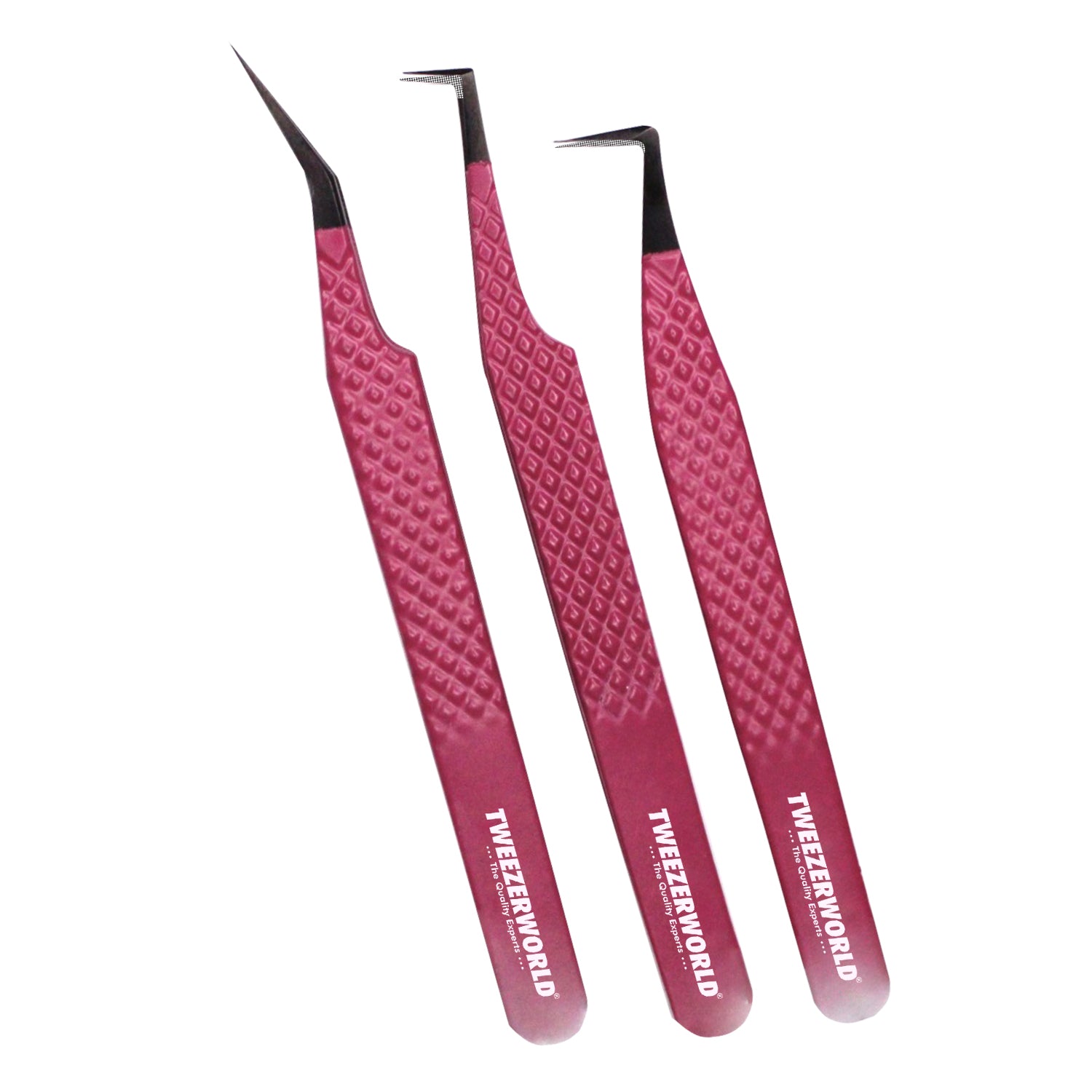
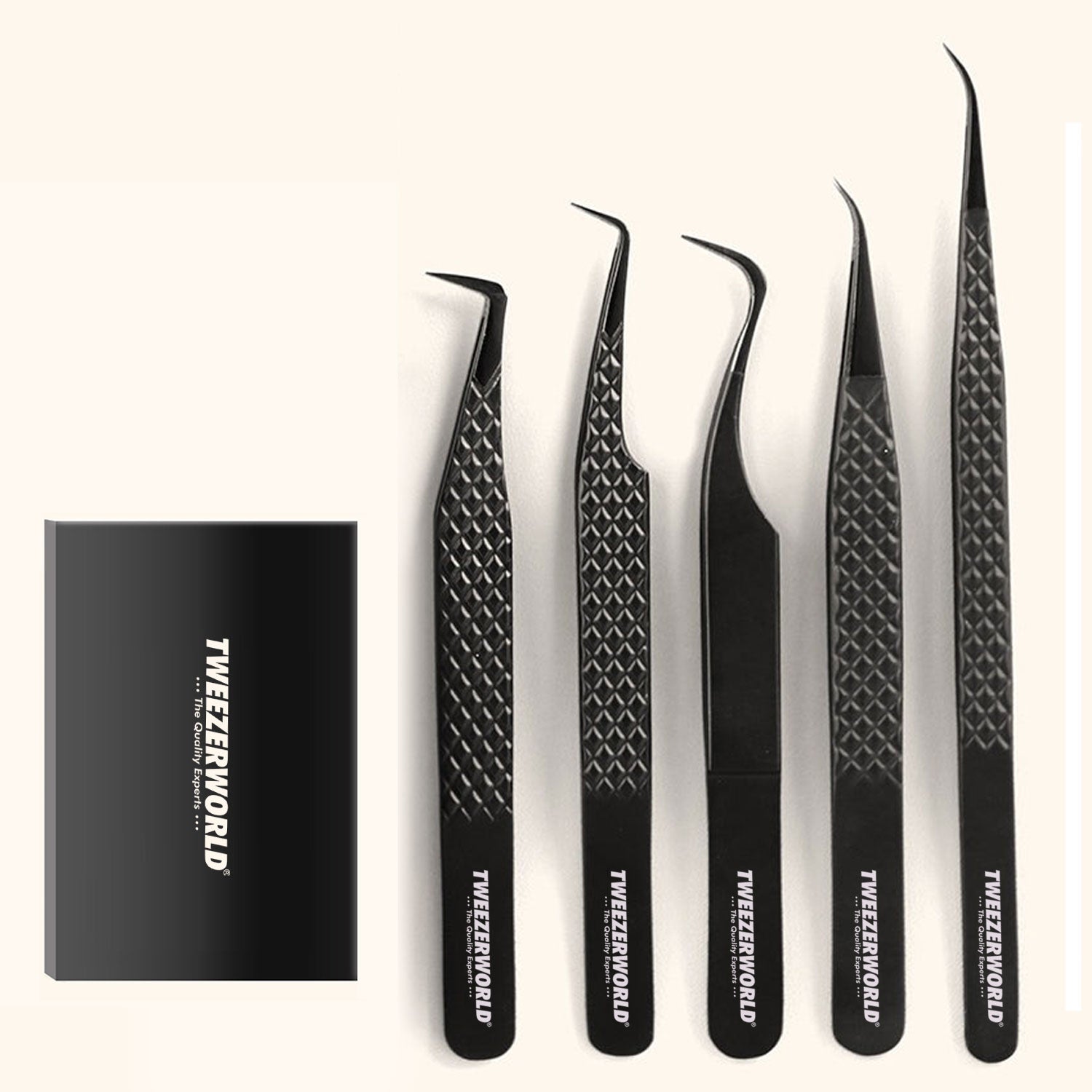
Most professional fiber tip tweezers have a fine micro-textured or hex-textured gripping surface inside the tips. This texture increases contact with the lash extensions and helps reduce slipping during fan creation.
However, the same tiny grooves that improve grip can also hold adhesive residue.
Adhesive commonly builds up when:
- The tweezer touches the adhesive drop
- Too much of the lash fan is dipped into the adhesive
- Fresh glue is not removed immediately
- Multiple thin adhesive layers are allowed to dry
- Residue remains around the biting point after cleaning
When the tweezer closes, pressure can push soft adhesive farther into the texture. Once it hardens, wiping the surface with a dry cloth may no longer be enough.
Can Dried Lash Glue Reduce Fiber-Tip Grip?
Yes. Dried adhesive can reduce the performance of even a high-quality fiber tip tweezer.
The textured surface works by creating multiple contact points between the tweezer and the lash extensions. When hardened glue fills those contact points, the tip can become partially smooth or uneven.
You may notice:
- Lash fans slipping during pickup
- Lashes sticking to the tweezer after placement
- Difficulty creating narrow or symmetrical fans
- Reduced grip at the usual sweet spot
- A visible gap between the closed tips
- Uneven pressure across the gripping surface
Loss of grip does not always mean the texture is worn out. Before replacing the tool, remove all visible adhesive, disinfect it correctly and test it with practice lashes. If it still slips, inspect the alignment and biting point for physical damage.
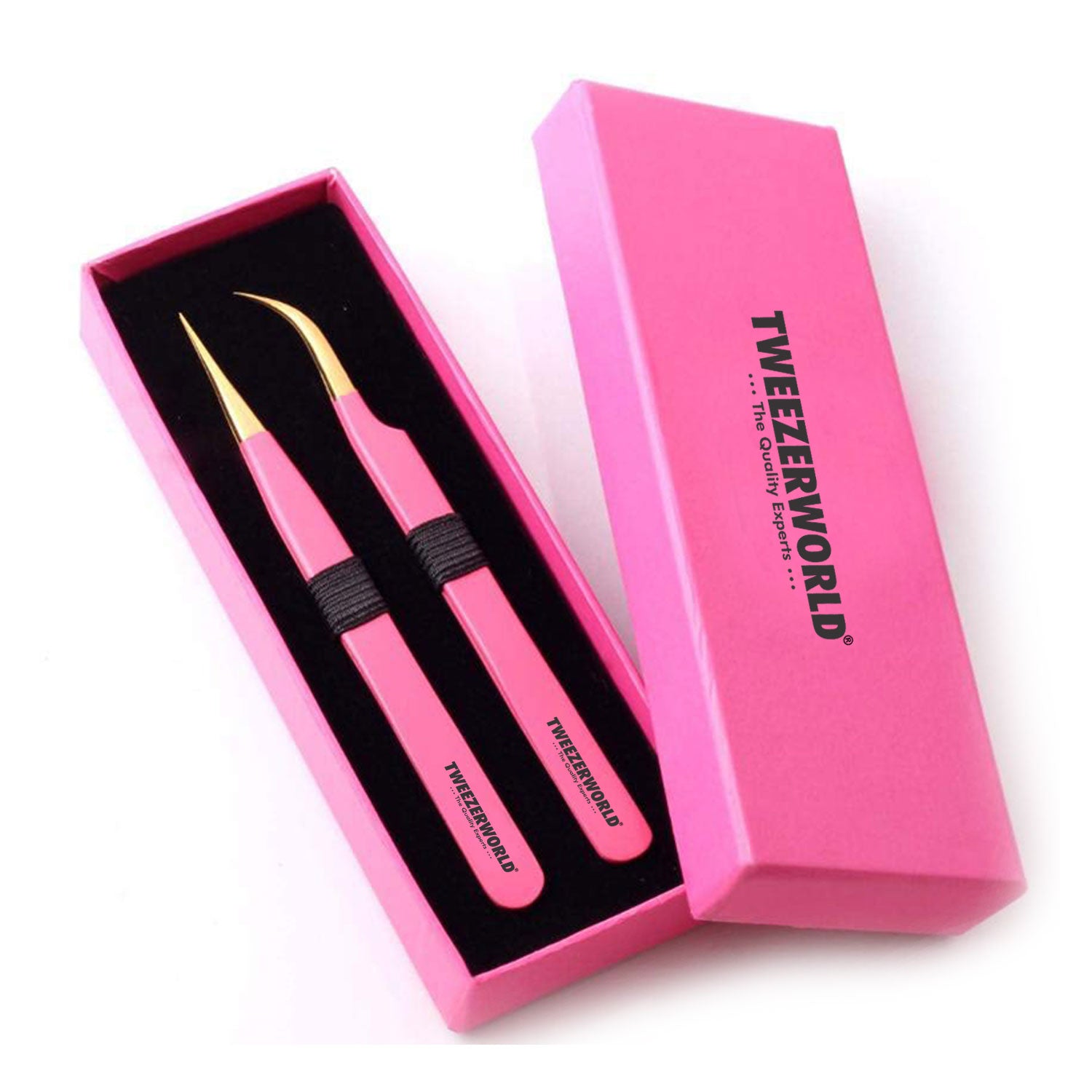
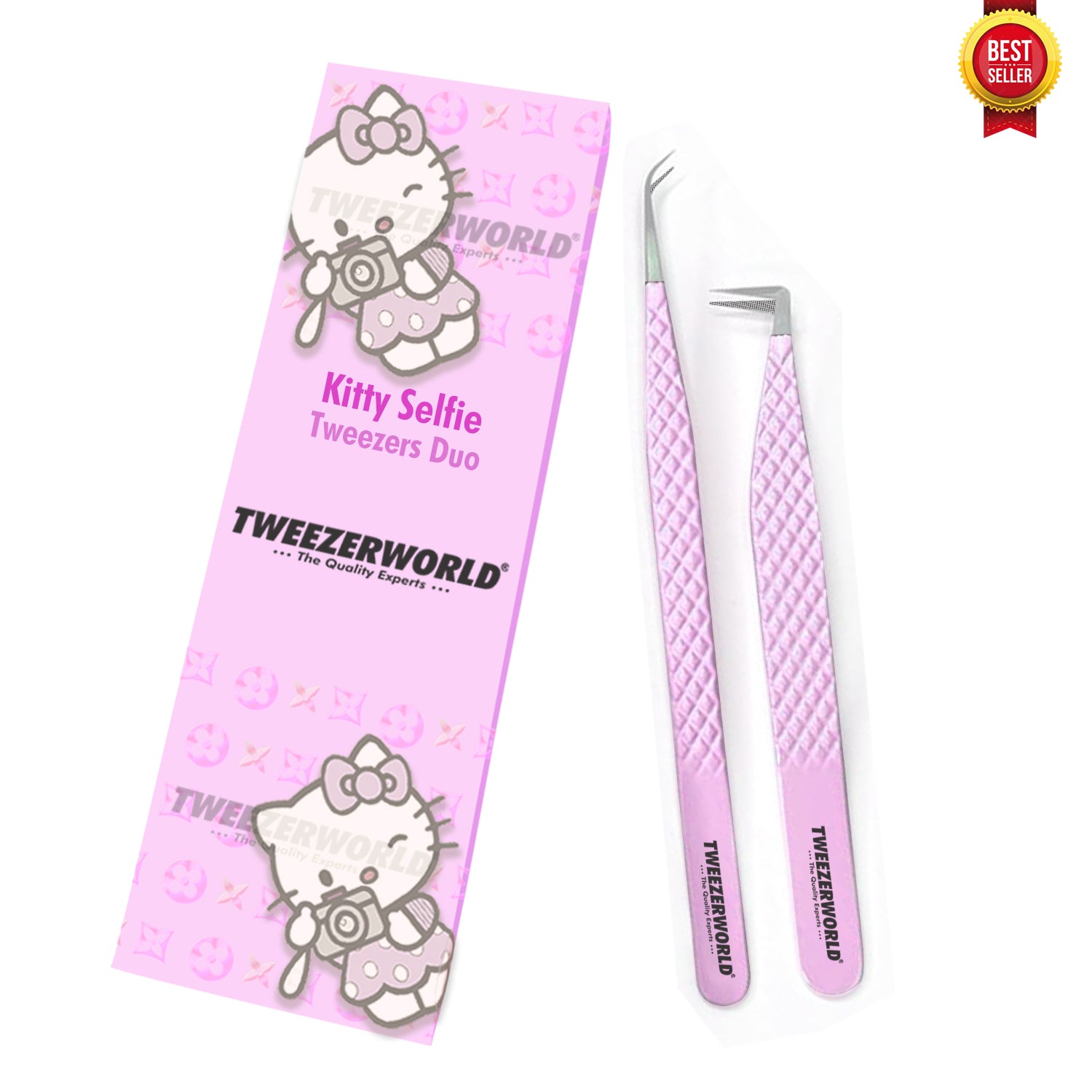
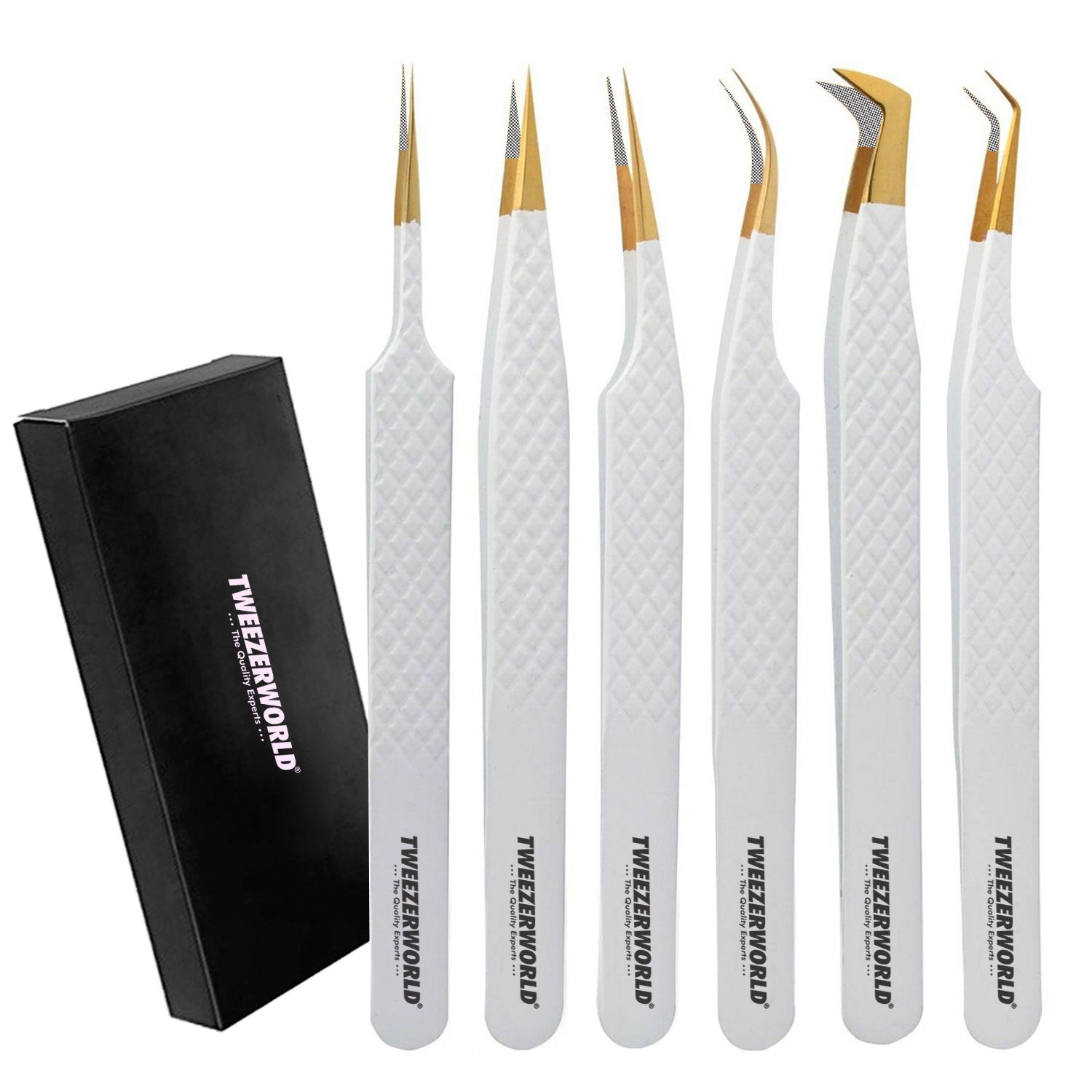
Explore our professional Fiber Tip Lash Tweezers with hand-tested alignment, gripping performance and multiple tip shapes.
What You Need to Remove Lash Glue from Tweezers
Prepare the following items:
- Professional adhesive remover for lash tweezers
- Suitable tweezer-cleaning jar or remover container
- Lint-free synthetic cleaning cloth
- Clean water, if required by the cleaner instructions
- Approved instrument disinfectant
- Protective gloves recommended by the chemical manufacturer
- Clean tweezer case
- Replacement tip protector
Choose a fiber tip tweezer cleaner that is compatible with stainless steel. If the handle has a titanium coating, powder coating, painted finish, printed logo or decorative element, confirm that the product will not damage it.
An adhesive remover is designed to dissolve glue. It should not be assumed to disinfect the instrument unless the product label specifically makes that claim.
Safe Adhesive-Removal Methods
Step 1: Remove Fresh Adhesive Immediately
If adhesive touches the tip during an appointment, stop and remove it before it fully cures.
Gently wipe the affected area with a suitable lint-free synthetic cloth, using a compatible cleaner when required. Avoid pushing the adhesive deeper into the textured surface.
Do not twist, pull apart or press heavily on the tweezer tips. Fine lash tweezer alignment can be affected by unnecessary pressure.
Step 2: Apply a Professional Tweezer Adhesive Remover
Place a small amount of professional adhesive remover for lash tweezers into an appropriate cleaning container.
Immerse only the adhesive-covered working tip unless the cleaner and tweezer manufacturers confirm that the entire instrument and its finish can be safely immersed.
This is especially important for tweezers with:
- Powder-coated handles
- Painted or custom-colored finishes
- Printed branding
- Decorative crystals
- Rubber grip sections
- Specialty surface treatments
Follow the product instructions for contact time, ventilation, personal protective equipment and safe handling.
Step 3: Allow the Adhesive to Soften
Leave the tip in contact with the remover for the time stated on the product label. Do not assume that longer soaking will produce better results.
If you use a professional tweezer-cleaning jar with an internal sponge, move the tip gently against the sponge. Do not push it aggressively into the bottom or sides of the container.
Step 4: Wipe the Textured Surface Gently
Remove the tweezer and wipe the tip with a clean, lint-free synthetic cloth. Pay close attention to:
- The biting point
- The sweet spot
- The edges of the tip
- The inner textured surface
- The transition between the textured and smooth areas
To clean hex-textured tweezers properly, repeat the softening process if residue remains. Never scrape dried glue out of the hex pattern with another metal tool.
Step 5: Rinse if the Cleaner Requires It
Some adhesive removers leave a chemical residue. If the instructions require rinsing, rinse the cleaned area with fresh water.
Never mix adhesive remover, disinfectant, bleach, alcohol or other chemicals. Combining products can damage the finish and may create unsafe fumes or reactions.
Step 6: Dry the Tweezer Completely
Dry the instrument with a clean lint-free cloth and allow it to air-dry fully.
Check that no moisture remains:
- Between the tweezer arms
- Around the textured tip
- Along the handle
- Inside engraved or textured grip areas
Do not place a protective cap on a wet tweezer.
Step 7: Inspect and Test the Tip
Close the tweezer gently and inspect:
- Tip alignment
- Biting-point contact
- Sweet-spot grip
- Spring tension
- Remaining residue
- Surface damage
Test it with practice lashes before returning it to client use.
What Not to Use on Hex-Textured Tips
Hex-textured tips should never be cleaned with aggressive tools or uncontrolled chemicals.
Avoid:
- Blades, needles, scissors or metal scrapers
- Nail files, sandpaper or abrasive polishing blocks
- Steel brushes or hard-bristled brushes
- Household bleach or acidic cleaners
- Unlabelled or industrial solvents
- Excessive force inside a cleaning jar
- Direct flame or uncontrolled heat
- Prolonged soaking of coated handles
- Bending the tips to improve closure
- Mixing cleaning and disinfecting chemicals
Scraping, sanding or filing may flatten the hex texture and permanently change how the tips meet. If glue does not release after one treatment, repeat the approved softening process instead of using force.
Can acetone be used?
Some professional lash tweezer cleaners contain acetone or similar solvents that can dissolve cyanoacrylate adhesive. These products may be suitable for exposed stainless steel tips, but they can damage powder coatings, paint, printed logos and decorative finishes.
Use only a compatible product, follow its safety instructions and keep it away from coated areas unless the coating manufacturer confirms compatibility.
Fiber Tip vs Smooth Tip Cleaning
| Cleaning factor | Fiber or hex-textured tip | Smooth tip |
|---|---|---|
| Adhesive collection | Can settle inside fine grooves | Usually remains on the flat surface |
| Cleaning difficulty | Requires gentle softening and careful wiping | Often easier to wipe after softening |
| Scraping risk | High—texture can be flattened or damaged | Can still scratch or alter tip contact |
| Main inspection area | Texture, biting point and sweet spot | Biting point, edges and alignment |
| Recommended approach | Repeat gentle cleaning when necessary | Use compatible remover and wipe gently |
| Care frequency | Remove glue immediately and reprocess after every client | The same hygiene schedule applies |
Fiber tips require more attention around the gripping texture, but both types need proper cleaning, disinfection, drying and protected storage.
How Often Should Lash Tweezers Be Cleaned?
Use the following schedule:
- During an appointment: Remove adhesive immediately whenever it touches the tip.
- After every client: Complete the required cleaning and disinfection process before reuse.
- At the end of the working day: Inspect the tips for residue, alignment problems and surface damage.
- Before storage: Confirm that the tweezer is completely clean and dry.
Frequent gentle cleaning is safer for the gripping surface than allowing several layers of adhesive to harden and removing them later with force.
Artists who work with several appointments each day should keep backup tools or professional lash tweezer sets available. This allows one set to be properly reprocessed while another clean set is ready for use.
Can Fiber Tip Tweezers Be Disinfected or Sterilized?
Yes, compatible fiber tip tweezers can be disinfected. Sterilization depends on the construction, base material, finish and manufacturer’s instructions.
Cleaning, disinfection and sterilization are separate processes:
- Cleaning removes glue, oil and visible residue.
- Disinfection uses an approved chemical process to reduce harmful microorganisms.
- Sterilization uses a validated process to destroy all forms of microbial life.
Adhesive must be removed before disinfection or sterilization. As a general instrument-reprocessing principle, the CDC explains that remaining material can interfere with the effectiveness of later disinfection or sterilization processes. CDC cleaning guidance
After cleaning:
- Use an instrument disinfectant approved for your market and salon setting.
- Confirm compatibility with stainless steel and the tweezer’s finish.
- Follow the correct concentration and dilution.
- Maintain the complete contact time stated on the label.
- Rinse when instructed.
- Dry the instrument completely.
- Follow all local salon hygiene regulations.
The EPA notes that a disinfected surface must remain wet for the entire labelled contact time to achieve the stated result. EPA disinfectant guidance
Can fiber tip tweezers go in an autoclave?
Only autoclave a tweezer when the manufacturer confirms that the complete model—including its coating, logo and construction—is suitable for the validated steam cycle.
Bare surgical-grade stainless steel may tolerate autoclaving, but powder coatings, printed logos, decorative parts and some specialty finishes may not. Remove any non-autoclavable tip protector before processing.
The presence of a fiber or hex texture does not automatically make a tweezer unsuitable for sterilization. Material and finish compatibility determine whether the process is safe.
Best Storage After Cleaning
Once the tweezer has been cleaned, disinfected and completely dried:
- Store it in an individual clean case or protective pouch.
- Use a properly fitting tip protector.
- Keep the tip from touching hard surfaces.
- Separate clean instruments from used instruments.
- Avoid humid drawers and closed containers containing moisture.
- Do not store tweezers loose with scissors or other metal tools.
- Keep sterilized instruments sealed in their approved pouches until needed, when required by your protocol.
- Check alignment before the next appointment.
A rigid tweezer case is especially useful for mobile lash artists because it protects the tips from drops, pressure and contact with other tools.
OEM Fiber-Tip Care Kits for Private-Label Brands
A branded care kit can add value to a lash tweezer collection without requiring a new tweezer shape.
TWEEZER WORLD® can develop a private label lash tweezer care kit containing:
- Fiber tip lash tweezer
- Protective tweezer case
- Lint-free cleaning cloth
- Fiber tip care card
- Suitable cleaning accessory or adhesive-removal instructions
- Replacement tip protector
- Branded storage pouch or retail box
Private-label customers can customize:
- Case color
- Cloth color
- Care-card design
- Brand logo
- Cleaning instructions
- QR code linking to a care video
- Multilingual instructions
- Magnetic or retail-ready packaging
The care card can include finish-specific warnings for titanium-coated, powder-coated and custom-colored tweezers. Where liquid adhesive remover cannot be included because of shipping or market restrictions, the kit can contain a compatible empty cleaning jar and clear product-selection instructions.
Learn more about our OEM and Private Label Tweezers manufacturing services.
Frequently Asked Questions
What is the best way to remove lash glue from tweezers?
Soften the glue with a professional adhesive remover compatible with the tweezer’s material and finish. Gently wipe the residue with a lint-free synthetic cloth and repeat if necessary. Never scrape the tip.
Can adhesive remover replace disinfectant?
No. An adhesive remover cleans away lash glue but should not be treated as a disinfectant unless its label specifically states that it provides approved disinfection.
Why has my fiber tip tweezer lost its grip?
Possible causes include adhesive residue, oil, cleaning-product deposits, worn texture, bent tips or incorrect alignment. Clean and inspect the tweezer before deciding whether it needs replacement.
Can I soak the complete tweezer?
Only if both the cleaner and tweezer manufacturers confirm that the complete instrument—including its coating and logo—is suitable for full immersion.
How do I clean hex-textured tweezers without damaging them?
Soften the adhesive, wipe the texture gently and repeat the process when needed. Do not use blades, needles, files, metal brushes or abrasive materials.
When should a fiber tip tweezer be replaced?
Replace it when the tips are bent, the alignment cannot be restored, the textured surface is physically damaged or the sweet spot no longer closes correctly after thorough cleaning.
Protect the Grip and Precision of Your Fiber Tip Tweezers
Correct fiber tip tweezer care helps preserve grip, alignment and professional performance. Remove lash adhesive as soon as it touches the tip, use a compatible cleaner, avoid scraping the textured surface and complete the required disinfection process after every client.
For new tools, explore TWEEZER WORLD® Fiber Tip Lash Tweezers, 4-Piece Lash Tweezer Sets and OEM private-label manufacturing.