
Straight-Line vs Hex-Textured Fiber Tip Tweezers | Guide
Straight-Line vs Hex-Textured Fiber Tip Lash Tweezers
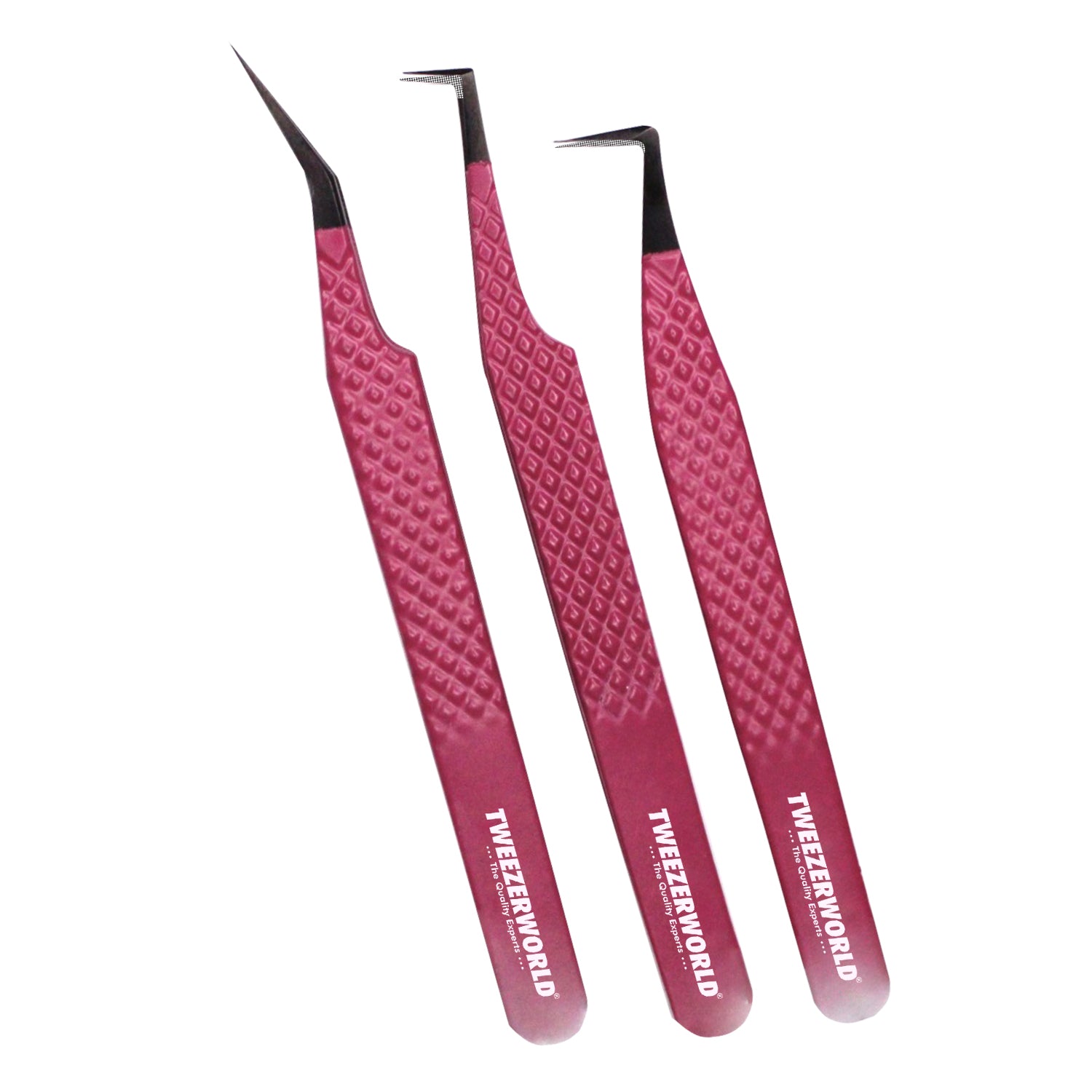
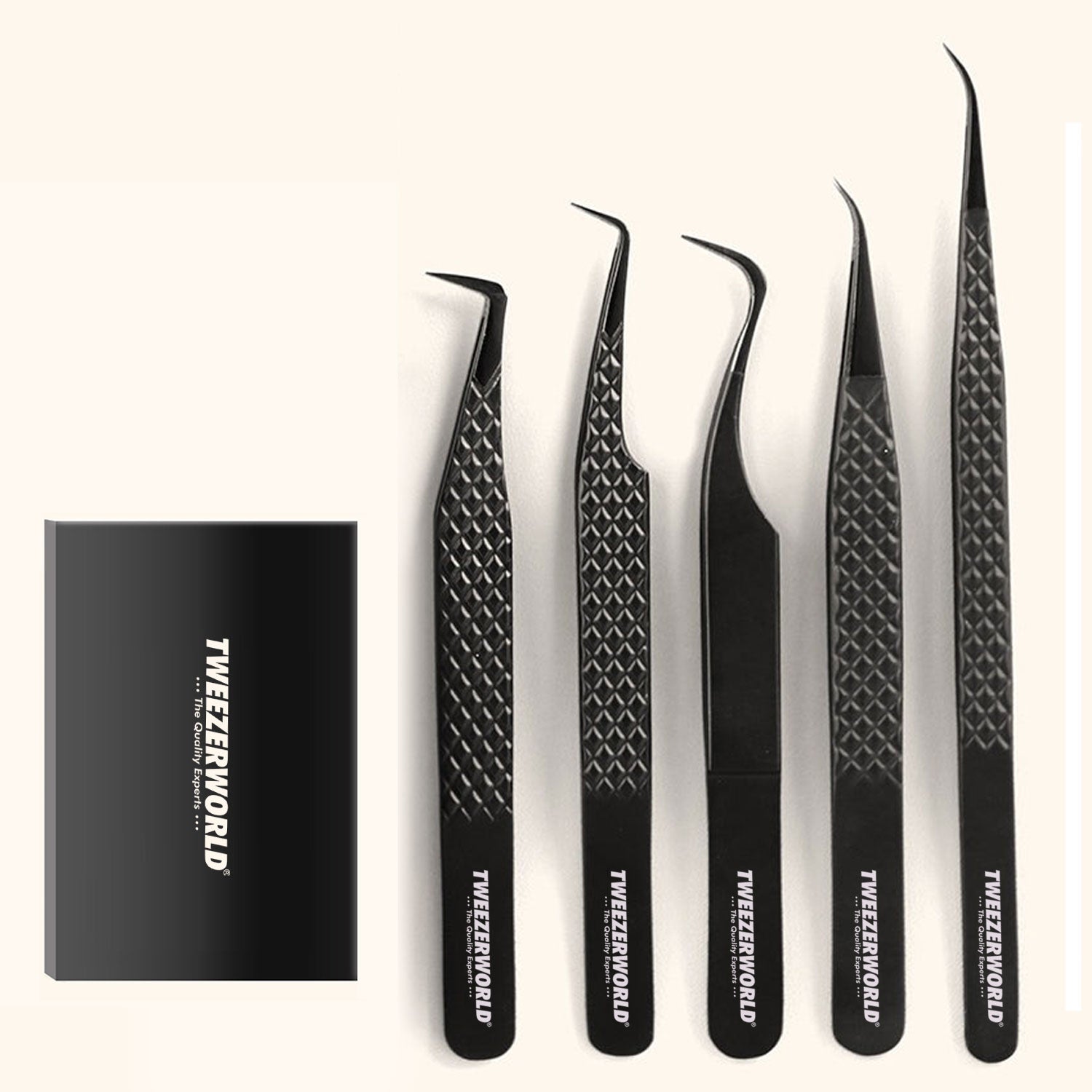
Fiber tip lash tweezers are not all textured in the same way. Some have parallel straight lines, others use a cross-pattern, while premium models may feature a detailed hex-textured gripping surface.
Each pattern changes how the inner tips contact fine lash extensions. However, texture alone does not determine performance. Tip alignment, gripping-point coverage, pattern depth, spring tension and tweezer shape all affect how securely the tool holds 0.03, 0.05 and other lash diameters.
This guide compares the main fiber tip tweezer texture options and explains which designs may work best for narrow fans, wide fans, volume pickup, isolation and private-label collections.
Explore TWEEZER WORLD® Fiber Tip Lash Tweezers in isolation, 45°, Boot, 90°, L-shape, J-curved and other professional shapes.
What Is a Straight-Line Fiber-Grip Pattern?
A straight-line fiber grip uses a series of parallel grooves across the inner working surfaces of the tweezer tips. Depending on the model, the lines may run horizontally, vertically or at a slight angle.
When the tweezer closes, these fine lines create additional edges that contact the lash fibres. This provides more grip than a completely smooth inner tip while maintaining a relatively simple surface pattern.
Potential benefits include:
- Consistent directional grip
- Clean, controlled pickup
- Good visibility of the contact area
- Easier inspection for adhesive residue
- Simpler cleaning than dense multi-directional textures
- Suitable control for narrow or closed fans
Straight-line fiber grip tweezers can be a good option for lash artists who want more gripping assistance than a smooth tip without using an aggressive or highly detailed pattern.
The spacing and depth of the lines matter. Grooves that are too shallow may provide little benefit, while overly deep lines can collect more adhesive or create uneven contact.
What Is a Cross-Pattern Grip?
A cross-pattern grip uses intersecting lines across the inner tip. One set of grooves crosses another, creating a cross-hatched or grid-like contact surface.
This design creates gripping edges in more than one direction. Therefore, it may hold lashes more consistently when the artist changes the pickup angle or moves between narrow and wider fans.
Potential benefits include:
- Multi-directional gripping contact
- Improved control at different pickup angles
- A broader working area than some single-direction patterns
- Suitable performance for narrow and medium-width fans
- Versatility across classic, hybrid and volume techniques
Cross-textured lash tweezers can provide a middle option between straight-line and hex-textured designs. They offer additional contact points without using the denser cellular pattern found on hex-textured tips.
The term “cross pattern” is not a universal technical standard. One manufacturer may use widely spaced crossing lines, while another may produce a much finer cross-hatched texture. Lash brands should always inspect and test the actual pattern instead of relying only on its name.
How Do Hex-Textured Tips Work?
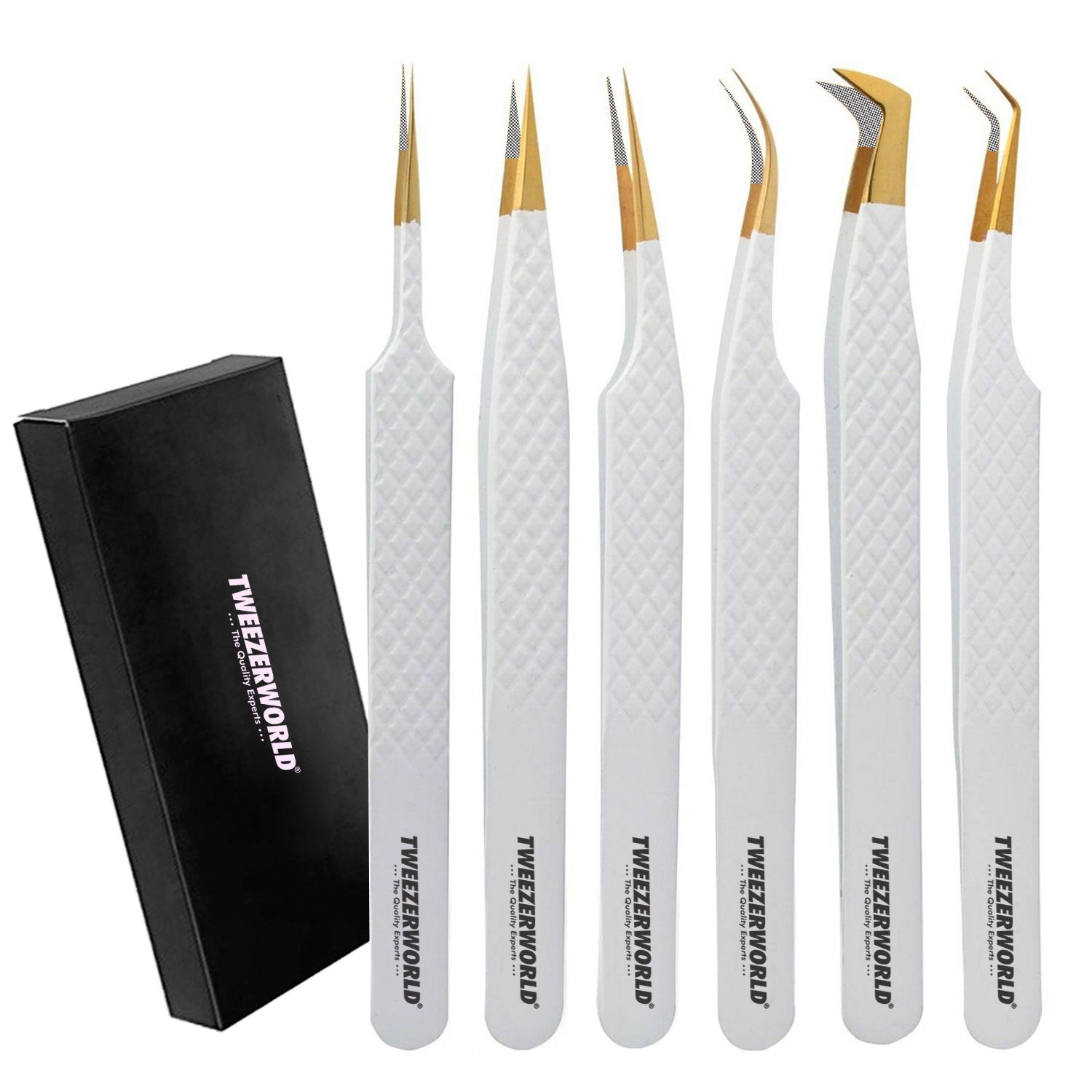
Hex-textured lash tweezers use a repeated geometric pattern across the inner gripping surface. The pattern creates many small edges and contact points that approach the lashes from different directions.
When both sides of the tweezer close correctly, the hex pattern can increase contact across the biting point and surrounding sweet spot. This can help hold fine lash extensions with less slipping during fan creation.
Potential advantages include:
- Multi-directional grip
- Broad contact across the working surface
- A larger usable gripping area when properly aligned
- Secure pickup of multiple fine lashes
- Support for volume and mega-volume techniques
- Consistent grip from different pickup positions
Hex-textured tips are commonly selected for Boot, 90°, L-shape and other volume tweezers where the artist uses a wider part of the inner tip.
However, texture cannot correct poor alignment. If the tips do not meet evenly, only part of the hex pattern will make contact.
Straight-Line vs Cross vs Hex-Textured Tips
| Feature | Straight-Line Pattern | Cross Pattern | Hex Pattern | Smooth Tip |
|---|---|---|---|---|
| Grip direction | Mainly directional | Multi-directional | Multi-directional | Depends on surface contact |
| Pattern density | Low to medium | Medium | Medium to high | None |
| Usable grip area | Focused | Broad | Potentially widest | Usually defined sweet spot |
| Best fan style | Narrow and controlled | Narrow to medium-wide | Medium to wide and mega volume | Classic and artist-specific |
| Cleaning difficulty | Easier | Moderate | Requires closer cleaning | Easiest |
| Adhesive visibility | Clear | Moderate | Residue may settle inside texture | Clear |
| Best for beginners | Easy transition from smooth tips | Versatile | Helpful grip but requires proper care | Familiar traditional option |
| OEM positioning | Professional | Advanced | Premium | Classic |
These are general design tendencies. Actual performance depends on the pattern depth, tip geometry, alignment, tension and the artist’s technique.
Which Texture Creates a Larger Usable Grip Area?
A well-made hex or fine cross-pattern tip will generally provide the largest multi-directional usable grip area. These patterns create contact edges in several directions and may allow the artist to pick up lashes from more positions across the inner tip.
Straight-line patterns usually provide a more directional gripping area. They can still produce a long, reliable sweet spot when the parallel grooves cover the complete biting surface and the tips are accurately aligned.
The largest visible texture does not automatically provide the largest functional grip area. The textured section is usable only where both inner tips meet correctly.
The effective gripping area depends on:
- Tip alignment
- Biting-point contact
- Texture coverage
- Groove depth
- Tip width
- Tip angle
- Spring tension
- Pressure applied by the artist
For this reason, manufacturers should test the complete textured area instead of checking only one point at the end of the tip.
Best Fiber Tip for 0.03 Lashes
Lashes with a 0.03 mm diameter are very fine and are often used for higher-density volume and mega-volume fans. Because multiple lightweight fibres must be controlled together, a broad and consistent gripping surface can be helpful.
A fine hex-textured or cross-pattern tip is generally a strong option for 0.03 lashes because it offers multi-directional contact across a larger working area.
Recommended features include:
- Fine, evenly manufactured texture
- Accurate closing contact
- Wide functional sweet spot
- Soft or balanced spring tension
- Boot, 90° or L-shape tip for wider fans
- Slim angled tip for narrow or closed fans
The best fiber tip for 0.03 lashes should grip without requiring excessive squeezing. Too much hand pressure can disturb the fan and contribute to artist fatigue.
Best Fiber Tip for 0.05 Lashes
Lashes with a 0.05 mm diameter are slightly thicker and are commonly used for lighter volume sets. Because fewer fibres may be required in each fan, artists can successfully use several texture types.
Suitable options include:
- Straight-line texture for controlled narrow fans
- Cross texture for flexible pickup angles
- Hex texture for broader volume pickup
- Smooth tips for artists with a precise, established sweet spot
For 0.05 lashes, alignment and tension may be more important than selecting the most aggressive texture. A correctly aligned straight-line pattern may outperform a poorly aligned hex-textured tip.
Best Texture for Narrow Fans
Narrow, closed and wet-look fans require precise control at the lash base. The tweezer must hold the selected fibres together without spreading them too early.
Straight-line and fine cross-pattern grips are good choices because they provide controlled contact without requiring an excessively wide gripping area.
Recommended narrow-fan combinations include:
- Slim 45° tip with a straight-line texture
- J-curved tip with a fine cross pattern
- Long-slim volume tip with a straight-line grip
- Narrow Boot tip with a fine hex pattern
These designs can be used for:
- Wispy spikes
- Wet-look sets
- Closed fans
- Brown lashes
- Hybrid sets
- Narrow volume fans
Best Texture for Wide Fans
Wide fans benefit from a larger gripping surface that can hold multiple fibres evenly across the base.
Hex-textured and cross-pattern tips are often suitable because their multi-directional contact can support wider pickup positions.
Recommended combinations include:
- Boot tip with hex texture
- 90° tip with hex texture
- L-shape tip with cross or hex texture
- Wide volume tip with full inner-tip texture
Explore professional Volume Lash Tweezers for handmade volume, Russian volume and mega-volume techniques.
Does Isolation Require a Textured Tip?
Isolation tweezers do not always require the same level of grip as volume pickup tools. Their main purpose is to separate one natural lash safely and maintain clear access during placement.
A straight-line or fine cross texture can provide additional control without making the tip feel overly aggressive. Smooth isolation tips remain suitable for artists who prefer a traditional precision surface.
Hex texture may be useful when:
- Working with fine or slippery lashes
- Isolating dense lash lines
- Using curved isolation shapes
- Requiring a larger gripping contact area
Browse professional Isolation Tweezers in straight, curved and precision styles.
Does Grip Texture Affect the Sweet Spot?
Yes, but texture is only one part of the sweet spot.
The sweet spot is the area where both tweezer tips meet evenly and hold the lash extensions securely. Adding texture can increase friction and extend the useful gripping area, but it cannot create contact where the tips do not close correctly.
A functional sweet spot depends on:
- Accurate tip alignment
- Even biting-point contact
- Correct inner-tip geometry
- Suitable texture depth
- Balanced spring tension
- Consistent hand pressure
A hex pattern may create a broad sweet spot when the entire inner surface closes correctly. A straight-line pattern may create a more focused sweet spot that some artists find easier to control.
No grip pattern can correct false grip, bent tips or uneven closing pressure. These issues must be addressed through manufacturing, alignment and final hand testing.
Cleaning Different Textured Tip Patterns
All fiber tip tweezers should be cleaned as soon as adhesive touches the working surface.
Straight-Line Texture
Parallel grooves are comparatively easy to inspect and wipe. Adhesive normally follows the direction of the lines, making remaining residue easier to identify.
Cross Pattern
The intersections may hold small amounts of dried adhesive. Clean gently in more than one direction using a suitable lint-free synthetic cloth.
Hex Pattern
Hex-textured tips contain more small edges and recessed areas. Adhesive should be softened with a compatible professional tweezer cleaner and removed gently. If residue remains, repeat the cleaning process instead of scraping the pattern.
Smooth Tip
Smooth tips are generally easier to wipe, but dried adhesive must still be softened first. Scraping can scratch the surface or change how the tips close.
For complete instructions, read:
- How to Clean Fiber Tip Lash Tweezers Without Damaging the Grip
- How to Remove Lash Adhesive from Fiber Tip Tweezers
Never use blades, needles, files, sandpaper or metal brushes on a textured tip. These methods can flatten the gripping pattern and permanently change the sweet spot.
Fiber Tip Care Kits for Textured Tweezers
Different textures require clear cleaning and storage instructions. Lash brands can add a private-label Fiber Tip Tweezer Care Kit to improve customer satisfaction and reduce damage caused by incorrect cleaning.
A care kit can contain:
- Fiber tip lash tweezer
- Protective tweezer case
- Lint-free cleaning cloth
- Texture-specific care card
- Suitable adhesive-removal accessory or instructions
- Replacement tip protector
- Branded storage pouch
The care card should identify whether the tool has a straight-line, cross, hex or smooth inner tip and explain how to maintain that particular surface.
OEM Custom Grip Patterns for Private-Label Brands
OEM fiber tip lash tweezers allow private-label brands to create more technical product differences than color and logo alone.
Brands can select:
- Straight-line grip
- Cross-pattern grip
- Hex-textured grip
- Smooth inner tip
- Full-tip or partial-tip texture
- Fine or medium texture depth
- Direction of straight-line grooves
- Length of the textured area
- Position of the biting point
- Exposed silver tip or coated exterior
- Custom tweezer shape and spring tension
A private-label brand could create several performance levels:
- Classic Collection: Smooth inner tips
- Precision Collection: Straight-line grip
- Advanced Collection: Cross-pattern grip
- Pro Volume Collection: Hex-textured tips
The pattern should be finalized through physical samples. Brands should test the samples with their preferred 0.03, 0.05 and other lash diameters before approving bulk production.
TWEEZER WORLD® provides OEM and Private Label Tweezers manufacturing, including custom shapes, tip technologies, finishes, logo engraving and branded packaging.
Frequently Asked Questions
Are hex-textured lash tweezers always better?
No. Hex texture can provide a broad multi-directional grip, but performance still depends on alignment, texture depth, tension, tip shape and the artist’s technique.
Which texture is easiest to clean?
Smooth tips are generally the easiest, followed by straight-line textures. Cross and hex patterns require closer inspection because adhesive can settle inside their intersections.
Which texture is best for beginners?
A straight-line or fine cross-pattern tip offers a comfortable transition from smooth tweezers. However, many beginners also prefer hex-textured tips because of their larger usable gripping area.
Can straight-line grip tweezers create volume fans?
Yes. Correctly aligned straight-line fiber grip tweezers can create narrow, medium and some wider volume fans. The tip shape and width also affect the result.
Can private-label brands choose different textures for each shape?
Yes. A brand may use smooth tips for isolation, straight-line tips for narrow fans and hex-textured tips for Boot, 90° or L-shape volume tweezers.
Which Fiber Tip Texture Should You Choose?
Choose the texture according to the artist’s technique rather than selecting the most detailed pattern automatically.
- Choose Smooth for traditional precision and easy cleaning.
- Choose Straight Line for controlled, directional grip and narrow fans.
- Choose Cross Pattern for versatile multi-directional pickup.
- Choose Hex Pattern for broad grip, wider fans and volume techniques.
The best-performing tweezer combines the correct texture with precise alignment, a reliable sweet spot, balanced tension and an appropriate tip shape.
Papular Products Gallery