
Anti-Magnetic vs Stainless-Steel Watch Tweezers
Anti-Magnetic vs Stainless-Steel Watchmaker Tweezers
Watchmaker tweezers must handle screws, jewels, hairsprings, wheels and watch hands without scratching, bending or losing control of the component. Tip shape is important, but the material from which the tweezer is made can be equally significant.
“Anti-magnetic” and “stainless steel” are often presented as opposing choices. Technically, however, they describe different characteristics:
- Stainless steel describes a corrosion-resistant family of steel alloys.
- Anti-magnetic describes the material’s response to a magnetic field.
- A watchmaker tweezer can be both stainless steel and anti-magnetic.
The useful comparison is therefore between a general stainless-steel tweezer with unspecified or magnetic behavior and a tweezer manufactured from a verified low-magnetic or anti-magnetic stainless-steel alloy.
Why Magnetism Matters in Watch Repair
Watch movements contain extremely small metal components. If a tweezer becomes magnetized, screws, springs and other parts may cling to its tips instead of releasing cleanly.
This can cause:
- Small screws to jump toward the tweezer
- Components to move unexpectedly during placement
- Hairsprings to cling to the working tip
- Reduced control under magnification
- Difficulty releasing parts accurately
- Contamination to collect on the tips
- Slower movement assembly
Magnetism is particularly undesirable when working with hairsprings and other light movement components. Even when servicing a modern movement with more magnetism-resistant components, low-magnetic tools help provide predictable pickup and release.
For this reason, professional watchmakers often keep dedicated anti-magnetic tweezers for movement work.
What Are Stainless-Steel Watchmaker Tweezers?
Stainless-steel watchmaker tweezers are manufactured from an iron-based alloy containing sufficient chromium to create a corrosion-resistant passive surface.
However, stainless steel is not a single material. It includes several families with different hardness, corrosion resistance and magnetic behavior.
Martensitic stainless steel
Grades such as AISI 410 and 420 can be hardened to produce strong, wear-resistant precision tips. These properties can be useful when the tweezer must retain a sharp point or perform more demanding handling work.
Martensitic stainless steels are normally magnetic. This does not mean they are poor-quality materials; it means they serve a different technical purpose. World Stainless confirms that martensitic grades can combine hardness and corrosion resistance while remaining magnetic.
Austenitic stainless steel
Grades such as AISI 304, 316L and 904L generally have much lower magnetic response in the annealed condition.
Austenitic grades usually offer:
- Good corrosion resistance
- Smooth surface finishing
- Low magnetic attraction
- Resistance to many workshop chemicals
- Suitable performance for delicate handling
However, some austenitic stainless steels can become slightly magnetic after cold working, grinding, forming or other manufacturing processes. The finished tool must therefore be evaluated—not only the raw steel grade. British Stainless Steel Association guidance explains how cold-worked areas can develop greater magnetic response.
What Are Anti-Magnetic Watchmaker Tweezers?
Anti-magnetic watchmaker tweezers are manufactured and processed to minimize magnetic attraction during precision work.
They may be produced from:
- 316L stainless steel
- 904L stainless steel
- Other stable austenitic stainless-steel alloys
- Nickel-chromium-molybdenum superalloys
- Titanium alloys
- Brass or bronze for specialist applications
- Carbon-fibre or engineered polymer tips
For example, professional No. 5 hairspring tweezers are commercially available in anti-magnetic 316L and 904L stainless steel. Horotec identifies its No. 5 anti-magnetic 316L model specifically for fine hairspring work.
An anti-magnetic claim should be supported by a material specification or appropriate test data. It should not be based only on the appearance, finish or price of the tweezer.
Anti-Magnetic vs Standard Stainless-Steel Tweezers
| Feature | Anti-magnetic stainless steel | General stainless steel |
|---|---|---|
| Magnetic response | Designed for low magnetic attraction | Depends on alloy and processing |
| Hairspring work | Preferred | Use only if magnetic behavior is verified |
| Small movement parts | Excellent for controlled release | May attract ferrous components |
| Corrosion resistance | Generally good to excellent | Depends on stainless-steel grade |
| Tip hardness | Alloy-dependent | Hardened martensitic grades may offer high hardness |
| Fine-point retention | Depends on material and heat treatment | Can be excellent in hardened grades |
| Cleaning resistance | Generally good | Grade-dependent |
| Typical applications | Movements, hairsprings, jewels and fine screws | General repair, cases, bracelets and stronger handling |
| Purchase specification | Alloy plus magnetic-performance data | Exact alloy, hardness and intended use |
| Cost | Often higher | Usually available across more price levels |
Neither category is automatically superior for every operation. The best material depends on what the watchmaker is handling.
Are All Stainless-Steel Tweezers Magnetic?
No.
Stainless steel includes magnetic and low-magnetic families:
- Martensitic stainless steels are normally magnetic.
- Ferritic stainless steels are magnetic.
- Austenitic stainless steels are generally non-magnetic or only slightly magnetic in their annealed condition.
- Duplex stainless steels normally show magnetic response.
Manufacturing can change the behavior of an austenitic alloy. Cold forming and other deformation may create some martensitic structure, increasing magnetic attraction. This is one reason the finished tweezer should be tested.
A product description that says only “stainless steel” does not tell the customer enough about magnetic performance.
Are Anti-Magnetic Tweezers Always Stainless Steel?
No. Anti-magnetic tweezers can also be manufactured from titanium, brass, bronze, carbon-fibre composites and specialist superalloys.
Titanium tweezers
Titanium provides low weight, good corrosion resistance and non-magnetic performance. It can be useful for long working sessions and specialized movement assembly.
Titanium has a different spring feel from steel and may cost more to manufacture.
Brass and bronze tweezers
Brass and bronze are non-ferrous and useful for handling finished parts where reducing scratching is more important than maintaining an extremely sharp point.
They are commonly considered for:
- Watch hands
- Polished screws
- Finished bridges
- Decorative movement parts
- Case and dial-related operations
Because these materials are softer than hardened steel, their tips may require more frequent maintenance.
Carbon-fibre or polymer-tip tweezers
Non-metallic tips can help protect polished or delicate surfaces. They may also provide low-magnetic handling, but the stiffness, wear resistance and chemical compatibility depend on the exact material.
Specialist superalloys
Some precision tweezers use non-magnetic nickel-based or cobalt-based alloys to combine high strength, temperature resistance and corrosion resistance. These materials are normally selected for demanding professional applications rather than general repair.
Best Material for Hairspring Tweezers
For hairspring work, select a short, lightweight tweezer with extra-fine tips and verified low-magnetic behavior.
A professional No. 5 hairspring tweezer commonly features:
- Short body
- Extra-fine points
- Light and controlled spring tension
- Smooth inner working surfaces
- Precise tip alignment
- Low magnetic attraction
- Clean, burr-free finishing
Horotec offers No. 5 hairspring tweezers in carbon steel, standard stainless steel and anti-magnetic 904L, demonstrating that the same tip shape can be produced in different materials for different working preferences. See the material comparison.
For delicate hairsprings, the 316L or 904L anti-magnetic option is generally the safer starting point.
Best Material for General Movement Assembly
An anti-magnetic stainless-steel tweezer is also a practical choice for:
- Movement screws
- Jewels
- Pallet components
- Balance components
- Setting parts
- Wheels and pinions
- Springs and levers
A No. 3 or similar fine-point profile is commonly selected for general movement work. A No. 5 is preferred when an even finer and lighter tool is required.
Numbered profiles are industry references rather than a universal dimensional standard. Check the actual length, tip width, thickness and geometry from each manufacturer.
Best Material for Watch Hands
Watch hands can be easily marked or bent. Magnetic performance is important, but surface protection may be even more critical.
Suitable options include:
- Smooth anti-magnetic stainless-steel tips
- Brass tweezers
- Bronze tweezers
- Polymer-tip tweezers
- Fine, flat-ended profiles
Avoid rough tips, burrs and excessive closing pressure. A sharp hardened point may provide excellent precision but can scratch a polished hand if it is used incorrectly.
Best Material for Cases and Bracelets
Case and bracelet work usually involves larger, stronger components. A hardened stainless-steel tweezer may be more suitable when tip strength and wear resistance are priorities.
Possible applications include:
- Handling spring bars
- Positioning bracelet screws
- Working with clasps
- Removing debris
- Holding stronger external components
Magnetism is generally less critical here than during hairspring or movement work. However, smooth finishing and appropriate tip geometry remain important to avoid scratching the watch.
Consider keeping case tools separate from movement tweezers. Tools used around bracelets and external components may collect abrasive particles that should not be transferred to a clean movement workstation.
Is 316L Better Than 904L for Watchmaker Tweezers?
Both alloys can be suitable for anti-magnetic watchmaker tweezers.
316L stainless steel
316L offers:
- Good corrosion resistance
- Low magnetic response in the proper condition
- Wide industrial availability
- Stable performance for precision tools
- Practical cost for professional production
904L stainless steel
904L is a higher-alloy austenitic stainless steel with increased nickel and molybdenum content. It provides excellent corrosion resistance and low magnetic response.
For watchmaker tweezers, the practical difference may depend more on:
- Tip geometry
- Material condition
- Cold working
- Spring design
- Heat treatment
- Surface finishing
- Final magnetic testing
A poorly aligned 904L tweezer will not outperform a precisely finished 316L tweezer simply because of the alloy name.
Does a Magnet Test Prove That a Tweezer Is Anti-Magnetic?
A simple magnet-attraction check can identify a strongly magnetic tool, but it is not a complete professional qualification method.
The result can change according to:
- Magnet strength
- Distance from the tool
- Which part of the tweezer is tested
- Cold-worked areas
- Tip geometry
- Surface contamination
- Test orientation
For an OEM or industrial specification, request a defined magnetic-performance requirement and repeatable test procedure. When relevant, magnetic permeability should be measured rather than relying only on a subjective “sticks” or “does not stick” test.
Avoid absolute claims such as “100% non-magnetic” unless the claim is supported by agreed measurement data.
Tip Quality Still Matters More Than the Material Name
Material alone does not create a professional watchmaker tweezer.
Inspect:
- Tip alignment
- Point symmetry
- Inner-tip smoothness
- Contact under light pressure
- Burrs and sharp edges
- Spring tension
- Closing and reopening action
- Body straightness
- Surface finish
- Cleanliness
- Magnetic response
An expensive anti-magnetic alloy cannot correct poor grinding, uneven tips or uncomfortable tension.
Every model should be evaluated for the operation it is intended to perform.
Recommended Watchmaker Tweezer Set
A versatile watch-repair set could include:
- No. 2 or 2A anti-magnetic tweezer — flat parts and general handling
- No. 3 anti-magnetic tweezer — movement assembly
- No. 4 fine tweezer — delicate spring work
- No. 5 anti-magnetic tweezer — hairsprings and extra-fine components
- No. 7 fine curved tweezer — restricted and difficult-to-reach areas
- Brass or bronze tweezer — hands and polished parts
- Hardened stainless-steel tweezer — stronger external work
- Polymer-tip tweezer — scratch-sensitive components
Explore the Watch Tweezers collection or view the 8-Piece Anti-Magnetic Watchmaker Tweezer Set.
Cleaning and Storage
Keep movement tweezers clean, dry and protected.
Recommended care includes:
- Remove oils and residue after use.
- Use a cleaning method compatible with the exact material and finish.
- Dry the tweezer completely before storage.
- Inspect the tips under magnification.
- Keep tip protectors on when appropriate.
- Store each tool in a fitted slot or separate sleeve.
- Do not allow fine tips to strike one another.
- Keep movement tweezers separate from rough case tools.
- Check magnetic behavior periodically.
- Repair or replace bent and damaged tips.
Do not use abrasive pads on precision tips. Abrasive cleaning can alter the contact surface, tip geometry and finish.
How Watch Brands Should Label Tweezer Materials
Product pages should not use “premium stainless steel” as the only technical description.
Useful specification fields include:
- Material grade
- Magnetic classification
- Tip style
- Tip width
- Overall length
- Spring-tension level
- Recommended application
- Surface finish
- Weight
- Corrosion-resistance information
- Inspection method
A clearer product description would be:
No. 5 extra-fine hairspring tweezer manufactured from anti-magnetic 316L stainless steel, with light tension and precision-aligned tips.
This is more useful than:
Professional premium steel watch tweezer.
OEM Anti-Magnetic Watchmaker Tweezers
Watch-tool brands, horology schools, repair centers and distributors can build specialist collections rather than offering one generic stainless-steel tweezer set.
OEM options may include:
- 316L or 904L anti-magnetic stainless steel
- Hardened stainless-steel models
- Titanium, brass or bronze options
- No. 1, 2, 3, 4, 5 and 7 profiles
- Custom tip geometry
- Soft, medium or firm tension
- Matte, satin or mirror finish
- Laser model-number marking
- Custom logo engraving
- Color-coded handles
- Protective tip covers
- Wooden or magnetic cases
- Individual inspection cards
- Batch identification
- Private-label packaging
TWEEZER WORLD® can manufacture separate product levels for private-label watch-tool brands:
Essential Series
General stainless-steel tweezers for cases, bracelets and basic repair.
Professional Anti-Magnetic Series
Low-magnetic stainless-steel models for movement assembly, screws, jewels and fine components.
Hairspring Series
Extra-fine No. 4 and No. 5 profiles with light tension, documented tip dimensions and agreed magnetic-performance testing.
Discuss custom materials, shapes and packaging through the TWEEZER WORLD® OEM and Private-Label page.
Frequently Asked Questions
Are anti-magnetic tweezers stainless steel?
Many are. Anti-magnetic watchmaker tweezers are commonly manufactured from austenitic stainless steels such as 316L or 904L. Other materials—including titanium and brass—can also provide low-magnetic performance.
Are all stainless-steel tweezers anti-magnetic?
No. Martensitic stainless steels such as 410 and 420 are normally magnetic. Some austenitic grades are low-magnetic but may develop slight magnetic response after cold working.
Which tweezers are best for hairsprings?
A short No. 5 extra-fine tweezer made from verified anti-magnetic stainless steel is a strong choice. The tool should also have light tension, smooth tips and precise alignment.
Are magnetic stainless-steel tweezers poor quality?
Not necessarily. Hardened magnetic stainless steel can provide excellent hardness and tip retention. It may be suitable for case, bracelet and stronger handling work, even if it is not preferred for hairsprings.
Is 904L always better than 316L?
No. Both can be suitable. Finished tip quality, tension, geometry and verified magnetic behavior are more important than the alloy name alone.
Can watchmaker tweezers become magnetized?
Some steel tweezers can become magnetized through contact with magnets, tools or magnetized watch components. Check movement tweezers periodically and keep them away from unnecessary magnetic sources.
Should I buy one tweezer for every watch-repair task?
A specialist set is better. Hairsprings, movement screws, hands, cases and bracelets require different tip profiles, materials and tension levels.
Conclusion
Anti-magnetic and stainless-steel watchmaker tweezers are not mutually exclusive. Many professional anti-magnetic models are manufactured from carefully selected stainless-steel alloys.
For hairsprings and delicate movement assembly, choose a verified low-magnetic material with fine, accurately aligned tips. For cases, bracelets and stronger external work, hardened stainless steel may provide greater wear resistance.
The best watchmaker’s kit combines both material categories, assigning each tweezer to the task for which its magnetic behavior, hardness, tip shape and tension are most suitable.
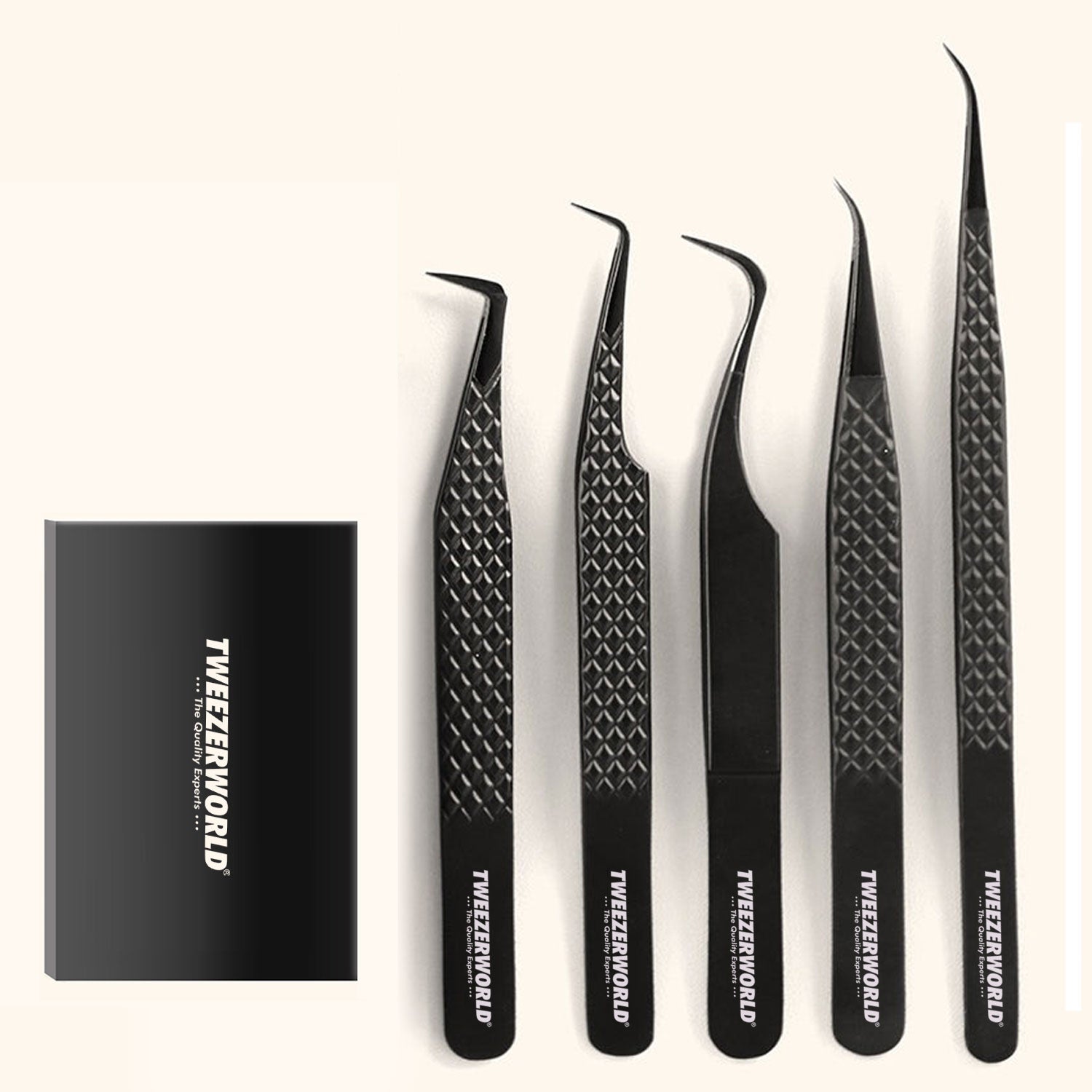
Watchmaker Precision Evaluation Set
Fine Straight | Fine Point | Curved | Titanium | Finish-Protecting/Non-Marring Candidate
Configure five candidate tools for watch-service and jewellery-workshop trials. The first three identify geometries; Titanium identifies a material option whose tip geometry must be agreed; the finish-protecting candidate identifies a contact-material evaluation requirement. Confirm exact models, availability and supplied tool count by quotation.
Evaluate access, pickup, retention, closing force and controlled release on representative parts. Define permitted contact zones before handling delicate springs, pivots, jewels, coated components or polished surfaces. Finish protection requires a marking test on the intended surface; no universal scratch-free claim applies.
Anti-magnetic performance requires material identification and magnetic-response evidence for the exact model and configuration. Titanium is not a substitute for that record. Record measured length, weight, tip/contact width, thickness, closing force, material identity, test method and sample revision. Unmeasured fields remain pending.
Request the Watchmaker Precision Evaluation Set · Distributor sample approval
Papular Products Gallery