
Lash Academy Tweezer Kits Australia | Private Label Guide
Lash Academy Tweezer Kits Australia | Private Label Guide
For an Australian lash academy, a branded tweezer kit can be much more than a collection of tools. It can support consistent training, give students a professional first impression and keep the academy’s name visible long after the course has finished. For an emerging beauty brand, the same kit can become a focused first product range without requiring dozens of different models.
The strongest kits are not built by choosing several attractive tweezers and placing them in a case. They are developed around the techniques being taught, the experience level of the user, the expected grip and tension, and the commercial position of the academy or brand.
This guide explains how Australian lash academies, trainers and growing beauty businesses can select suitable tweezer shapes, compare plain and fiber tips, structure different kit levels, develop samples and prepare a private-label range for launch.
Why branded lash academy kits are a practical opportunity
Students normally need reliable tools from the beginning of their training. If every student arrives with a different tweezer shape, tension and tip quality, it becomes more difficult for the trainer to identify whether a problem comes from technique or from the tool itself.
A planned academy kit helps create a more controlled learning environment. The trainer can demonstrate with the same models supplied to students, explain the purpose of each tweezer and establish clear care and storage instructions.
A branded kit can also help an academy or emerging business:
- create a consistent student experience across different course dates;
- add visible value to training packages;
- introduce students to the academy’s preferred tools and techniques;
- generate additional retail or replacement-tool sales;
- strengthen brand recognition through logos, colours and packaging; and
- test a private-label product concept before developing a larger collection.
The objective should be repeatable performance throughout a full appointment—not simply a tweezer that looks impressive in promotional photographs.
How to build a branded lash academy tweezer kit
1. Begin with the course, not the packaging
First define exactly what the student should be able to perform by the end of the course. A beginner classic course may only require an isolation tweezer and one dependable pickup tweezer. A combined classic and volume programme will usually need a broader tool selection. An advanced or trainer kit may include several pickup shapes so artists can compare hand positions and fan-making methods.
Write down the techniques included in the course:
- classic lash placement;
- basic isolation;
- inner-corner isolation;
- light volume;
- Russian volume;
- mega-volume or advanced fan making; and
- different pickup methods used by the trainer.
This list becomes the foundation for selecting the tweezer shapes. It also prevents unnecessary tools from increasing the cost of a beginner kit.
2. Choose a clear kit level
A useful private-label programme can be divided into three levels.
| Kit level | Suitable user | Suggested structure | Presentation |
|---|---|---|---|
| Academy Starter | Beginner students | Isolation plus one 45°, boot or classic pickup tweezer | Protective sleeves or a simple branded case |
| Professional | Qualified artists and advanced students | Isolation, 45°, 90° and boot options | Custom case, care card and coordinated finish |
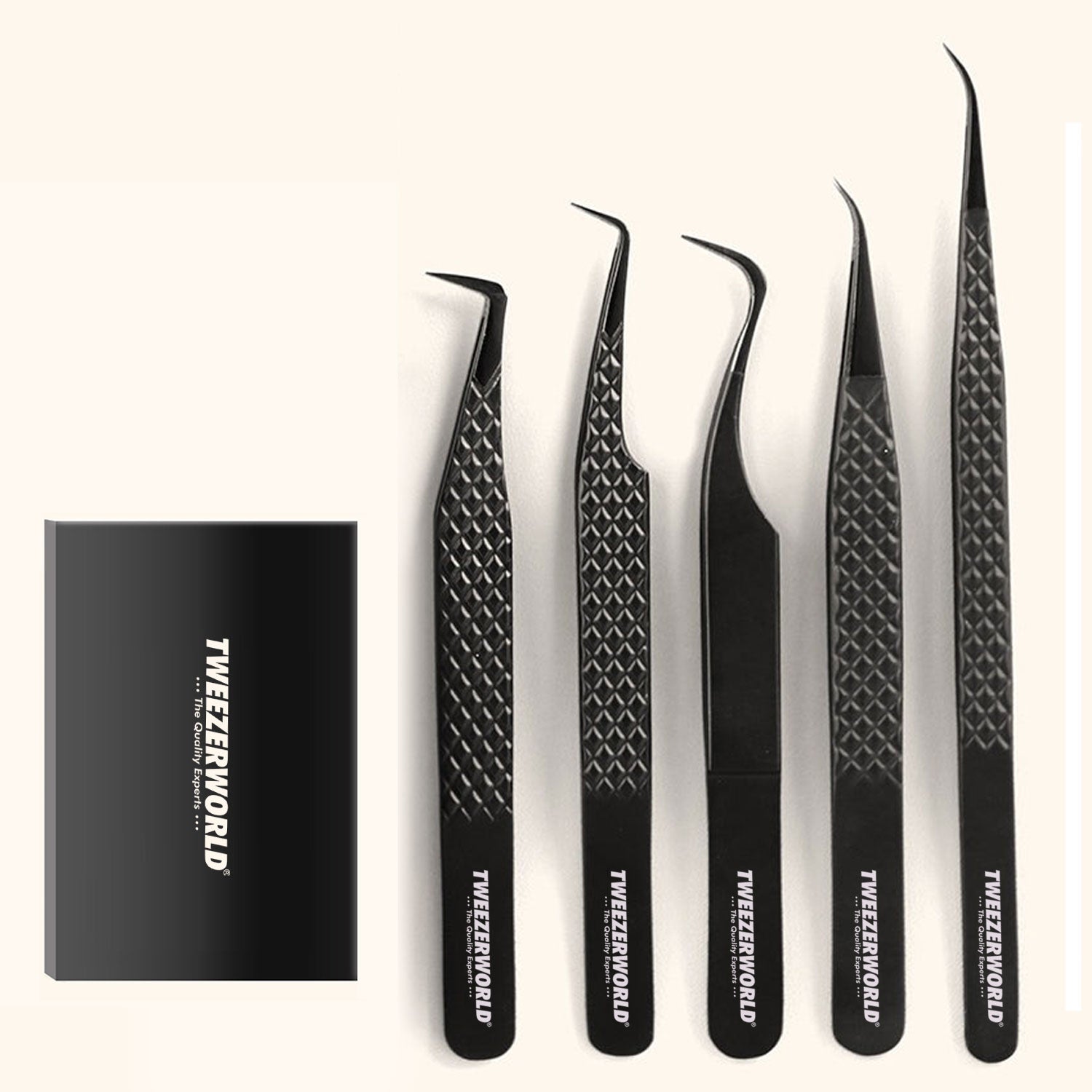
| Trainer or Master | Educators and premium programmes | Multiple isolation and pickup shapes for demonstration | Premium case, custom insert and branded training materials |
An academy does not need to launch all three levels immediately. A well-tested starter kit is often a stronger first project than a large collection with overlapping tools.
3. Select the essential tweezer shapes
Each shape should have a defined role inside the kit.
Isolation tweezers
Straight, curved or long-slim isolation tweezers are used to separate natural lashes and maintain a clean working area. A beginner kit should normally include an isolation model with manageable tension and clear tip alignment. Advanced training may introduce a fine inner-corner or curved isolation style.
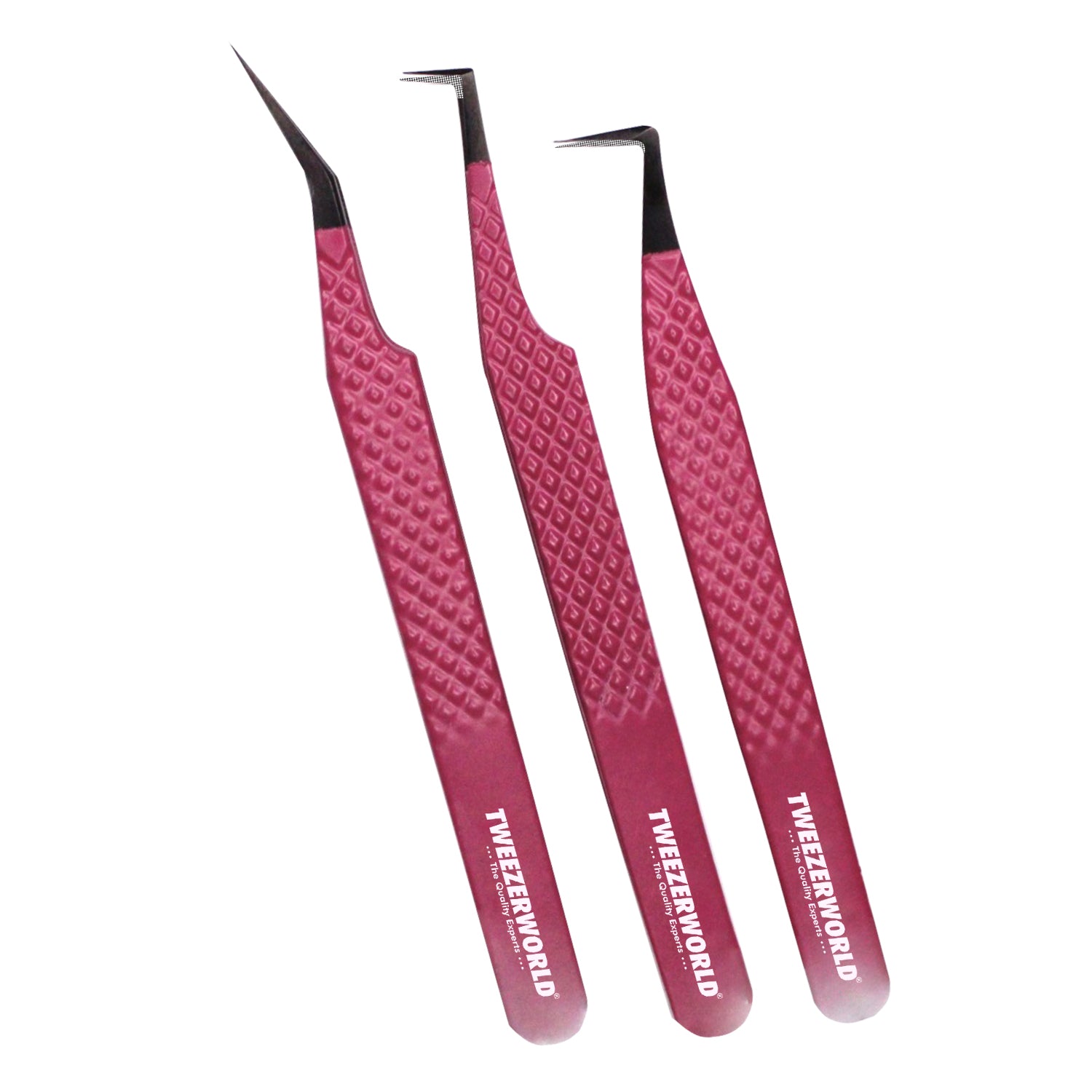
45-degree tweezers
A 45° tweezer offers an angled working position and can be useful for several pickup and volume techniques. It can be a versatile choice where an academy wants one adaptable pickup tool rather than multiple highly specialised shapes.
90-degree tweezers
A 90° model is frequently selected for volume work because its angled tip can support controlled pickup and fan creation. The exact suitability depends on the inner-tip surface, closing position, sweet spot and the trainer’s preferred method.
Boot tweezers
Boot tweezers have a wider gripping area and are often chosen for volume and mega-volume techniques. However, the width and angle should match the lash diameters and pickup method used in the course. A large boot is not automatically better for every student.
Volume tweezers
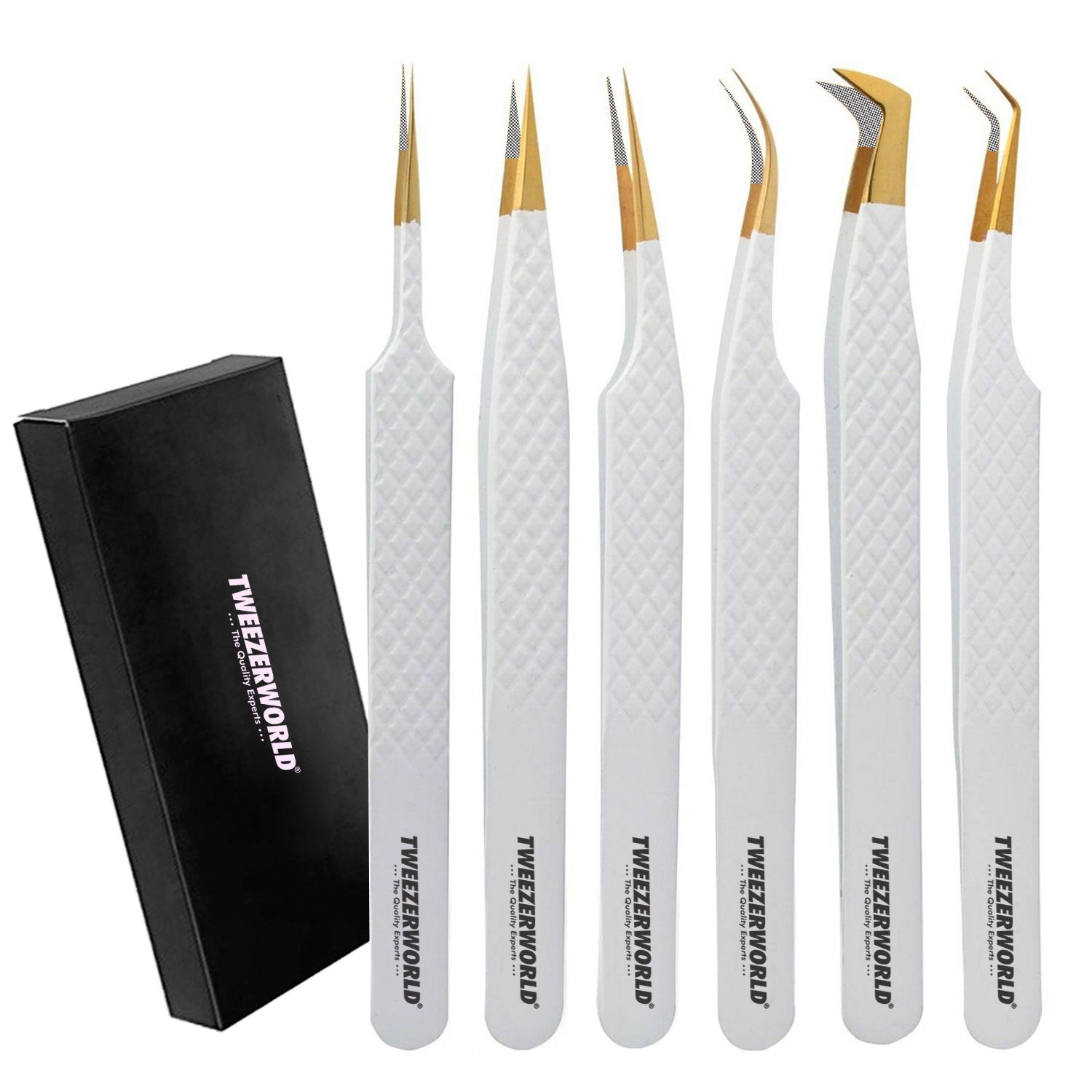
“Volume tweezer” is a broad category rather than one universal shape. J-curved, L-shaped, 45°, 90° and boot models can all serve different volume methods. Academies should test the actual model instead of choosing only by the product name.
Best tweezers for lash training students
The best student tweezer is not necessarily the most advanced or most expensive option. It is the model that allows the trainer to teach correct hand position and controlled pickup without excessive hand fatigue or inconsistent closing.
Evaluate these factors before approving a student kit.
Tip alignment
The tips should meet in the intended gripping area when normal working pressure is applied. Misalignment can make isolation or pickup inconsistent and may cause students to compensate with excessive pressure.
Closing tension
Tension should suit the course and intended user. Very firm tension can cause fatigue during long practice sessions, while extremely soft tension may provide insufficient feedback for some beginners. There is no single correct tension for every artist, so trainer testing is important.
Sweet spot and pickup area
The trainer should know where the tweezer grips most effectively and be able to demonstrate that location to students. The usable pickup area should be reasonably repeatable across the approved samples and production specification.
Handle comfort and balance
Students may practise for long periods. A balanced handle, suitable length and controlled spring action can reduce unnecessary strain. Decorative coatings should not interfere with the closing action or cover working surfaces in a way that affects performance.
Plain-tip or fiber-tip?
Plain-tip tweezers use a traditional smooth or conventionally finished inner gripping surface. They can be an appropriate choice for classic work, isolation and students learning controlled pickup.
Fiber-tip lash tweezers use a textured gripping surface intended to provide contact across more of the tip area. They may help with certain volume methods and can be useful when an academy wants students to experience a more textured pickup surface.
Neither technology removes the need for correct technique. Adhesive condition, lash diameter, pickup angle, grip pressure and cleanliness can all influence results. Some academies may prefer plain-tip isolation tweezers combined with fiber-tip volume tweezers.
| Training need | Possible starting option | What to test |
|---|---|---|
| Beginner isolation | Straight or gently curved isolation | Alignment, visibility and comfortable tension |
| Classic placement | Straight classic or slim curved pickup | Precision and control at the working tip |
| Introductory volume | 45° or compact boot | Sweet spot and compatibility with the taught method |
| Advanced volume | 90°, boot, L-shape or other tested model | Pickup area, lash diameter and fan size |
Private-label lash tweezers for Australian beauty brands
An emerging Australian beauty brand may not need a large catalogue at launch. A focused two-piece or four-piece collection can communicate a clearer purpose and make product testing, photography, packaging and inventory easier to manage.
Start with a defined customer
Decide whether the range is designed for academy students, newly qualified artists, volume specialists or working salon professionals. A student collection should emphasise clarity, comfort and value. A premium professional collection may place greater emphasis on specialised shapes, documented specifications and presentation.
Use branding where it adds value
Private-label options can include:
- laser marking on the tweezer handle;
- custom colours and available surface finishes;
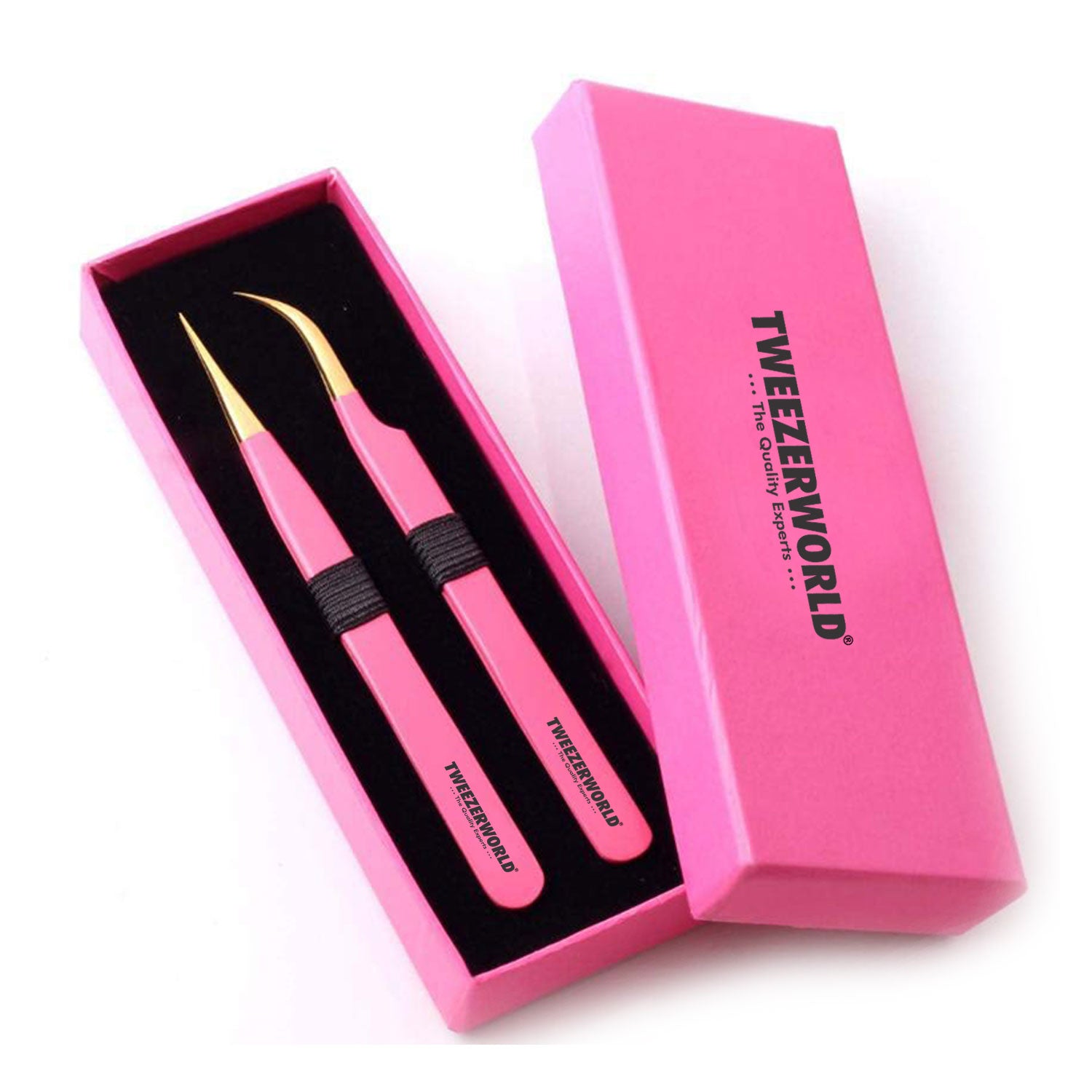
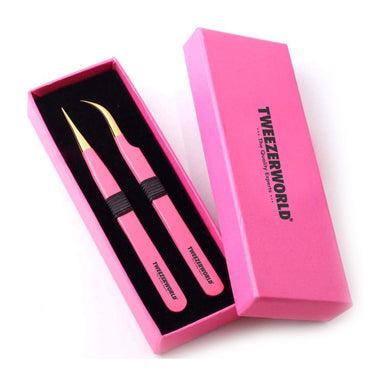
- protective sleeves, tip guards or coordinated cases;
- printed care and training cards;
- custom retail boxes and inserts; and
- barcode or product-reference areas where required.
Branding should remain readable without interfering with the grip, spring action or working tips. Keep the first design controlled: one strong brand colour, a clearly positioned logo and concise packaging information are often more effective than a crowded layout.
Prepare useful specifications
Before requesting samples, record the selected model, overall length, finish, logo position, tip technology, preferred tension classification, case arrangement and card content. If a sample is approved, keep it as the physical reference for production and reorders.
For private-label development, explore TWEEZER WORLD®’s OEM and private-label manufacturing service and review the OEM development process.
A practical sample-development process
- Submit the brief. Share the course type, target user, selected shapes, expected first quantity, preferred finish, logo and packaging requirements.
- Shortlist models. Compare suitable isolation, 45°, 90°, boot and volume options in plain-tip or fiber-tip configurations.
- Review a digital mock-up. Confirm logo placement, colour direction and packaging layout before customised samples are produced.
- Test physical samples. Ask trainers or experienced artists to evaluate alignment, tension, pickup, comfort and consistency during real working sessions.
- Record feedback. Avoid feedback such as “make it better.” Identify the exact model, gripping area, pressure, technique and adjustment required.
- Approve the specification. Confirm the final tool selection, colours, branding, case, cards, quantity and packing requirements before production.
Testing should involve more than opening and closing the tweezer by hand. Use the relevant lash diameters, strips, pickup techniques and working duration. If the kit will be supplied across several courses, obtain feedback from more than one trainer.
What should be included in a branded academy kit?
A complete kit may contain:
- one isolation tweezer;
- one or more pickup tweezers suitable for the course;
- protective tip guards or sleeves;
- a secure tweezer case with a planned tool arrangement;
- a care and cleaning card;
- a shape-identification or technique card;
- academy contact details or a reorder reference; and
- appropriate retail or course packaging.
Only include accessories that students can understand and use correctly. The care card should explain safe handling and storage, how to avoid damaging aligned tips and which cleaning method is appropriate for the specific tool and finish.
Ordering and shipping to Australia
Australian academies and brands should request a quotation based on the exact kit configuration and delivery destination. Shipping cost depends on the number of kits, packaging volume, weight and service selected.
Small initial order options may be available depending on the models, colour, logo method and custom packaging. Complex packaging normally requires different minimum quantities from standard tweezers, so it can be practical to begin with branded tools and a standard case before moving to a fully customised retail box.
Import duties, GST, customs processing and other local charges may apply. Buyers should confirm current Australian import and tax requirements with their broker, courier or relevant authority before ordering. A manufacturer or supplier should not present a freight quotation as confirmation that all Australian charges are included unless this is explicitly agreed in writing.
Common mistakes to avoid
- Choosing only by appearance: colour and packaging cannot compensate for unsuitable tension, shape or alignment.
- Adding too many models: overlapping shapes can confuse beginners and increase inventory.
- Skipping trainer testing: samples should be evaluated during the actual techniques taught.
- Using vague specifications: record the approved finish, tip technology, logo position, case and performance requirements.
- Overstating performance: avoid universal claims such as “works perfectly for every artist” or “never loses grip.”
- Ignoring replacement sales: give each tool a product name or reference so students can reorder the correct model.
Frequently asked questions
Can Australian lash academies order custom tweezer kits in small quantities?
Small starting quantities may be possible, but availability depends on the selected models, finish, logo process and packaging. Standardised tools and cases are usually easier to produce in smaller quantities than completely custom packaging.
Which tweezers should be included in a beginner lash course?
A common starting structure is one comfortable isolation tweezer and one pickup tweezer matched to the technique being taught. The final choice should be tested and approved by the academy’s trainer.
Can plain-tip and fiber-tip tweezers be mixed in one academy kit?
Yes. For example, an academy may select a plain-tip isolation tweezer and a fiber-tip 45°, 90° or boot tweezer for volume pickup. The combination should reflect the training programme rather than a fixed formula.
Can academy logos be added to the tweezers and case?
Laser logos, branded cases, printed cards and custom packaging can be developed subject to artwork, material and quantity requirements. Logo size and position should be confirmed through a mock-up and sample.
Should samples be approved before a bulk order?
Yes. Sample approval is especially important when the project includes custom colours, logos, tension preferences, fiber-tip patterns or specialised packaging.
Build Your Australian Lash Academy Kit
Tell TWEEZER WORLD® which techniques you teach, the tweezer shapes you prefer and how you want your academy branding presented. We can help you plan the kit and prepare the next step for a digital mock-up or samples.
Request an Academy Kit Mock-UpOr discuss your project on WhatsApp: +92 321 6194723
TWEEZER WORLD® manufactures professional tweezers and private-label tool collections in Sialkot, Pakistan, supporting academies, distributors and specialist brands internationally. Product configuration, starting quantities, development time and shipping are confirmed according to each project.
Papular Products Gallery