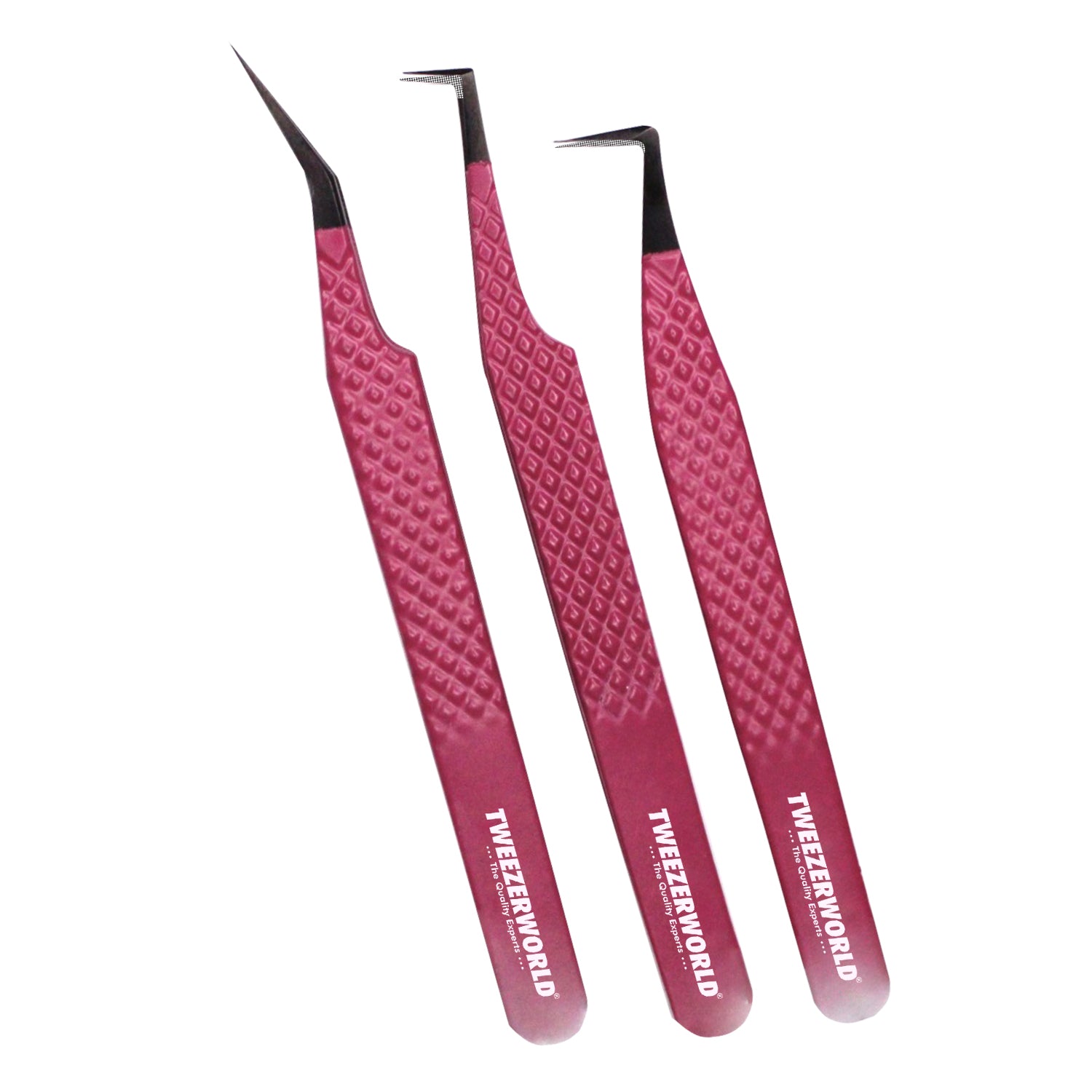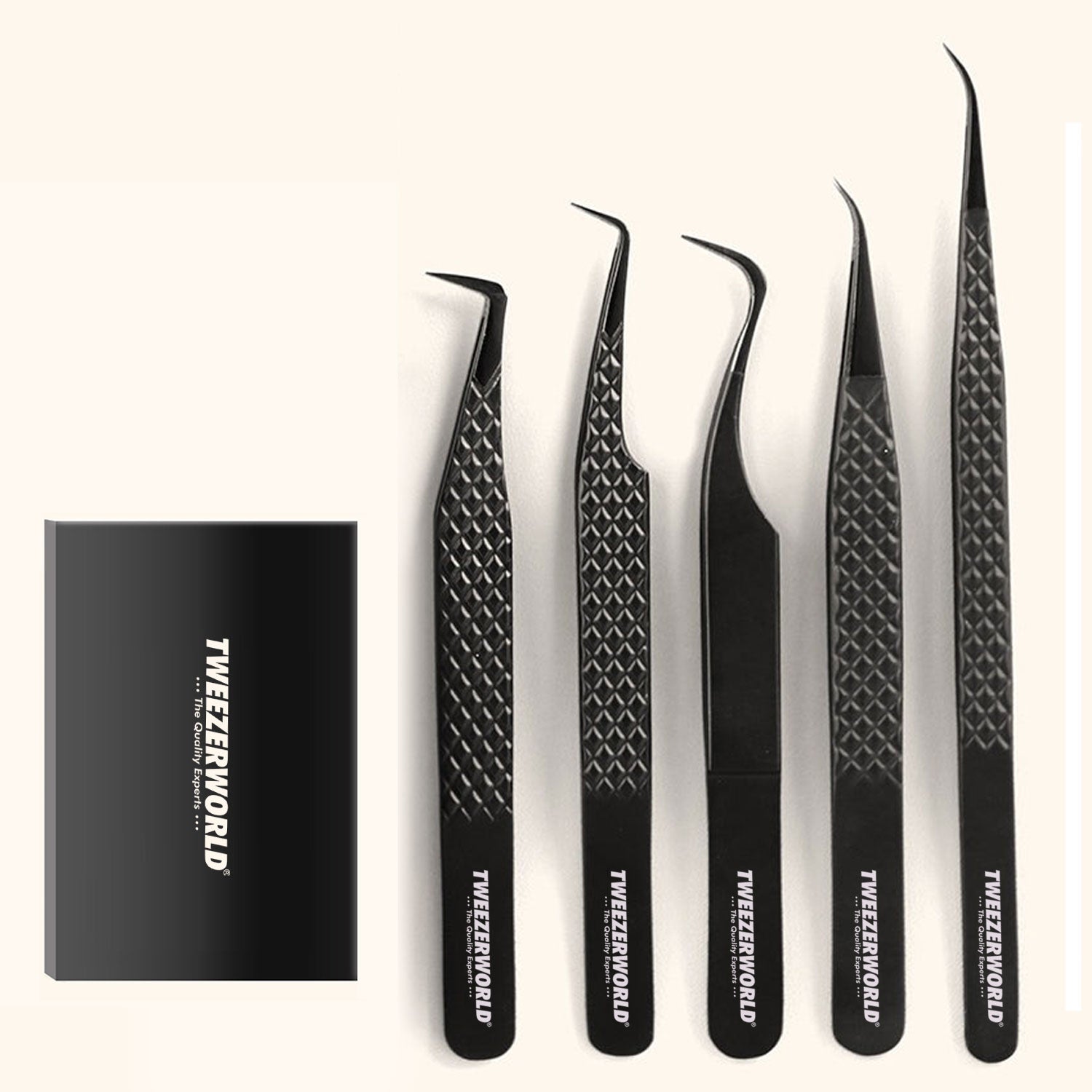

Precision Watch-Service Tweezers for Professional Workshops
Precision Watch-Service Tweezers for Professional Workshops: Selection Guide
A professional watch workshop rarely relies on one universal tweezer. The tool used to position a bridge should not automatically be the same tool used near a hairspring, polished hand, delicate dial surface or small spring. Each task places different demands on tip geometry, magnetic response, closing force, surface finish and access angle.
The best precision watch-service tweezers are therefore selected as a controlled workshop system. A well-planned set gives the technician a suitable option for routine movement work, ultra-fine component handling, restricted access and scratch-sensitive parts. It also makes training, replacement purchasing and tool maintenance easier to standardize.
This guide explains how professional workshops can select watch repair tweezers by service task, compare common materials and tip shapes, establish practical inspection criteria and build workshop sets for technicians, distributors or private-label programs.
For available tools, visit the TWEEZER WORLD® Watch Tweezers collection. Commercial buyers can also review our Watchmaking & Jewelry Tweezers manufacturing page.
Why Professional Watch Service Requires More Than One Tweezer
Watch movements contain components that differ greatly in size, rigidity, finish and sensitivity. A general-purpose pointed tweezer may handle screws or larger wheels effectively, but the same tip may be too heavy, too sharp or too magnetically responsive for another operation.
A workshop normally needs to control several risks:
- Component loss: excessive closing pressure can launch a spring, screw or jewel setting from the bench.
- Surface damage: sharp or rough edges can mark polished hands, bridges, plates or decorative finishes.
- Magnetic interaction: unsuitable tools can complicate work around magnetically sensitive movement components.
- Restricted visibility: a bulky handle or unsuitable tip angle can obstruct the technician’s view.
- Hand fatigue: unnecessarily firm tension can reduce fine control during long servicing sessions.
- False grip: misaligned tips may appear closed while contacting only at one edge or behind the intended gripping point.
The objective is not simply to buy the sharpest available tool. It is to match the tweezer’s working geometry and material behavior to the component being handled.
Select Watchmaker Tweezers by Service Task
| Watch-service task | Useful tweezer configuration | Main selection priority | What to inspect |
|---|---|---|---|
| General movement assembly | Fine straight tips with balanced tension | Versatility and predictable closure | Alignment, tip contact and comfortable spring force |
| Hairspring and very fine spring work | Ultra-fine, smooth, low-magnetic-response tips | Minimal disturbance and precise visibility | Tip symmetry, smooth edges and verified magnetic performance |
| Screws, wheels and routine small components | Fine but slightly stronger straight tips | Durability without excessive bulk | Point strength, even contact and controlled pickup |
| Work beneath bridges or around restricted areas | Curved or angled precision tips | Access and an unobstructed sight line | Consistent curve, tip meeting point and hand clearance |
| Hands, dials and polished components | Rounded, coated or replaceable soft-tip options | Reduced marking risk | Cleanliness, edge finish and replaceable-tip condition |
| Holding components during inspection or preparation | Reverse-action or cross-lock configuration | Stable holding without continuous hand pressure | Closing pressure, jaw contact and release control |
This table is a starting point rather than a universal prescription. Individual technicians may prefer different handle widths, tension levels and working lengths. Samples should be evaluated with the actual parts and procedures used in the workshop.
Best Tweezer Shapes for Professional Watch Repair
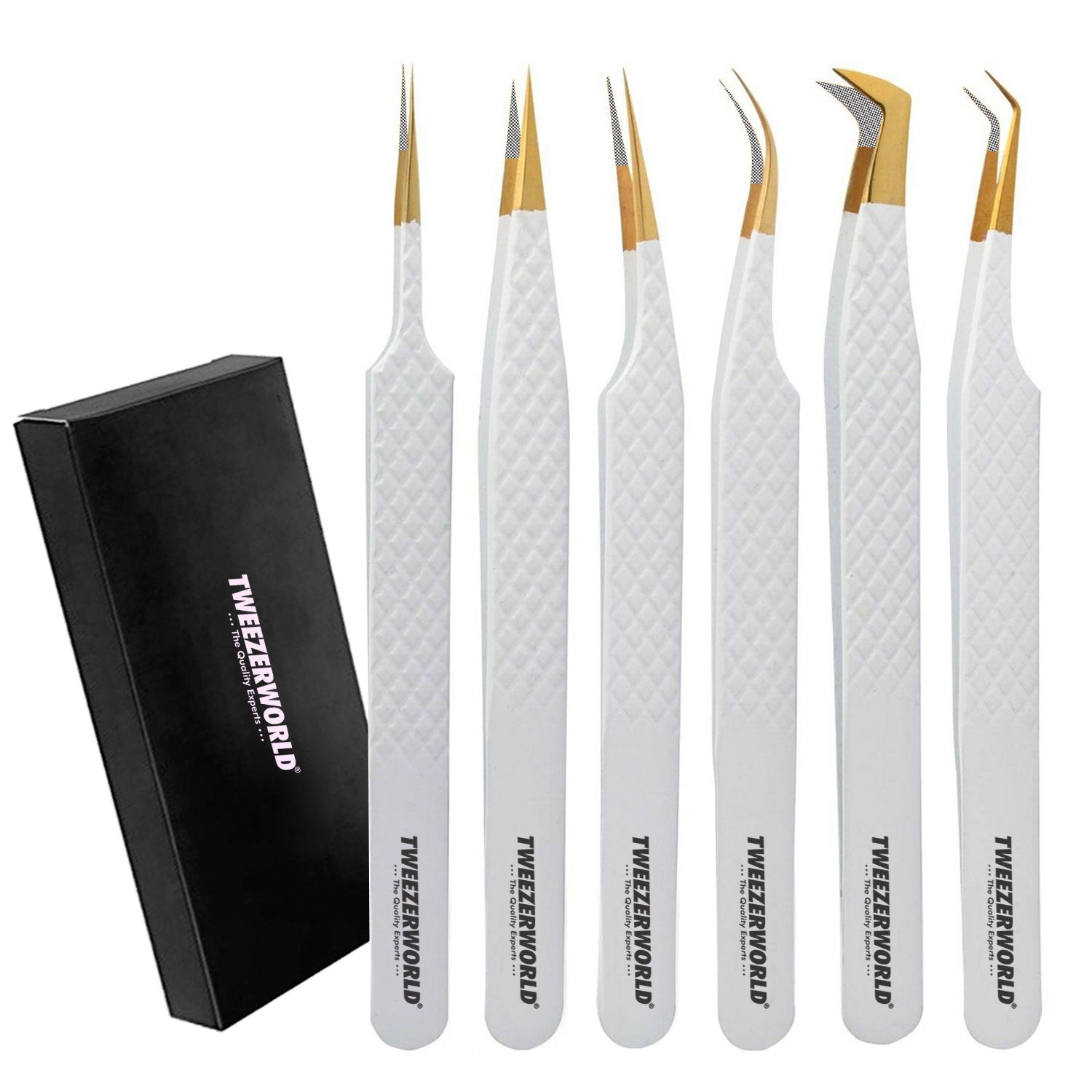
Fine Straight Tips
A fine straight tweezer is the foundation of most workshop sets. It offers a direct sight line and controlled access for screws, wheels, setting parts and general movement assembly. The tips should be narrow enough for small components but strong enough for the intended routine work.
One straight model does not have to perform every task. Many workshops benefit from one stronger general-assembly tweezer and a separate ultra-fine model reserved for the most delicate work.
Ultra-Fine Long Tips
Long, slender points improve access and visibility when working with very small movement parts. They can be appropriate for delicate springs and precision positioning, but the reduced tip mass also makes them easier to damage. They should be stored separately with a secure protector and never used for levering or gripping components beyond their intended capacity.
Curved and Angled Tips
Curved watchmaker tweezers change the hand position and can improve visibility around bridges, plates and recessed areas. The curve should support access without forcing the technician to rotate the wrist excessively. The two tips must still meet evenly at the intended gripping point.
Rounded, Flat or Soft-Contact Tips
Scratch-sensitive handling may require a less aggressive contact surface. Rounded or broader tips spread pressure across a larger area. Replaceable polymer, composite or other soft-contact tips can be useful for selected polished components, provided they are clean, undamaged and suitable for the workshop’s process.
No tip material can guarantee that a part will never be marked. Contamination, trapped particles, excessive force and poor technique can damage a surface even when a softer tip is used.
Reverse-Action Tweezers
Reverse-action tweezers close when hand pressure is released. They can hold a component during inspection, positioning or selected preparation tasks while reducing the need for continuous squeezing. Because the tool applies its own holding force, the workshop should evaluate whether that force is appropriate for the specific component.
Replaceable-Tip Tweezers
Replaceable-tip designs allow a workshop to renew worn contact surfaces without discarding the complete handle. They can also support different contact materials within one tool system. Buyers should confirm tip availability, fastening security, replacement consistency and whether spare tips can be ordered under a stable model reference.
Anti-Magnetic vs Stainless-Steel Watchmaker Tweezers
“Stainless steel” describes a broad material family; it does not automatically mean that a tweezer is non-magnetic or suitable for every watch-service operation. Magnetic behavior depends on the exact alloy, manufacturing process and condition of the finished tool.
For magnetically sensitive work, buyers should request a clearly identified material and a defined inspection method rather than relying only on a general “anti-magnetic” label. A professional specification may record the material grade, intended use, magnetic-response requirement, tip hardness, corrosion resistance and final acceptance method.
Standard stainless-steel tweezers can provide a strong balance of durability, corrosion resistance, tip retention and cost for general workshop use. Anti-magnetic or low-magnetic-response alloys are selected where interaction with sensitive components must be minimized. Titanium options may be considered where reduced weight, corrosion resistance and low magnetic response are priorities, but the precise alloy and tip behavior should still be evaluated.
For a focused comparison, read Anti-Magnetic vs Stainless-Steel Watchmaker Tweezers.
How Tip Tension Affects Watch-Service Control
Tweezer tension is often overlooked because it is less visible than tip shape. In practice, it directly affects hand pressure, pickup control and fatigue.
- Soft tension may support delicate work and long bench sessions, but the tool must still return consistently and maintain accurate contact.
- Medium tension is a practical general-workshop starting point for routine component handling.
- Firm tension may provide a stronger tactile response for selected tasks, but excessive resistance can reduce fine control and increase the risk of launching small parts.
Tension classifications should only be published after consistent testing. For procurement, a physical approved sample is often more useful than an undefined label such as “light” or “professional tension.”
Workshop Inspection Checklist
Before approving a watchmaker tweezer model, inspect more than the visual finish.
- Tip alignment: both tips should meet at the intended working point under normal pressure.
- Tip symmetry: the points or contact faces should have a consistent shape when viewed from the top and side.
- False grip: confirm that the tool grips at the desired area rather than behind the point.
- Edge condition: check for burrs, roughness or sharp edges that could mark a component.
- Closing force: confirm that the tension is appropriate and repeatable across samples.
- Return action: the arms should open smoothly without twisting or uneven movement.
- Surface finish: inspect polishing, coating boundaries, handle texture and cleanliness.
- Magnetic performance: where relevant, test against the buyer’s defined requirement and method.
- Task simulation: evaluate the tweezer with representative screws, wheels, springs and other workshop components.
A short inspection record can identify the model, batch, material, length, tip geometry, tension classification, test result and approved sample reference. This is especially valuable for distributor and private-label reorders.
Recommended Watch-Service Workshop Sets
| Set level | Suggested tools | Suitable buyer |
|---|---|---|
| Essential Workshop Set | General fine straight, stronger straight and curved-access tweezers | Routine service benches, trainees and compact tool kits |
| Professional Movement Set | General straight, ultra-fine low-magnetic-response, curved, stronger component-handling and soft-contact tweezers | Independent watchmakers and established repair workshops |
| Master Workshop Set | Multiple straight profiles, hairspring model, curved-access tool, reverse action, replaceable soft-tip option and selected specialty tools | Advanced workshops, training schools, distributors and premium private-label ranges |
The final configuration should reflect the services offered by the workshop. A movement-focused bench may prioritize ultra-fine and low-magnetic-response tools, while a service center handling bracelets, cases and general repairs may need stronger profiles in addition to movement tweezers.
Care and Storage in a Professional Workshop
Precision tips can be damaged by a single drop or by contact with other tools. Each tweezer should have a defined storage position in a protective case, tray or rack. Ultra-fine models should use suitable tip protection that does not force the points out of alignment.
- Remove oils, residue and particles using a cleaning method compatible with the material and finish.
- Do not scrape precision tips with files, blades or abrasive workshop materials.
- Keep scratch-sensitive tweezers separate from general bench tools.
- Inspect replaceable tips regularly and change them before wear affects grip or surface safety.
- Recheck alignment after a drop, impact or unexplained change in pickup performance.
- Use model references so technicians can return each tool to its correct storage position.
OEM Workshop Sets and Private-Label Packaging
Watch-tool distributors, service networks and training schools can build a more useful private-label range by defining each tweezer according to its workshop role. A professional program may include:
- selected straight, curved, ultra-fine, reverse-action and replaceable-tip models;
- stainless steel, low-magnetic-response alloy, titanium or suitable specialty materials;
- model names or laser references on each handle;
- documented overall length, tip geometry and tension classification;
- batch-level alignment and finish inspection;
- custom foam or molded case inserts;
- tool-selection, care and replacement cards;
- custom logo engraving and private-label packaging; and
- sample development before wholesale production.
Clear model identification is commercially important. If a technician loses or damages one tool, the exact replacement should be easy to order without purchasing the complete set again.
Learn more about OEM and private-label tweezer manufacturing and review the TWEEZER WORLD® OEM development process.
Supporting Watchmaker Tweezer Guides
- Best Tweezer Shapes for Professional Watch Repair
- Anti-Magnetic vs Stainless-Steel Watchmaker Tweezers
- How to Select Tweezers for Watch Movements and Small Components
Frequently Asked Questions
What is the best general-purpose tweezer for watch repair?
A fine straight tweezer with accurate alignment, smooth edges and balanced tension is a practical starting point for general movement work. A professional workshop should still keep separate tools for ultra-fine, curved-access and scratch-sensitive tasks.
Are all stainless-steel watchmaker tweezers anti-magnetic?
No. Stainless steel is a broad material category, and magnetic behavior depends on the alloy and manufacturing condition. If magnetic performance matters, request an identified material and a defined inspection requirement.
Which tweezers are suitable for hairspring work?
Hairspring work generally requires ultra-fine, smooth and accurately aligned tips with controlled tension and suitably low magnetic response. The final model should be approved by an experienced technician using the workshop’s actual procedures.
When should a workshop use curved tweezers?
Curved tweezers can improve access and visibility around bridges, plates and restricted areas. They are useful when a straight handle blocks the sight line or creates an uncomfortable hand angle.
Are replaceable tips useful for watch-service workshops?
Yes. Replaceable tips can support scratch-sensitive handling and allow worn contact surfaces to be renewed. Buyers should verify replacement availability, fastening security and consistency between spare tips.
Can watch-service tweezer sets be customized for distributors?
Yes. Qualifying OEM and private-label projects can combine selected shapes, materials, model markings, logo engraving, case inserts, care cards and retail packaging. Samples should be tested before bulk approval.
Build a Workshop Set Around Your Service Tasks
Tell TWEEZER WORLD® which watch-service operations your technicians perform, which materials and tip profiles you require, and whether the set is intended for workshop use, distribution, training or private-label retail.
TWEEZER WORLD® manufactures precision tweezers and custom tool sets in Sialkot, Pakistan, supporting professional workshops, distributors, training providers and specialist brands internationally. Product configuration, material, starting quantity, sampling, production time and documentation are confirmed according to each project.
Watchmaker Precision Evaluation Set
Fine Straight | Fine Point | Curved | Titanium | Finish-Protecting/Non-Marring Candidate
Configure five candidate tools for watch-service and jewellery-workshop trials. The first three identify geometries; Titanium identifies a material option whose tip geometry must be agreed; the finish-protecting candidate identifies a contact-material evaluation requirement. Confirm exact models, availability and supplied tool count by quotation.
Evaluate access, pickup, retention, closing force and controlled release on representative parts. Define permitted contact zones before handling delicate springs, pivots, jewels, coated components or polished surfaces. Finish protection requires a marking test on the intended surface; no universal scratch-free claim applies.
Anti-magnetic performance requires material identification and magnetic-response evidence for the exact model and configuration. Titanium is not a substitute for that record. Record measured length, weight, tip/contact width, thickness, closing force, material identity, test method and sample revision. Unmeasured fields remain pending.
Request the Watchmaker Precision Evaluation Set · Distributor sample approval
Papular Products Gallery