
Choosing Watchmaker Tweezers: Materials, Shapes and Uses
Choosing Watchmaker Tweezers: A Guide to Shapes, Materials and Uses
Watchmaker tweezers are essential tools for handling screws, wheels, jewels, hairsprings, hands, batteries and other miniature watch components. However, one pair of tweezers is rarely suitable for every repair or assembly operation.
An extra-fine tweezer designed for hairsprings may bend when used on a bridge. A strong steel tweezer may securely hold a movement component but mark a polished watch hand. Metal tips may also be inappropriate for certain quartz battery operations.
Choosing the best watchmaker tweezers requires comparing:
- Tip shape and size
- Material
- Magnetic properties
- Closing tension
- Tip alignment
- Surface finish
- Component size
- Intended operation
This guide helps watchmakers, repair technicians, horology students and precision-tool buyers select the correct models.
Quick Watchmaker Tweezer Selection Guide
| Watchmaking task | Recommended style | Important features |
|---|---|---|
| General movement work | No. 2 or No. 3 | Fine straight tips and medium tension |
| Screws, wheels and jewels | No. 3 or No. 5 | Fine aligned points and polished contact |
| Hairspring work | No. 4 or No. 5 | Extra-fine, soft-tension, anti-magnetic tips |
| Watch-hand handling | Flat, round or soft tip | Smooth, non-marking contact surfaces |
| Restricted areas | No. 7 curved | Angled access and improved visibility |
| Bridges and larger parts | No. 1, AA or strong flat tip | Wider contact and stronger arms |
| Quartz batteries | Insulated or nonconductive | Reduced risk of bridging contacts |
| Polished movement parts | Brass, bronze or polymer tip | Softer contact surface |
| Continuous holding | Reverse-action tweezer | Controlled default clamping force |
| Case and bracelet work | Strong flat or blunt tip | Durable profile and firm control |
Model numbers are useful references, but dimensions can vary among manufacturers. Always compare the actual tip shape, width, thickness and tension.
Why Watchmakers Need Different Tweezers
A watch movement contains parts with very different sizes, finishes and mechanical strengths.
For example:
- Hairsprings require extremely light handling.
- Jewels require fine, accurately aligned points.
- Bridges need a wider and more stable gripping area.
- Polished hands need smooth contact surfaces.
- Batteries may require electrically insulated tips.
- Hard-to-reach parts benefit from curved tweezers.
Using the wrong tweezer can bend the tips, mark a component or cause a small part to jump from the tool.
A professional watchmaker’s kit should include general-purpose, extra-fine, curved and specialised models.
Explore TWEEZER WORLD® Watchmaker Tweezers.
Understanding Watchmaker Tweezer Numbers
Watchmaker tweezers are commonly identified by numbers such as No. 1, 2, 3, 4, 5 and 7. These numbers usually refer to recognised tip profiles, but they do not guarantee identical dimensions across every brand.
No. 1 Watchmaker Tweezer
No. 1 tweezers generally have strong arms and relatively wide tips.
Best for:
- Bridges
- Larger movement parts
- Stronger springs
- General assembly
- Components requiring more gripping surface
They are normally too wide and strong for hairspring work.
No. 2 Watchmaker Tweezer
No. 2 tweezers commonly combine a stronger body with fine, flat working tips.
Best for:
- Movement bridges
- Medium-sized screws
- Wheels
- General disassembly
- Everyday repair work
A No. 2 can provide greater stability than an extra-fine model without becoming excessively bulky.
No. 3 Watchmaker Tweezer
The No. 3 is one of the most useful general-purpose watchmaker tweezers.
Best for:
- Small screws
- Wheels and pinions
- Jewels
- Movement components
- Precision placement
- Inspection work
A professional No. 3 should provide fine points, controlled tension and stable tip closure.
No. 4 Watchmaker Tweezer
No. 4 tweezers generally have long, fine tips designed for delicate operations.
Best for:
- Hairsprings
- Fine springs
- Extended-reach work
- Delicate movement components
Horotec currently identifies its No. 4 long fine-tip model as suitable for hairspring handling and offers it in several materials. (Horotec No. 4)
No. 5 Watchmaker Tweezer
No. 5 tweezers are usually short and extra-fine.
Best for:
- Hairsprings
- Escapement components
- Fine jewels
- Very small screws
- Microscope work
Because the points are delicate, No. 5 tweezers should not be used to pull or hold large parts.
No. 7 Watchmaker Tweezer
No. 7 tweezers normally feature curved or angled tips.
Best for:
- Side-angle component pickup
- Restricted areas
- Parts positioned behind bridges
- Work under magnification
- Operations where the hand obstructs visibility
Curved tips must be checked carefully for side-to-side alignment.
Best Tweezers for General Watch Repair
For everyday movement work, begin with a No. 2 or No. 3 fine straight tweezer.
Look for:
- Fine but durable points
- Accurate tip alignment
- Medium or soft-to-medium tension
- Smooth inner gripping surfaces
- Stable arms without lateral twisting
- Comfortable overall length
- Consistent reopening
The sharpest tip is not always the best. Points that are too thin may bend easily or mark movement components.
Best Tweezers for Hairsprings
Hairsprings require light pressure, extremely fine alignment and low magnetic interaction.
Recommended options include:
- No. 4 long fine-tip
- No. 5 short extra-fine
- Special hairspring tweezers
- Anti-magnetic precision tweezers
Important characteristics include:
- Soft closing tension
- Extra-fine matching points
- Smooth polished contact
- Low magnetic response
- No internal burrs
- Lightweight construction
- Stable reopening
The tool should hold the hairspring with minimal pressure. Strong, damaged or serrated tips can deform the spring.
Horotec lists its No. 5 short extra-fine model for precise hairspring work. (Horotec No. 5)
Best Tweezers for Watch Hands
Watch hands may have polished, painted, coated or heat-blued surfaces. Rough or sharp points can leave visible marks.
Suitable options include:
- Fine round-tip tweezers
- Flat polished tips
- Brass or bronze tweezers
- Polymer-tip tweezers
- Dedicated hand-straightening models
The contact surfaces should be:
- Smooth
- Polished
- Burr-free
- Clean
- Wide enough to distribute pressure
Horotec offers fine round-tip and flat-tip tools specifically for watch-hand adjustment. (Fine Round Tips, Flat Tips)
Best Tweezers for Screws, Wheels and Jewels
A No. 3 or No. 5 model can handle small screws, wheels, pinions and jewels, depending on component size.
Check for:
- Matching tip length
- Parallel closing
- Fine internal surfaces
- Controlled spring tension
- No lateral movement
- Clean release
- Good visibility under magnification
Small parts may jump from tweezers when too much pressure is applied or when the tips are misaligned, contaminated or excessively firm.
The best precision tweezer provides controlled contact—not maximum squeezing force.
Best Tweezers for Quartz Batteries
Metal tweezers can create a conductive path if they bridge battery terminals or nearby movement contacts.
For battery work, use the tool specified by the watch manufacturer’s service procedure. Appropriate choices may include:
- Insulated tweezers
- Nonconductive polymer tips
- Approved plastic tweezers
- Dedicated battery-handling tools
Avoid simultaneously contacting both battery terminals with a conductive metal tool.
Battery tweezers should have smooth, blunt surfaces that hold the battery without puncturing, scratching or allowing it to slip.
Best Tweezers for Restricted Areas
A curved No. 7 or fine angled tweezer can improve access around:
- Movement bridges
- Recessed screws
- Calendar components
- Springs
- Electronic modules
- Inspection points
The curved profile helps keep the watchmaker’s fingers out of the field of view. This can be particularly useful under a loupe or microscope.
Best Tweezers for Cases and Bracelets
Case and bracelet work normally requires stronger tools than movement assembly.
Recommended choices include:
- Strong flat-tip tweezers
- Blunt stainless-steel tweezers
- Brass tweezers
- Polymer-tip tweezers
- Reverse-action holding tweezers
Suitable tasks include:
- Gasket positioning
- Spring-bar handling
- Bracelet screws
- Larger case components
- Decorative parts
Do not use extra-fine hairspring tweezers for these operations. Larger parts can bend or damage precision points.
Carbon Steel vs Stainless Steel Tweezers
Carbon steel
Carbon-steel tweezers are traditionally valued for hard, crisp working points.
Advantages may include:
- High tip hardness
- Fine point formation
- Good tactile feedback
- Ability to be refinished by an experienced technician
- Suitability for detailed mechanical work
Considerations include:
- Greater corrosion risk
- More careful storage requirements
- Commonly stronger magnetic behaviour
- Regular maintenance
Carbon-steel tools should be cleaned, dried and protected from humidity.
Stainless steel
Stainless steel is a practical everyday option because of its corrosion resistance and durability.
Advantages may include:
- Easier maintenance
- Corrosion resistance
- Long service life
- Availability in many tip shapes
- Suitability for general bench work
However, stainless does not automatically mean anti-magnetic. Magnetic response varies with the grade and finished manufacturing process.
Explore TWEEZER WORLD® Precision Tweezers.
Anti-Magnetic Watchmaker Tweezers
Magnetised tweezers can attract small screws, springs and other ferrous movement components when the watchmaker is trying to release them.
Anti-magnetic tweezers are particularly useful for:
- Hairsprings
- Balance assemblies
- Escapement work
- Fine screws
- Movement adjustment
- Precision inspection
Available low-magnetic materials may include:
- Specialised austenitic stainless steel
- Nickel-based alloys
- Brass
- Bronze
- Titanium
“Anti-magnetic” should be treated as a measurable specification rather than a general marketing term.
Buyers should request:
- Exact material
- Test method
- Acceptance limit
- Finished-tool test result
- Batch consistency
TWEEZER WORLD® offers an 8-Piece Anti-Magnetic Watchmaker Tweezer Set. Buyers should confirm its exact specifications for their intended professional use.
Brass and Bronze Tweezers
Brass and bronze are softer than many hardened steels and may reduce marking risk on selected components.
Best suited for:
- Polished parts
- Movement bridges
- Larger wheels
- Watch hands
- Decorative components
- Low-magnetic handling
Advantages include:
- Softer component contact
- Low magnetic interaction
- Easy reshaping
- Visible wear
Limitations include:
- Faster tip wear
- Easier bending
- Lower suitability for extra-fine points
- More frequent inspection
Brass is not completely non-marring. Dirty, damaged or burred brass tips can still scratch a polished component.
Titanium Watchmaker Tweezers
Titanium tweezers may be selected for their:
- Low weight
- Corrosion resistance
- Low magnetic response
- Comfortable handling
- Professional durability
The supplier should document the titanium grade, tip hardness, surface finish, dimensions and closing tension.
Titanium models usually cost more than standard stainless-steel tweezers, so they should be selected where their material properties provide a real advantage.
Plastic, Carbon-Fibre and Replaceable Tips
Replaceable soft-tip tweezers can reduce direct metal contact with polished or easily marked components.
Tip materials may include:
- Engineering plastic
- Carbon-fibre composite
- PTFE
- PEEK
- Conductive polymer
- Vulcanised fibre
Potential benefits include:
- Softer component contact
- Replaceable working surfaces
- Lower marking risk
- Electrical insulation or controlled conductivity
- Chemical resistance
Buyers should verify temperature limits, wear, particle generation, chemical compatibility and replacement availability.
Ceramic Watchmaker Tweezers
Ceramic tips provide:
- Electrical insulation
- Heat resistance
- Low magnetic interaction
- Chemical resistance
- Hard working surfaces
They may suit selected quartz, soldering and high-temperature operations.
However, ceramic tips are hard and brittle. They can chip if dropped or twisted and may mark softer components. They should not automatically replace metal, brass or polymer watchmaker tweezers.
Choosing the Correct Tweezer Tension
Soft tension
Best for:
- Hairsprings
- Jewels
- Fine screws
- Delicate movement parts
- Long periods under magnification
Medium tension
Best for:
- General movement repair
- No. 2 and No. 3 models
- Wheels
- Bridges
- Everyday assembly
Firm tension
Best for:
- Larger components
- Case work
- Strong flat tips
- Watchmakers who prefer greater resistance
Firm tension does not guarantee better grip. Tip alignment and surface contact are more important than closing resistance alone.
How to Check Watchmaker Tweezer Quality
Tip alignment
Close the tweezer slowly under magnification. The points should meet evenly without crossing.
Tip symmetry
Both tips should have matching width, taper and length.
Inner surface
The contact area should be smooth, clean and free of burrs.
Lateral stability
The arms should not twist sideways under normal closing pressure.
Closing tension
Resistance should feel smooth and consistent.
Release control
The part should release deliberately rather than sticking or jumping.
Surface finish
Check for corrosion, coating damage, rough grinding or contamination.
Magnetic behaviour
Use an agreed test method when anti-magnetic performance is required.
Common Selection Mistakes
- Buying only the sharpest available tip
- Using one tweezer for every operation
- Assuming stainless steel is anti-magnetic
- Selecting firm tension for “stronger” grip
- Handling batteries with an unsuitable metal tool
- Ignoring the inner-tip finish
- Choosing only by model number
- Using hairspring tweezers on larger components
- Storing fine tips without protection
Recommended Beginner Watchmaker Set
A practical four-piece starter set contains:
- No. 2 strong fine tweezer for general movement parts
- No. 3 precision tweezer for screws, wheels and daily work
- No. 5 extra-fine anti-magnetic tweezer for hairsprings and jewels
- No. 7 curved tweezer for restricted access
Add an approved insulated battery tweezer when servicing quartz movements.
Recommended Professional Set
A professional watchmaker set may include:
- No. 1 strong tweezer
- No. 2 fine flat tweezer
- No. 3 general precision tweezer
- No. 4 long hairspring tweezer
- No. 5 extra-fine anti-magnetic tweezer
- No. 7 curved tweezer
- Flat hand-straightening tweezer
- Brass or bronze tweezer
- Insulated battery tweezer
- Reverse-action holding tweezer
- Replaceable polymer-tip tweezer
Each tool should be clearly marked and stored separately.
Cleaning and Storage
After use:
- Remove oil, dust and fingerprints using a compatible lint-free material.
- Use a cleaning method suitable for the tool’s material.
- Dry it completely.
- Check alignment under magnification.
- Inspect for bending, burrs and corrosion.
- Protect carbon-steel tools from humidity.
- Store tweezers separately in a case.
- Use tip guards where appropriate.
Do not reshape extra-fine points without the correct equipment and experience. Uneven grinding can change alignment and gripping pressure.
OEM Watchmaker Tweezers
TWEEZER WORLD® can support OEM and private-label watchmaker tools for:
- Watch-tool brands
- Horology schools
- Repair-equipment suppliers
- Watch-service centres
- Jewellery-tool distributors
- E-commerce businesses
- Precision-tool wholesalers
Customisation options may include:
Tip profiles
No. 1, 2, 3, 4, 5, 7, straight, curved, flat, rounded, reverse-action or custom.
Materials
Carbon steel, stainless steel, selected anti-magnetic material, brass, bronze, titanium or replaceable-tip construction.
Technical specifications
- Tip width and thickness
- Overall length
- Tweezer weight
- Closing-force range
- Alignment tolerance
- Surface finish
- Hardness
- Magnetic-response requirement
- Corrosion resistance
Branding and packaging
- Laser logo
- Model-number marking
- Batch identification
- Protective sleeve
- Tip guard
- Leather pouch
- Wooden case
- Custom retail box
- Quality-control card
Learn more about OEM and Private-Label Manufacturing and the TWEEZER WORLD® Manufacturing Process.
Recommended Product-Page Specifications
Add these fields to every watchmaker tweezer product page:
- Model: No. 1 / 2 / 3 / 4 / 5 / 7
- Recommended Use: General / Hairspring / Hands / Battery / Case
- Tip Shape: Straight / Curved / Flat / Rounded
- Tip Width: Measured value
- Tip Thickness: Measured value
- Overall Length: Measured value
- Weight: Measured value
- Material: Exact grade
- Magnetic Property: Tested classification
- Tension Level: Soft / Medium / Firm
- Inner-Tip Finish: Polished / Matte / Textured
- Replaceable Tips: Yes / No
- Packaging: Sleeve / Pouch / Wooden Box
- OEM Available: Yes / No
Only publish anti-magnetic, hardness and dimensional claims after consistent testing.
Frequently Asked Questions
Which tweezer is best for general watch repair?
A No. 2 or No. 3 fine straight tweezer is a versatile option for movement screws, wheels, bridges and general assembly.
Which tweezer is best for hairsprings?
Choose a No. 4 long fine-tip or No. 5 extra-fine anti-magnetic tweezer with soft closing tension.
Are stainless-steel tweezers anti-magnetic?
Not automatically. Magnetic behaviour depends on the stainless-steel grade and finished manufacturing process.
Are brass tweezers better than steel?
Brass is softer and may reduce marking on selected components, while steel is usually more durable and better suited to extra-fine points.
Can metal tweezers be used for batteries?
Follow the watch manufacturer’s service procedure. Use insulated or nonconductive tweezers where a metal tool could bridge electrical contacts.
Why do parts jump from watchmaker tweezers?
Common causes include excessive pressure, firm tension, contaminated tips, poor alignment and unstable component positioning.
How many tweezers does a beginner need?
A four-piece set containing strong, general fine, extra-fine and curved tweezers provides a useful starting point.
Final Recommendation
Choose each watchmaker tweezer according to its intended task:
- No. 2 or No. 3: general movement work
- No. 4 or No. 5: hairsprings and delicate components
- No. 7: difficult angles and restricted areas
- Flat or rounded tips: watch hands
- Strong flat tips: bridges, cases and larger parts
- Insulated tips: battery operations where bridging is possible
- Brass, polymer or soft tips: easily marked components
The best watchmaker tweezer is not simply the sharpest. It combines appropriate tip geometry, controlled tension, accurate alignment, suitable material and a surface finish matched to the component.
Watchmaker Precision Evaluation Set
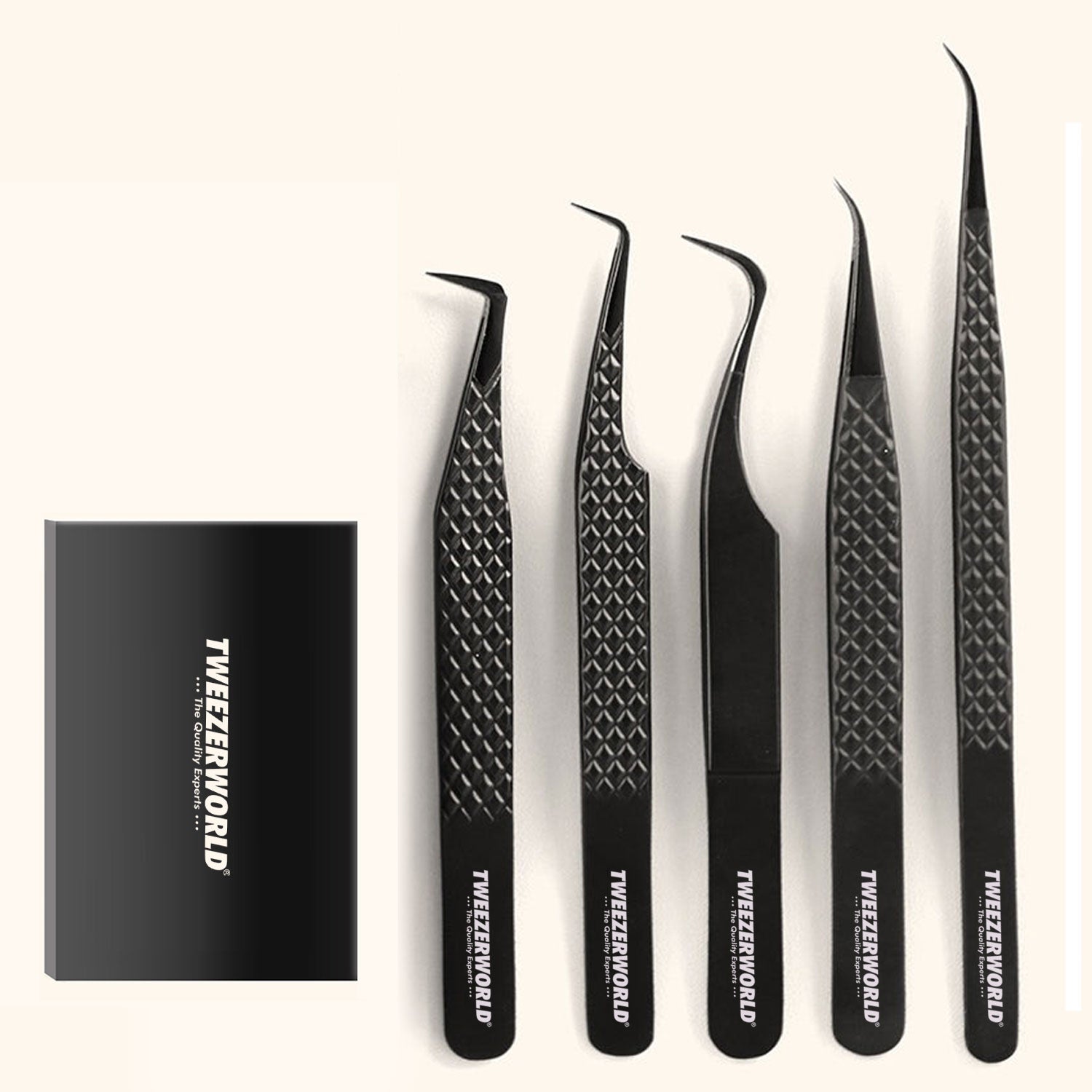
Fine Straight | Fine Point | Curved | Titanium | Finish-Protecting/Non-Marring Candidate
Configure five candidate tools for watch-service and jewellery-workshop trials. The first three identify geometries; Titanium identifies a material option whose tip geometry must be agreed; the finish-protecting candidate identifies a contact-material evaluation requirement. Confirm exact models, availability and supplied tool count by quotation.
Evaluate access, pickup, retention, closing force and controlled release on representative parts. Define permitted contact zones before handling delicate springs, pivots, jewels, coated components or polished surfaces. Finish protection requires a marking test on the intended surface; no universal scratch-free claim applies.
Anti-magnetic performance requires material identification and magnetic-response evidence for the exact model and configuration. Titanium is not a substitute for that record. Record measured length, weight, tip/contact width, thickness, closing force, material identity, test method and sample revision. Unmeasured fields remain pending.
Request the Watchmaker Precision Evaluation Set · Distributor sample approval
Papular Products Gallery