
Professional Watch-Service Tweezer Materials Guide
Professional Watch-Service Tweezers: Stainless, Titanium and Non-Marring Tips
A professional watch workshop rarely needs one “best” tweezer. It needs a controlled selection of tools matched to movement parts, screws, springs, hands, dials, finished cases and other components that differ greatly in size, hardness, magnetic sensitivity and surface fragility.
Stainless-steel tweezers provide rigidity and durable fine points. Titanium tools reduce mass and may offer useful magnetic and corrosion characteristics. Non-marring polymer, composite or coated tips can lower the risk of cosmetic marking. Each material also introduces limitations, so the correct choice depends on the task—not the marketing label.
This guide helps professional workshops, watch-tool distributors and OEM buyers select and specify watch-service tweezers by material, tip geometry, tension, alignment, cleaning and actual contact risk.
Workshop note: “Anti-magnetic,” “non-marring” and “precision” should be treated as qualified performance descriptions, not absolute guarantees. Verify the finished tool with the components, procedures and acceptance limits used by the workshop.
Quick Comparison
| Tip or body material | Primary strength | Main limitation | Useful starting applications |
|---|---|---|---|
| Stainless steel | Rigid, durable and capable of very fine geometry | Can scratch soft finishes; magnetic response varies by grade and processing | Movement screws, robust gears, pins, springs and general bench work |
| Titanium alloy | Low mass with potentially favourable corrosion and magnetic characteristics | More flexible than some steels; alloy and finished-tool behaviour must be verified | Long sessions, small components and field-sensitive work after qualification |
| Engineering polymer | Softer contact for cosmetic surfaces | Wear, particles, chemical compatibility and deformation vary by formulation | Hands, dials, finished cases, crystals and coated parts where approved |
| Carbon-fibre or filled composite | Replaceable non-metallic contact and controlled electrical behaviour in some grades | Fibre exposure, wear debris and resistance vary by formulation | Sensitive finishes, larger components and controlled handling tasks |
| Soft coating over metal | Combines a rigid body with a less aggressive contact surface | Coating can chip, peel, swell or alter tip alignment | Defined cosmetic tasks with scheduled surface inspection |
Begin With the Watch-Service Task
Material selection becomes easier when the buyer first defines what the tool will touch.
| Service task | Recommended starting profile | Key risk |
|---|---|---|
| General movement assembly | Fine straight stainless steel or qualified titanium | Launching parts, excessive pressure and tip misalignment |
| Screws and pins | Rigid fine or medium straight tips | Slipping, point deformation and marking adjacent surfaces |
| Springs and delicate levers | Fine smooth tips with light, controlled tension | Bending, scratching or losing the component |
| Side access within a movement | Fine curved or angled tips | Poor sightline, lateral loading and accidental contact |
| Watch hands | Rounded or non-marring tips approved for the finish | Paint, plating or polished-surface damage |
| Dials and applied markers | Broad non-marring contact or designated handling tool | Surface marking, contamination and concentrated force |
| Cases, bezels and crystals | Blunt polymer or composite tips | Cosmetic scratching and inadequate grip |
| Parts holding | Reverse-action or broad tips with defined force | Excessive continuous grip and uncontrolled release |
The tool should contact only the approved handling zone. A tweezer suitable for the edge of a bridge may not be suitable for a polished dial, jewel, hairspring or coated hand.
Stainless-Steel Watch-Service Tweezers
Stainless steel remains a common choice for watch-service tweezers because it can provide a stiff body, fine point, consistent spring action and durable working edge. These characteristics support controlled manipulation of small screws, plates, gears, pins and robust movement parts.
Advantages
- Fine straight, curved and pointed profiles are practical to manufacture.
- Rigid tips can transmit small hand movements accurately.
- Surface finishes can be polished, satin or matte for different workshop preferences.
- Quality tips can be dressed, inspected and maintained using established workshop practices.
- Stainless steel is widely available for OEM and distributor ranges.
Limitations
- Bare metal can scratch polished, painted, plated or coated surfaces.
- Magnetic response varies by alloy, heat treatment, forming and cold work.
- Very fine hard points can bend or chip delicate components if excessive force is applied.
- High-polish surfaces may create glare under strong bench lighting.
“Stainless steel” is not a complete specification. The buyer should request the exact grade or permitted grade family, material condition, hardness where relevant, surface finish and batch traceability.
Titanium Watch-Service Tweezers
Titanium tweezers are often selected for low mass, corrosion performance and reduced magnetic interaction. Manufacturer material guidance commonly distinguishes titanium from harder stainless alloys by describing it as lighter and more flexible. Those differences can be beneficial or undesirable depending on the operator and component.
Advantages
- Lower tool mass can reduce the heavy feel of a long or broad tweezer.
- Selected alloys may provide useful magnetic behaviour for watch-service environments.
- Titanium offers good corrosion resistance in many workshop conditions.
- Different balance and spring feel may suit technicians who prefer a lighter response.
Limitations
- Greater flexibility can reduce feedback or rigidity for some fine operations.
- A sharp titanium point can still scratch a dial, hand or polished bridge.
- “Titanium” does not identify the exact alloy or material condition.
- Low magnetic response should be confirmed on the completed tool, including markings or attachments.
Titanium should not automatically replace stainless steel throughout a set. A workshop may prefer titanium for prolonged fine handling while retaining rigid stainless-steel models for controlled force or difficult access.
Non-Marring Watch-Service Tips
Non-marring tweezers use polymer, composite, coated or other less aggressive contact surfaces to reduce the chance of cosmetic marking. They are particularly valuable when handling finished hands, dials, cases, bezels, crystals or coated parts.
However, “non-marring” does not mean that damage is impossible. A trapped abrasive particle, sharp moulding line, worn composite fibre or excessive closing force can still mark the component.
Engineering-Polymer Tips
Polymer tips may be softer than metal and can distribute contact over a broader area. Their performance depends on the exact formulation. Hardness, surface texture, solvent resistance, heat resistance, wear and particle generation should be assessed.
Carbon-Fibre and Filled-Composite Tips
Composite tips can combine controlled stiffness with a non-metallic contact surface. Some formulations are intended to provide defined electrical behaviour, but that feature is not automatically relevant to watch service. Buyers should focus on contact quality, visible fibre exposure, wear debris, chemical compatibility and replacement consistency.
Coated Metal Tips
A coated metal tip retains a rigid underlying structure while placing a softer layer between the tool and part. The coating may change contact geometry and can degrade through cleaning, friction or age. It should be inspected for cracks, peeling, swelling and embedded debris.
“Non-Marring” Must Be Tested Against the Actual Finish
No single coupon represents every watch surface. The buyer should test the proposed tip on representative materials and finishes, such as:
- Polished and brushed stainless steel
- Gold-coloured or decorative coatings
- Painted or lacquered hands
- Printed or textured dial samples
- Acrylic, mineral or sapphire test pieces
- Plated bridges or decorative movement components
Define the closing force, contact angle, number of contacts, cleanliness condition, illumination and unacceptable mark. A result obtained with a clean tip at light force should not support an unlimited “will never scratch” claim.
Magnetic Response: Avoid Absolute Claims
Magnetism matters because small ferrous parts can cling to a tool, move unexpectedly or become difficult to release. Yet “anti-magnetic” is not the same as zero magnetic susceptibility.
For stainless steel, behaviour depends on grade and processing. For titanium, the exact alloy and finished construction still matter. Test the completed tweezer rather than relying only on a raw-material description.
A practical purchasing specification may define:
- Screening magnet or field conditions
- Distance and tool orientation
- Maximum permitted attraction or movement
- Residual magnetism before and after use
- Test frequency and lot sampling
If the workshop uses a demagnetizer, that process should be controlled separately. Demagnetization does not change an unsuitable alloy into a universally non-magnetic material.
Tip Geometry Is as Important as Material
| Tip shape | Potential workshop use | Primary control |
|---|---|---|
| Fine straight | General movement parts, screws and pins | Point symmetry, rigidity and controlled tension |
| Extra-fine straight | Very small parts and narrow access | Bending, sharpness and high contact pressure |
| Fine curved | Side access and improved sightline | Bend consistency, tip rotation and lateral alignment |
| Rounded or blunt | Hands, cases and larger components | Surface cleanliness and resistance to slipping |
| Flat or paddle | Broad contact with a part edge | Uniform flatness and excessive contact area |
| Reverse action | Temporary hands-free holding | Default grip force and controlled release |
| Replaceable non-marring | Finished or coated components | Tip retention, wear, particles and replacement availability |
Pattern names are not enough for OEM production. The technical drawing should identify tip length, width, thickness, radius, curve, contact zone and tolerances.
Alignment and Contact Pattern
The two tips should meet according to the intended contact pattern without crossing, twisting or sliding sideways. Extra-fine tips may require point contact; broad tips may require uniform face contact.
Specify:
- Inspection magnification and lighting
- Applied closing force
- Maximum tip gap
- Maximum lateral offset
- Permitted contact sequence
- Reference images or an approved golden sample
Do not promise “perfect alignment.” State measurable limits that the supplier and buyer can inspect consistently.
Spring Tension and Workshop Fatigue
The correct spring tension provides control without requiring unnecessary thumb pressure. Light tension can support prolonged precision work, while a firmer tool may be preferred for larger or resistant parts.
Measure closing force at a specified opening and handle location. Define a permissible range for each model, because one tension value will not suit every shape and task. Test return action and permanent deformation after repeated compression.
Balance also matters. Two tweezers with the same mass may feel different because the material and geometry distribute weight differently along the arms.
Surface Finish and Glare
Watchmakers often work under strong magnification and concentrated light. A highly reflective tweezer can create distracting glare, while a satin or matte finish may improve visual comfort. Finish selection must not compromise smoothness, cleanliness or corrosion behaviour.
Inspect for burrs, pits, sharp handle edges, polishing residue, uneven coating, discoloration and rough working faces. Decorative coatings should stop before the contact area when a bare precision tip is required.
Cleaning and Maintenance
Keep tweezers clean, protected and assigned to suitable tasks. Oils, polishing residue and small abrasive particles can transfer to the watch or defeat a non-marring contact surface.
A workshop care procedure should cover:
- Approved cleaning agents
- Lint-free wiping materials
- Inspection under magnification
- Tip dressing restrictions
- Demagnetization, where applicable
- Replaceable-tip installation and fastener checks
- Individual tip protection
- Retirement criteria
Metal points may sometimes be professionally dressed, but polymer, composite and coated tips should follow the manufacturer’s replacement instructions. Improvised sanding may expose fibres or create an aggressive edge.
Recommended Professional Watch-Service Set
A balanced workshop set may include:
- Fine straight stainless-steel tweezers for general movement assembly
- Extra-fine straight stainless-steel or titanium tweezers for small parts
- Fine curved titanium or stainless-steel tweezers for side access
- Medium blunt stainless-steel tweezers for robust components
- Rounded polymer-tip tweezers for hands and finished parts
- Flat composite-tip tweezers for cases, crystals and broader contact
- Reverse-action tweezers for approved temporary holding tasks
Separate delicate-finish tools from general metalwork tools. Clear model markings and dedicated case positions reduce misuse.
Procurement Specification Checklist
| Procurement field | Buyer’s requirement |
|---|---|
| Product name | Professional Watch-Service Tweezer Set |
| Models included | List each shape, material, quantity and unique reference |
| Intended task | Define permitted components and contact zones for every model |
| Body material | Exact stainless-steel or titanium grade and condition |
| Non-marring material | Exact polymer, composite or coating formulation |
| Tip geometry | Width, thickness, length, radius, angle and tolerance on drawing |
| Alignment | Numeric gap and offset limits under defined closing force |
| Spring tension | Model-specific force range at defined opening and location |
| Magnetic response | Complete-tool test method and acceptance limit, where required |
| Surface finish | Approved satin, matte or polished reference; burr- and residue-free |
| Non-marring test | Approved finish coupons, contact force, cycles and rejection criteria |
| Cleaning | Compatible agents, method and post-cleaning inspection |
| Marking | Brand, model and material identification where specified |
| Packaging | Individual tip protection and dedicated set positions |
| Documentation | Drawings, material records, inspection report and care instructions |
| Golden sample | Signed reference linked to approved drawing and specification revisions |
| Change control | Prior written approval for material, tip, process, tooling, coating or supplier changes |
How to Qualify Samples
Evaluate samples with representative parts or controlled coupons. Do not approve a tool only because it looks sharp in a catalogue photograph.
| Test | What to record | Acceptance principle |
|---|---|---|
| Visual inspection | Finish, burrs, scratches, particles and symmetry | No critical surface or safety defects |
| Alignment | Gap, offset and contact pattern | Within drawing limits |
| Closing force | Force at the specified opening | Within model-specific range |
| Pickup and release | Representative parts, success rate and operator observations | Controlled handling without unacceptable launching or sticking |
| Surface-contact test | Coupon, force, cycles and resulting marks | No mark beyond the approved visual limit |
| Magnetic response | Test setup and measured attraction | Within the workshop’s defined limit |
| Cleaning compatibility | Agent, exposure and post-test condition | No swelling, corrosion, delamination or functional loss |
| Repeated use | Compression cycles, alignment and tip retention | No unacceptable permanent change |
Avoid Overclaiming Performance
| Risky claim | More defensible wording |
|---|---|
| 100% non-magnetic | Finished tool meets the stated magnetic-response limit under defined test conditions |
| Will never scratch | No unacceptable marking on the approved reference finish under stated force and test conditions |
| Perfect precision | Tip geometry, alignment and closing force meet the controlled specification |
| Best for every watch | Intended for the listed watch-service tasks and approved contact zones |
| Maintenance free | Inspect, clean and protect according to the supplied care instructions |
| Titanium is always better | Titanium offers different weight, flexibility and magnetic characteristics that must match the task |
OEM and Private-Label Watch-Service Tweezers
For OEM sets, each model should have its own drawing, material and acceptance criteria. Placing several shapes in a case does not create a professional set unless the tools are functionally complementary and consistently inspected.
TWEEZER WORLD® can discuss:
- Stainless-steel and titanium watch-service tweezers
- Fine straight, curved, blunt, flat and reverse-action shapes
- Polymer and composite non-marring tips
- Custom spring-tension and alignment requirements
- Matte, satin and polished finishes
- Laser marking and model identification
- Protective cases and private-label packaging
- Golden samples, inspection plans and batch documentation
Explore Watchmaker Tweezers, review Precision Tweezers, or learn about OEM and Private-Label Manufacturing.
Frequently Asked Questions
Are stainless-steel tweezers suitable for professional watch repair?
Yes, when the grade, geometry, alignment and tension suit the task. Bare steel should be used carefully around delicate cosmetic surfaces.
Are titanium tweezers better than stainless steel?
Not universally. Titanium is lighter and may offer useful magnetic characteristics, while stainless steel may provide greater rigidity. The better choice depends on the operation.
What are non-marring watch tweezers?
They use polymer, composite, coated or other less aggressive contact surfaces intended to reduce marking under defined conditions.
Can non-marring tips still scratch a watch?
Yes. Dirt, abrasive particles, worn fibres, sharp moulding edges or excessive force can still cause damage.
Which tweezers are best for watch hands?
Rounded or broad non-marring tips are useful starting options, but they must be tested with the hand’s paint, plating and permitted gripping area.
Which tweezers are best for movement screws?
Rigid fine straight tips with controlled alignment and tension are commonly suitable. The tip must match the screw size without slipping.
Does anti-magnetic mean zero magnetism?
No. Buyers should define and verify an acceptable magnetic-response limit on the finished tool.
How should watch tweezers be stored?
Store them clean and dry with individual tip protection. Separate cosmetic-surface tools from general workshop tools.
When should replaceable tips be changed?
Replace them when they show cracks, deformation, exposed fibres, embedded debris, looseness or a changed contact surface.
What should distributors request from an OEM supplier?
Request controlled drawings, material identification, alignment and tension criteria, representative test results, packaging specifications, inspection records and change control.
Conclusion
Professional watch-service tweezers should be chosen by task and contact risk. Stainless steel provides rigidity and durable fine geometry. Titanium offers lower mass and different magnetic and spring characteristics. Non-marring tips can reduce cosmetic damage but require formulation-specific qualification, cleanliness and regular inspection.
A strong workshop set combines these materials rather than forcing one material into every role. For OEM and distributor procurement, convert claims into measurable requirements for material, tip shape, alignment, tension, magnetic response, surface contact, cleaning and packaging.
Request a Professional Watch-Service Tweezer Set
Shopify SEO Settings
SEO title: Professional Watch-Service Tweezer Materials Guide
Meta description: Compare stainless-steel, titanium and non-marring watch-service tweezers by task, tip geometry, magnetism, tension and OEM specifications.
URL handle: professional-watch-service-tweezers-stainless-titanium-non-marring-tips
Blog excerpt: Choose professional watch-service tweezers by actual workshop task. Compare stainless steel, titanium and non-marring tips for movement parts, hands, dials, cases and finished components.
Primary keyword: professional watch-service tweezers
Secondary keywords: stainless steel watch tweezers, titanium watchmaker tweezers, non-marring watch tweezers, watch repair tweezer set, anti-magnetic watch tweezers, OEM watchmaker tweezers, watch-service tool specifications
Suggested image alt text: Professional stainless-steel, titanium and non-marring watch-service tweezers beside a mechanical watch movement.
Watchmaker Precision Evaluation Set
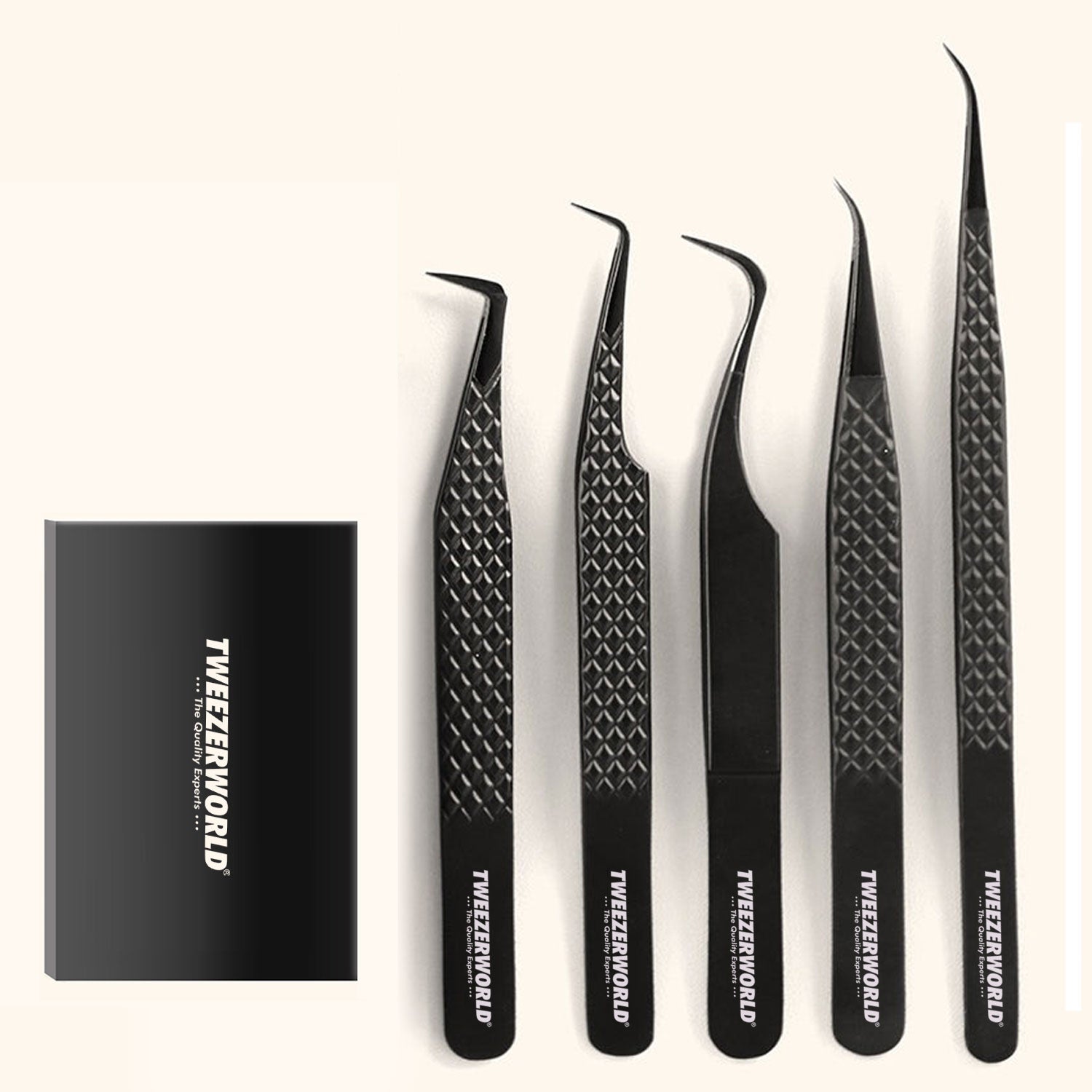
Fine Straight | Fine Point | Curved | Titanium | Finish-Protecting/Non-Marring Candidate
Configure five candidate tools for watch-service and jewellery-workshop trials. The first three identify geometries; Titanium identifies a material option whose tip geometry must be agreed; the finish-protecting candidate identifies a contact-material evaluation requirement. Confirm exact models, availability and supplied tool count by quotation.
Evaluate access, pickup, retention, closing force and controlled release on representative parts. Define permitted contact zones before handling delicate springs, pivots, jewels, coated components or polished surfaces. Finish protection requires a marking test on the intended surface; no universal scratch-free claim applies.
Anti-magnetic performance requires material identification and magnetic-response evidence for the exact model and configuration. Titanium is not a substitute for that record. Record measured length, weight, tip/contact width, thickness, closing force, material identity, test method and sample revision. Unmeasured fields remain pending.
Request the Watchmaker Precision Evaluation Set · Distributor sample approval
Papular Products Gallery