
Semiconductor Rework Tweezer Set Specifications
Semiconductor Rework Tweezer Sets: Distributor Procurement Specifications
A semiconductor rework tweezer set should be specified as a controlled group of handling tools—not as a pouch containing several visually different tweezers. For distributors, electronics-tool brands and OEM buyers, the commercial risk lies in assuming that terms such as “ESD safe,” “anti-magnetic,” “precision tip” or “heat resistant” describe measurable performance.
The correct set depends on the components being handled, the rework process, the ESD-control program, access around adjacent components, working temperature, cleaning chemistry and inspection method. A tool suitable for positioning a large connector is not necessarily appropriate for lifting a miniature passive component, supporting a fine wire or handling a sensitive package.
This guide explains how to convert those requirements into a distributor-ready procurement specification covering set composition, material, geometry, electrical behaviour, functional performance, packaging, documentation and batch acceptance.
Important: Tweezers are handling tools, not electrically insulated safety tools. Rework must be performed on equipment placed in the safe state required by the buyer’s approved procedure. Tool selection does not replace technician training, process validation, ESD controls or applicable workplace-safety requirements.
What Is a Semiconductor Rework Tweezer Set?
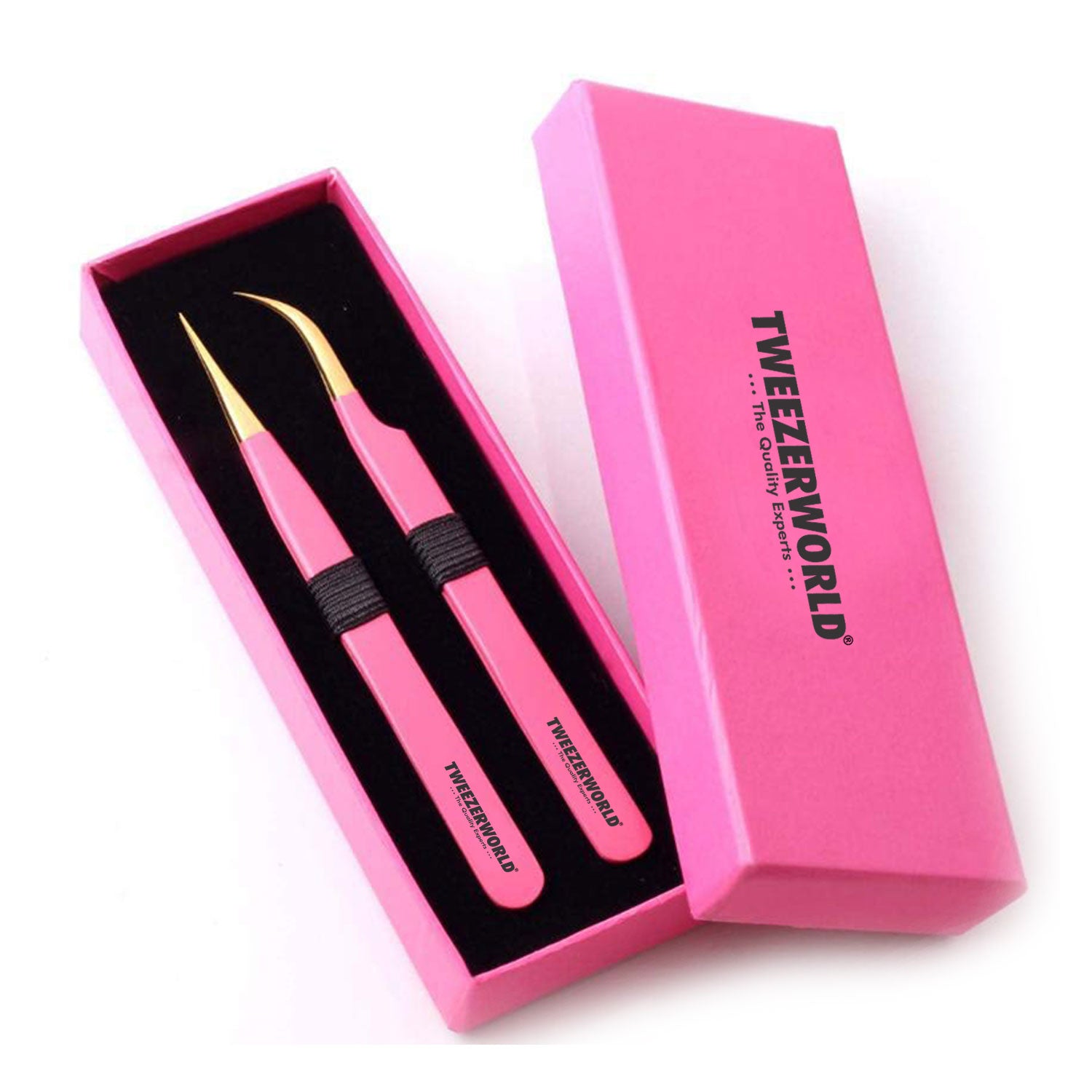
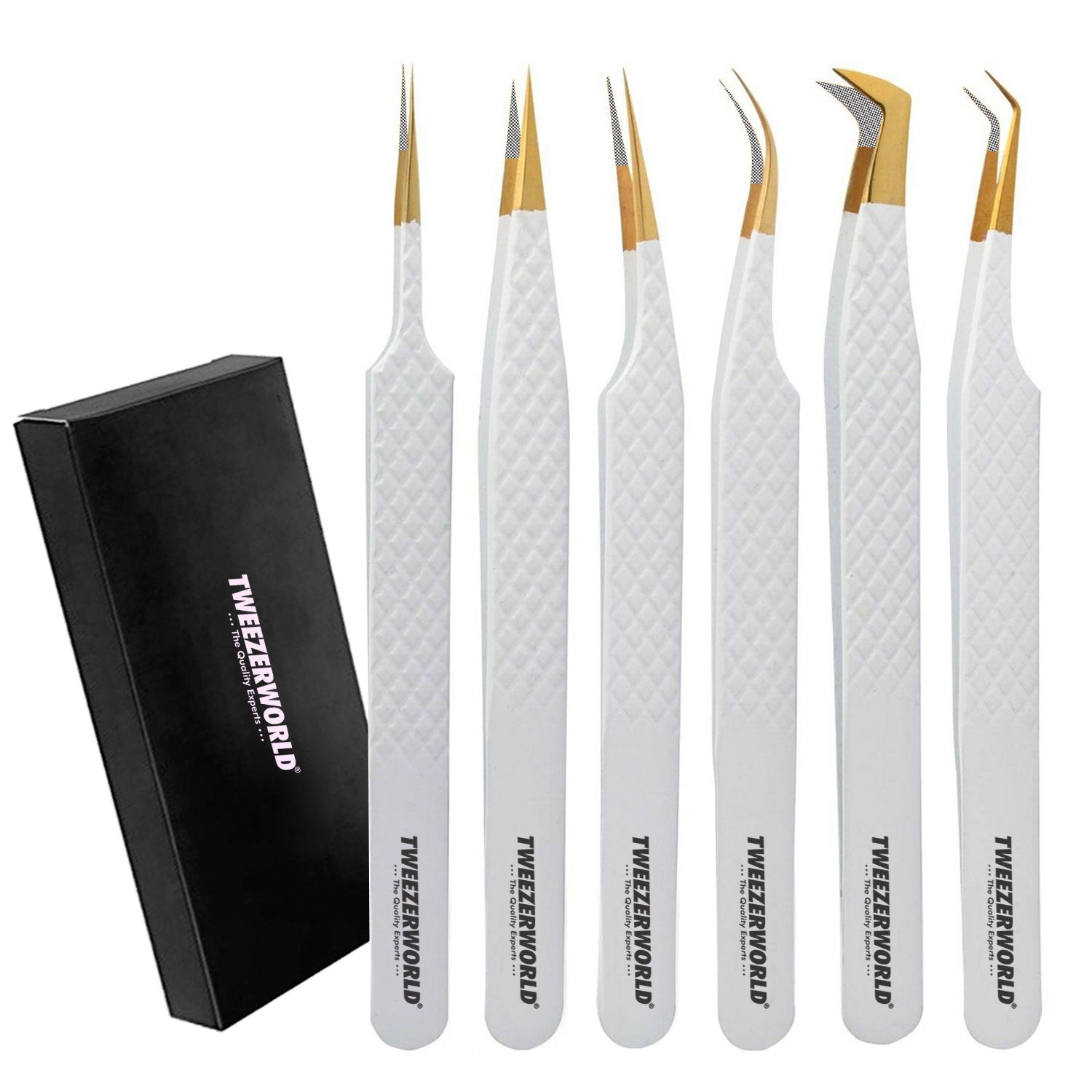
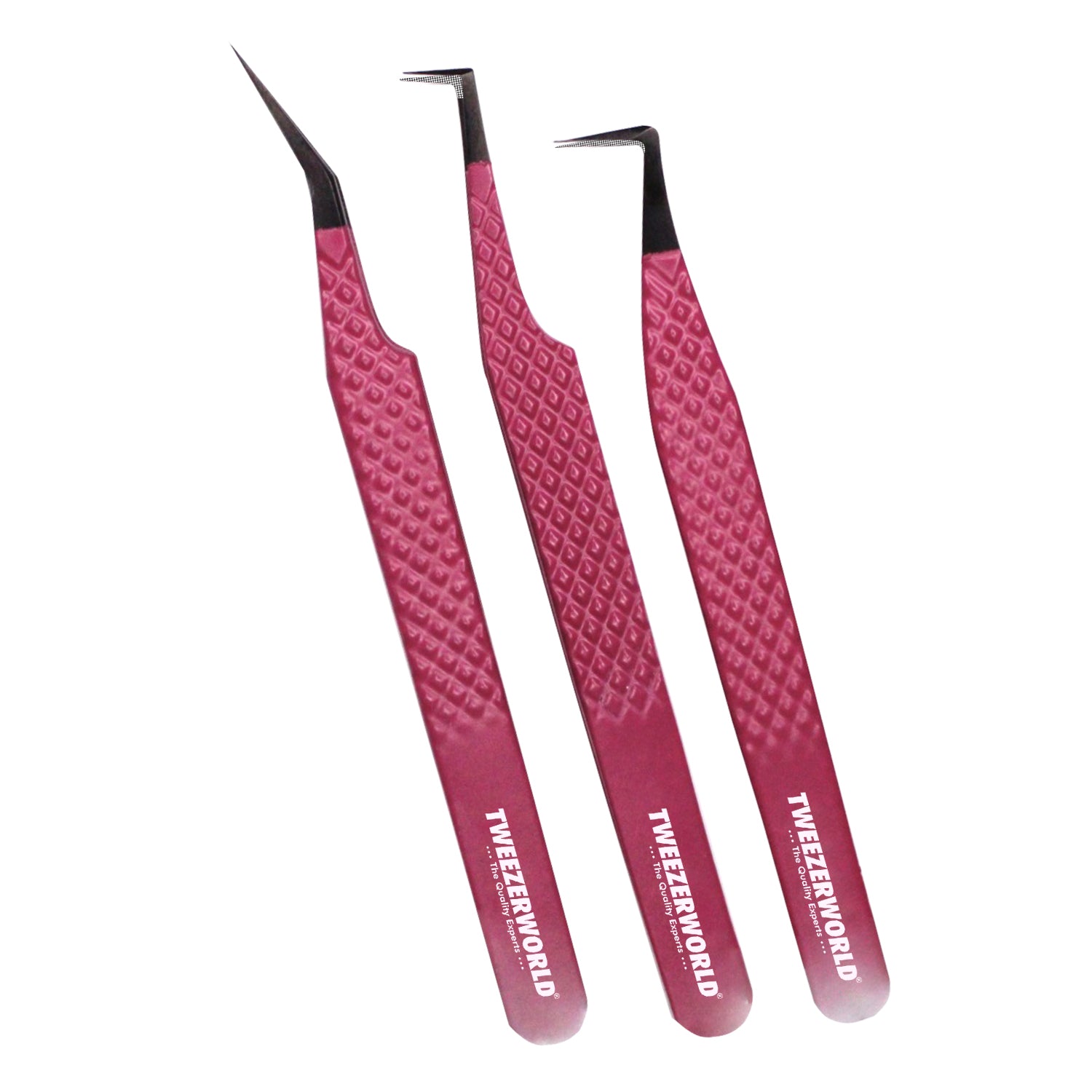
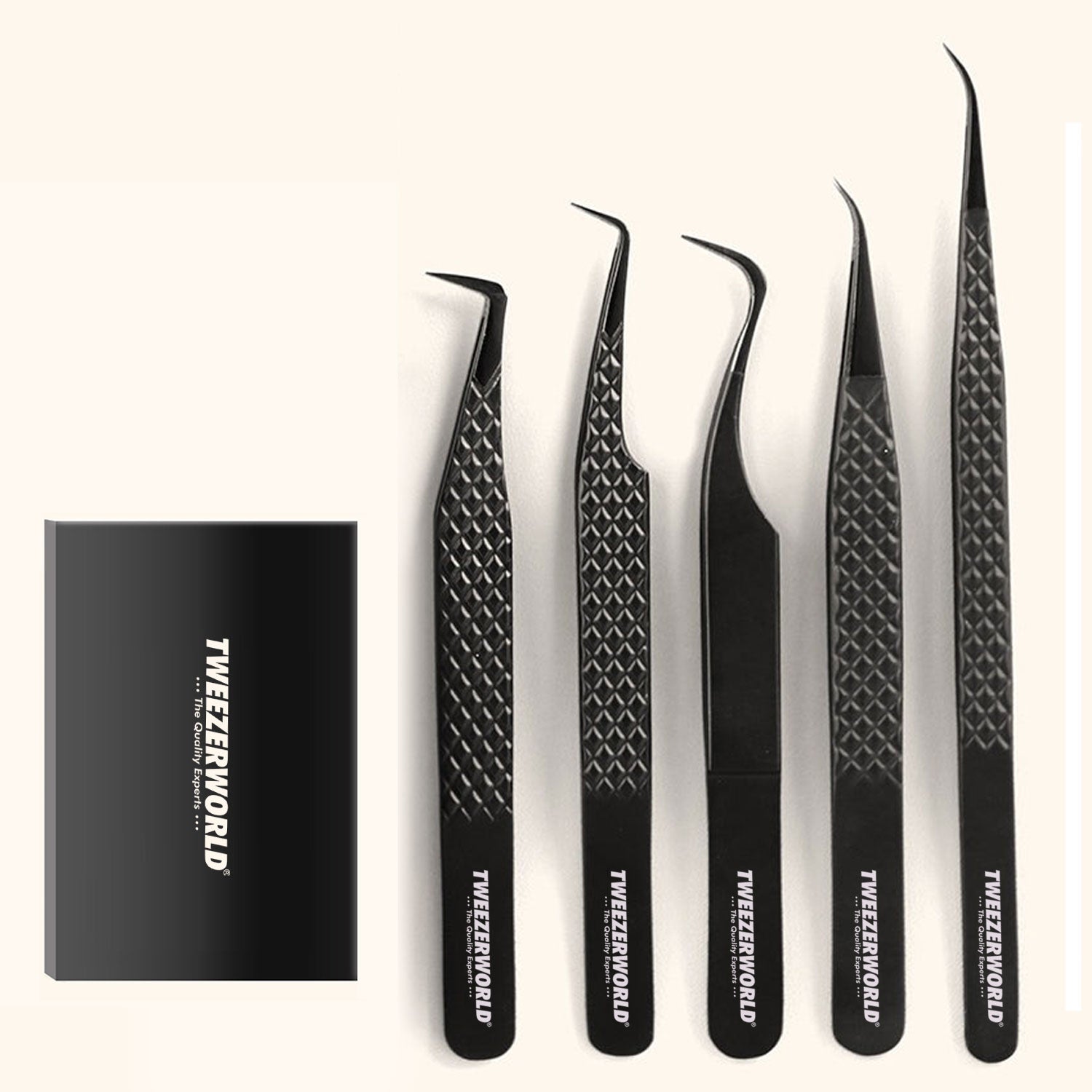
A semiconductor rework tweezer set is a defined selection of tools intended to support component handling, positioning, removal, inspection and repair operations on electronic assemblies. A professional set may include:
- Fine straight tweezers
- Fine curved tweezers
- Blunt or rounded tweezers
- Flat or paddle-tip tweezers
- Reverse-action tweezers
- Ceramic-tip tweezers
- Replaceable polymer or composite-tip tweezers
- Component-positioning or gripping tweezers
The set should not imply that every tool may be used for every component. Each model needs a defined purpose, permitted contact area and acceptance criteria.
Start With the Buyer’s Rework Process
Before requesting samples, identify the work the set must support:
- SMD placement and repositioning
- Component removal after controlled heating
- Inspection under magnification
- Handling connectors, shields and small mechanical parts
- Supporting wires, jumpers or leads during approved repair
- Handling ceramic packages or sensor housings
- Working in densely populated assemblies
- Transferring components between ESD-protective packaging and the workstation
IPC-7711/7721 provides procedures for rework, repair and modification of printed board assemblies, while IPC J-STD-001 addresses requirements for soldered electrical and electronic assemblies. The buyer should identify the standards, internal work instructions and product class that govern its operation. A tweezer supplier should not claim that a tool by itself makes a rework process compliant.
Define the Component Range
“For semiconductor components” is too broad. The RFQ should list representative components and packages, including minimum and maximum dimensions, mass, fragility and permitted gripping zones.
| Component or task | Useful starting geometry | Main risk to control |
|---|---|---|
| Miniature passives | Fine straight or fine curved | Excessive force, launching the component or contacting adjacent pads |
| IC packages | Fine curved, flat or package-gripping profile | Lead damage, package marking and uneven lifting |
| Connectors and shields | Blunt, flat or medium-duty profile | Slipping, distortion and insufficient stiffness |
| Fine wires and jumpers | Smooth fine straight or curved tips | Cutting, nicking or over-bending the conductor |
| Hot-zone positioning | Qualified metal or ceramic working end | Heat transfer, coating damage and material degradation |
| Sensitive finishes | Rounded polymer or composite tips | Scratching, particles and inconsistent release |
| Hands-free holding | Reverse-action tweezers | Excessive default grip force and uncontrolled release |
Direct contact with active die surfaces, wire bonds, exposed optical faces or other fragile features should be prohibited unless the device owner has approved and validated the method.
Recommended Set Architectures
Distributors can offer tiered sets rather than one universal configuration.
| Set type | Suggested contents | Intended positioning |
|---|---|---|
| Essential 4-piece | Fine straight, fine curved, blunt flat and reverse action | General electronics servicing and training benches |
| Professional 6-piece | Essential set plus ceramic tip and replaceable non-marring tip | Repair centres and mixed-component rework |
| Micro-rework 5-piece | Two fine straight profiles, two curved access profiles and a fine reverse-action tool | Dense SMD assemblies under magnification |
| Heat and chemical 5-piece | Qualified stainless-steel profiles plus ceramic-tip tools | Processes involving controlled heat or cleaning chemistry |
| Distributor custom set | Buyer-selected models, case, marking and documentation | Private-label ranges and technician programmes |
Set names are commercial descriptions. The product specification should still identify each included model by a unique reference and drawing revision.
1. Specify ESD Performance Correctly
IEC 61340-5-1:2024 provides requirements for establishing, implementing and maintaining an ESD-control program. IEC TS 61340-5-4:2026 describes compliance-verification procedures for ESD-control items. A distributor should connect the tweezer specification to the customer’s ESD programme instead of relying on an unsupported “ESD safe” label.
Define:
- Whether the tool must be conductive, dissipative or insulating
- The required resistance range
- Test voltage, electrode arrangement and conditioning
- Measurement points on the complete tool
- Whether coatings or grips are included in the measurement
- Product-qualification and periodic-verification frequency
- Lot sampling and record-retention requirements
A metal tweezer may be conductive, but that does not prove safe integration into the workstation. A ceramic tip may be insulating, but insulation is not automatically the correct ESD-control strategy. A filled composite may be described as dissipative, but its resistance can vary with formulation, humidity, temperature and wear.
Browse TWEEZER WORLD® ESD and Anti-Static Tweezers for available formats.
2. Define Material by Grade or Formulation
Material selection affects rigidity, corrosion behaviour, magnetic response, electrical performance, heat transfer, wear and cleanability.
| Material family | Potential advantages | Procurement cautions |
|---|---|---|
| Stainless steel | Rigid fine points, durable geometry, familiar finishing and cleaning | Specify grade and condition; magnetic response can change with alloy and processing; bare metal can mark soft surfaces |
| Titanium alloy | Low mass and potentially useful corrosion or magnetic characteristics | Specify the exact alloy; do not treat “titanium” as proof of non-magnetic or thermal performance |
| Technical ceramic | Electrical insulation, low magnetic interaction and heat-resistant working ends in suitable applications | Hard and brittle; tips can chip; holder, screws and adhesive must also be qualified |
| Engineering polymer | Softer contact and potential reduction of cosmetic marking | Temperature, solvent resistance, particles, creep and wear are formulation-specific |
| Carbon-fibre or filled composite | Replaceable formats and controllable electrical behaviour in some formulations | Resistance, wear debris, binder, fibre exposure and batch consistency require verification |
Require a batch-linked material declaration or certificate appropriate to the commercial and technical risk. A generic supplier datasheet is not the same as traceability to the finished production lot.
3. Specify Tip Geometry With a Drawing
Terms such as “ultra-fine,” “needle point” and “precision curved” are subjective. The drawing should define:
- Overall length
- Tip length, width and thickness
- Tip radius or point profile
- Curvature angle and bend location
- Inside-face flatness and finish
- Serration or texture, if permitted
- Closed-tip gap and lateral offset
- Permitted twist
- Measurement locations and tolerances
Very sharp tips improve access but raise the risk of pad damage, component marking and technician injury. The smallest tip is not automatically the best tip.
4. Control Alignment and Contact Pattern
Tip alignment should be evaluated under defined closing force and magnification. Depending on the model, the desired contact may be point contact, a short progressive contact zone or uniform flat contact.
The acceptance specification should state:
- Where the tips first meet
- Maximum visible gap
- Maximum lateral offset
- Whether crossing or sliding is permitted
- Applied force during inspection
- Magnification and illumination
- Reference sample or image
A claim of “perfect alignment” is not measurable. Use numeric limits and a repeatable inspection method.
5. Specify Closing Force and Spring Tension
Excessive closing force contributes to fatigue and component damage. Too little tension can reduce control or allow a part to move unexpectedly.
Measure closing force at a specified opening and handle location. Define the permissible range for each model rather than applying one value to the entire set. Also test return action, repeated compression and permanent deformation.
For reverse-action tweezers, specify default grip force, maximum opening, release force and the component sizes the tool is intended to hold. Reverse action should not be assumed to provide a gentle grip.
6. Address Heat Exposure
“Heat resistant” is incomplete without temperature, exposure time and test method. During rework, the tool may be close to a soldering iron, hot-air nozzle, preheater or recently heated component.
Define:
- Maximum working-end temperature
- Exposure duration and number of cycles
- Permitted change in alignment or closing force
- Coating, adhesive and replaceable-tip limits
- Cooling and handling procedure
- Post-exposure visual and functional inspection
Do not extrapolate the temperature capability of a ceramic insert to the entire tweezer assembly.
7. Define Chemical and Cleaning Compatibility
Rework tools may contact flux residues, approved cleaning agents and workshop contaminants. The procurement request should identify permitted cleaning chemicals and whether the tool will undergo wiping, immersion, ultrasonic cleaning or another controlled process.
After cleaning, inspect for:
- Corrosion or staining
- Coating softening or delamination
- Swelling or cracking of polymer tips
- Loose ceramic or replaceable tips
- Residue in serrations or joints
- Changed ESD resistance
- Loss of marking legibility
8. Prevent Magnetic Claims From Becoming a Liability
“Anti-magnetic” usually describes reduced magnetic response; it does not establish zero susceptibility or prove suitability for every field-sensitive component. Stainless-steel behaviour can depend on grade, forming and cold work, while screws and other attachments may behave differently from the body.
If magnetic response matters, specify the complete-tool test, applied field or screening magnet, orientation, distance, measured attraction or retained magnetism and acceptance limit.
9. Specify Surface Finish and Cleanliness
Surface finish affects glare under a microscope, corrosion behaviour, cleaning and appearance. Common choices include satin, matte, polished and coated finishes.
Require the tools to be free from:
- Burrs and unintended sharp edges
- Pits, cracks and deep scratches
- Polishing compound and oil
- Loose coating or exposed fibres
- Particles and packaging debris
- Residue at replaceable-tip fasteners
For cleanroom or high-sensitivity applications, state the preparation, packaging and cleanliness test. “Cleanroom compatible” should not be used without supporting conditions.
10. Protect Every Tool in the Set
A precisely inspected tip can be damaged during transport if the case permits metal-to-metal contact. Specify:
- Individual tip protectors
- Dedicated, labelled tool positions
- Non-shedding case or pouch materials where required
- Protection from bending and impact
- ESD-protective packaging when applicable
- Lot, model and set identification
- Replacement-tip and care instructions
IEC 61340-5-3:2022 defines ESD-protective packaging properties for ESDS items through production, rework, maintenance, transport and storage. Determine whether that standard applies to the tools, the components supplied with them or the buyer’s broader packaging system.
Required Documentation Package
A distributor procurement file may include:
- Set bill of materials
- Unique model references
- Approved technical drawings
- Material declarations or certificates
- ESD product-qualification results
- Magnetic-response results, where required
- Heat and chemical-resistance evidence
- Closing-force and alignment records
- Cleaning and care instructions
- Packaging specification
- Label and marking artwork
- Final inspection report
- Certificate of Conformity
- Change-control agreement
Documentation should identify the tested model, revision and lot. A report for a different tip material or earlier design may not support the delivered product.
Inspection and Batch-Acceptance Plan
| Characteristic | Suggested control | Example acceptance principle |
|---|---|---|
| Correct set contents | 100% verification | All models and quantities match the approved bill of materials |
| Tip damage and burrs | 100% visual inspection | Zero critical defects |
| Alignment | 100% or risk-based model plan | Gap and offset within drawing limits |
| Closing force | Measured sampling or 100% for critical models | Within model-specific range |
| Dimensions | Calibrated sampling inspection | Within controlled-drawing tolerances |
| ESD resistance | Qualification plus defined lot or periodic verification | Within stated range under the specified method |
| Functional handling | Representative component or coupon test | Reliable pickup and release without unacceptable damage |
| Marking | Visual and durability check | Correct, legible and positioned as approved |
| Packaging | 100% set check plus transport validation | Tips remain protected and contents do not move |
If AQL sampling is used, define the inspection standard, level, defect categories and acceptance values. Critical defects—such as a broken tip, dangerous burr or wrong model—may justify zero acceptance or 100% control.
Completed Distributor RFQ Checklist
| Procurement field | Buyer’s requirement |
|---|---|
| Product name | Professional Semiconductor Rework Tweezer Set |
| Set configuration | Six pieces: fine straight, fine curved, blunt flat, reverse action, ceramic tip and replaceable non-marring tip |
| Intended users | Trained electronics-rework technicians and authorised laboratory personnel |
| Representative components | Buyer to provide package families, dimensions, weight and approved gripping zones |
| ESD requirement | Each applicable model tested by an agreed method and integrated into the buyer’s IEC 61340-5-1-based control programme |
| Body material | Exact declared stainless-steel or titanium grade; no substitution without written approval |
| Replaceable-tip material | Exact ceramic, polymer or composite formulation with attachment method and replacement reference |
| Dimensions | According to model-specific approved drawings with stated tolerances |
| Alignment | No crossing; numeric gap and lateral offset limits defined for each model |
| Closing force | Measured at the drawing-defined opening and handle location; model-specific range |
| Heat exposure | Temperature, dwell and cycles defined by buyer; no functional or surface failure after test |
| Chemical compatibility | Qualified against the buyer’s named cleaning agents and process |
| Finish | Uniform low-glare satin or approved coating; clean, residue-free and burr-free |
| Marking | Brand, model and set position; laser marking must not impair function or cleaning |
| Packaging | Rigid six-position case with individual tip protection and approved label |
| Documentation | Drawings, material records, qualification evidence, inspection report, care instructions and Certificate of Conformity |
| Golden sample | Signed sample linked to drawing and specification revisions before bulk production |
| Change control | Prior written approval for material, tooling, tip, coating, supplier, process, marking, packaging or manufacturing-site changes |
| Initial order | Qualification quantity to be agreed; bulk release only after sample and documentation approval |
Avoid Overclaiming Tool Performance
| Risky wording | More defensible wording |
|---|---|
| ESD safe | Resistance verified within the stated range by the specified method and intended for use in an approved ESD-control programme |
| Perfect precision | Dimensions, alignment and closing force meet the controlled specification |
| Non-magnetic | Finished tool meets the stated magnetic-response limit under defined test conditions |
| Heatproof | Qualified for the stated temperature, exposure time and number of cycles |
| Chemical proof | Compatible with the named chemical, concentration, temperature and exposure method |
| Non-scratch | No unacceptable marking on the approved reference coupon under stated force and test conditions |
| Suitable for all semiconductors | Intended for the listed component families and approved gripping zones |
OEM and Private-Label Semiconductor Rework Sets
Private-label buyers should approve more than the logo. The set architecture, tool references, tip materials, ESD evidence, case layout, replacement parts and inspection criteria must be controlled together.
TWEEZER WORLD® can discuss:
- Four-, five-, six- and custom-piece rework sets
- Fine straight, curved, blunt, flat and reverse-action profiles
- Stainless-steel, titanium, ceramic and replaceable-tip options
- ESD-control specifications and batch inspection requirements
- Custom laser marking and model identification
- Protective cases, inserts and private-label packaging
- Golden samples, inspection reports and change control
- Wholesale and distributor production
Explore Precision Tweezers, Ceramic Tweezers and OEM and Private-Label Manufacturing.
Frequently Asked Questions
How many tweezers should a semiconductor rework set contain?
Four to six well-defined tools cover many general rework needs. A larger set is useful only when each additional geometry has a documented purpose.
Does a stainless-steel tweezer qualify as ESD safe?
Not from the material name alone. The complete tool must be evaluated using the buyer’s specified method and used within an approved ESD-control system.
Are ceramic tweezers better for hot components?
Ceramic working ends may offer useful heat resistance, but the complete assembly—including holders, fasteners and adhesive—must be qualified for the temperature and exposure time.
What is the best tweezer shape for SMD rework?
Fine straight and curved tips are common starting points. The correct shape depends on component size, access, adjacent parts and the approved gripping zone.
Should reverse-action tweezers be included?
They can provide hands-free holding, but their default grip force and release behaviour must suit the component. They are not automatically gentle.
How should tip alignment be inspected?
Inspect at defined magnification, illumination and closing force. Measure the gap, lateral offset, contact sequence and crossing against numeric limits.
Can one set be marketed for all semiconductor work?
No credible set covers every package, sensitivity level and process. Define the intended component families and limitations clearly.
What documentation should distributors request?
Request controlled drawings, material records, applicable ESD and functional test results, inspection reports, packaging specifications, care instructions and change-control commitments.
Should every tweezer be individually marked?
Model marking helps technicians return each tool to its correct position and prevents substitution. Marking should remain legible and must not impair cleaning or function.
What is a golden sample?
It is the signed physical reference approved with the controlled drawing and specification before bulk production. It supports future appearance and functional comparisons.
Conclusion
A professional semiconductor rework tweezer set begins with the buyer’s component and process—not a generic tool count. Distributors should define ESD behaviour, material, tip geometry, alignment, closing force, heat exposure, chemical compatibility, cleanliness, packaging and documentation for every model.
Measurable specifications protect the distributor, manufacturer and end user from inconsistent interpretation. They also make samples meaningful and create a reliable basis for batch inspection, private-label production and future change control.
Request a Semiconductor Rework Tweezer Set
Papular Products Gallery