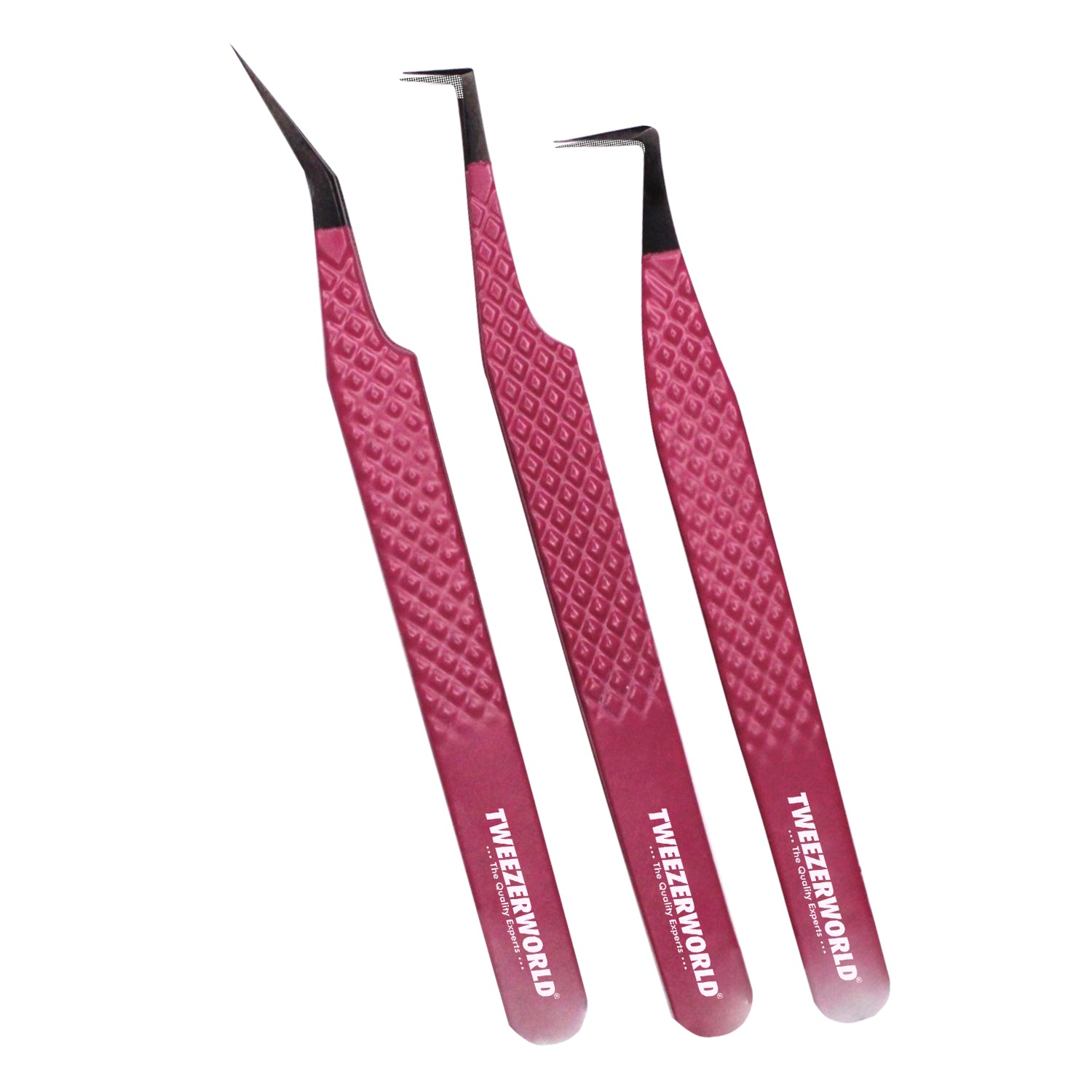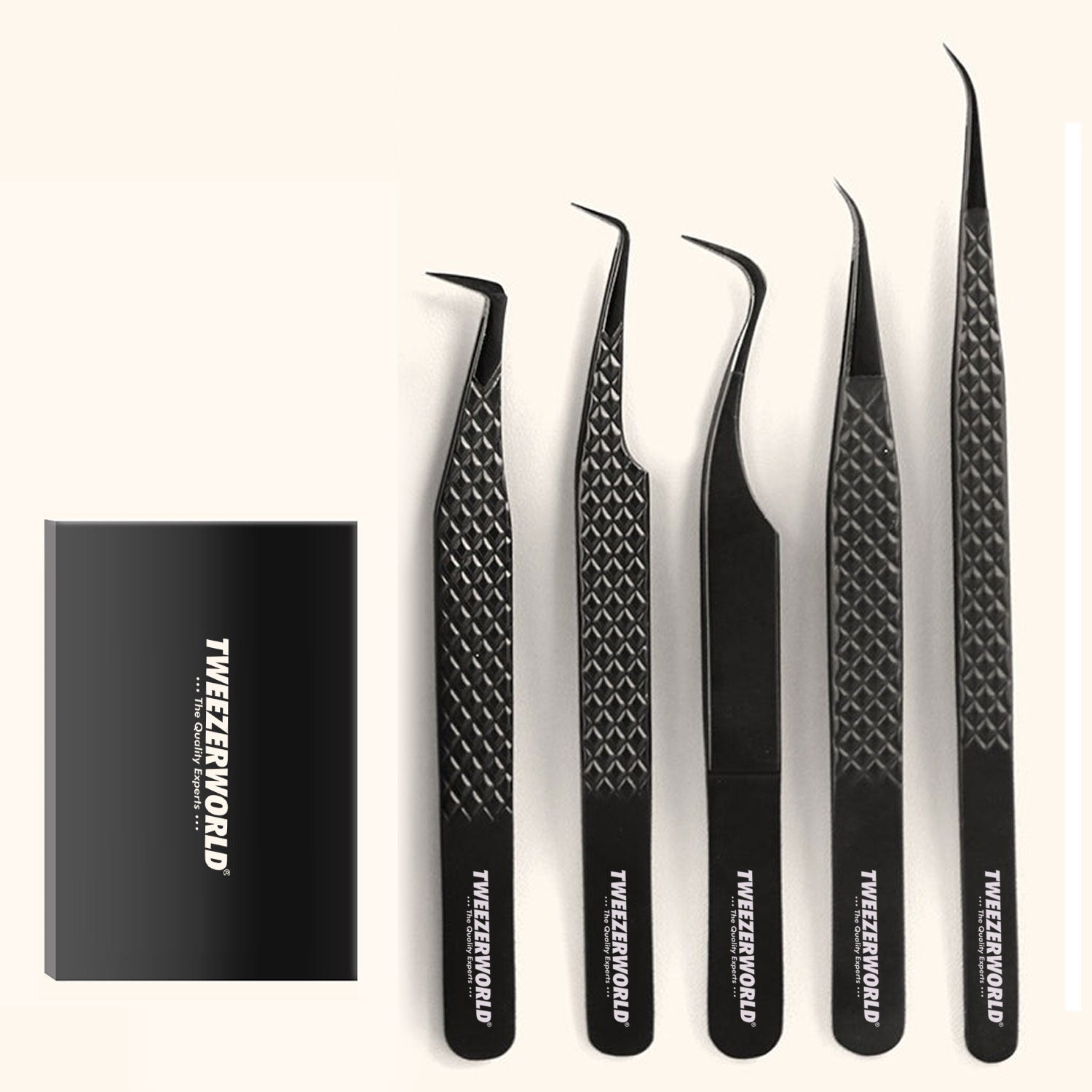

45° Smooth Tip Lash Tweezers: Confirming Inner Contact Geometry
For a 45° smooth-tip lash tweezer, the headline angle does not tell the whole story. Pickup performance depends on the geometry of the inner faces, the length and position of contact, tip alignment, surface condition and spring response. Buyers should approve those characteristics with a repeatable sample check.
Define the angle consistently
Specify the reference lines used to measure 45°. For example, state whether the angle is measured between the handle centerline and the tip working face. Include a tolerance and drawing view. Without a reference, two suppliers can report the same angle for visibly different shapes.
Inspect the inner contact geometry
| Feature | What to observe | Why it matters |
|---|---|---|
| Face flatness | Continuous contact versus isolated high spots | Influences grip consistency across the working zone |
| Contact length | Where contact begins and ends | Helps match fan-making or isolation technique |
| Parallelism | Whether inner faces meet evenly | Reduces twisting and incomplete closure |
| Edge condition | Burrs, sharp transitions or polishing marks | Affects control and potential fiber damage |
| Tip symmetry | Left/right shape and vertical alignment | Supports predictable pickup |
A sample-approval routine
- Clean each sample using the agreed method and allow it to dry.
- Inspect tips and inner faces under consistent lighting and magnification.
- Close slowly and record the first point of contact.
- Use thin paper or a suitable contact film to map the contact zone.
- Measure opening and closing force at a defined handle position.
- Run pickup tests using the lash fibers and technique representative of customers.
- Record successful pickups, slips, fiber damage and operator comments.
Do not hide variation inside an average
Evaluate multiple pieces and retain individual results. An acceptable average can mask one weak or misaligned tool. Define critical defects separately from cosmetic defects, and specify whether any critical defect causes sample rejection.
Questions for the supplier
- Is the 45° form created before or after tip finishing?
- Which dimensions and contact characteristics are inspected?
- What method is used to check face contact and alignment?
- How is spring tension controlled between production lots?
- Will material, finish or tooling changes trigger prior notice?
- Can private-label packaging keep the approved model and lot identifiable?
Turn the approved sample into a control
Photograph the accepted contact pattern, label the physical reference sample, record the drawing revision and set a retention period. Production orders should cite that revision. A clear reference reduces disputes caused by subjective phrases such as “good grip” or “smooth closing.”
Explore related TWEEZER WORLD collections
For custom geometry, finishes, inspection requirements or private-label packaging, review our manufacturing capabilities and wholesale program.
Build a purchase specification with TWEEZER WORLD
For OEM, wholesale or distributor enquiries, share the intended task, target geometry, quantity, packaging needs and the records you expect with each shipment. Ask for a controlled sample before approving bulk production.
Review the wholesale program or contact TWEEZER WORLD. Email: tweezersworld@gmail.com · WhatsApp: +92 321 6194723.
Papular Products Gallery