
Anti-Magnetic Watch-Service Tweezers Guide
Anti-Magnetic Watch-Service Tweezers
Watch servicing requires controlled handling of components that may be smaller than a grain of sand. Screws, gears, jewels, springs, hands and balance components must be lifted and positioned without contamination, scratching or accidental magnetic influence.
For this reason, anti-magnetic watch-service tweezers are an important part of a professional watchmaker’s toolkit. The correct model should combine low magnetic attraction with precise tip alignment, controlled tension and a geometry suited to the component being handled.
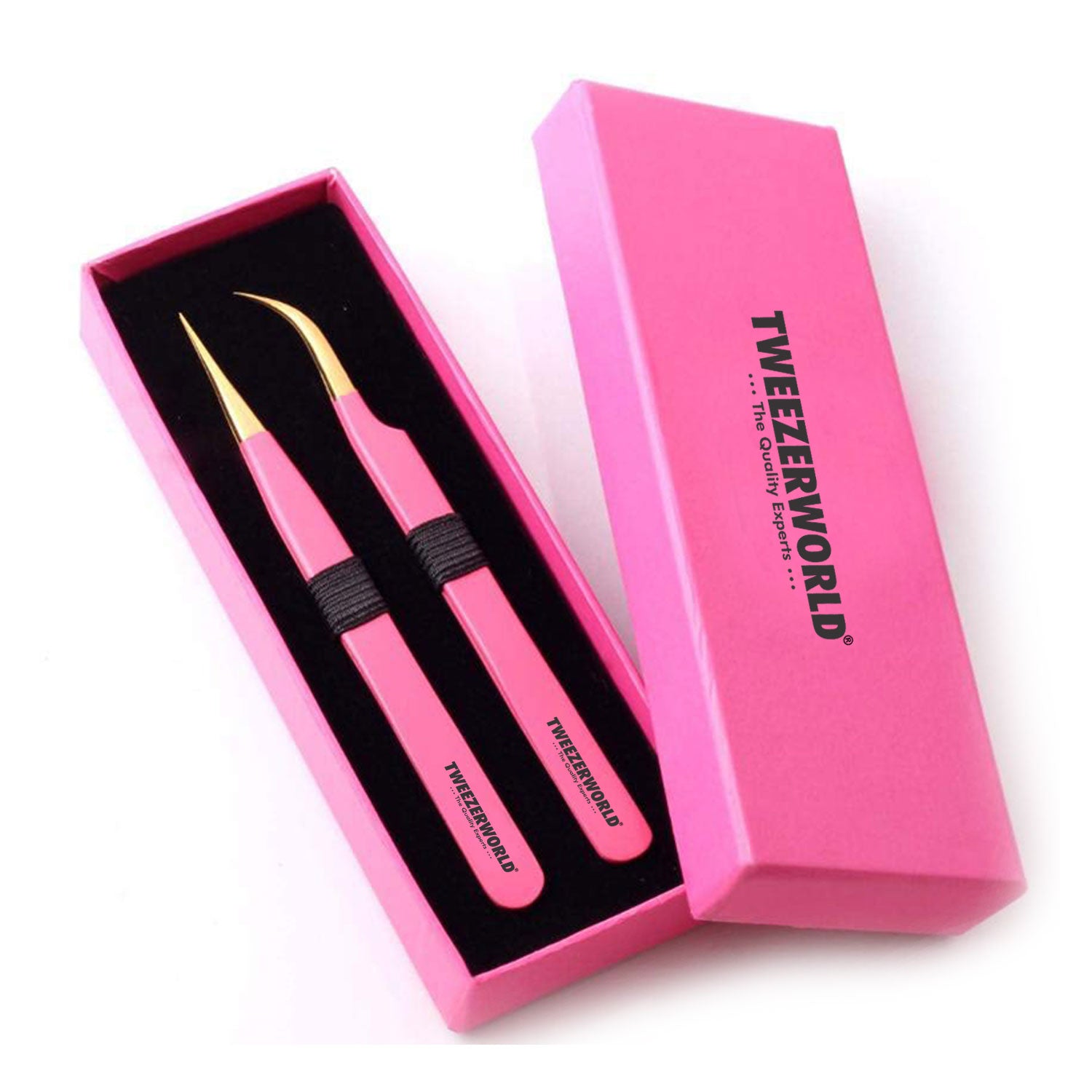
Explore TWEEZER WORLD® Watch Repair Tweezers for professional, wholesale and private-label options.
Why Magnetism Matters During Watch Servicing
Mechanical movements contain sensitive metallic components. Exposure to magnetism can cause a watch to gain or lose time and, in stronger cases, stop operating correctly. Grand Seiko advises that magnetism can affect mechanical-watch accuracy and that a magnetized movement may require demagnetization. Read Grand Seiko’s magnetic-resistance guidance.
A magnetized service tool can also make workshop tasks more difficult. Instead of releasing a component cleanly, a magnetic tweezer may:
- Attract small screws or springs unexpectedly
- Make components cling to the tip
- Pull lightweight parts out of position
- Collect fine ferrous particles
- Interfere with controlled placement
- Increase contamination around the movement
- Complicate balance-spring and escapement work
Anti-magnetic tweezers help reduce these problems, but the term must be used carefully.
What Are Anti-Magnetic Watch-Service Tweezers?
Anti-magnetic watch-service tweezers are manufactured from materials selected to minimize magnetic attraction and residual magnetization during precision work.
They are commonly used for:
- Movement assembly and disassembly
- Handling screws and wheels
- Positioning jewels
- Escapement work
- Balance-spring inspection
- Dial and hand installation
- Calendar mechanism servicing
- Shock-setting components
- Watchmaking education
- Quality-control inspection
The material is only one part of the tool’s performance. Tip geometry, hardness, alignment, surface finish and spring tension remain equally important.
Anti-Magnetic vs Non-Magnetic Tweezers
“Anti-magnetic” and “non-magnetic” are often used as if they mean the same thing, but they can describe different performance levels.
Anti-Magnetic
An anti-magnetic tweezer is designed to resist magnetic attraction and reduce the likelihood of becoming magnetized during normal use. However, the exact level of magnetic response depends on the alloy, manufacturing process and finished tool.
Non-Magnetic
A non-magnetic material has extremely low or negligible magnetic response under its stated conditions. Certain titanium and specialized high-alloy materials may be described as fully non-magnetic when supported by technical data.
For example, Ideal-tek identifies its Grade 1 titanium tweezer range as fully non-magnetic, while describing several stainless-steel families as anti-magnetic. See Ideal-tek’s titanium material guidance.
Manufacturers should avoid claiming that every stainless-steel tweezer is completely non-magnetic. Material composition, heat treatment, cold working, grinding and forming can affect the magnetic behavior of the finished instrument.
Best Materials for Anti-Magnetic Watch Tweezers
Anti-Magnetic Stainless Steel
Anti-magnetic stainless steel is a practical choice for everyday watch servicing. It provides a useful balance of:
- Corrosion resistance
- Tip strength
- Dimensional stability
- Cleanability
- Professional appearance
- Manufacturing flexibility
- Competitive cost
Austenitic stainless-steel grades and proprietary anti-magnetic alloys are frequently used. However, buyers should confirm the exact grade and magnetic test information for the finished product rather than relying only on the term “stainless steel.”
Anti-magnetic stainless steel is suitable for general movement work, screws, wheels, jewels and workshop inspection.
Titanium
Titanium tweezers provide very low magnetic influence and are lighter than stainless steel. Their lower weight can be comfortable during long servicing sessions.
Titanium models can be useful for:
- Magnetism-sensitive movement components
- Extended microscope work
- Fine assembly
- Laboratories
- High-value professional tool sets
However, titanium should not automatically be described as harder or sharper than every stainless-steel option. Tip durability depends on the specific grade, geometry and manufacturing process.
High-Alloy Stainless Steel
Specialized high-alloy austenitic stainless steels can provide strong corrosion resistance and very low magnetic response. These materials may be appropriate for technical, laboratory and premium watchmaking tools.
They are generally more expensive and should be selected when documented material performance justifies the additional cost.
Carbon Steel
Carbon steel can provide hard, sharp and durable tips. It remains useful for certain watchmaking operations, particularly when tip rigidity or cutting performance is the main priority.
However, carbon steel is magnetizable and has lower corrosion resistance than many stainless-steel options. It should not be presented as anti-magnetic unless supported by a specific material system or coating and relevant testing.
A surface coating does not necessarily change the magnetic behavior of the underlying steel.
Does Anti-Magnetic Mean ESD-Safe?
No. Anti-magnetic performance and electrostatic-discharge control are separate characteristics.
An anti-magnetic stainless-steel tweezer may still be electrically conductive. Similarly, a coated ESD tweezer may use a magnetic base material.
For watch servicing, ESD protection may be relevant when working on:
- Quartz movements
- Smartwatches
- Electronic modules
- Circuit boards
- Sensors
- Hybrid mechanical-electronic products
If a tweezer is promoted as both anti-magnetic and ESD-safe, each claim should be supported independently.
Best Tweezer Shapes for Watch Servicing
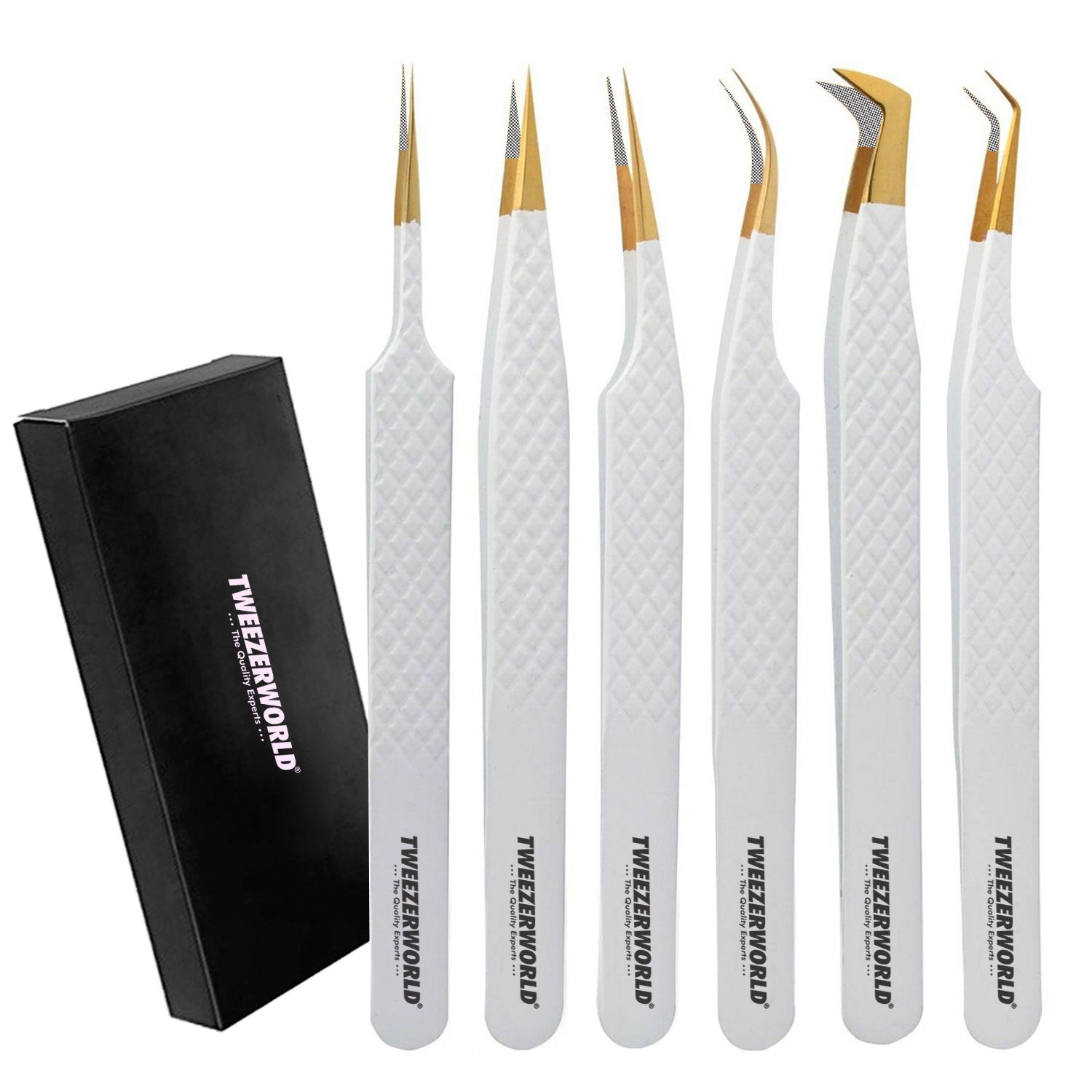
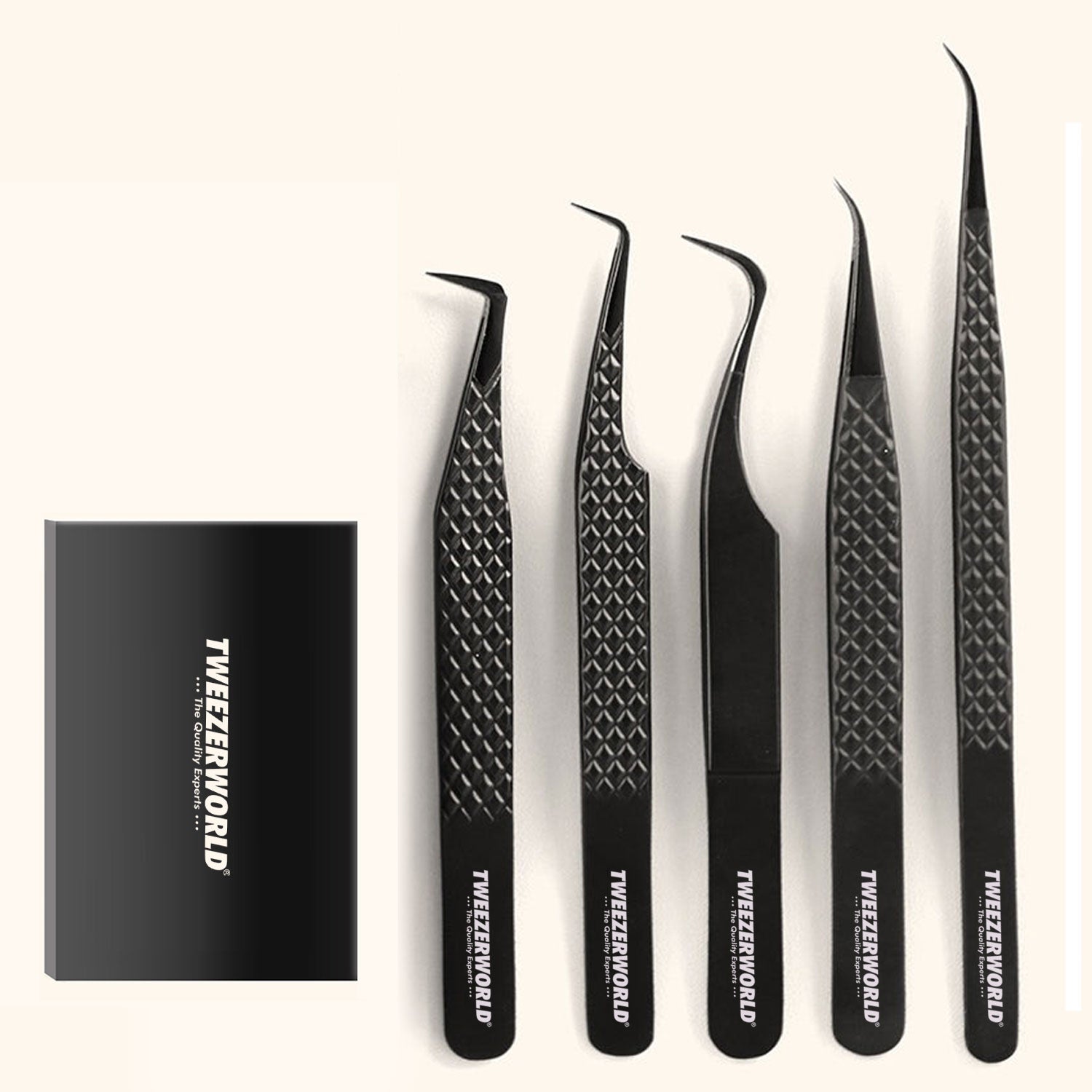
A professional watch-service set should include different tip geometries instead of several nearly identical tweezers.
Strong Straight Tweezers
Strong straight tips are suitable for general movement disassembly, larger screws, wheels and components requiring controlled pressure.
They provide more durability than ultra-fine tips and make a practical everyday workshop tool.
Fine Straight Tweezers
Fine straight tips are suitable for:
- Small screws
- Jewels
- Setting components
- Fine wheels
- Calendar parts
- General movement assembly
The tips should close evenly without crossing or sliding sideways.
Extra-Fine Pointed Tweezers
Extra-fine tips provide access to very small parts and confined areas. They can be useful for balance, escapement and shock-setting work.
Because they are more delicate, they should not be used to bend heavy springs, pry components or lift parts requiring stronger pressure.
Curved Tweezers
Curved tips improve visibility when the watchmaker needs to work around a bridge, plate or installed component.
They are useful for:
- Side access
- Picking parts from trays
- Inspection under magnification
- Working around movement structures
- Reaching confined areas
Flat or Rounded Tweezers
Flat or rounded tips distribute gripping pressure across a wider area. They may be preferable for components that could be marked or punctured by sharp points.
Protective-Tip Tweezers
Plastic, brass, coated or other protective-tip designs can be useful for dials, hands, polished parts and decorative surfaces.
They should not replace fine metal tweezers for every movement operation. Their purpose is surface protection rather than maximum tip sharpness.
Read our Choosing Watchmaker Tweezers Guide for a broader comparison of watch-service shapes and materials.
Tip Alignment Is as Important as Material
A tweezer can be manufactured from an excellent anti-magnetic alloy and still perform poorly if its tips are misaligned.
Professional watch-service tweezers should be inspected for:
- Tip symmetry
- Centered closure
- Side-to-side alignment
- Consistent contact
- Suitable point sharpness
- Smooth inner-tip surfaces
- Controlled spring tension
- Absence of burrs
- Stable return after repeated closing
When closed gently, the tips should meet at the intended contact area without twisting, crossing or leaving an unwanted gap.
For ultra-fine models, inspection under magnification is recommended.
Choosing the Correct Tension
Watch-service tweezers should provide enough resistance for controlled handling without requiring excessive hand pressure.
Soft Tension
Soft tension is suitable for prolonged work and extremely delicate components. It can reduce fatigue but may provide insufficient holding force for heavier parts.
Medium Tension
Medium tension offers a practical balance for general movement servicing, screws, wheels and everyday workshop tasks.
Firm Tension
Firm tension may be useful for stronger components or technicians who prefer more resistance. Excessively firm tension can reduce sensitivity and increase the risk of launching a small component when the grip is released.
Tension classifications should be published only after the manufacturer uses a consistent testing method.
How to Test Anti-Magnetic Watch Tweezers
A professional inspection process should evaluate the completed tweezer—not only the raw material.
Testing may include:
- Confirming the specified material grade.
- Cleaning the tool before measurement.
- Measuring magnetic response with suitable test equipment.
- Checking residual magnetism after manufacturing.
- Inspecting tip alignment under magnification.
- Testing controlled pickup and release.
- Recording the result by model or batch.
A gaussmeter or suitable magnetic-field tester provides better evidence than simply checking whether a screw sticks to the tip.
Never use a watch movement as the test object.
Can Watchmaker Tweezers Become Magnetized?
Some stainless steels and carbon steels can acquire residual magnetism after contact with magnets, magnetized tools or certain workshop equipment.
Possible sources include:
- Magnetic parts trays
- Magnetized screwdrivers
- Loudspeakers
- Electric motors
- Magnetic clasps
- Tool holders
- Mobile-device accessories
- Incorrect demagnetizer use
Even tweezers sold as anti-magnetic should be checked periodically when working with particularly sensitive movements.
If residual magnetism is detected, follow the equipment manufacturer’s demagnetization procedure and test the tool again before returning it to service.
Cleaning Anti-Magnetic Watch-Service Tweezers
Cleaning should remove oils and particles without damaging tip geometry or creating corrosion.
A suitable routine is:
- Remove visible debris with a clean, soft brush.
- Wipe the tweezer with a compatible cleaning agent.
- Pay particular attention to the inner-tip surfaces.
- Dry the complete tool thoroughly.
- Inspect the tips under magnification.
- Check that no lint or residue remains.
- Fit a protective tip cover.
- Store the tool in a dry, non-magnetic case.
Do not scrape the tips against abrasive workshop surfaces. Repeated uncontrolled sharpening can change their geometry, balance and closure.
When Should Watch Tweezers Be Replaced?
Replace or professionally recondition a watch-service tweezer when:
- The tips no longer align
- One point is visibly shorter
- The tips cross during closure
- Burrs or chips are present
- The tool has become permanently twisted
- Tension has changed significantly
- Corrosion is visible
- Components no longer release cleanly
- Magnetic response exceeds the workshop’s acceptable level
Fine tips can sometimes be professionally reshaped, but excessive grinding changes their length and contact geometry.
Building a Professional Watch-Service Tweezer Set
A practical watchmaker’s set could include:
- Strong straight anti-magnetic tweezer
- Fine straight anti-magnetic tweezer
- Extra-fine pointed tweezer
- Curved fine-tip tweezer
- Flat or rounded-tip tweezer
- Protective-tip tweezer for dials and hands
- Dedicated carbon-steel model for suitable cutting or forming work
- Premium titanium tweezer for low-magnetic applications
Keep each model clearly marked so the watchmaker can select the correct tool without repeatedly inspecting the tip shape.
OEM Anti-Magnetic Tweezers for Watch Brands
Watch brands, training schools and tool distributors should define technical requirements before ordering private-label watch-service tweezers.
Recommended specifications include:
- Material grade
- Magnetic-performance classification
- Test method
- Tip shape
- Tip width and thickness
- Overall length
- Tool weight
- Surface finish
- Spring-tension classification
- Intended component or task
- Tip-alignment inspection
- Model identification
- Batch or production traceability
- Packaging and tip protection
TWEEZER WORLD® supports OEM customers with:
- Custom watch-tweezer shapes
- Anti-magnetic material options
- Stainless-steel and titanium options
- Custom model markings
- Laser-engraved logos
- Matte, satin and polished finishes
- Protective cases
- Private-label packaging
- Multi-piece watch-service kits
- Sample development
- Batch inspection
Explore our OEM and Private-Label Tweezer Manufacturing.
Recommended Private-Label Product Levels
Essential Watch-Service Range
Anti-magnetic stainless-steel construction, standard tip geometry, protective sleeve and basic alignment inspection.
Professional Watch-Service Range
Named tip style, documented length and weight, tension classification, individual tip inspection and protective case.
Technical Watch-Service Range
Verified material grade, defined magnetic test method, batch inspection record, measured tip dimensions and task-specific product identification.
This structure gives distributors and watch-tool brands clear technical reasons to offer different price levels.
Frequently Asked Questions
Why do watchmakers use anti-magnetic tweezers?
They help reduce unwanted attraction, movement and retention of small metallic watch components during servicing.
Are all stainless-steel tweezers anti-magnetic?
No. Stainless-steel grades have different magnetic properties. Some are magnetizable, while others provide low magnetic response. The finished tool should be verified.
Are titanium tweezers better for watch repair?
Titanium can provide low weight and excellent non-magnetic performance, but stainless steel may offer better value or different tip characteristics. The best choice depends on the task.
Can anti-magnetic tweezers handle a balance spring?
A suitable ultra-fine anti-magnetic tweezer may be used for balance-spring work, but the tip geometry, finish, tension and technician’s skill are critical.
Do coatings make a magnetic tweezer anti-magnetic?
Not necessarily. A coating may improve grip, corrosion resistance or appearance without changing the magnetic behavior of the base metal.
How should anti-magnetic tweezers be stored?
Store them clean and dry in a protective, non-magnetic case away from magnetic parts trays, speakers, motors and magnetized tools.
How often should their magnetic response be checked?
The interval depends on workshop risk and tool usage. High-precision service centers may check tools routinely or before work on magnetism-sensitive components.
Conclusion
Anti-magnetic watch-service tweezers help watchmakers handle fine movement components with greater control and fewer unwanted magnetic interactions. However, material claims alone do not define a professional tool.
The strongest watchmaking tweezers combine verified magnetic performance with precise alignment, appropriate tip geometry, controlled tension and a clean surface finish.
TWEEZER WORLD® manufactures Watch Repair Tweezers, Precision Tweezers and private-label watch-service kits for brands, distributors, workshops and training schools worldwide.
For an additional material comparison, read Anti-Magnetic vs Stainless-Steel Watchmaker Tweezers.
Watchmaker Precision Evaluation Set
Fine Straight | Fine Point | Curved | Titanium | Finish-Protecting/Non-Marring Candidate
Configure five candidate tools for watch-service and jewellery-workshop trials. The first three identify geometries; Titanium identifies a material option whose tip geometry must be agreed; the finish-protecting candidate identifies a contact-material evaluation requirement. Confirm exact models, availability and supplied tool count by quotation.
Evaluate access, pickup, retention, closing force and controlled release on representative parts. Define permitted contact zones before handling delicate springs, pivots, jewels, coated components or polished surfaces. Finish protection requires a marking test on the intended surface; no universal scratch-free claim applies.
Anti-magnetic performance requires material identification and magnetic-response evidence for the exact model and configuration. Titanium is not a substitute for that record. Record measured length, weight, tip/contact width, thickness, closing force, material identity, test method and sample revision. Unmeasured fields remain pending.
Request the Watchmaker Precision Evaluation Set · Distributor sample approval
Papular Products Gallery