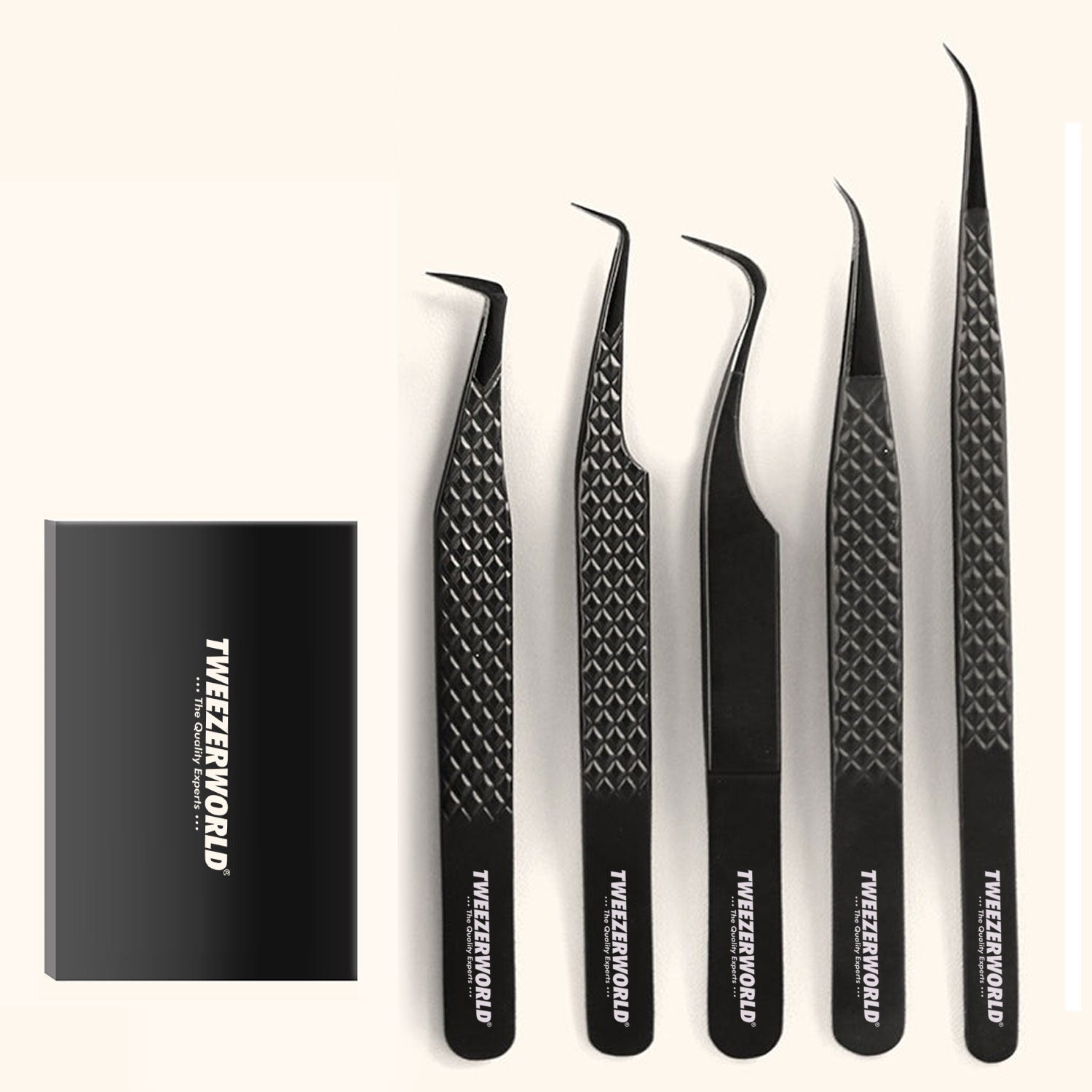

Numbered Academy Tweezers: Student Tool Replacement and QC
Numbering an academy kit is useful only when every number points to a permanent, replaceable tool specification. “Student No. 7” identifies the owner; it does not identify whether the missing tool was the approved isolation, classic or volume model. A reliable system records both the student kit number and the tool model code.
Use two identifiers
Give each kit a unique classroom identifier, such as KIT-014, and give each tool position a stable function code:
- S1: straight isolation;
- S2: curved or fine-angle isolation;
- S3: classic pickup;
- S4: approved volume profile;
- S5: optional advanced profile.
The physical tool, case slot, care card, instructor reference and replacement form should use the same function code. Color can support recognition, but it should not be the primary identifier because finishes can vary by batch.
Create a replacement specification
For every code, record the supplier SKU, profile, tip technology, finish, spring-tension range, contact-zone requirement and approved sample reference. When a student drops or loses a tool, the academy can order the same specification instead of selecting a visually similar alternative.
Define when a tool should be quarantined
Remove a student tweezer from use when the tips cross, close unevenly, show a new gap, chip, bend, develop residue that cannot be safely removed under the academy procedure, or no longer performs the defined classroom task. Do not attempt uncontrolled tip bending during a lesson.
Run a simple incoming QC check
- Match the model code to the purchase and replacement record.
- Inspect finish and permanent markings.
- Check tip condition under suitable magnification.
- Observe alignment and contact progression.
- Compare closure feel with the instructor reference sample.
- Perform the academy’s defined practice-material test.
- Record pass, conditional pass or reject.
Keep the instructor reference separate
The instructor should demonstrate core exercises with the same approved specification supplied to students. Retain one protected reference tool for each model. This helps distinguish a damaged student tool from a technique problem and provides a practical comparison when replacement stock arrives.
Plan replacement stock by failure risk
Core isolation and pickup models usually justify more spares than specialty shapes. Track losses and failures by model rather than buying the same number of every profile. Replacement timing should be condition-based; do not promise a fixed useful life without evidence from actual use and care.
What to include in an OEM academy request
State student count, tools per student, function codes, tool models, case layout, logo placement, care card, instructor references, spare quantity and replacement-order method. Approve the tool specification before finalizing color and packaging.
Related collections and buyer support
- lash tweezer sets
- lash tweezers
- straight fiber-tip isolation tweezers
- curved fiber-tip lash tweezers
- volume lash tweezers
- mega-volume lash tweezers
- protective cases and packaging
- academy kit program
- OEM process
- request an academy quotation
Build a numbered academy sample kit
Request a 5-, 10- or 20-student configuration and name the exact isolation and pickup models. Include instructor references, spare quantities, permanent replacement codes, case layout, care card, logo files and delivery country.
Contact TWEEZER WORLD® or review the OEM process before submitting the request.
Papular Products Gallery