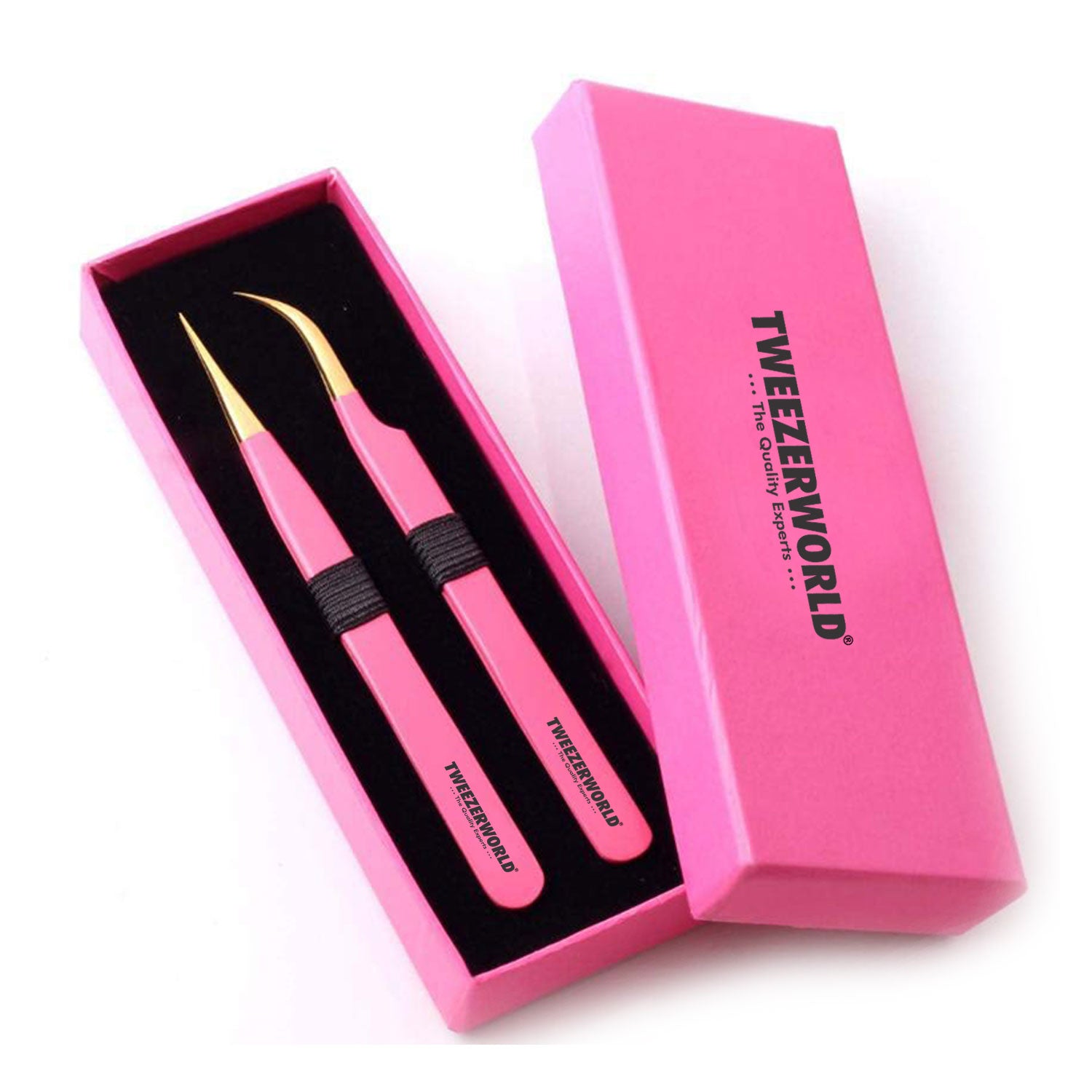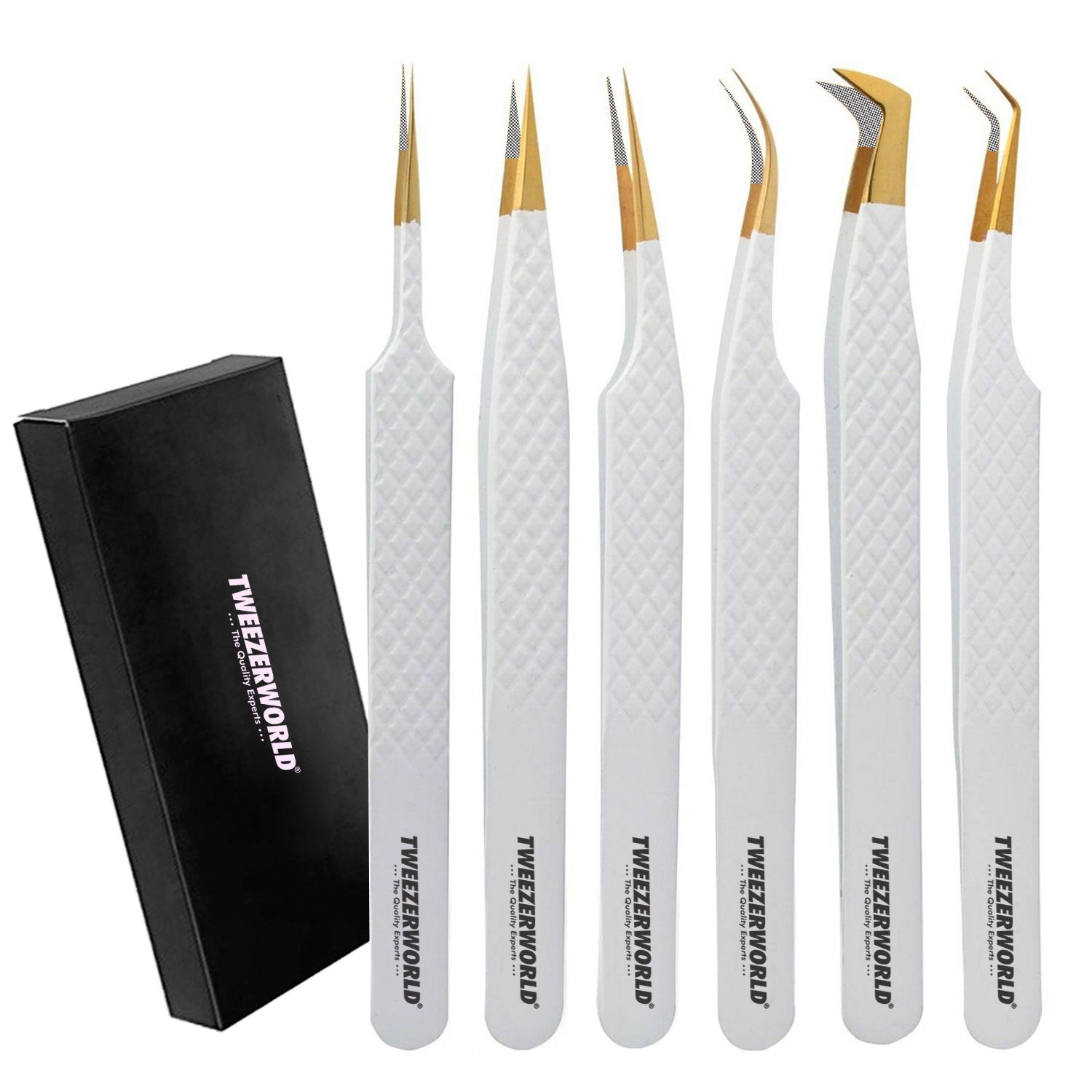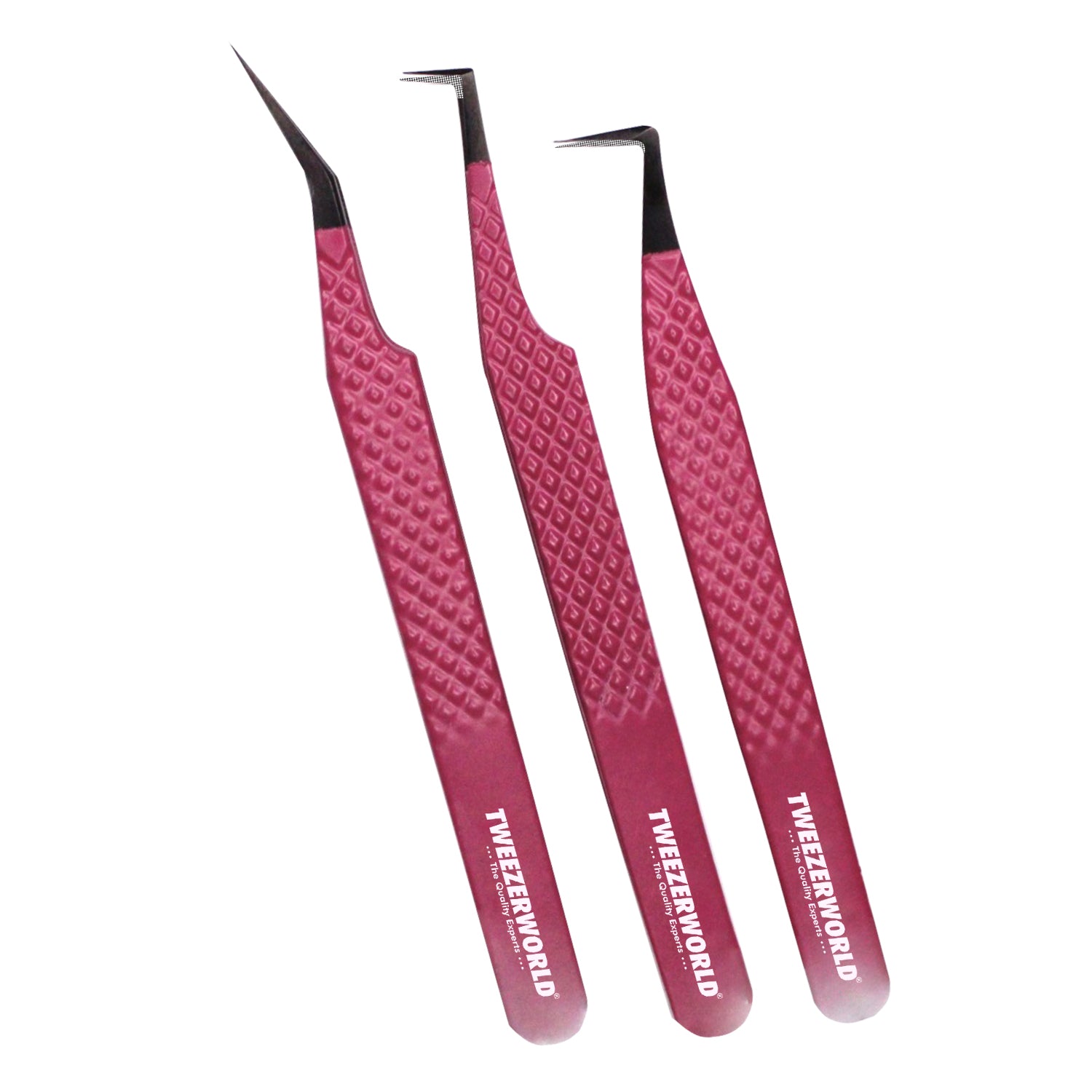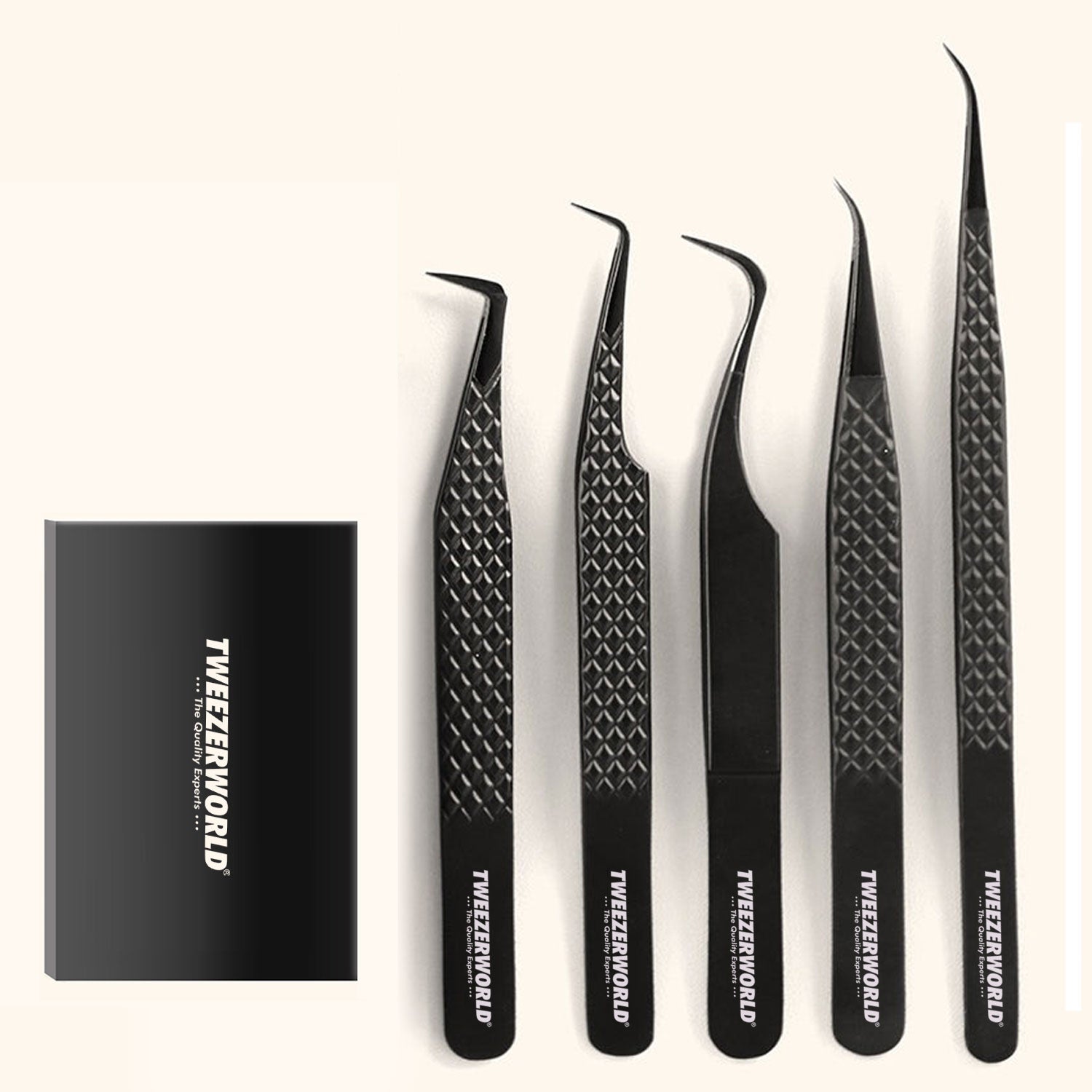

Optical Fiber Handling Tools: Contact Material Guide
Optical-fiber work brings together components with very different handling risks. A technician may work with coated fiber, buffered fiber, connector bodies, ferrules, dust caps, sleeves, optical modules, small fasteners and microscopic glass fragments during the same procedure. The tool that safely holds one item may scratch, contaminate, chip or deform another.
That is why professional optical-fiber handling tools should be selected by the intended contact surface—not by a broad catalogue description such as “precision,” “non-magnetic,” “ESD safe” or “non-marring.” Buyers should define what the tool will touch, where contact is permitted, the required grip force, cleanliness expectations and the consequences of slipping or transferring contamination.
This guide compares stainless steel, titanium, ceramic and replaceable polymer contact materials for optical-fiber installation, laboratory work, transceiver service and component handling. It also provides a practical specification framework for distributors, data-centre suppliers, laboratories and OEM brands.
Safety note: Never look into a fiber or optical port unless the system has been made safe and verified according to the applicable procedure. Bare glass-fiber fragments can penetrate skin and eyes. Wear appropriate eye protection, control fiber scraps and follow the equipment, tool and chemical manufacturers’ instructions. This article is a procurement guide, not a substitute for technical training or a site-specific safety procedure.
Why Contact Material Matters
A tweezer or handling tool creates a concentrated contact zone. Its material, edge radius, surface texture and closing force determine whether that contact is controlled or damaging.
The main risks include:
- Scratching: hard or sharp tips can mark connector bodies, coated parts, polished surfaces or fragile protective layers.
- Crushing and microbending: excessive pressure can damage coated or buffered fiber and change its mechanical or optical behavior.
- Contamination transfer: oil, adhesive, dust, polishing residue or particles retained on a tool can move to the component.
- Particle generation: worn polymer, chipped ceramic, damaged coatings or metal burrs can introduce debris.
- Electrostatic discharge: active optical modules and electronic assemblies may require handling within an ESD-control program.
- Magnetic interaction: some laboratory or precision assemblies may require low-magnetic-response tools.
- Tool slip: overly smooth tips, poor alignment or unsuitable tension can release or launch a small part.
No contact material eliminates all of these risks. Selection is always a trade-off between rigidity, wear resistance, grip, cleanliness, electrical behavior and the sensitivity of the workpiece.
First Define What the Tool Will Touch
Before choosing a material, divide the procedure into contact categories.
| Component or area | Typical handling objective | Preferred contact approach | Primary risk |
|---|---|---|---|
| Bare or stripped fiber | Positioning only within an approved termination, splicing or laboratory procedure | Dedicated fiber-processing tools and procedure-specific holders | Breakage, shards, surface damage and contamination |
| Coated or buffered fiber | Guiding or positioning without exceeding the permitted bend radius | Smooth, rounded, low-force contact where authorized | Compression, coating damage and microbending |
| Connector body or boot | Positioning an accessible non-optical surface | Broad, smooth or non-marring tips | Cosmetic damage, deformation and contamination |
| Ferrule and end face | Inspection and cleaning | Approved inspection and connector-cleaning equipment | Scratches, residue and degraded optical performance |
| Dust cap | Placement or removal without contacting the protected end face | Clean, broad, smooth tips if the procedure permits | Transferring contamination from the cap or tool |
| Optical transceiver housing or pull tab | Assisting an approved module-handling step | Specified latch, bail or extraction method; non-marring tool only when authorized | Housing damage, ESD and connector contamination |
| Small clips, screws or sleeves | Controlled pickup and placement | Fine aligned metal or polymer tips selected by the part | Dropping, marking or losing the component |
Fiber connector end faces should be inspected and cleaned with approved equipment before connection. VIAVI’s “Inspect Before You Connect” guidance emphasizes inspection and cleaning to prevent contamination-related damage and performance problems. Review the VIAVI fiber inspection and cleaning guidance.
Stainless-Steel Contact Tips
Stainless steel is widely used for precision tweezers because it can provide thin, rigid tips, predictable spring action and good wear resistance. It is suitable for many hard, non-optical components such as small metal clips, washers and fasteners.
Advantages
- Can be manufactured with fine, repeatable geometry
- Good rigidity for small hard parts
- Durable contact edges when correctly finished
- Compatible with many established cleaning processes
- Available in straight, bent, rounded and broad-tip patterns
Limitations
- Hard tips can scratch polymer, plated or coated surfaces
- Fine points concentrate closing force
- Steel is electrically conductive
- Magnetic response varies by alloy, processing and cold work
- Serrations can retain contamination and mark components
“Stainless steel” alone is not a sufficient specification. State the grade or permitted grade family, hardness or condition where relevant, surface finish, edge radius, corrosion requirement and magnetic-property test if one is needed. Avoid using the term “non-magnetic” as an absolute claim unless it is supported by a defined acceptance method.
Titanium Contact Tips
Titanium tweezers can provide low mass, corrosion resistance and generally low magnetic response. They may be useful for precision laboratory handling and long inspection sessions where tool weight and magnetic interaction matter.
Advantages
- Lightweight compared with many steel designs
- Good corrosion resistance
- Low magnetic response for many applications
- Useful balance of rigidity and tactile feedback in a well-designed tool
Limitations
- More expensive than common stainless-steel options
- Wear and edge durability depend on alloy, geometry and finish
- Still capable of scratching delicate surfaces
- Electrically conductive and not a substitute for insulation
Buyers should distinguish solid titanium construction from titanium-colored finishes or titanium-based coatings. These products can have very different mass, wear, conductivity and magnetic characteristics.
Ceramic Contact Tips
Ceramic-tip tweezers are often selected where heat resistance, electrical insulation or low magnetic response is useful. They can provide a hard, chemically resistant contact surface for carefully defined bench tasks.
Advantages
- Electrical insulation characteristics, depending on the ceramic and complete design
- High temperature resistance
- Low magnetic response
- Resistance to many chemicals
Limitations
- Brittle tips can chip or fracture after impact or side loading
- A chipped edge may become sharp or generate particles
- Hard ceramic can scratch softer surfaces
- White tips may make clear glass fragments difficult to see
- Electrical properties must be verified for the exact material and assembly
Ceramic should not automatically be described as “non-scratch.” Hardness and non-marring behavior are different. A ceramic tip may resist wear while still marking a softer connector or coating.
Non-Marring Polymer Tips
Replaceable tips made from engineering polymers or fiber-reinforced compounds can spread contact pressure and reduce direct metal-to-component contact. They are often useful for connector bodies, dust caps, coated components and other surfaces where marking is a concern.
Advantages
- Lower surface hardness than metal or ceramic options
- Broad, rounded profiles can distribute closing force
- Replaceable tips allow renewal without discarding the complete handle
- Material can be selected for insulating, conductive or static-dissipative behavior
Limitations
- Tips can wear, creep, deform or loosen
- Reinforced compounds may expose abrasive fibers as they wear
- Polymer can retain contamination or react with cleaning agents
- Temperature limits are lower than many metal or ceramic alternatives
- “Non-marring” performance depends on cleanliness, force and the contacted surface
Ask the supplier to identify the exact tip compound. “Plastic,” “carbon fiber” or “ESD material” is too vague for technical procurement. Specify surface resistance where relevant, maximum service temperature, approved cleaning agents, particle-shedding expectations and a replacement interval or inspection rule.
Contact-Material Comparison
| Material | Relative rigidity | Surface-marking risk | Electrical behavior | Typical controlled use |
|---|---|---|---|---|
| Stainless steel | High, depending on geometry | Moderate to high on soft surfaces | Conductive | Small hard parts, fasteners and precision retrieval |
| Titanium | Moderate to high | Moderate; still a hard contact material | Conductive | Low-mass, low-magnetic-response laboratory handling |
| Ceramic | High but brittle | Moderate to high on soft surfaces | Often insulating; verify exact construction | Selected heat, chemical or electrically isolated bench tasks |
| Engineering polymer | Low to moderate | Generally lower when clean and undamaged | Insulating, dissipative or conductive depending on compound | Connector bodies, dust caps and coated components |
| Fiber-reinforced polymer | Moderate | Low to moderate; rises if fibers become exposed | Compound-specific | ESD-controlled non-marring handling when validated |
These are general tendencies, not guaranteed performance ratings. The finished tool must be tested with the buyer’s representative components, handling force, cleaning process and work environment.
Tip Geometry Is as Important as Material
A soft material with a sharp point can still concentrate pressure. A hard material with a broad, rounded face may sometimes be safer than a narrow polymer point. Contact material and geometry should therefore be specified together.
| Tip geometry | Best suited to | Main caution |
|---|---|---|
| Fine straight point | Small hard components with direct access | High local pressure and scratch risk |
| Fine bent point | Small parts where an angled approach improves visibility | Side loading can bend or chip the tip |
| Rounded narrow tip | Guiding coated fiber or small polymer parts when permitted | Must not pinch or violate minimum bend radius |
| Flat or paddle tip | Dust caps, labels and broader connector surfaces | Requires more working space |
| Reverse-action tip | Holding a lightweight item during controlled bench inspection | Release action must not allow the part to spring away |
| Long-reach tip | Retrieval in recessed, de-energized equipment | Lower tactile feedback and greater risk of adjacent contact |
Do Not Use Tweezers as Connector-Cleaning Tools
Connector end faces require purpose-designed inspection and cleaning equipment. A tweezer cannot confirm cleanliness and should never scrape, wipe or pick contamination from the optical interface.
Corning recommends cleaning connector end faces before testing or insertion and identifies suitable connector and adapter cleaning tools for its systems. See Corning’s UniCam connector cleaning guidance. Cisco connector-maintenance procedures similarly use approved wipes, filtered air and inspection equipment for specified connector systems rather than improvised metal tools.
Keep tools for mechanical handling separate from tools used in controlled optical cleaning. A dedicated case, color coding or engraved task identifier can reduce cross-contamination.
ESD Requirements Around Active Optical Components
Optical fiber itself is dielectric, but transceivers, photonic modules, driver electronics, receiver assemblies and circuit boards may be sensitive to electrostatic discharge. A handling tool used near these components must fit within the site’s complete ESD-control program.
Do not assume that a polymer tip is ESD safe because it is black, or that a metal tweezer is suitable because it is conductive. Require a defined resistance range, test method, conditioning environment and acceptance criteria for the complete assembled tool. ESD control is also different from electrical insulation.
Cleanliness and Chemical Compatibility
Tool cleanliness can be more important than nominal material. Stainless steel may retain polishing compound in serrations. Polymer can absorb or retain some chemicals. Ceramic can collect residue at the joint between the tip and handle. Replaceable-tip screws can create recesses where particles accumulate.
A procurement specification should define:
- Permitted cleaning agent and concentration
- Wipe or immersion method
- Drying procedure
- Maximum cleaning temperature
- Residue and particle acceptance
- Whether the tool is dedicated to a controlled area
- Inspection frequency and replacement criteria
Do not introduce a lubricant, adhesive remover or aggressive solvent unless its compatibility with the tool and optical work area has been confirmed.
Fiber-Shard Safety and Disposal
Cleaving and termination can generate nearly invisible glass fragments. These fragments are sharp and should be controlled at the source. The Fiber Optic Association recommends eye protection, a suitable work surface and a dedicated container for fiber scraps. It also advises verifying that a fiber is dark before inspection. Review the FOA’s fiber-optic installation safety guidance.
A shard-retrieval tweezer, if included in a kit, should be dedicated to that purpose and cleaned or disposed of according to the procedure. It should not later be used on connector bodies, end-face protection or sensitive components. Never use fingers to sweep a bench or floor for glass fragments.
OEM and Distributor Procurement Specification
| Specification field | Buyer requirement |
|---|---|
| Intended contact | Identify the exact component, permitted contact area and prohibited surfaces |
| Tool pattern | Straight, bent, rounded, paddle, long-reach or reverse action |
| Body material | Exact stainless-steel, titanium or other body specification |
| Tip material | Exact alloy, ceramic grade or polymer compound; no generic material name |
| Tip dimensions | Width, thickness, angle, contact length and edge radius with measurement points |
| Tip alignment | Maximum gap, lateral offset, crossing and twist at a defined closing force |
| Closing force | Acceptance range measured at a stated opening and location |
| Surface texture | Smooth, micro-textured or serrated; define coverage and permitted roughness |
| ESD property | Resistance range, test method and conditions for the complete tool where required |
| Magnetic property | Defined test and limit if low magnetic response is necessary |
| Cleanliness | No burrs, chips, loose particles, grease, polishing residue or unidentified coating |
| Chemical compatibility | Approved cleaning agents and exposure limits |
| Replaceable tips | Replacement code, attachment method, tightening requirement and service interval |
| Packaging | Individual tip protection and contamination-controlled storage |
| Traceability | Model, lot or batch code and inspection record where required |
| Change control | Written buyer approval before material, geometry, coating or supplier changes |
Recommended Optical-Fiber Handling Set
A distributor evaluation set may include:
- Fine straight stainless-steel tweezer for small hard parts and fasteners.
- Fine bent titanium tweezer for lightweight, low-magnetic-response bench handling.
- Rounded non-marring polymer-tip tweezer for selected connector bodies, boots and dust caps.
- Flat paddle-tip polymer tweezer for broad, low-pressure contact.
- Ceramic-tip tweezer for defined heat-resistant or electrically isolated bench tasks.
- Dedicated shard-handling tweezer marked and stored separately from component tools.
This is not a universal kit. Buyers should remove any tool that has no approved use in their procedures and add manufacturer-specified cleaners, inspection equipment, cleavers, strippers, holders or extraction tools separately.
Incoming Inspection and Validation
Inspect every sample against a controlled drawing and representative workpiece. Validation can include:
- Dimensional inspection at defined measurement points
- Tip closure, alignment and contact-pattern examination
- Closing-force and return-action measurement
- Magnified inspection for burrs, chips, exposed reinforcement and residue
- Repeated cleaning-compatibility trials
- Surface-resistance testing where an ESD property is claimed
- Controlled handling trials using dummy or retired components
- Drop, tip-impact and replacement-tip retention checks where appropriate
Do not validate a tool by pickup success alone. A tweezer may grip a component while applying unacceptable pressure or leaving microscopic marks. Examine the contacted surface after repeated cycles and define the inspection magnification and rejection criteria.
Claims That Require Qualification
- “Non-marring”: identify the tested component surface, force, number of cycles and cleanliness conditions.
- “Non-magnetic”: state the material and test limit; avoid absolute wording where residual response is possible.
- “ESD safe”: provide the resistance range and test method for the complete tool.
- “Chemical resistant”: list the chemicals, concentrations, temperature and exposure duration.
- “Clean-room suitable”: support the claim with material, cleaning, packaging and particle-control evidence relevant to the target cleanroom.
- “Fiber safe”: define the fiber construction, contact area, bend conditions and validated procedure.
Frequently Asked Questions
Which tweezer material is safest for optical-fiber components?
No material is safest for every component. Broad polymer tips may reduce marking on connector bodies, while fine steel or titanium tips can provide better control for small hard parts. The exact component, contact area, force and cleanliness requirement determine the correct tool.
Can stainless-steel tweezers touch bare optical fiber?
Only when an approved process specifically requires it. Bare fiber is easily damaged and produces hazardous shards when broken. Dedicated holders, strippers, cleavers and processing tools should perform the main fiber-preparation operations.
Are ceramic tweezers non-marring?
Not automatically. Ceramic is hard and can scratch softer surfaces. Its benefits are more commonly heat resistance, low magnetic response and electrical insulation characteristics, depending on the exact construction.
Are black polymer tweezers always ESD safe?
No. Color does not establish electrical resistance. Ask for the exact compound, resistance range, test method and conditioning conditions.
Can tweezers clean a fiber connector end face?
No. Use approved inspection and connector-cleaning equipment. Tweezers can scratch the ferrule or end face and transfer contamination.
What should an optical-fiber tool distributor request from a manufacturer?
Request controlled drawings, material identification, tip dimensions, alignment and tension limits, ESD data where applicable, cleaning compatibility, packaging specifications, inspection records, replacement-tip details and change-control terms.
Specify the Contact, Then Select the Tool
Successful optical-fiber handling begins by defining the permitted contact surface and the failure risk. Stainless steel, titanium, ceramic and non-marring polymers each have useful roles, but none should be treated as a universal solution.
TWEEZER WORLD® supports optical-component suppliers, electronics distributors, laboratories and OEM brands with custom tip geometry, stainless-steel and titanium options, ceramic and replaceable polymer tips, private-label marking, protective packaging and agreed inspection criteria. Explore our ESD and anti-static tweezers and learn about OEM and private-label manufacturing.
Request an Optical-Fiber Handling Tool Set
For an accurate quotation, provide representative components or drawings, permitted contact areas, preferred materials, ESD requirements, cleaning agents, packaging, branding, quantity and destination market.
Papular Products Gallery