
Quantum & Cryogenic Tweezers: Material Selection
Quantum & Cryogenic Laboratory Tweezers: Material and Tip Selection
Choosing tweezers for a quantum or cryogenic laboratory requires more than ordering a fine-point tool described as “non-magnetic” or “cryogenic safe.” The correct instrument depends on where it will be used, what it may contact, the lowest exposure temperature, the magnetic field, the vacuum level, the contamination budget and the fragility of the component.
A tweezer used to load a chip carrier at room temperature faces different requirements from one used inside a vacuum chamber, near a superconducting magnet or in brief contact with a cold sample stage. Stainless steel, titanium, ceramic, polymer and composite tips can each be useful, but none is automatically suitable for every quantum-laboratory task.
This guide helps laboratories, distributors, OEM brands and procurement teams convert an application into measurable material, geometry, cleanliness and acceptance requirements.
Safety note: Hand tweezers are not personal protective equipment, electrically rated tools or substitutes for an approved cryostat, magnet, vacuum or cryogen procedure. Never reach into energized, pressurized or hazardous equipment. Follow the laboratory’s engineering controls, training, lockout procedures and environmental-health-and-safety requirements.
Quick Answer: Which Tweezer Is Best?
There is no universal “best cryogenic tweezer.” A sensible starting point is:
- Fine low-magnetic-response metal tips for controlled handling of small packages and robust substrates where rigidity matters.
- Titanium tools when low mass, corrosion behaviour or application-specific magnetic and thermal properties make the selected grade preferable.
- Ceramic tips when electrical insulation and low magnetic interaction are important, provided brittleness and hard-contact risks are acceptable.
- Polymer or composite tips for softer contact with delicate finishes, provided the exact formulation is qualified for temperature, vacuum, particles and cleaning.
- Rounded, paddle or broad tips when contact pressure and scratching are greater concerns than access to a very small feature.
The final choice should be qualified with the actual component, approved contact zone and handling procedure.
Begin With the Handling Stage
“For cryogenic use” is incomplete unless the buyer defines where the tool enters the process.
| Handling stage | Typical task | Main selection questions |
|---|---|---|
| Room-temperature preparation | Loading a die, sensor, chip carrier, sample mount or small fastener | Tip geometry, ESD control, cleanliness, grip force and permitted contact zone |
| Vacuum-system loading | Positioning parts before pump-down | Residues, particles, lubricants, adhesives, coatings and chamber-cleaning compatibility |
| Magnet-adjacent work | Handling fixtures or samples near a field source | Magnetic attraction, susceptibility, retained magnetism, tool length and access control |
| Cold-stage contact | Brief manipulation at a defined low temperature | Thermal conductivity, contraction, embrittlement, icing, thermal shock and dwell time |
| Warm-up and removal | Removing samples after a controlled return to safe conditions | Condensation control, contamination, surface damage and post-cycle inspection |
A tool approved for room-temperature loading should not automatically be approved for contact with a cold stage. The complete instrument—not only its nominal tip material—must be evaluated for the intended conditions.
Define the Component and Permitted Contact Zone
Quantum and low-temperature laboratories may handle superconducting-device packages, sensor assemblies, chip carriers, thin-film substrates, optical elements, sample pucks, connectors, shields and miniature fasteners. These objects do not tolerate the same contact.
The work instruction should identify whether the tweezer may touch:
- A package edge or designated handling tab
- A ceramic or metal carrier
- A substrate edge
- A protective cap
- A robust mechanical fixture
- An optical or coated surface
Direct contact with wire bonds, membranes, active device areas, polished optical faces or unsupported thin films should normally be prohibited unless the device owner has defined and validated that contact method.
Why Temperature-Dependent Properties Matter
Material labels alone do not describe low-temperature behaviour. Thermal conductivity, specific heat and dimensional contraction vary with temperature and material condition. The U.S. National Institute of Standards and Technology publishes cryogenic-to-room-temperature property data for materials including stainless steels, titanium alloys, polymers, sapphire and silicon. Buyers should use temperature-dependent data for the exact material grade wherever available rather than relying on a room-temperature datasheet.
For tweezer selection, consider:
- Heat transfer: a conductive tool can create an unwanted thermal path or rapidly chill at the working end.
- Thermal contraction: the body, replaceable tip, fastener and adhesive may contract differently.
- Strength and toughness: acceptable room-temperature behaviour does not prove resistance to low-temperature shock or brittle damage.
- Repeated cycling: alignment, tip retention and closing force can change after multiple temperature cycles.
- Condensation and icing: a cold tool exposed to ambient air can collect moisture and contamination.
Do not use “low thermal conductivity” as a complete specification. State the material, temperature range, exposure time, permissible heat input and test configuration.
Material Comparison for Quantum and Cryogenic Tweezers
| Material family | Potential advantages | Important limitations | Best considered for |
|---|---|---|---|
| Stainless steel | High rigidity, durable fine geometry, familiar cleaning methods and broad availability | Magnetic response varies by grade, processing and cold work; metal tips can scratch; thermal behaviour must be checked over the actual range | General sample preparation, robust packages, fixtures and fine access where a qualified grade is acceptable |
| Titanium alloy | Low mass, good corrosion performance and potentially favourable magnetic response for selected grades | “Titanium” does not identify the alloy or magnetic, thermal and mechanical condition; fine tips can still damage delicate surfaces | Low-mass tools and field-sensitive work after complete-tool magnetic qualification |
| Technical ceramic | Electrical insulation, low magnetic interaction and hard wear-resistant contact surfaces | Hard and potentially abrasive; brittle tips may chip; the holder, screws and adhesive can control overall compatibility | Electrical isolation or low magnetic interaction where hard contact is acceptable |
| Engineering polymer | Softer contact and potential reduction of cosmetic marking; often lower heat conduction than metals | Dimensional change, embrittlement, creep, wear, particles, solvent sensitivity and outgassing are formulation-specific | Room-temperature or qualified low-temperature handling of sensitive finishes and larger components |
| Carbon-fibre or filled composite | Replaceable-tip formats, controlled electrical behaviour in some formulations and softer contact than polished metal in some applications | Electrical resistance, anisotropy, fibres, wear debris, binders and outgassing differ by formulation and batch | ESD-controlled or non-marring handling after formulation-specific testing |
These are screening characteristics, not guarantees. A complete instrument may combine several materials in its arms, tips, screws, coating and bonding system.
Stainless-Steel Tweezers
Stainless steel is useful when the task needs a rigid, accurately formed working end. It can support very fine straight or curved profiles and withstand routine workshop handling. However, “stainless steel” and “surgical steel” are not sufficient procurement descriptions.
Specify the exact grade, heat-treatment condition, surface finish and manufacturing route. Austenitic stainless steels are often selected for low magnetic response, but forming, grinding, cold work and contamination can change the behaviour of the finished tool. Magnetic suitability should therefore be verified on the completed instrument, not inferred from a raw-material certificate alone.
Metal tips also concentrate force. For coated substrates, optical surfaces and fragile chip edges, a broader or replaceable non-metallic tip may be preferable.
Titanium Tweezers
Titanium tweezers are frequently considered for field-sensitive, corrosion-conscious or low-mass applications. Yet “titanium” covers multiple alloys and conditions. The buyer should request the exact grade and require magnetic, dimensional and functional evidence under the intended conditions.
Titanium should not be advertised as absolutely non-magnetic without a defined test and acceptance limit. Nor should lower mass be treated as proof of low heat transfer. The relevant property is the complete thermal path over the application’s temperature range.
When comparing titanium and stainless steel, evaluate tip stiffness, permanent deformation, gripping force, surface finish, particle generation and response after thermal cycling—not the alloy name alone.
Ceramic Tips
Ceramic-tip tweezers can provide electrical insulation and low magnetic interaction at the contact point. They may also resist wear and many cleaning chemicals. Those advantages are valuable when a conductive metal contact is undesirable.
The tradeoff is that ceramic is hard and brittle. A sharp ceramic edge can chip a substrate, mark a coating or fracture if twisted. Ceramic tips should be inspected for chips, cracks and looseness before use. The ceramic composition, surface texture, mounting screws and any adhesive should be identified.
A ceramic tip described as temperature resistant is not automatically qualified for rapid thermal shock, repeated cryogenic cycling or ultra-high-vacuum service.
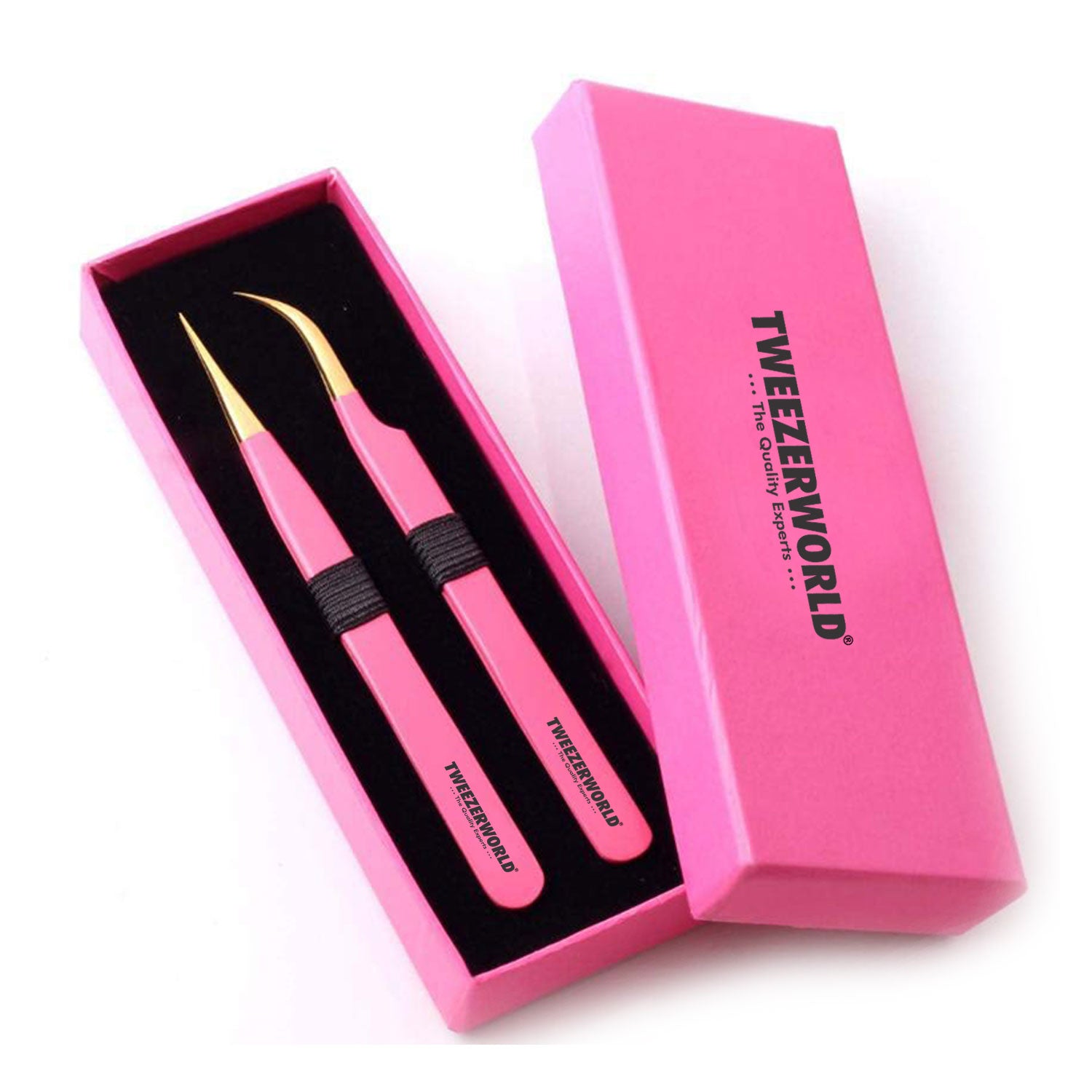
Explore TWEEZER WORLD® Ceramic Tweezers as a starting point for application review.
Polymer and Composite Tips
Polymer and composite tips are often chosen to reduce scratching or distribute contact over a wider area. They can be useful for packages, carriers, connectors and finished surfaces. Their suitability is highly dependent on the exact resin, fillers, manufacturing process and cleaning history.
For cryogenic or vacuum procurement, ask for:
- Exact material trade name and grade
- Colourant, filler and binder information where relevant
- Temperature limits and thermal-cycling evidence
- Electrical resistance or insulation test method
- Wear and particle-generation assessment
- Vacuum outgassing data for the finished formulation
- Cleaning-agent compatibility
- Tip-retention method and replacement instructions
“Plastic,” “carbon fibre” and “ESD material” are not complete specifications.
Vacuum Compatibility Is a System Property
A solid metal body may be acceptable for a vacuum process while its lubricant, coating, adhesive, polymer grip or trapped cleaning residue is not. Vacuum review must cover every material exposed to the chamber.
NASA’s outgassing database provides test data that can help screen materials for low-outgassing applications. Such data are useful evidence, but they do not by themselves prove suitability for a laboratory’s chamber pressure, bakeout, contamination budget, optical sensitivity or process duration.
The procurement specification should state:
- Target pressure range and exposure duration
- Bakeout or maximum temperature
- Permitted materials, lubricants, coatings and adhesives
- Cleaning and packaging process
- Outgassing evidence required
- Particle and residue acceptance criteria
- Whether the tool enters the chamber or only loads parts before pump-down
Magnetic Compatibility: Replace Labels With Test Conditions
In a strong magnetic field or field gradient, even a small attractive force can affect control or create a hazard. “Anti-magnetic” usually means reduced magnetic response; it does not mean zero susceptibility or universal suitability near every magnet.
Define a test for the finished tweezer that reflects the intended environment. The protocol may need to address applied field, field gradient, orientation, distance, attractive force, torque, retained magnetism and pass/fail criteria. Include screws, replaceable-tip hardware, markings and coatings in the evaluation.
Magnet-area access and tool control remain laboratory safety responsibilities. A product claim cannot replace the facility’s magnet-safety procedure.
ESD and Electrical Behaviour
Quantum-device and sensor assemblies may contain electrostatic-discharge-sensitive components. An insulating ceramic tip, conductive metal tool and dissipative composite tip behave differently. “Insulating” is not synonymous with “ESD safe,” and “conductive” is not sufficient without an approved grounding and handling system.
IEC 61340-5-1:2024 defines general requirements for protecting electronic devices from electrostatic phenomena in covered handling activities. The laboratory should determine whether its devices fall within or below the standard’s stated withstand-voltage scope and establish a process-specific ESD control plan.
Where electrical performance matters, specify the measurement method, conditioning, test voltage, electrode arrangement, required resistance range and verification frequency. Review Anti-Static and ESD Tweezers for available tool formats.
Select the Tip Geometry by Contact Risk
| Tip geometry | Potential use | Primary risk to control |
|---|---|---|
| Extra-fine straight | Small robust components and narrow access | High contact pressure, tip bending and accidental puncture |
| Fine curved | Side approach and improved sightline around fixtures | Lateral loading, rotated components and difficult alignment inspection |
| Rounded or blunt | Packages, carriers and larger parts | Reduced access and possible slipping if the contact finish is too smooth |
| Flat or paddle | Distributing force across a package edge or tab | Oversized contact area and contact with forbidden surfaces |
| Reverse action | Holding a part without continuous hand pressure | Excessive default force and uncontrolled release |
| Long reach | Access into fixtures or shielded spaces when equipment is in a safe state | Reduced stiffness, leverage, vibration and accidental contact |
| Replaceable soft tip | Sensitive finishes and application-specific contact | Loose tips, particles, formulation changes and contamination at fasteners |
Tip width, thickness, radius, angle, surface texture and closing contact should be shown on a controlled drawing. Pattern names alone are interpreted differently by suppliers.
Control Closing Force, Alignment and Release
A technically suitable material can still produce a poor instrument if the tips cross, the arms twist or the closing force varies widely. Define:
- Free opening
- Closing-force range at a specified opening and measurement point
- Tip-contact sequence
- Maximum gap and lateral offset
- Permitted tip rotation
- Return action after repeated compression
- Maximum permanent deformation
- Release behaviour using representative components
A “perfectly aligned” claim should be avoided. Alignment is meaningful only when accompanied by a drawing, measurement method, magnification, applied force and acceptance limit.
Cleanliness and Packaging
Contamination can come from polishing compound, fingerprints, oil, passivation residue, particles, foam inserts, adhesives and packaging fibres. The buyer should define the final-cleaning process and the condition in which the tool arrives.
Possible requirements include solvent compatibility, ultrasonic-cleaning restrictions, particle limits, non-shedding packaging, double-bagging, lot identification and cleanroom transfer procedures. Do not describe a tool as “cleanroom compatible” without stating the cleanliness level, preparation process and packaging configuration.
Qualification and Acceptance Tests
| Characteristic | Suggested evidence or test | Example acceptance approach |
|---|---|---|
| Material identity | Batch-linked certificate and suitable identity verification | Exact approved grade; no unapproved substitution |
| Tip geometry | Dimensional inspection against controlled drawing | Width, thickness, radius, angle and texture within stated tolerances |
| Alignment | Inspection at defined magnification and closing force | No crossing; offset and gap within numeric limits |
| Closing force | Force measurement at a defined opening and location | Within model-specific range |
| Magnetic response | Complete-tool test under defined field conditions | Attraction, torque or susceptibility within project limit |
| Thermal cycling | Specified temperature range, ramp, dwell and number of cycles | No cracking, looseness, unacceptable deformation or functional loss |
| Vacuum suitability | Material data plus chamber-relevant qualification | Meets project outgassing, residue and particle limits |
| Electrical behaviour | Resistance or insulation test under defined conditioning | Within approved range for the ESD plan |
| Cleanliness | Visual, particle, residue or analytical test as required | No prohibited residue; packaging remains clean and intact |
| Representative handling | Controlled trial with reference components or coupons | Secure pickup and release without unacceptable marking or damage |
Qualification proves that a design can meet requirements. Routine batch inspection confirms that production remains consistent. Buyers should not confuse a single approved sample with ongoing lot conformity.
Recommended Laboratory Tweezer Set
A multi-purpose quantum or cryogenic laboratory may evaluate a set containing:
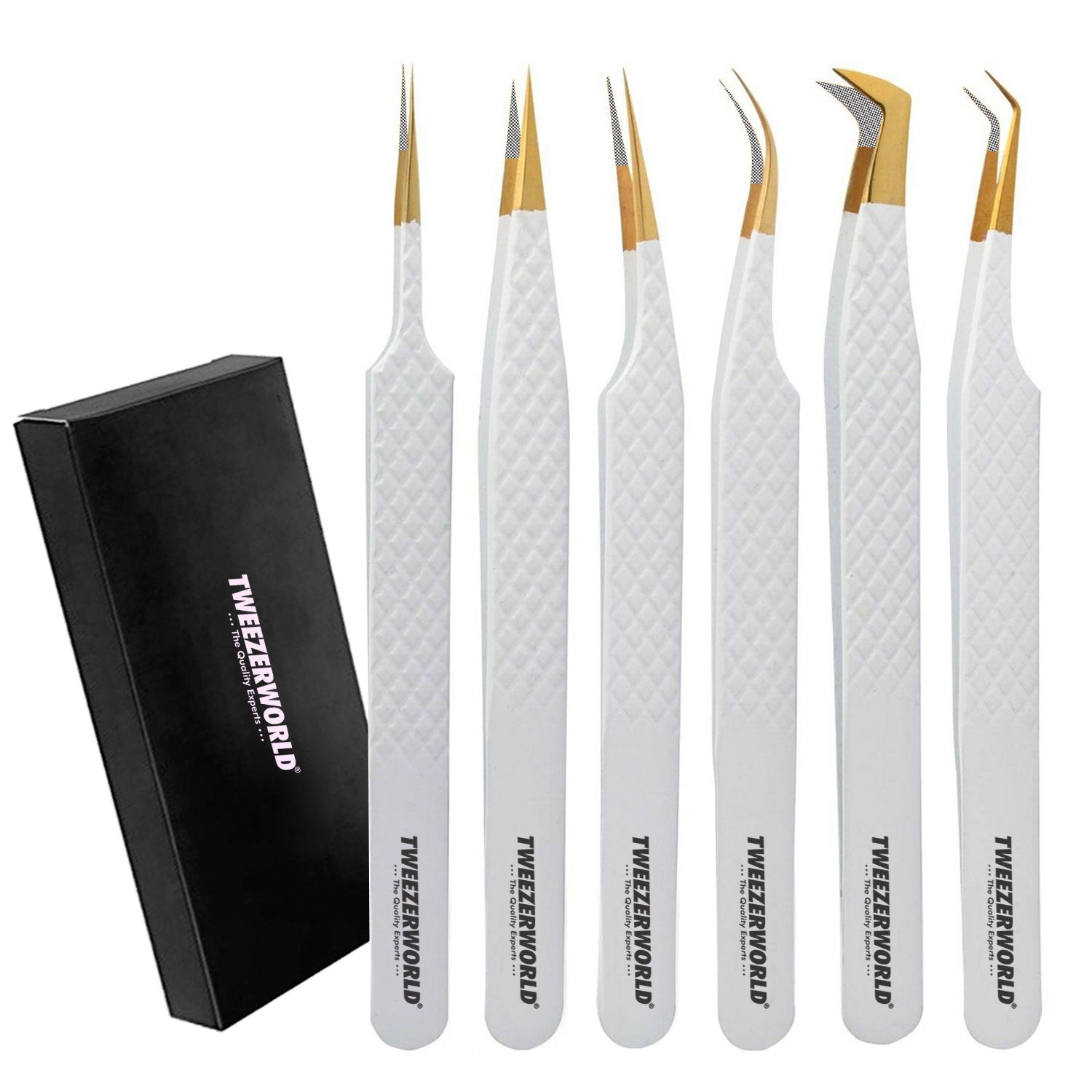
- Fine straight low-magnetic-response metal tweezers for small robust parts
- Fine curved low-magnetic-response tweezers for side access
- Rounded or paddle-tip tweezers for packages and carriers
- Ceramic-tip tweezers for electrically isolated contact
- Replaceable polymer or composite-tip tweezers for sensitive finishes
- Medium-duty blunt tweezers for small hardware and fixtures
Each instrument should have a defined purpose, approved contact zone and storage position. Colour coding or laser marking can reduce tool mix-ups, provided the marking material and process satisfy magnetic, vacuum and cleanliness requirements.
Procurement Specification Checklist
| Procurement field | Buyer’s requirement |
|---|---|
| Application | Identify component, operation and permitted contact zone |
| Use stage | Room-temperature preparation, vacuum loading, magnet-adjacent work or cold-stage contact |
| Temperature | Minimum, maximum, ramp, dwell, number of cycles and exposure atmosphere |
| Magnetic environment | Field, gradient, distance, orientation and complete-tool acceptance limit |
| Vacuum | Pressure range, duration, bakeout and contamination limits |
| ESD requirement | Applicable control plan, resistance range and test method |
| Body material | Exact alloy or approved formulation with batch traceability |
| Tip material | Exact grade, filler, coating and attachment method |
| Tip geometry | Width, thickness, radius, angle, length, finish and tolerance |
| Alignment | Gap, offset, contact pattern, magnification and closing force |
| Closing force | Minimum and maximum at a defined measurement point |
| Cleaning | Permitted agents, method, final rinse, drying and verification |
| Packaging | Tip protection, clean bagging, labels, lot traceability and storage |
| Qualification | Thermal, magnetic, vacuum, ESD, particle and functional tests as applicable |
| Batch acceptance | Critical, major and minor defects; sampling plan; required records |
| Change control | Prior approval for material, process, tooling, coating, adhesive, supplier or site changes |
Avoid Overclaiming Performance
| Risky claim | More defensible specification language |
|---|---|
| Non-magnetic | Finished tool meets the stated magnetic-response limit under the defined test conditions |
| Cryogenic safe | Qualified for the stated temperature range, dwell, atmosphere and number of cycles |
| Vacuum safe | Materials and process meet the stated outgassing, residue and particle criteria for the defined vacuum system |
| Zero heat transfer | Thermal performance evaluated against the project’s maximum permissible heat input |
| Non-scratch | No unacceptable marking on the approved reference coupon under the stated force and handling method |
| ESD safe | Electrical properties verified by the specified method and integrated into the laboratory’s ESD control plan |
| Perfect alignment | Tip gap and lateral offset meet numeric limits under defined inspection conditions |
OEM and Private-Label Quantum Laboratory Tweezers
For an OEM set, the buyer and manufacturer should approve each model separately. A straight metal tweezer, ceramic-tip tweezer and replaceable polymer-tip instrument require different material records and tests.
TWEEZER WORLD® can discuss:
- Stainless-steel and titanium material options
- Straight, curved, rounded, paddle and long-reach geometries
- Ceramic, polymer and composite replaceable tips
- Closing-force and alignment requirements
- Custom laser marking and set identification
- Protective cases and controlled packaging
- Inspection reports, batch traceability and golden samples
- OEM and private-label production
Documentation and suitability must be confirmed for the exact tool, component, laboratory process and destination market. Learn more about OEM and Private-Label Tweezer Manufacturing and browse Precision Tweezers.
Frequently Asked Questions
What makes a tweezer suitable for cryogenic laboratory work?
Suitability comes from qualification for a defined application, temperature range, atmosphere, contact material, geometry and number of cycles. The word “cryogenic” alone does not prove performance.
Is titanium always non-magnetic?
No absolute claim should be made from the material name alone. Specify the alloy and test the complete finished instrument under conditions relevant to the magnetic environment.
Are ceramic tips safe at cryogenic temperatures?
Some ceramics may tolerate low temperatures, but the complete tip assembly can still fail through thermal shock, brittle damage, differential contraction or attachment problems. Project-specific testing is required.
Can polymer tips be used in vacuum?
Only after reviewing the exact polymer formulation, fillers, cleaning process, outgassing data, particles and chamber requirements. A generic polymer-family name is not enough.
Which tweezers should handle superconducting devices?
Choose from the device owner’s approved handling method. Define permitted contact areas, magnetic limits, ESD controls, force and cleanliness before selecting a material or shape.
Should tweezers touch a bare quantum chip?
Not unless the device owner has explicitly defined a safe contact zone and validated the method. Handle packages, carriers or designated edges whenever the process permits.
How should magnetic response be specified?
State the field or screening method, orientation, distance, complete-tool configuration, measured quantity and pass/fail limit. Avoid relying only on “anti-magnetic” wording.
What does low outgassing mean for tweezers?
It means the exposed materials meet defined volatile-loss or contamination criteria under a stated test. The result must still be evaluated against the laboratory’s vacuum and sensitivity requirements.
Are ESD tweezers the same as insulating tweezers?
No. ESD control may require conductive or dissipative behaviour within a managed system, while an insulating tool interrupts conduction. The correct property depends on the process and device.
What should an OEM buyer approve before production?
Approve drawings, materials, finishes, closing force, alignment, functional samples, qualification evidence, cleaning, packaging, marking, inspection records and change-control requirements.
Conclusion
Quantum and cryogenic laboratory tweezers should be selected as engineered handling tools, not by marketing labels. Begin with the component, contact zone and use stage. Then specify temperature, vacuum, magnetic, ESD, cleanliness, force and geometry requirements.
Stainless steel offers rigidity, titanium may provide useful mass and magnetic characteristics, ceramic can provide insulation, and polymer or composite tips can reduce contact damage. Every option introduces tradeoffs that must be verified on the finished instrument under representative conditions.
Papular Products Gallery