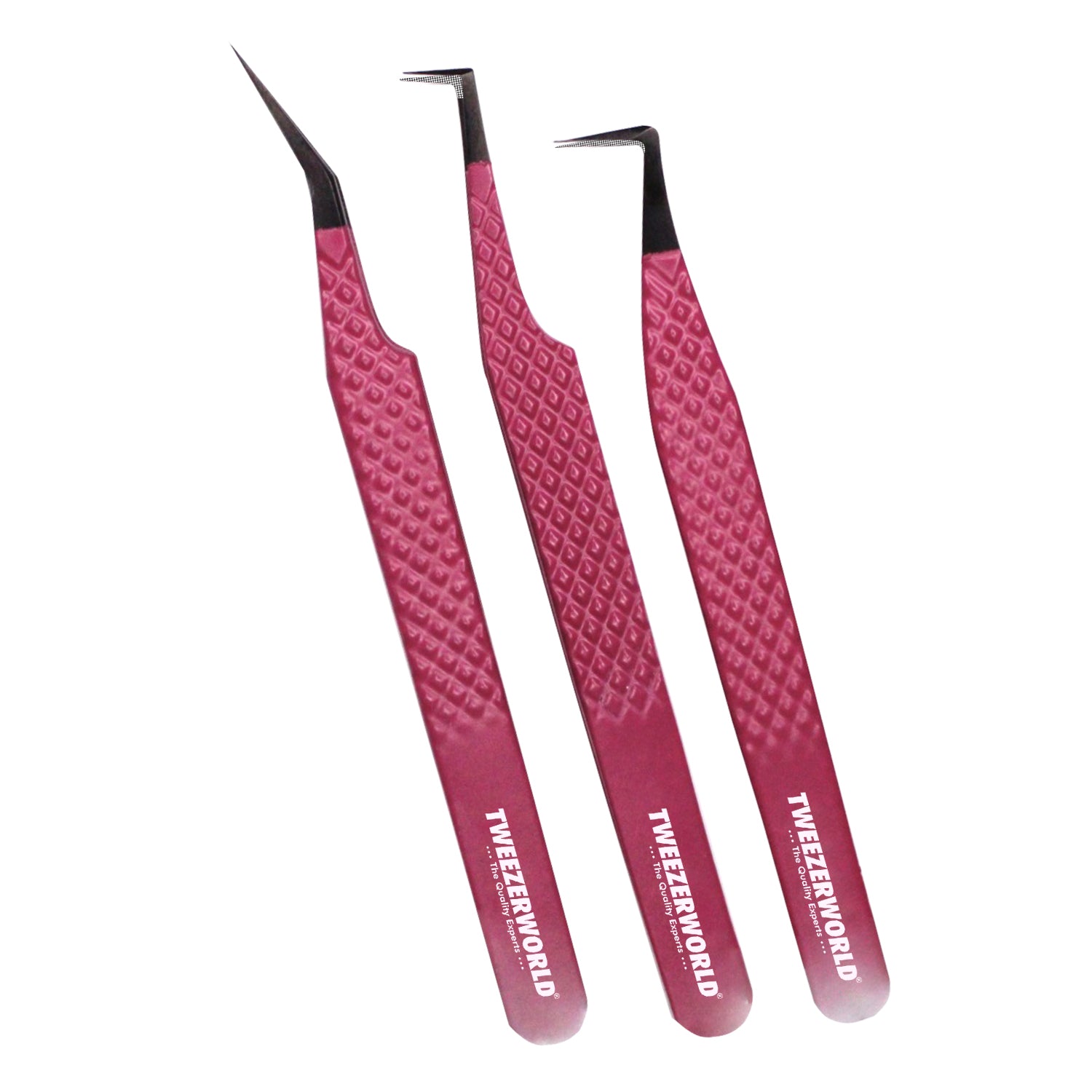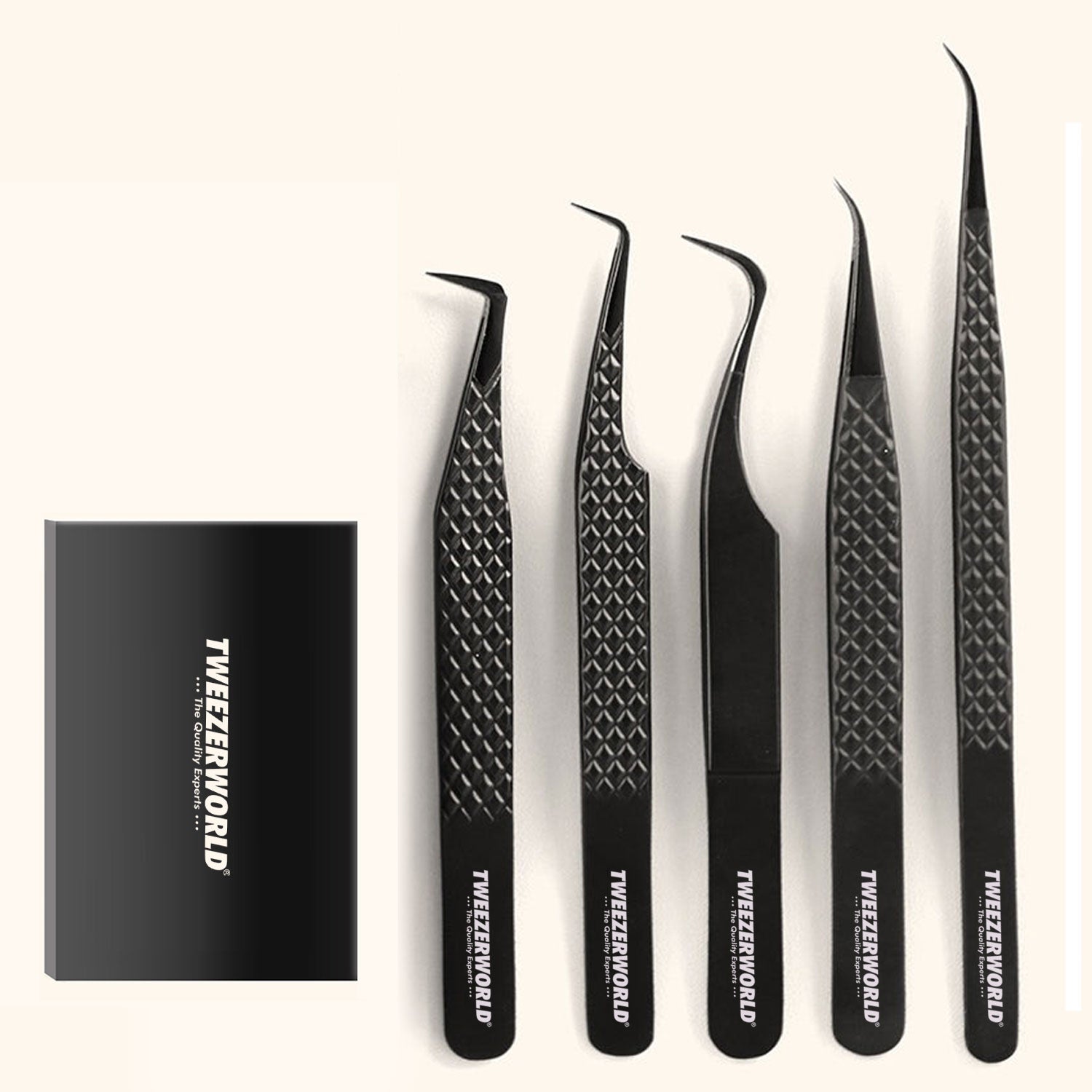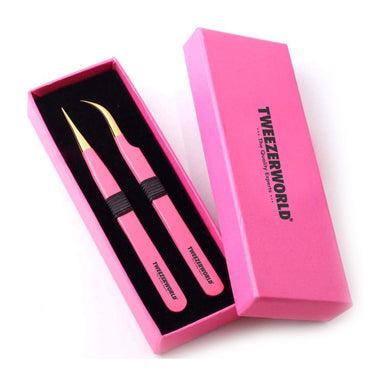

Academy Student Tweezers vs Instructor Tweezers
Academy Student Tweezers vs Instructor Tweezers
A lash academy should not choose student and instructor tweezers as two unrelated product groups. The most effective training system uses the same approved core models for demonstrations and student practice, while the instructor receives additional comparison tools, diagnostic models and backups.
Student tweezers should make the academy’s core techniques easier to learn repeatedly. Instructor tweezers must also help the trainer demonstrate alternatives, diagnose whether a difficulty comes from technique or tool selection, and keep the class running when a tweezer is dropped or damaged.
This guide explains how lash academies, independent educators and private-label training brands can specify student and instructor tweezer sets without creating unnecessary complexity.
Quick answer: Give students a small, standardised set matched to the techniques taught. Give instructors the same reference set, plus clearly labelled alternative shapes, tip technologies, tension samples and spare tools. The instructor should demonstrate first with the same model the students are using.
Explore TWEEZER WORLD®’s Academy Training Tweezer System and Private-Label Lash Academy Tweezer Kits.
Academy Student Tweezers vs Instructor Tweezers: Main Differences
| Specification area | Student tweezers | Instructor tweezers |
|---|---|---|
| Primary purpose | Learn and repeat the academy’s core techniques | Demonstrate, compare, diagnose and assess |
| Core models | Small standardised set | The same student models as a matched reference set |
| Additional models | Only those required by the course | Alternative shapes, grip styles and tension options |
| Shape choice | Predictable isolation and pickup shapes | Matched core shapes plus comparison models such as 45°, boot, 90°, L-shape or J-curved |
| Tip technology | One approved plain-tip or fiber-tip specification | Matched student specification plus selected comparison tips |
| Tension | Consistent approved range, commonly soft to medium depending on the model | Matched student tension plus labelled comparison samples if taught |
| Identification | Simple model names, colour codes or numbers | Detailed labels showing model, role and comparison purpose |
| Quantity | Usually 2–4 tools for beginner and combined courses | Core set, comparison set, reference sample and backups |
| Packaging | Compact protective case with care card | Organised trainer case with separated and labelled tool groups |
| Replacement planning | Clear replacement model code | Immediate spare stock and batch-reference tools |
The instructor set is broader, but it should not make the student set appear inferior. Both sets require accurate alignment, suitable grip, controlled tension and a clean finish. The difference is their training role.
Why the Instructor Should Use the Same Core Tweezers as Students
A common academy problem occurs when the trainer demonstrates with a personal favourite tweezer while students receive a different shape, tension or tip technology. The instructor may create an easy fan with a familiar 90° fiber-tip tweezer, while the student is expected to repeat the movement with a smooth 45° model. The learning difficulty is then blamed on the student even though the tools behave differently.
For every core exercise, the instructor should have a matched reference model from the same approved specification as the student kit. This makes it easier to:
- demonstrate the same hand position and pickup angle;
- explain the location of the gripping area or sweet spot;
- compare student technique under similar tool conditions;
- identify a defective or damaged student tool;
- standardise assessments across different course dates; and
- order the correct replacement model later.
The trainer can still show alternative tweezers, but those alternatives should be introduced as deliberate comparisons rather than silently substituted during demonstrations.
What Makes a Good Student Lash Tweezer?
A student tweezer should support learning without hiding the technique or creating avoidable frustration. That does not mean every beginner needs the softest tension, widest boot or most aggressive inner-tip texture. It means the academy has selected a predictable specification for a defined exercise.
1. A clear role in the course
Each tweezer should have one easy-to-explain purpose. For example:
- S1 — Isolation: separating natural lashes
- S2 — Classic pickup: picking up and placing individual extensions
- S3 — Volume pickup: creating or picking up fans using the academy’s chosen method
- S4 — Advanced volume: a second pickup shape only when the course teaches it
Simple model codes allow the trainer to say “use S2” instead of asking students to interpret several visually similar tools.
2. Consistent, controlled tension
Light or medium spring tension can reduce thumb effort for many users, but “light tension” must be defined and tested rather than used as a vague description. If one student receives a very soft tool and another receives a firm tool, their hand pressure and pickup experience will differ.
The academy should approve a practical tension range for every model. The range can be evaluated through measured closing force, technician assessment or both. An instructor reference sample should represent the accepted feel.
3. A visible and teachable gripping area
The student should be able to understand where the tweezer grips. For classic pickup, the meeting area may be narrow and precise. For volume pickup, a boot, 45° or 90° model may provide a broader working zone depending on the technique.
A textured fiber tip can offer useful grip for some volume methods, but strong texture should not replace technique instruction. The student still needs to learn correct pickup position, pressure and release.
4. Reliable alignment
The tips should meet at the intended contact area without crossing or leaving an unintended gap. Poor alignment can make a correct student movement fail. Academy kits should be inspected before packing, and trainers should know how to identify damage after drops or misuse.
5. Protective, practical packaging
A student case should protect the tips, keep models separated and make it obvious where each tool belongs. Include a concise care card covering safe storage, adhesive-residue removal and the academy’s approved cleaning and disinfection procedure.
What Makes a Good Instructor Tweezer Set?
An instructor set serves four functions: demonstration, comparison, diagnosis and continuity. It should therefore be organised into clearly defined groups.
Matched demonstration set
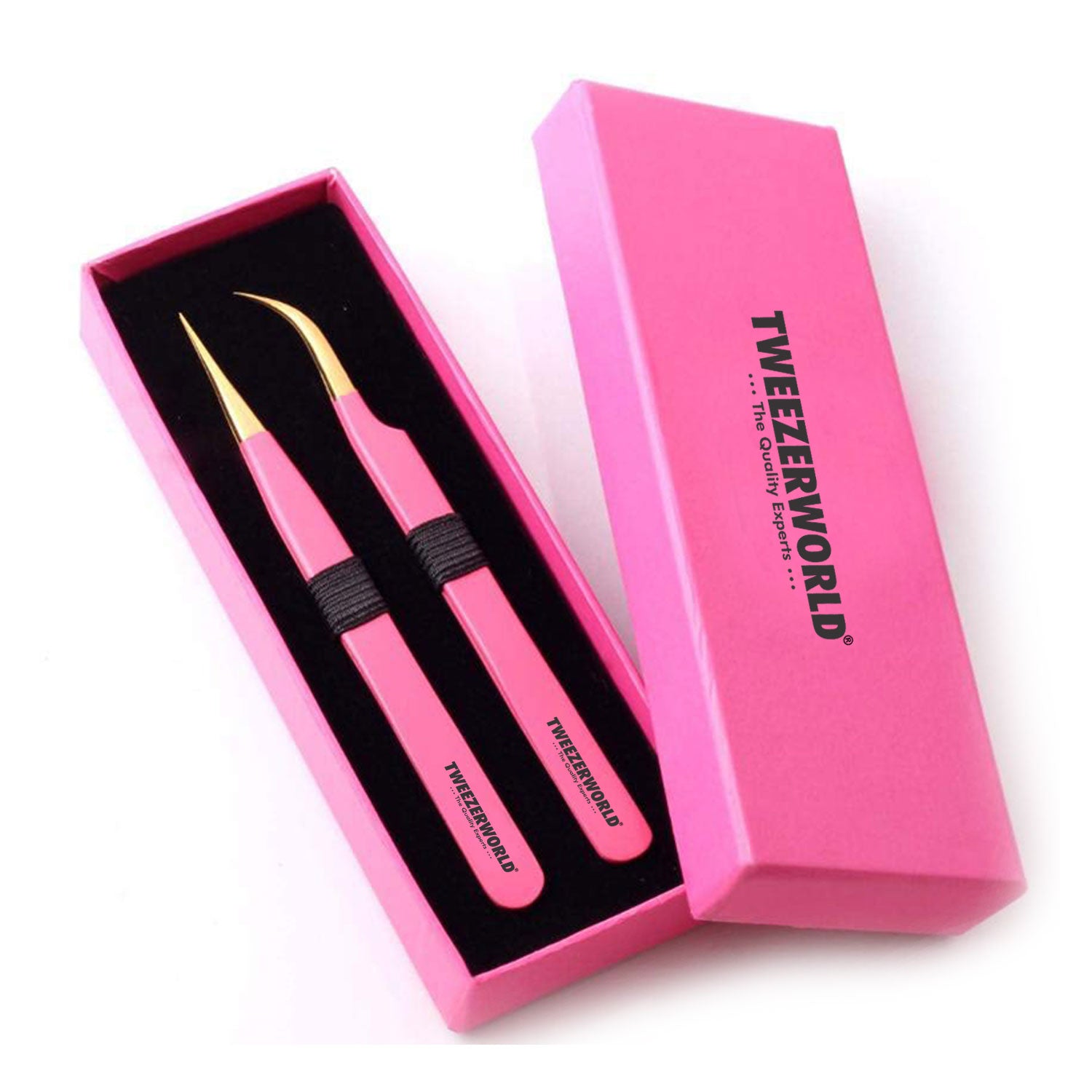
This set should contain the same approved models supplied to students. If the student kit includes isolation, classic pickup, 45° volume and boot tweezers, the instructor needs those exact four references.
Comparison set
The trainer may need to explain why different artists prefer different shapes. A comparison set can include selected alternatives such as:
- straight isolation versus curved isolation;
- 45° versus 90° pickup;
- boot versus slim boot;
- L-shape versus J-curved;
- plain tip versus fiber tip; and
- soft versus medium tension.
The purpose is not to overwhelm beginners with choices. The instructor introduces alternatives when explaining ergonomics, fan-making methods or progression to advanced work.
Diagnostic set
A diagnostic set helps answer a practical question: is the student struggling because of technique, tool condition or tool suitability?
The trainer can compare the student tool against an approved reference, check alignment under magnification, test the gripping area with the same practice lashes and determine whether the tool has been dropped, contaminated or damaged.
Backup set
A class should not stop because one tweezer is damaged. Keep spare core models in sealed or clearly protected positions. The backup should match the current approved batch specification as closely as practical.
Isolation Tweezers for Students and Instructors
Isolation is a core skill in classic, hybrid and volume training. A beginner kit normally needs one approved isolation tweezer rather than several competing shapes.
Student isolation options
- Straight isolation: a direct, easy-to-explain shape for general training.
- Gentle curved isolation: useful when the academy teaches a side approach or needs improved access around lash layers.
- Long isolation: may improve reach for some hand positions, but length and point rigidity should be tested.
The academy should choose one primary model for its beginner programme. A second isolation shape is more appropriate in an advanced course or instructor comparison set.
Instructor isolation options
The instructor needs the student reference model plus one or two alternatives. These allow the trainer to show how curve, length and hand position influence visibility and access without suggesting that every student must immediately purchase several isolation tweezers.
Pickup Tweezers for Student and Instructor Kits
Pickup models should match the techniques taught. A classic-only course does not need the same set as a volume or mega-volume programme.
| Pickup shape | Possible student use | Instructor use |
|---|---|---|
| Straight or gently angled classic | Classic extension pickup and placement | Matched demonstration and basic placement assessment |
| 45° volume | Versatile volume training when it matches the academy method | Core demonstration plus comparison with steeper angles |
| Boot or mini boot | Broad pickup zone for selected volume techniques | Demonstrate pickup-zone position and compare boot widths |
| 90° volume | Advanced volume or mega-volume training where appropriate | Demonstrate dense fan work and compare wrist position |
| L-shape or J-curved | Usually advanced or technique-specific courses | Comparison, troubleshooting and specialist demonstrations |
Learn more about the available shapes in the Lash Tweezers Guide or browse the complete Lash Tweezers Collection.
Plain Tips vs Fiber Tips in Academy Training
Plain and fiber tips can both have a place in academy programmes. The choice should follow the course method, the practice lash material and the academy’s learning objectives.
Student set
Use one approved tip technology for each core exercise so all students begin with comparable grip behaviour. If the course is built around a fiber-tip boot for volume pickup, supply that same model consistently. If the academy teaches precise smooth-tip control, do not substitute a textured model without reviewing the course method.
Instructor set
Keep the matched student specification for demonstrations. Add a plain-versus-fiber comparison pair only if the trainer will explicitly teach how inner-tip texture changes pickup feel, pressure and maintenance.
Fiber texture can support grip, especially for selected volume and mega-volume methods, but it is not automatically the best choice for every beginner or technique. Texture pattern, coverage, alignment and tension must be evaluated together. Explore the Fiber Tip Lash Tweezers Collection.
Recommended Academy Kit Structures
| Course level | Student kit | Instructor kit |
|---|---|---|
| Beginner classic | Straight or gentle-curved isolation + classic pickup | Matched 2-piece set + alternative isolation + spare pair |
| Classic and hybrid | Isolation + classic pickup + approved hybrid/volume pickup | Matched 3-piece set + 45°/boot comparison + backups |
| Volume foundation | Isolation + 45° or boot + second course-specific pickup if required | Matched set + 45°, boot and 90° comparison + plain/fiber references |
| Advanced volume | Isolation + 45° + boot + 90° or another approved four-piece combination | Matched four-piece set + L-shape/J-curved options + tension references + backups |
| Trainer education | Not applicable | Full reference library, batch master samples, assessment tools and spare stock |
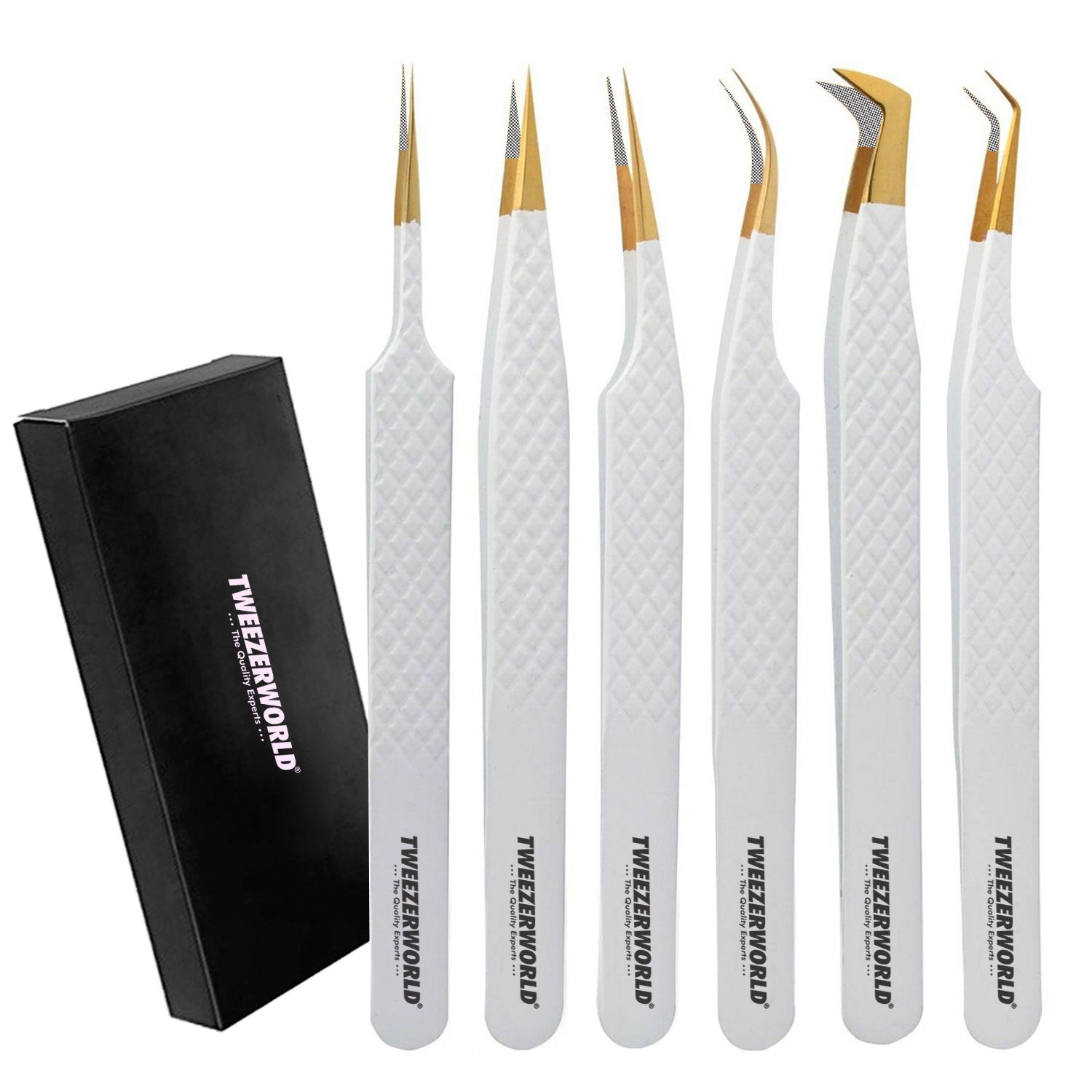
TWEEZER WORLD®’s 4-Piece Fiber Tip Lash Tweezer Set includes isolation, 45°, boot and 90° models and can be evaluated as a starting structure for combined volume training. Final shapes and tip specifications should still be matched to the academy’s curriculum.
Quality-Control Requirements for Academy Kits
Academy procurement requires more than attractive colours and logos. Inconsistent tools can make assessments unfair and create unnecessary support requests.
Core inspection points
- Tip alignment: the intended contact faces meet without crossing.
- Grip performance: the tool picks up the approved practice material at the defined working area.
- Sweet-spot consistency: the usable gripping zone is sufficiently repeatable across the batch.
- Tension: closing force remains within the academy’s approved range.
- Surface finish: no burrs, sharp unintended edges, deep scratches or loose coating.
- Identification: every model and kit component is correctly labelled.
- Packaging protection: tips cannot strike each other or become side-loaded in transit.
Approve golden samples
Keep an approved sample of each student model and instructor comparison model. Record the model code, specification revision, finish, tip technology, tension classification and approval date. A golden sample gives the academy and supplier a shared physical reference for repeat orders.
Control substitutions
The supplier should not replace a 45° shape with a visually similar model, change from plain to textured tips or alter the tension without approval. Even a small change may affect the teaching method and student experience.
Colour Coding and Model Identification
Colour can support training when it has a functional role. For example:
- Silver: isolation
- Black: classic pickup
- Gold: 45° volume
- Rose gold: boot
- Blue: 90° or advanced volume
This is only an example. The academy may use one brand colour across the full set and identify models through laser codes instead. Whatever system is chosen should appear consistently on the tool, case position, care card, course manual and replacement-order form.
Do not rely on colour alone. Coating batches can vary slightly, and visually similar models may be confused. Use a permanent model number or name as the primary identifier.
Student Packaging vs Instructor Packaging
Student packaging should include
- a compact protective case or pouch;
- a clearly labelled position for every tweezer;
- an academy logo and student-kit name;
- a concise use and care card;
- a replacement model list or QR link; and
- student name or kit number where useful.
Instructor packaging should include
- a matched demonstration section;
- a separately labelled comparison section;
- protected spare tools;
- a reference sample or inspection card;
- model, tension and tip-technology labels; and
- space for inspection notes or replacement records.
The instructor case should make it impossible to confuse a standard student model with a specialty comparison tool during a live class.
Care, Cleaning and Replacement
Both student and instructor tools need documented care. Adhesive residue, contamination, drops and incorrect storage can change gripping performance even when the original tweezer passed inspection.
- Remove adhesive residue using a method compatible with the tool material and finish.
- Follow the academy’s documented hygiene procedure and applicable local requirements.
- Observe the cleaning or disinfectant manufacturer’s concentration and contact-time instructions.
- Dry the tools completely before storage.
- Protect the tips individually.
- Inspect alignment after a drop or impact.
- Quarantine tweezers that cross, slip, chip, bend or close unevenly.
Do not make an autoclave, sterilisation or chemical-resistance claim for an academy tweezer unless the complete model and finish have suitable supporting evidence for the stated process.
Replacement timing should be condition-based rather than based only on a calendar. A well-protected trainer reference may remain consistent longer than a student tool that has been dropped. Academies should keep spare core models and a simple inspection-and-replacement rule.
Common Academy Procurement Mistakes
Choosing by colour before technique
Brand colours are valuable, but the academy must first approve shape, tip technology, tension and grip.
Giving beginners too many shapes
A six-piece kit may look premium but can confuse students when only two tools are required for the course. Add shapes as the curriculum progresses.
Teaching with a different instructor model
If the trainer demonstrates with a different tool, students cannot reliably reproduce the same hand position, sweet spot or closing pressure.
Assuming fiber tips solve every pickup problem
Textured tips can change grip, but technique, alignment, tension and cleanliness remain important.
Leaving tension undefined
“Lightweight” describes overall mass, not necessarily thumb pressure. Specify closing tension separately.
Ordering without spare models
Drops and damage occur during training. Without approved spares, the class may continue with a mismatched tool.
Using one model code for several shapes
Every approved shape and tip technology should have its own reference so replacements remain accurate.
Academy Tweezer RFQ Checklist
| Procurement field | Academy requirement |
|---|---|
| Course type | Classic, hybrid, volume, mega volume, advanced or trainer education |
| Student learning outcomes | Define the techniques each model supports |
| Student set configuration | List exact shape, model code and quantity |
| Instructor matched set | Same core models as the student kit |
| Instructor comparison set | List alternative shapes, tips and tension references |
| Tip technology | Plain, fiber, hex, cross, straight-line or another approved specification |
| Texture coverage | Full or partial inner gripping area |
| Tension | Approved soft, medium or model-specific measured range |
| Finish and colour | Approved coating, finish reference and acceptable variation |
| Branding | Academy logo, model code, kit level and optional student identification |
| Quality checks | Alignment, grip, tension, finish and set completeness |
| Packaging | Student case, instructor case, tip protection and care materials |
| Spare quantity | Define replacement stock per class or annual intake |
| Golden samples | Approved reference for every model and revision |
| Change control | No unapproved change to shape, tip, tension, finish or packaging |
OEM and Private-Label Academy Tweezer Systems
A private-label academy system can extend the training experience beyond the course. Students continue using tools marked with the academy’s name, and replacement sales can become a structured part of the programme.
Customisation options may include:
- academy logo engraving;
- student and instructor model codes;
- custom colours and finishes;
- plain or selected fiber-tip technology;
- 2-piece, 3-piece, 4-piece or custom sets;
- student cases and larger instructor cases;
- care cards and course inserts;
- barcode or replacement-order labels; and
- wholesale replenishment planning.
Start with the course specification, then approve digital artwork, production-intent samples and packaging before bulk production. Read the full Branded Lash Academy Tweezer Kits Guide, review OEM and Private-Label Manufacturing, or see the OEM Process.
Frequently Asked Questions
Should students and instructors use the same lash tweezers?
They should use the same approved core models for demonstrations and practice. The instructor can also keep alternative shapes, tip technologies, tension references and backups for comparison and troubleshooting.
How many tweezers should a beginner student kit contain?
A classic beginner kit often needs two tools: one isolation tweezer and one classic pickup tweezer. Combined classic, hybrid or volume programmes may require three or four models. The course objectives should determine the quantity.
What is the best lash tweezer for students?
There is no universal best model. A suitable student tweezer has a clear role in the curriculum, consistent tension, reliable alignment, a teachable gripping area and protective packaging. Shape and tip technology should match the technique being taught.
Are fiber-tip tweezers suitable for lash students?
They can be suitable when the academy teaches a technique that benefits from the approved fiber-tip shape and texture. Fiber tips may support grip, but they do not replace correct pickup position, pressure, release and care.
Why does an instructor need more tweezer shapes?
Instructors use additional shapes to compare ergonomics and techniques, diagnose student difficulties and demonstrate progression. Those extra models should be clearly separated from the matched student demonstration set.
Should student tweezers have soft tension?
Many students may find soft-to-medium tension comfortable, but the correct range depends on the tweezer shape, technique and academy preference. Tension should be approved and controlled for each model rather than described only as “lightweight.”
When should academy tweezers be replaced?
Replace or quarantine a tweezer when the tips become misaligned, bent, chipped or unable to grip consistently, when the coating or surface creates a functional concern, or when the tool cannot be cleaned according to the academy’s procedure. Inspect after any drop or impact.
Conclusion
Student and instructor tweezers should form one controlled academy system. Student kits need a small number of consistent tools that support the course’s core techniques. Instructor kits need the same reference models plus comparison shapes, diagnostic options, labelled tension or tip examples and immediate backups.
Begin with the curriculum, define every model’s role, approve shape and tension, test the gripping area, protect the tips and create a clear replacement system. Branding and packaging should reinforce that structure rather than hide it.
Need student kits, instructor reference sets or a complete private-label training system?
Build Your Academy Tweezer System
Papular Products Gallery