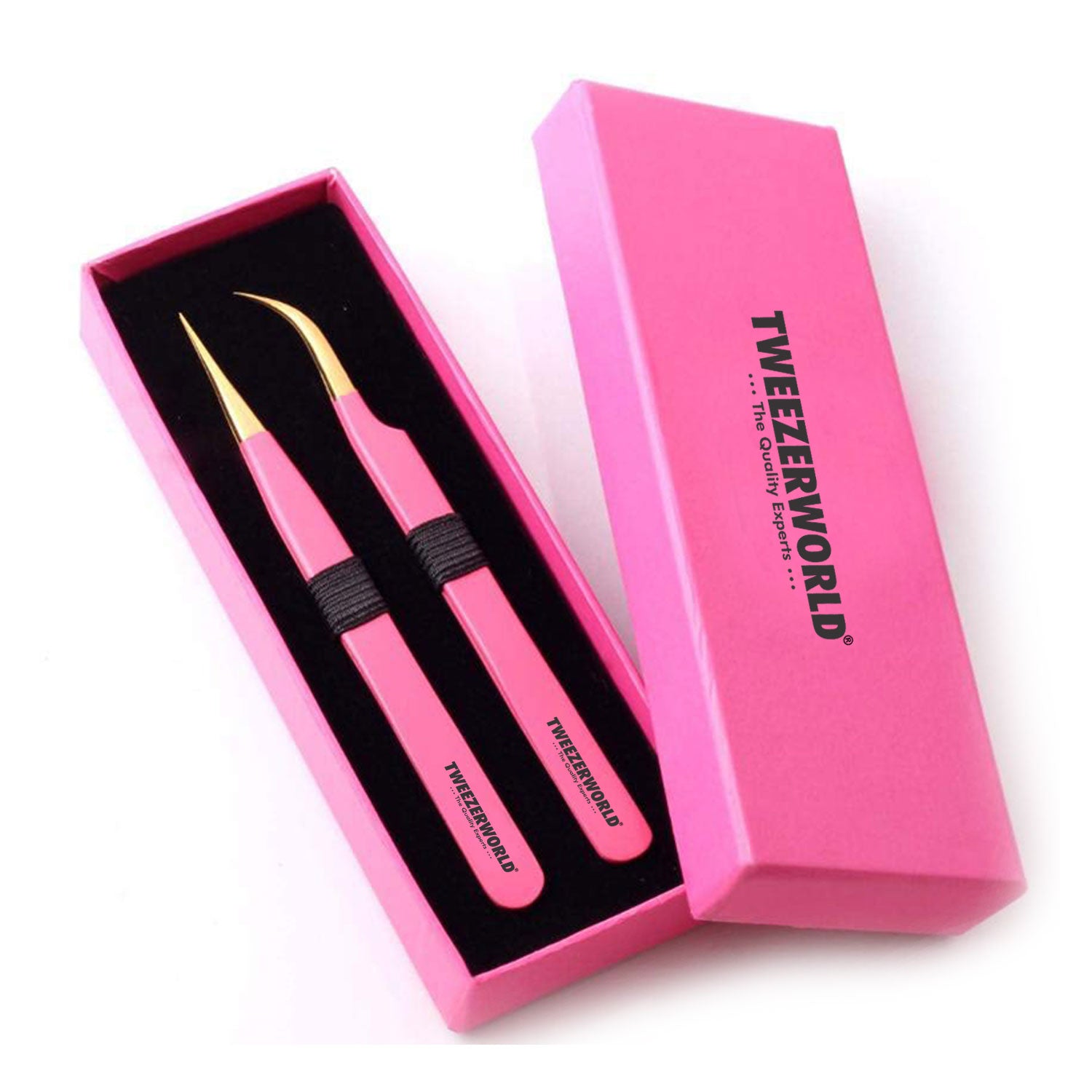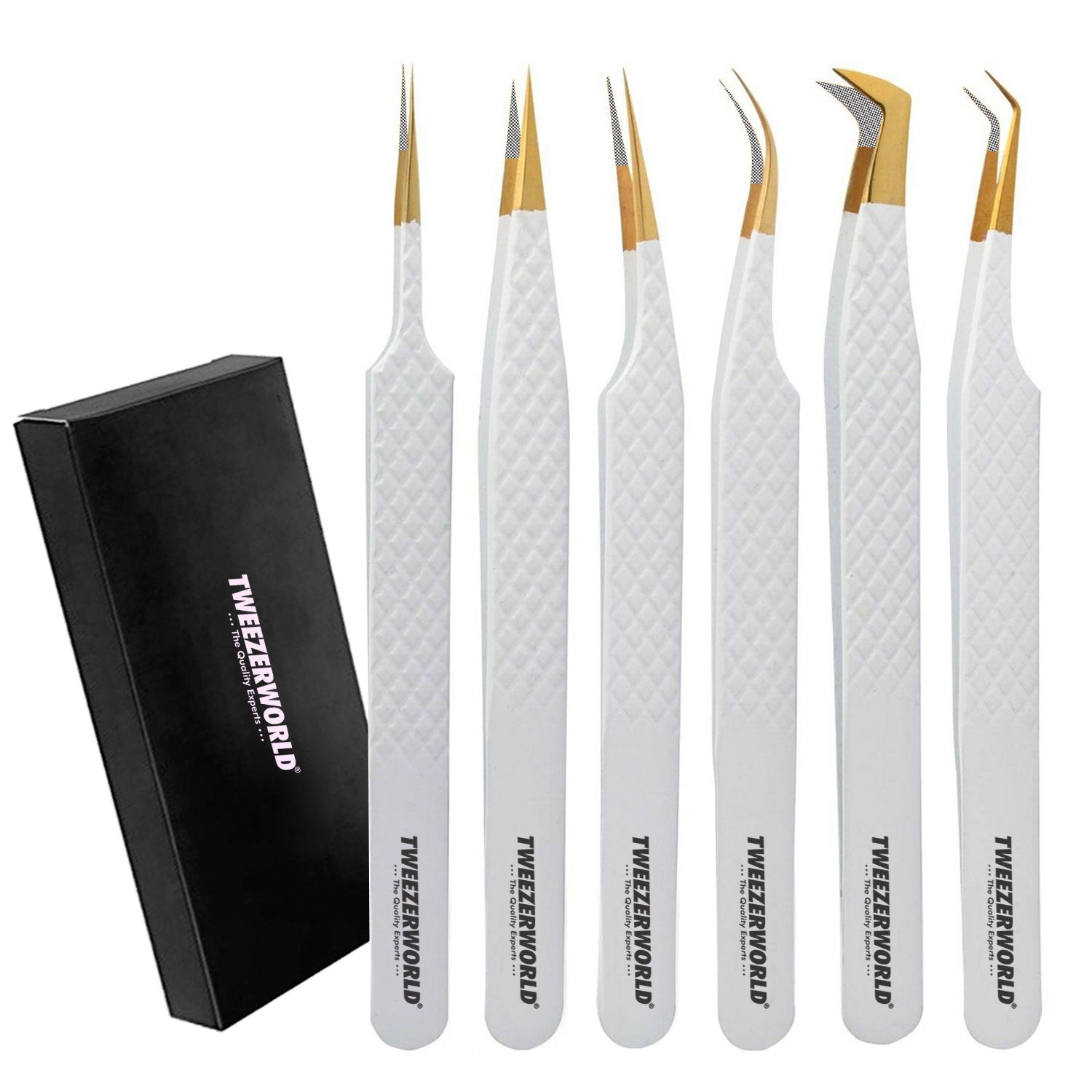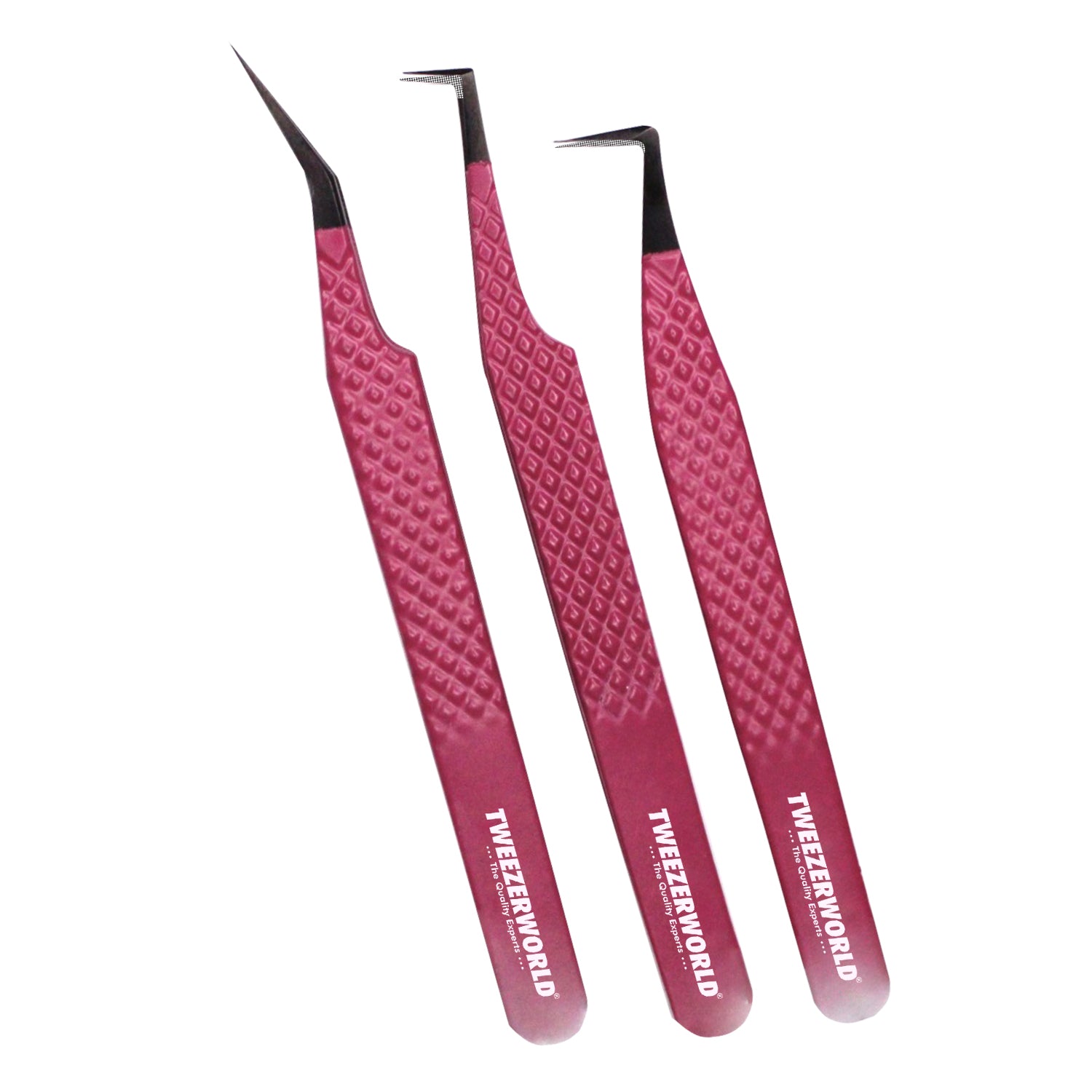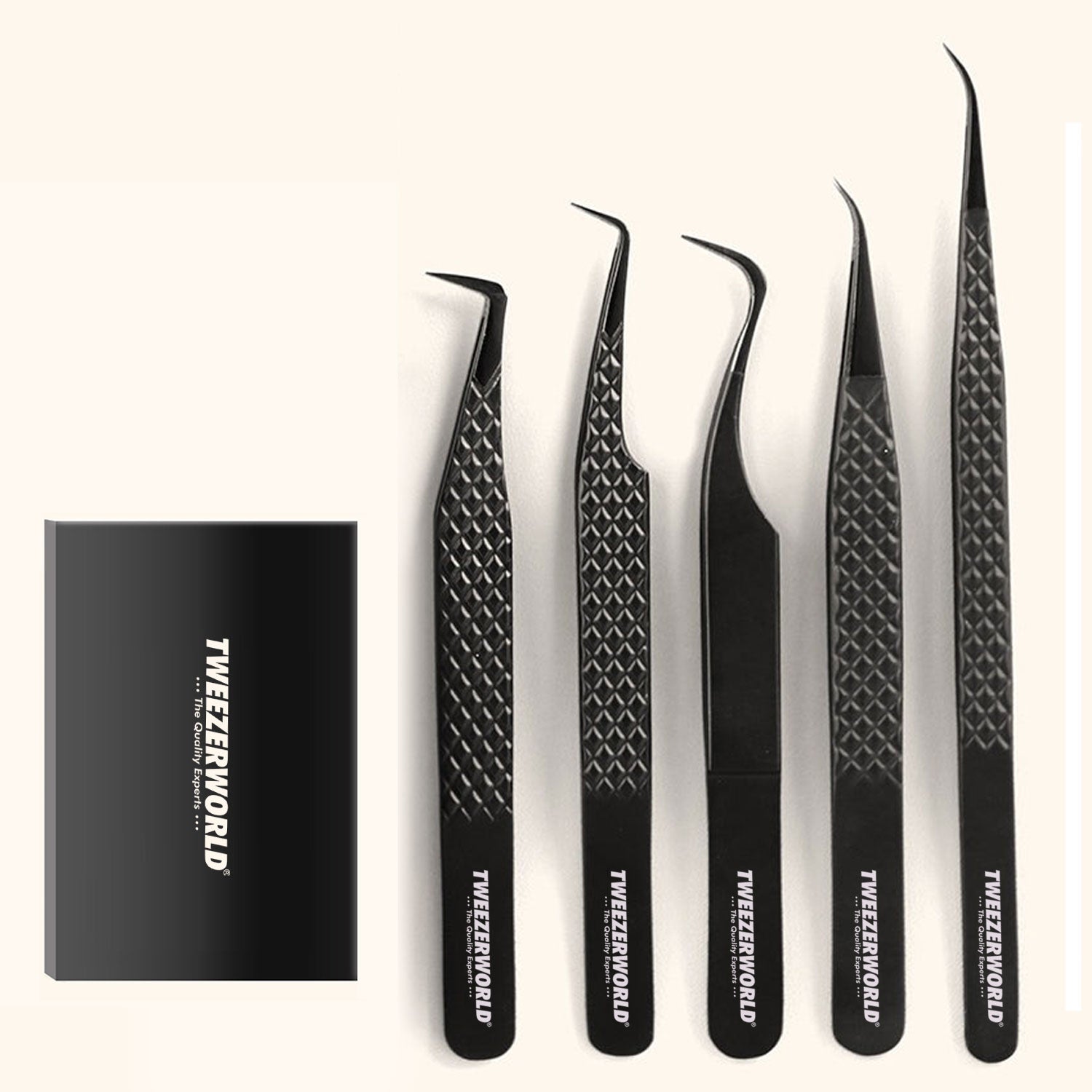

Best Tweezer Shapes for Professional Watch Repair
Best Tweezer Shapes for Professional Watch Repair
Professional watch repair does not have one universally “best” tweezer. The right shape depends on the component being handled, the available access, the technician’s sight line and how much contact pressure the part can tolerate.
A fine straight model is the foundation of most benches, but it should not be expected to handle every operation. Ultra-fine points improve access to very small parts; curved tips can clear bridges and improve visibility; broader rounded jaws support larger flat components; and protected-contact tips may reduce marking risk on selected finished surfaces.
This guide compares the most useful tweezer shapes for movement service, restoration, casing, dial work and professional workshop sets. Material selection is important too, but shape and material should be specified separately. Start with the task, choose the geometry, and then select a suitable alloy or contact-tip material.
Quick answer: A professional watch-repair set usually needs at least one fine straight tweezer for general movement work, one ultra-fine straight tweezer for very small components, one curved or angled model for restricted access, and one broader or protected-contact tool for larger or scratch-sensitive parts. Final selection should be approved by a qualified technician using the workshop’s actual components and procedures.
Explore TWEEZER WORLD®’s Watch Tweezers Collection or review the broader Precision Watch-Service Tweezers for Professional Workshops selection guide.
Watchmaker Tweezer Shapes at a Glance
| Tweezer shape | Typical watch-service tasks | Main advantage | Main limitation |
|---|---|---|---|
| Fine straight | General movement assembly, screws, wheels and setting parts | Direct control and predictable sight line | One point may be too delicate for routine heavier work |
| Ultra-fine straight | Very small springs, jewels and precision positioning | Narrow access and high visibility under magnification | Fine points are easier to bend or damage |
| Strong straight | Larger screws, robust movement parts and controlled pickup | Greater rigidity and tip durability | Bulkier tips can obstruct access to tiny components |
| Curved or bent | Work around bridges, plates and recessed areas | Improved hand clearance and sight line | Requires accurate curve symmetry and technician familiarity |
| Angled or offset | Side access, dial-side work and restricted spaces | Changes the approach angle without excessive wrist rotation | Poorly chosen angles may reduce control |
| Flat, rounded or blunt | Batteries, gaskets and larger flat components | Broader contact area than a sharp point | Not suitable for very fine movement work |
| Protected or replaceable tip | Selected hands, dials, polished parts and delicate finishes | Can reduce direct metal contact | No tip is universally non-marring; actual finishes must be tested |
| Reverse-action or cross-lock | Temporary holding, inspection and controlled positioning | Holds without continuous squeezing | Self-closing pressure may be excessive for delicate parts |
This table is a starting point rather than a substitute for bench testing. Handle tension, body length, point finish and alignment can make two tweezers with the same nominal shape behave very differently.
1. Fine Straight Tweezers: The General-Assembly Standard
A fine straight tweezer is usually the first tool selected for routine movement work. The direct relationship between the fingers, arms and tips makes the gripping action easy to judge. Straight points also give a familiar sight line for picking up screws, wheels, setting components and other small parts.
The best general-purpose version is not necessarily the sharpest available. A point that is too long or too thin can flex, twist or become damaged during daily use. For a working bench, the goal is a fine but sufficiently supported tip that closes evenly and remains predictable through repeated handling.
What to inspect
- Both points meet at the intended contact area without crossing.
- The inside faces close evenly rather than touching at one corner.
- The spring tension permits controlled pickup without hand fatigue.
- The points remain visible under the workshop’s usual magnification.
- Edges are smooth and free from burrs, hooks or polishing residue.
Many professional workshops standardise two straight models: a slightly stronger tool for everyday assembly and a finer model reserved for the smallest components.
2. Ultra-Fine Straight Tweezers: Precision With Less Margin for Misuse
Ultra-fine straight tips are designed for narrow access and precise contact. Their reduced tip mass can improve visibility when positioning very small movement parts. Style names vary between suppliers, but very fine No. 5-style geometry is a familiar example in the precision-tool market.
Official manufacturer data illustrates the distinction: Ideal-tek describes its Type 5 as straight, very fine and sharp, intended to hold small components while maintaining visibility. That is useful evidence of the geometry, but it is not proof that every product called “Type 5” has identical dimensions or performance. Buyers should approve a drawing and a physical sample rather than relying on the style number alone.
Ultra-fine tips must never become general-purpose levers. They are vulnerable to bending when used on large parts, when pushed sideways or when stored without protection. A damaged point may still look acceptable to the naked eye while failing to meet correctly under magnification.
Best suited to
- Very small screws, jewels and springs
- Precision positioning where a broader tip blocks the sight line
- Technician-approved hairspring work with suitable smoothness, tension and magnetic performance
- Dedicated use at a clean movement-service bench
Hairspring work deserves special caution. “Ultra-fine” alone does not make a tweezer suitable. The technician should evaluate point symmetry, surface smoothness, closing pressure and magnetic response together.
3. Strong Straight Tweezers: Rigidity for Routine Components
A stronger straight tweezer uses broader, thicker or more supported points than an ultra-fine model. It can be useful for routine pickup, larger screws and components that need a firmer hold. Keeping this tool on the bench helps protect the workshop’s finest points from inappropriate loads.
A broad “00-style” tool is one reference example: official Ideal-tek product data describes a Type 00 geometry as straight, thick, squared and strong. Again, the naming is not universal. The important procurement values are the actual point width, thickness, inside-face geometry and closing force.
Stronger does not mean uncontrolled. The tips must still align, the inner faces should be finished appropriately, and the tension must suit the component. Excessive grip can launch a small screw or distort a delicate part just as easily as a weak, misaligned tip can lose it.
4. Curved and Bent Tweezers: Better Access and Visibility
Curved tweezers move the technician’s hand away from the direct line above the component. This can improve visibility around plates, bridges and recessed areas, especially under a loupe or microscope. A curved approach can also help reach from the side when a straight body would interfere with the work.
Style 7 is commonly associated with a very fine curved form. Ideal-tek, for example, lists a 45-degree bend for one Type 7 model and describes the shape as supporting maximum visibility during delicate small-component handling. That angle should be treated as a product-specific specification, not a rule for all watchmaking work.
Curved-tip acceptance checks
- The left and right arms follow a consistent, symmetrical bend.
- The tips meet without lateral displacement or rolling past each other.
- The chosen angle clears the movement while keeping the wrist neutral.
- The technician can see the pickup point at the normal working height.
- The curve does not introduce excessive flex during closure.
A more dramatic bend is not automatically better. The preferred curve depends on the bench position, magnification system and movement geometry.
5. Angled and Offset Tweezers: Side Access Without Excessive Wrist Rotation
Angled or offset tips change the direction of approach while leaving the main body in a comfortable hand position. They may be helpful for side access, dial-side operations and areas where a straight tweezer blocks the technician’s view.
Curved and angled are sometimes used interchangeably in catalogues, but they should be separated in a procurement drawing. A curved form transitions gradually, while an angled form may have a defined bend location and included angle. Specify the bend angle, bend radius, tip length after the bend and the intended gripping point.
These tools are more specialised than a straight general-purpose model. They should be tested by the technicians who will use them, because a geometry that improves access for one procedure may feel unstable during another.
6. Flat, Rounded and Blunt Tips: Broader Contact for Larger Parts
Not every watch component requires a needle-sharp point. Flat, rounded or blunt tips can be more practical for batteries, gaskets and larger components. Their broader contact area can improve stability and reduce the local pressure created by a sharp metal point.
A 2A-style configuration is one familiar example of straight, fine, round and flat tips. Official manufacturer guidance positions this geometry for holding flat components. The exact use in watch service still depends on the part, finish, cleanliness and technician’s method.
Rounded tips are not automatically safe for dials or polished surfaces. A smooth-looking metal edge can still mark a soft coating if it is contaminated, damaged or closed with excessive force. Inspect and test the complete contact system, not just the catalogue shape.
7. Protected and Replaceable Tips: For Selected Scratch-Sensitive Work
Replaceable polymer, fibre, ceramic or other specialty tips can separate the component from the metal tweezer body. They may be considered for selected hands, dials, polished components and other surfaces where direct metal contact is undesirable.
“Non-marring” should not be treated as an absolute promise. A tip’s effect depends on its material, edge condition, cleanliness, closing pressure and the component’s finish. A hard particle trapped in a soft tip can scratch a surface. Ceramic tips may resist wear and magnetic attraction but can be brittle. Polymer tips may be gentler in some applications but can wear, deform or retain contamination.
For replaceable-tip models, confirm:
- Tip material and intended application
- Replacement-tip reference and continued availability
- Fastener security and permitted tightening method
- Alignment after tip replacement
- Cleaning compatibility
- Wear, chip and contamination rejection criteria
- Performance on the actual watch finish
For a deeper comparison of alloys and contact materials, read Anti-Magnetic vs Stainless-Steel Watchmaker Tweezers.
8. Reverse-Action and Cross-Lock Tweezers: Stable Holding With Caution
Reverse-action tweezers close when the handle is released and open when pressure is applied. This can reduce continuous hand effort during temporary holding, inspection, preparation or controlled positioning.
The same feature creates an important risk: the default closing pressure acts on the component until the tool is deliberately opened. A reverse-action model intended for a robust part may apply too much force to a delicate spring, hand or finished surface.
Specify and inspect the holding force, jaw contact, release control and opening range. Reverse-action tools should support defined workshop tasks, not replace the technician’s standard precision tweezer for every operation.
Shape Numbers Are References, Not Complete Specifications
Names such as No. 1, 2A, 3C, 5, 7 and 00 are widely used in the precision-tweezer market, but they do not guarantee identical geometry across manufacturers. Two suppliers may use the same style name while delivering different overall lengths, point dimensions, bends, tension or surface finish.
A professional RFQ should therefore define:
- Overall length and tolerance
- Tip length measured from a defined transition point
- Closed-tip width and thickness
- Inside-face shape and surface condition
- Bend angle, radius and location for curved or angled tools
- Opening gap and closing force at defined measurement points
- Permitted closed-tip gap and lateral offset
- Material grade or verified material family
- Finish, marking and packaging requirements
Use a controlled drawing together with an approved golden sample. The sample confirms the feel and workmanship; the drawing provides measurable limits for production and inspection.
Choose the Shape by Component and Bench Task
| Component or task | Useful starting shape | Priority to evaluate |
|---|---|---|
| Routine movement assembly | Fine straight | Balanced tension, alignment and point strength |
| Very small screws and jewels | Ultra-fine straight | Visibility, point symmetry and controlled pickup |
| Hairsprings and delicate springs | Technician-approved ultra-fine smooth tips | Low closing pressure, smoothness and verified magnetic response |
| Restricted areas around bridges | Curved or angled | Access angle, sight line and consistent tip meeting |
| Batteries and gaskets | Flat, rounded or broader tips | Stable contact and appropriate electrical/material properties |
| Hands, dials and polished components | Rounded or suitable protected-contact tips | Actual-surface testing, cleanliness and edge condition |
| Temporary parts holding | Reverse-action or cross-lock | Holding pressure and controlled release |
If one model appears in several rows, that does not mean the same physical tweezer should move freely between benches. Dedicated tools can reduce contamination transfer, prevent misuse and make inspection responsibility clearer.
A Practical Professional Watchmaker Tweezer Set
A set should reflect the workshop’s services rather than an arbitrary piece count. A useful starting configuration is:
- General fine straight: the primary tool for routine movement assembly.
- Strong straight: for larger or more robust parts, protecting finer points from overload.
- Ultra-fine straight: reserved for the smallest approved components.
- Fine curved or angled: for restricted access and improved visibility.
- Broad rounded or flat: for batteries, gaskets and larger flat components.
- Protected-contact model: for selected scratch-sensitive tasks after surface testing.
- Reverse-action model: when the workshop has a defined temporary-holding procedure.
A compact movement-service set may use only the first four. A full-service or restoration workshop may require all seven plus dedicated spares. Training centres and multi-bench operations should number each model and document which tool belongs to each task.
How to Evaluate Samples Before Bulk Procurement
Catalogue photographs cannot confirm alignment, spring force or point finish. Evaluate production-intent samples under the same conditions in which the tweezers will be used.
Visual and dimensional inspection
- Inspect the points under suitable magnification.
- Measure tip width, thickness, length and opening at defined locations.
- Check for crossing, twisting, unequal bends, burrs and chipped contact surfaces.
- Confirm marking position does not interfere with grip or cleaning.
Functional bench evaluation
- Use representative screws, wheels, springs, batteries and finished samples.
- Test pickup, controlled movement, placement and release.
- Assess visibility under the workshop’s normal loupe or microscope.
- Record technician feedback on tension, balance, wrist position and fatigue.
- Repeat the test across several samples rather than approving one unusually good unit.
Production controls
- Link the approved sample to a drawing revision and model code.
- Define critical, major and minor defects.
- Require suitable inspection records for each batch.
- Control changes to material, tooling, heat treatment, tip grinding, finish and subcontractors.
Alignment, Tension and Finish Matter as Much as Shape
A correct outline cannot compensate for poor execution. A curved tool with mismatched bends will not grip accurately. An ultra-fine model with excessive tension may launch parts. A rounded tip with a burr may damage a surface it was selected to protect.
For professional procurement, evaluate the complete handling system:
- Alignment: where and how the tips meet
- Tension: the force needed to close the tool at a defined opening
- Rigidity: resistance to sideways movement and permanent deformation
- Finish: smoothness, edge quality and absence of residue
- Visibility: how much the tool blocks the technician’s view
- Ergonomics: balance, body length, grip area and wrist position
- Material behavior: corrosion resistance, magnetic response and suitability for the procedure
Care and Storage by Tweezer Shape
Fine and curved tools lose performance quickly when their working ends are allowed to strike other instruments. Use individual guards or a fitted case, but ensure a protector does not force the points sideways.
- Keep ultra-fine tips in dedicated protected positions.
- Do not use fine points for levering, scraping or pulling heavy components.
- Inspect curved tools for asymmetry after a drop or impact.
- Clean protected tips using a method compatible with the tip material.
- Replace worn or chipped serviceable tips as a matched pair when required.
- Quarantine any tool that crosses, hooks, slips or closes unevenly.
Read Why Your Tweezers Stop Working for general maintenance guidance. Reworking precision points can change their geometry and contact behavior, so repair should be controlled and followed by inspection.
OEM and Private-Label Watchmaker Tweezer Sets
Distributors, service networks, training centres and watch-tool brands can specify sets around actual bench tasks. A private-label project may include:
- Selected straight, ultra-fine, curved, angled and protected-tip models
- Approved material options for each tool
- Model numbers, bench codes or technician identification
- Laser marking and private-label branding
- Individual point guards or fitted set packaging
- Replacement-tip references and spare-tip quantities
- Golden samples, drawings and batch inspection requirements
- Wholesale quantities and scheduled replenishment
Review TWEEZER WORLD®’s OEM and Private-Label Manufacturing capabilities and OEM process. Product suitability and documentation should be confirmed for the exact model, intended use and destination market.
Frequently Asked Questions
What is the best general-purpose tweezer shape for watch repair?
A fine straight tweezer with aligned points, smooth contact surfaces and balanced tension is the most practical general-purpose starting point. Professional workshops should still keep separate ultra-fine, curved-access and broader-contact models.
Are No. 5 tweezers best for hairsprings?
A very fine No. 5-style shape may provide useful access and visibility, but the style number alone does not establish hairspring suitability. Point symmetry, smoothness, closing pressure, material and verified magnetic response must also be evaluated by the technician.
When should a watchmaker use curved tweezers?
Curved tweezers are useful when a straight body obstructs the sight line or cannot approach comfortably around bridges, plates or recessed areas. The preferred curve depends on the movement, magnification and technician’s working position.
Do rounded tips prevent scratches?
No shape can guarantee a scratch-free result. Rounded or protected tips may reduce local pressure or direct metal contact, but cleanliness, tip condition, closing force and the component’s finish determine actual performance.
Are reverse-action tweezers suitable for delicate watch parts?
Only when the model’s self-closing pressure and contact geometry have been approved for the specific part. Reverse-action tools are useful for defined temporary-holding tasks, but excessive default pressure can damage delicate components.
How many tweezers should a professional watchmaker set contain?
A compact movement-service set may contain four core shapes: general straight, strong straight, ultra-fine straight and curved or angled. Full-service workshops may add rounded, protected-tip and reverse-action models. The correct set size follows the bench tasks, not a marketing piece count.
Conclusion
The best tweezer shape for professional watch repair is the one matched to the component, access angle, sight line and permitted contact pressure. Fine straight tips cover routine movement assembly; ultra-fine points support narrow precision work; curved and angled tools improve access; broader rounded forms suit larger components; and specialty tips support defined scratch-sensitive or holding tasks.
Do not approve a workshop set from shape names alone. Define the geometry, alignment, tension, finish and material for each model, then test production-intent samples with actual watch parts under normal magnification.
Need a task-specific set for your service centre, distributor range or private-label brand?
Request a Watch-Service Tool Set
Watchmaker Precision Evaluation Set
Fine Straight | Fine Point | Curved | Titanium | Finish-Protecting/Non-Marring Candidate
Configure five candidate tools for watch-service and jewellery-workshop trials. The first three identify geometries; Titanium identifies a material option whose tip geometry must be agreed; the finish-protecting candidate identifies a contact-material evaluation requirement. Confirm exact models, availability and supplied tool count by quotation.
Evaluate access, pickup, retention, closing force and controlled release on representative parts. Define permitted contact zones before handling delicate springs, pivots, jewels, coated components or polished surfaces. Finish protection requires a marking test on the intended surface; no universal scratch-free claim applies.
Anti-magnetic performance requires material identification and magnetic-response evidence for the exact model and configuration. Titanium is not a substitute for that record. Record measured length, weight, tip/contact width, thickness, closing force, material identity, test method and sample revision. Unmeasured fields remain pending.
Request the Watchmaker Precision Evaluation Set · Distributor sample approval
Papular Products Gallery