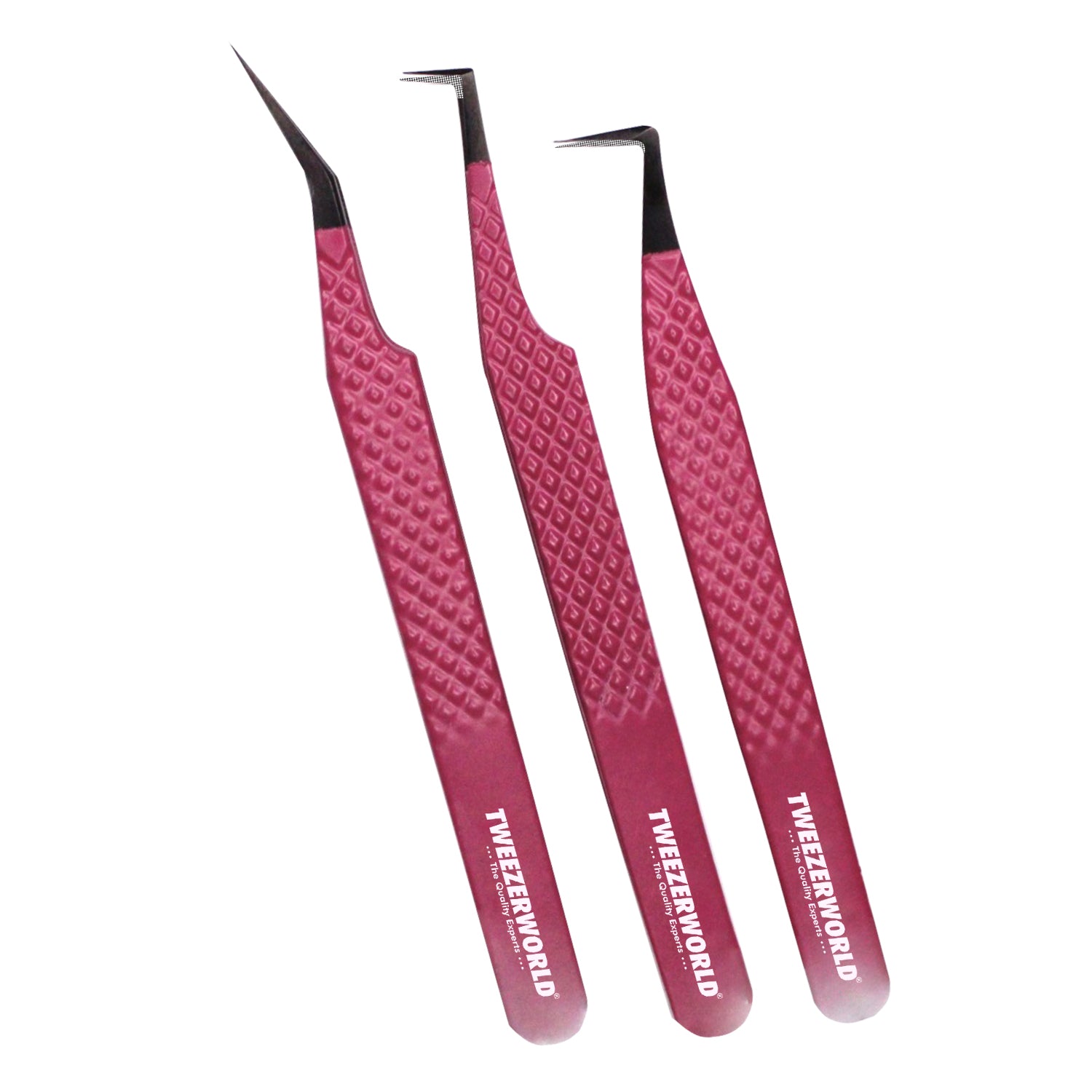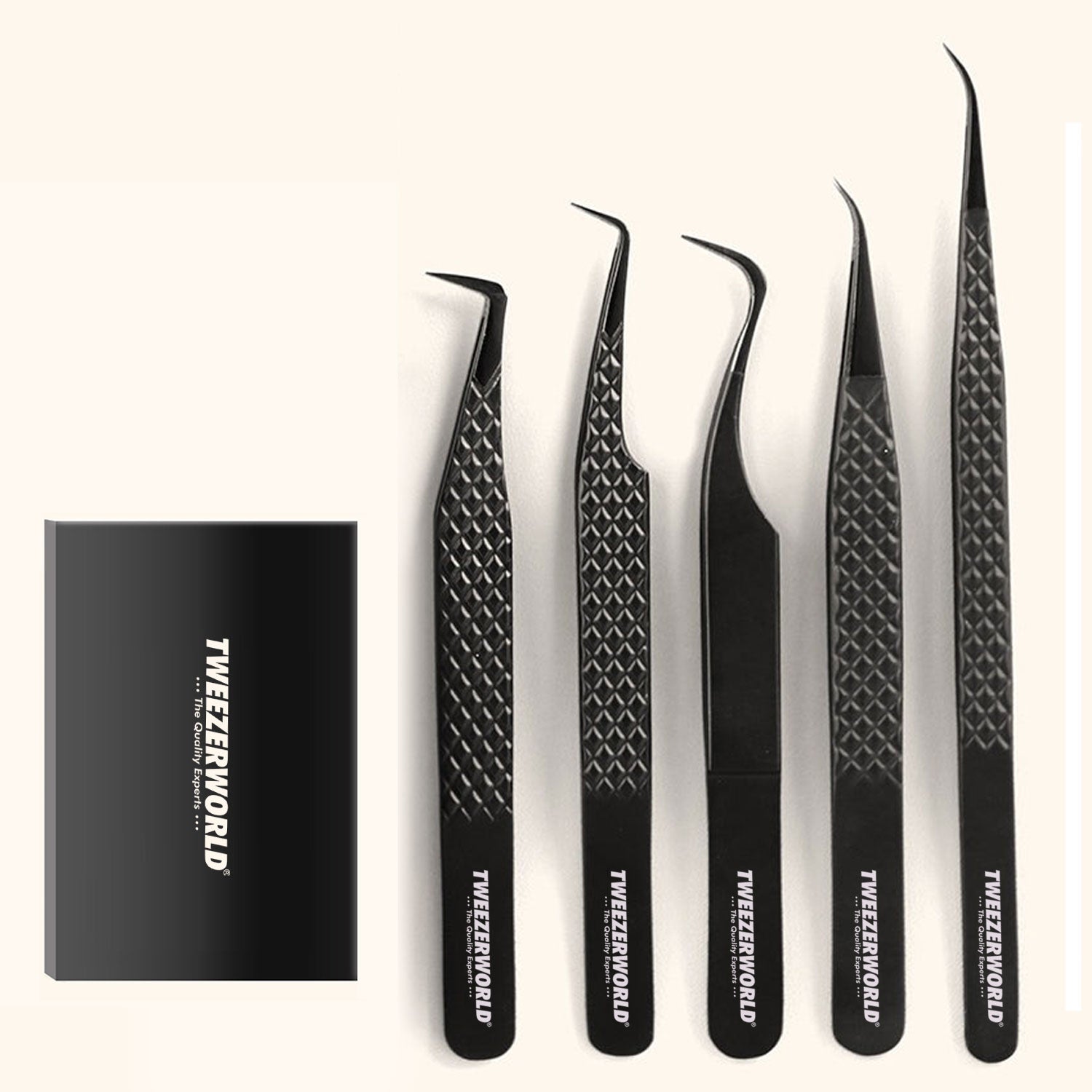

Cross vs Straight-Line vs Hex Fiber Tip Tweezers
Cross vs Straight-Line vs Hex Fiber Tip Tweezers
Cross, straight-line and hex fiber tip tweezers all use texture on the inner gripping surfaces, but the patterns do not create the same contact behaviour. Straight-line grooves are directional. Cross grooves intersect in two directions. Hex texture creates a network of small cells or contact edges across the gripping area.
That does not make one pattern universally stronger or better. Actual performance also depends on tweezer shape, tip alignment, texture depth and pitch, coverage, spring tension, closing pressure, lash diameter, pickup angle and the artist’s technique.
This guide provides a three-way comparison for lash artists, academies, distributors and private-label buyers. It also explains how to test samples without confusing the effect of the texture with differences in the tweezer body.
Quick answer: Choose straight-line texture when you want directional contact and a defined pickup area. Choose cross texture when you want intersecting grip lines and flexibility across more pickup angles. Choose hex texture when you want a broad network of multidirectional contact across the tip. Test all three on the same tweezer shape before making a final decision.
Explore TWEEZER WORLD®’s Fiber Tip Lash Tweezers Collection or read How to Choose a Fiber Tip Lash Tweezer by Technique.
What Does “Fiber Tip” Mean in This Comparison?
In this article, “fiber tip” refers to a textured inner gripping surface on a lash tweezer. It does not necessarily mean that a separate fibre material has been attached to the tip. The working surface may be created through controlled machining, texturing or another manufacturing process appropriate to the model.
Because the term is used broadly in the lash industry, buyers should ask the supplier to identify:
- the actual inner-tip pattern;
- the material beneath the texture;
- the method used to create the gripping surface;
- whether the texture covers the full or partial contact area;
- the approved pattern sample or drawing; and
- how grip, alignment and cleanliness are inspected.
“Fiber tip” alone is not a complete product specification.
Cross vs Straight-Line vs Hex: At-a-Glance Comparison
| Feature | Straight-line pattern | Cross pattern | Hex pattern |
|---|---|---|---|
| Surface structure | Parallel grooves | Intersecting grooves | Repeated hexagonal or cell-like network |
| Contact direction | Primarily directional | Multidirectional across intersecting lines | Multidirectional across a distributed cell network |
| Typical pickup feel | Defined and focused | Noticeably textured with flexible angle response | Distributed across a broad gripping area |
| Sweet-spot tendency | Often more defined | May extend across several intersecting contact points | May support a broad usable contact zone |
| Potential starting applications | Classic, hybrid, isolation, wet-look and narrow fans | Hybrid, volume, wispy and varied pickup angles | Volume, mega volume and broader fan pickup |
| Common shape combinations | Straight, slim curved, 45° and long-slim | Curved, 45°, J-curved, L-shape and boot | Boot, wide boot, L-shape and 90° |
| Visual inspection | Parallel channels can be simple to examine | Intersections require careful residue inspection | Cell network requires careful inspection across the full area |
| Important limitation | Pickup can feel more dependent on direction | Pattern quality varies with pitch, depth and intersection finish | A broad pattern cannot compensate for poor tip alignment |
These are practical tendencies, not guaranteed results. A fine hex pattern on a narrow tip may feel more precise than a deep cross pattern on a wide boot. Always evaluate the complete tool.
1. Straight-Line Fiber Tip Tweezers
A straight-line texture uses parallel grooves across the inner gripping surfaces. The lash fibres make contact with repeated lines running in one defined direction.
This geometry can create a focused, predictable gripping area. Artists who use a consistent pickup direction may find it easier to understand where the tool holds and how it releases. The open parallel channels can also make fresh residue easier to see during inspection.
Possible advantages
- Defined directional contact
- Clear and teachable sweet-spot position
- Controlled pickup for individual extensions or narrow groups
- Predictable release for selected classic, hybrid and wet-look methods
- Relatively simple visual inspection of the channels
Possible limitations
- Grip may change when the pickup angle changes relative to the groove direction.
- A very deep or coarse line pattern may feel too aggressive for delicate work.
- A shallow pattern may add little usable contact if the tips do not meet correctly.
- Parallel grooves do not automatically create a broad sweet spot.
Useful starting combinations
- Straight or gentle-curved isolation with fine straight-line texture
- Classic pickup tweezer with a narrow textured contact area
- Slim 45° tweezer for narrow fans and spikes
- Long-slim volume tip for closed or wet-look fans
For the detailed two-pattern comparison, read Straight-Line vs Cross-Pattern Fiber Tips.
2. Cross-Pattern Fiber Tip Tweezers
A cross pattern uses two sets of grooves that intersect across the gripping surface. Those intersections create multiple contact points and reduce dependence on one groove direction.
Cross texture can be a useful middle route between the directional feel of straight lines and the broad distributed contact of a hex network. Depending on pitch and coverage, it may provide a focused sweet spot or a wider usable area.
Possible advantages
- Contact in more than one direction
- Flexibility when the artist changes the pickup angle
- Defined tactile feedback from intersecting grooves
- Potential suitability for hybrid, volume and wispy techniques
- Can be specified as fine or more pronounced texture
Possible limitations
- Adhesive residue may collect at groove intersections.
- A coarse cross pattern can feel very different from a fine cross pattern.
- Grip claims cannot be evaluated without knowing texture pitch, depth and coverage.
- An uneven pattern can create inconsistent contact from left to right.
Useful starting combinations
- Curved isolation with a subtle cross texture
- 45° volume tip for varied pickup angles
- J-curved model for spikes, wispy work or flower-bouquet methods
- L-shape or boot model for small and medium fans
Cross pattern is not automatically weaker than hex or stronger than straight-line texture. The answer changes with the complete tip design.
3. Hex Fiber Tip Tweezers
A hex pattern creates a repeated network of small cell-like forms across the gripping surface. Contact can occur around several edges of each cell, producing a distributed multidirectional texture.
Hex texture is often paired with broader volume shapes because the network can extend across a larger pickup area. It may help artists who want less dependence on one small gripping point, particularly when controlling multiple fine lash fibres.
Possible advantages
- Broad multidirectional contact network
- Potentially large usable gripping area
- Useful starting option for multiple fine fibres
- Can support narrow or wide pickup depending on tip geometry
- Strong visual differentiation for a private-label product range
Possible limitations
- A large pattern may retain residue if it is not cleaned promptly.
- Cell edges must be consistent and free from burrs or unfinished areas.
- Broad texture cannot correct a twisted or partially closing tip.
- Some artists may prefer the more defined release of a simpler pattern.
Useful starting combinations
- Boot or wide-boot tip for volume fan pickup
- 90° model for selected Russian-volume and mega-volume methods
- L-shape model for pinching or strip pickup
- Narrow boot with a fine hex pattern for controlled narrow fans
For more detail, read Hex Pattern vs Cross Pattern Fiber Tip Lash Tweezers and Straight-Line vs Hex-Textured Fiber Tip Lash Tweezers.
Which Pattern Is Best by Lash Technique?
| Technique | Useful starting pattern | Why it may suit | What else to test |
|---|---|---|---|
| Classic pickup | Fine straight-line or subtle cross | Defined contact and controlled release | Point width, alignment and closing pressure |
| Isolation | Straight-line, fine cross or micro-texture | Additional contact without requiring a broad volume grip | Point sharpness, visibility and safe edge finish |
| Wet-look spikes | Straight-line or fine cross | Focused control of narrow closed groups | Slim tip geometry and release feel |
| Small handmade volume fans | Cross, straight-line or fine hex | Choice depends strongly on fanning method and pickup direction | Sweet-spot width, lash diameter and tension |
| Medium volume fans | Cross or hex | Multidirectional contact across more fibres | Boot or 45° shape, texture coverage and pressure |
| Mega-volume fans | Hex or cross | Potentially broad contact for multiple fine fibres | 90°/boot geometry, 0.03 handling and technician approval |
| Premade fan pickup | Fine straight-line, cross or hex | Several patterns may work when the shape and pressure are suitable | Fan base, pickup orientation and release consistency |
This table is a sampling guide, not a universal prescription. Two artists using the same fanning method may prefer different feedback, tension or sweet-spot width.
Texture Pattern Is Only One Part of Grip
The pattern name is easy to market, but other variables often have an equal or greater effect on performance.
Tip alignment
Both inner faces must meet at the intended working area. If the tips touch only at one corner, most of the texture cannot contribute to grip.
Texture pitch
Pitch describes the spacing between lines, intersections or cells. Fine pitch creates more, smaller features; coarse pitch creates fewer, larger features. Suppliers should avoid treating every version of the same named pattern as identical.
Texture depth
Deeper texture may feel more pronounced, but excessive depth can change release, cleaning and edge condition. Very shallow texture may provide little additional contact. Depth should be approved through samples and controlled during production.
Texture coverage
Full coverage extends across the defined inner gripping area. Partial coverage focuses the texture near a chosen sweet spot. The specification should identify where the texture begins and ends.
Tip width and length
A wide boot with straight-line texture can still provide more total contact area than a narrow 45° tip with hex texture. Shape and texture must be compared together.
Spring tension and artist pressure
A textured tip may allow some artists to use less thumb pressure, but the tool’s spring tension determines how much force is required to close it. Record texture and tension as separate fields.
Surface cleanliness
Adhesive residue can fill grooves or cells and change the feel of any pattern. A clean cross pattern may perform better than a contaminated hex pattern, regardless of the catalogue description.
How Texture Influences the Sweet Spot
The sweet spot is the area where the inner tips make effective contact and hold the lash fibres reliably. Texture can expand, define or change that area, but it does not create a functional sweet spot by itself.
The usable area depends on:
- left-to-right tip alignment;
- contact progression as the tool closes;
- tip width and stiffness;
- pattern pitch, depth and coverage;
- spring tension;
- artist closing pressure;
- lash-fibre diameter; and
- pickup angle.
A well-aligned straight-line model may have a wider usable zone than a poorly aligned hex model. Inspect the closed contact surfaces under suitable magnification and test the actual practice material.
How to Compare Samples Correctly
The best comparison changes only one variable at a time. If the straight-line sample is a slim 45° tool and the hex sample is a wide 90° boot, the test cannot show whether the result came from texture or shape.
Use a controlled three-sample set
Request three samples with:
- the same tweezer shape;
- the same overall length;
- the same tip width and angle;
- the same material and finish;
- the same target spring tension;
- the same texture coverage; and
- different inner-tip patterns only: straight-line, cross and hex.
Use the same test conditions
- Use the same lash brand, curl, diameter and strip.
- Test the same fanning or pickup method.
- Use the same workstation and hand position.
- Clean every sample before evaluation.
- Randomise or code the samples if you want to reduce branding bias.
- Use several trained testers where possible.
Record the results
| Test field | What to record |
|---|---|
| Pickup success | Successful pickups over a defined number of attempts |
| Fan-base control | Whether fibres remain together during movement and release |
| Usable grip area | Length and position of the reliable contact zone |
| Required pressure | Artist assessment or measured closing force if available |
| Release feel | Clean, delayed, abrupt or inconsistent |
| Angle flexibility | Performance when pickup direction changes |
| Residue visibility | How easily contamination can be detected |
| Cleaning effort | Time and method required after the same controlled use |
| Hand comfort | Thumb effort, stability and fatigue during the trial |
| Overall preference | Preferred sample and stated technical reason |
Do not select a production texture from one successful pickup. Repeat the comparison and inspect several samples for consistency.
Cleaning Cross, Straight-Line and Hex Textures
All textured tips require gentle, prompt cleaning. Intersections and cells can retain adhesive, while parallel grooves can also become filled if residue is allowed to dry.
- Remove fresh residue promptly using a suitable lint-free material.
- Use a cleaner or adhesive remover compatible with the complete tweezer and finish.
- Follow the cleaner manufacturer’s instructions, including contact time.
- Allow residue to soften before wiping.
- Inspect grooves, intersections and cells under good lighting.
- Dry the tool completely before storage.
- Protect the tips from impact and contact with other tools.
Do not scrape the inner surface with blades, needles, metal files or abrasive tools. Scraping can alter the texture and alignment. Read How to Clean Fiber Tip Lash Tweezers Without Damaging the Grip.
Which Pattern Is Best for Lash Academies?
An academy should choose one approved pattern for each core exercise so students begin with comparable tools. The trainer can keep a coded comparison set containing the same tweezer shape with straight-line, cross and hex tips.
A useful academy structure may include:
- Student classic tool: fine straight-line or subtle cross texture
- Student volume tool: approved cross or hex texture on the chosen pickup shape
- Instructor comparison set: three identical bodies with the three different patterns
- Reference sample: labelled golden sample for each approved model
- Care card: texture-specific inspection and cleaning instructions
The instructor should demonstrate with the same model supplied to students before introducing alternative textures. Explore the Academy Training Tweezer System.
Private-Label Product-Line Strategy
Offering all three patterns under one vague “fiber tip” name makes it difficult for customers to understand why the products differ. Clear technical naming creates a stronger collection.
Example three-level range
| Collection name | Pattern | Positioning |
|---|---|---|
| Precision Line | Straight-line | Defined pickup for classic, hybrid, wet-look and narrow fans |
| Multi-Angle Grip | Cross pattern | Flexible pickup directions for hybrid and volume work |
| Full-Contact Volume | Hex pattern | Broad distributed grip for volume and mega-volume tools |
Those names are examples, not performanCE status to be verified for the exact product and markets. Every product description should still identify the actual tweezer shape, texture coverage, tension classification and recommended technique.
Useful set concepts
- Three-Texture Sample Set: same 45° body with straight-line, cross and hex tips
- Classic and Volume Duo: straight-line classic pickup + cross or hex boot
- Wet-Look and Wispy Set: slim straight-line 45° + fine cross J-curved
- Mega-Volume Grip Set: hex boot + hex or cross 90°
- Academy Demonstration Set: coded comparison tools with matching care card
TWEEZER WORLD®’s 4-Piece Fiber Tip Lash Tweezer Set provides an isolation, 45°, boot and 90° shape structure that can be evaluated for a private-label collection.
OEM Fiber Tip Texture Specification Checklist
| Specification field | Buyer’s requirement |
|---|---|
| Tweezer model | Unique code for every shape and texture combination |
| Intended technique | Classic, isolation, hybrid, wet look, volume or mega volume |
| Tip shape | Straight, curved, 45°, J-curved, L-shape, boot, 90° or approved drawing |
| Inner-tip pattern | Straight-line, cross or hex |
| Pattern reference | Approved drawing, magnified image or golden sample |
| Pitch and depth | Defined range or controlled approved-sample reference |
| Texture coverage | Full or partial, with start and end points identified |
| Sweet-spot requirement | Location and minimum usable gripping length |
| Tension | Soft, medium, firm or measured closing-force range |
| Alignment acceptance | No crossing; defined contact and permitted gap |
| Grip test | Approved lash diameter, pickup method and acceptance criteria |
| Finish | Matte, satin, polished, titanium-coated, powder-coated or approved sample |
| Branding | Logo, model code and pattern name |
| Care information | Compatible cleaning, inspection and storage instructions |
| Packaging | Individual tip protection, case, care card and labels |
| Golden sample | Signed pattern, finish, tension and packaging reference |
| Change control | No unapproved change to tooling, pitch, depth, coverage, tension or shape |
Common Buying Mistakes
Comparing different tweezer shapes
A hex 90° and a straight-line 45° cannot isolate the effect of texture. Compare identical bodies first.
Assuming pattern name defines strength
“Hex” does not automatically mean maximum grip. Alignment, pitch, depth, coverage and pressure determine the actual result.
Ignoring release
Strong pickup is only part of performance. The fan or extension must release cleanly at the intended placement point.
Leaving texture coverage undefined
Full and partial coverage can feel very different even when the pattern name is the same.
Using “lightweight” instead of tension
Overall weight and spring tension are different specifications. Define both when relevant.
Skipping cleaning evaluation
A product may grip well when new but become difficult to maintain if residue is not visible or accessible.
Approving one perfect sample
Evaluate several production-intent pieces to understand consistency, not only the best individual sample.
Frequently Asked Questions
Which is better: cross, straight-line or hex fiber tip tweezers?
None is universally better. Straight-line texture provides directional contact, cross texture provides intersecting multidirectional contact, and hex texture distributes contact across a cell network. The best option depends on tweezer shape, technique, lash diameter, tension and artist preference.
Which fiber tip pattern is best for beginners?
A broad, well-aligned cross or hex gripping area may help some beginners find a usable pickup zone. Others may learn more easily with the defined feedback of straight-line texture. Academies should test identical shapes and standardise one approved model.
Which pattern is best for 0.03 mega-volume lashes?
Hex and cross textures are practical starting options because they can provide multidirectional contact across multiple fine fibres. Tip shape, alignment, tension, texture coverage and the artist’s fanning method remain equally important.
Can straight-line fiber tips be used for volume fans?
Yes. Straight-line tips can work for small fans, narrow fans, closed fans and artists using a consistent pickup direction. They should not be limited to classic work solely because the grooves are directional.
Is hex texture stronger than cross texture?
Not automatically. Hex texture may distribute contact across a broad cell network, while cross texture may provide defined intersecting grip. Actual holding performance depends on the complete tip design and closing conditions.
Which pattern is easiest to clean?
Straight-line grooves can be simpler to inspect because they run in one direction. Cross intersections and hex cells require careful inspection, but all patterns need prompt, gentle cleaning without scraping.
Can a private-label brand offer all three patterns?
Yes. Use distinct model codes and explain the technical role of each pattern. A controlled three-texture sample set is a useful way to approve the range before bulk production.
Conclusion
Straight-line, cross and hex fiber tip tweezers create different contact patterns. Straight-line grooves favour directional, defined pickup. Cross grooves provide contact across intersecting directions. Hex cells distribute contact over a broad multidirectional network.
The pattern name is only the beginning of the specification. Approve the tweezer shape, pattern pitch and depth, texture coverage, sweet spot, alignment, tension, finish and cleaning requirements together. When comparing samples, keep every variable except the inner-tip pattern the same.
Developing a technique-specific fiber tip collection for your lash brand or academy?
Request a Fiber Tip Texture Sample Set
Regulatory and specification note: ISO, CE, FDA, medical-device, sterilization, material-grade and hardness claims apply only where current documentation supports the exact product, batch and destination market. Confirm model-specific specifications before regulated or clinical use.
Papular Products Gallery