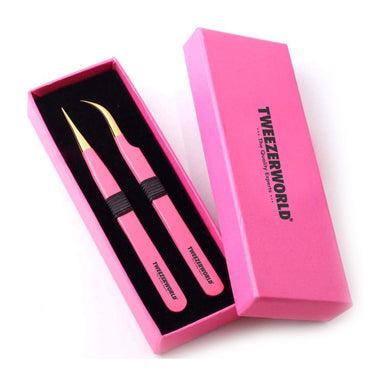

How to Approve a Golden Sample for OEM Precision Tweezers
A golden sample is most useful when it is treated as a controlled production reference—not simply the nicest sample a supplier has made. For OEM precision tweezers, the physical reference should be linked to written specifications, measurements, test requirements, branding files and an approval revision.
Step 1: Freeze the intended configuration
Identify the exact model/SKU, revision, geometry, material, finish, logo, packaging and intended application. Open decisions should be resolved or explicitly marked before final approval.
Step 2: Measure the physical sample
Record the dimensions that matter for the model: overall length, tip/contact width, tip thickness, angle or curvature, weight and other critical geometry. If closing force matters, define the measurement method and opening position rather than recording an unexplained number.
Step 3: Record material and special-test status
Identify material to the agreed level. For ESD, magnetic response, heat, chemical exposure, cleanliness or surface-contact requirements, attach the method, conditions, result and acceptance criterion. An untested requirement remains Pending / Not Verified; sample approval must not silently convert it into “Passed.”
Step 4: Run the representative functional trial
Use the intended component or an agreed surrogate. Check access, contact location, closing behavior, slip, operator control and any visible effect on the handled part. For lash or other specialist tools, the equivalent step is evaluation by the intended professional user against the agreed technique.
Step 5: Close deviations
Record each requested correction and approve the revised sample, not a verbal promise that production will be different. If an exception is accepted, document it so production and inspection teams understand the same requirement.
Step 6: Identify and control the golden sample
Label the approved reference with sample ID, model/SKU, revision and approval date. Link it to the current specification, drawings where applicable, measurement record, test evidence, artwork/packaging revision and approval decision. Controlled matching references for buyer and factory can reduce ambiguity.
Step 7: Use it during production QC
The golden sample should work alongside measurable specifications and inspection criteria. It does not replace test reports, tolerances or batch inspection. First production output and later QC samples should be compared against the approved revision, and material/process/design changes that affect the requirement should trigger review or re-approval.
TWEEZER WORLD sample-to-bulk route
Application → Candidate Sample → Measured Record → Required Tests → Functional Trial → Golden/Reference Sample → Pilot/Bulk QC.
TWEEZER WORLD® technical sourcing note: tool suitability depends on the exact component, permitted contact zone, geometry, material, finish and documented test requirement. A material name or tool category alone does not prove ESD, magnetic, cleanroom, chemical, heat or non-marring performance. Where a property has not been measured or tested for the exact model, its status should remain Pending / Not Verified.
Technical sourcing routes: Semiconductor Micro-Handling Tweezers · Photonics/VCSEL Tweezers Evaluation Set · 8-Piece Advanced Packaging & Photonics Evaluation Set · Technical Distributor Evaluation Pack · Quality Control · OEM Process
For OEM/private-label development, contact tweezersworld@gmail.com or WhatsApp +92-321-6194723. Established 2017 · Family Manufacturing Experience Since 1969.
Papular Products Gallery