
Electronics Repair Tweezers: How to Upgrade a Bench for Delicate Component Handling
An electronics repair bench needs tweezers that help technicians reach, hold and place delicate parts without obscuring their view. Buying the sharpest-looking model is not enough. The best bench upgrade begins with the repairs performed most often and the handling problems that slow them down.
Recent repair coverage keeps the issue current
iFixit’s teardown index lists new entries dated September 20, 23 and 29, 2026. The continued examination of compact consumer devices provides a current context for repair-tool selection. It does not establish that those devices are easy to repair or quantify growth in the repair-tweezer market.
Map tools to your common repairs
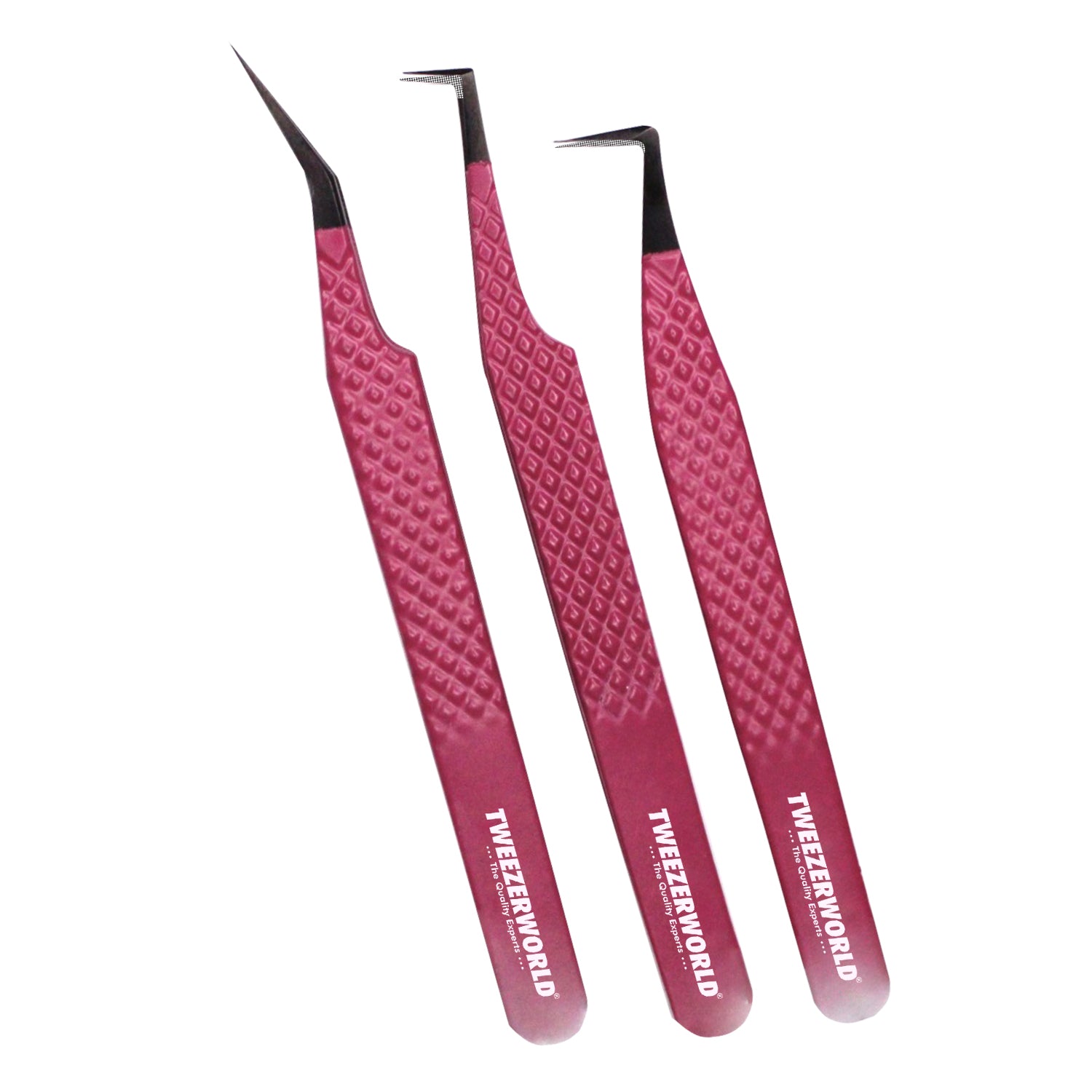
List the small parts handled during your routine jobs: screws, connectors, seals, wires or board components. Note the space available and the workpiece’s sensitivity. An angled tip may improve access in one position, while a straight model may suit another. Try both under the same lighting and magnification used at the bench.
Choose contact area as carefully as tip sharpness. A very fine point can concentrate force on a fragile part. The tool should provide a controlled hold without encouraging the technician to squeeze harder than necessary.
Treat ESD as a documented requirement
If a repair involves electrostatic-sensitive components, define the tool requirements within the shop’s ESD control procedure. Ask for the relevant model information rather than assuming that black-coated tweezers meet the requirement. A suitable tweezer is only one part of a controlled workstation.
Similarly, metal tweezers should not be described as electrically insulated simply because their handles are coated. Follow the device repair procedure for power isolation and battery handling. Tweezers should not substitute for the specified opening or disconnecting tool.
Test control and repeatability
Use representative practice components when evaluating samples. Assess visibility, closure, access and the ease of placing a part repeatedly. Check whether the tips move sideways under the intended load and whether the operator can release the component predictably.
Record the selected model and maintain a replacement reference. Inspect working tweezers for damage and retire a model that no longer meets the task. Bending a damaged tip back by eye may not restore its original alignment or handling performance.
Build a useful shop or distributor kit
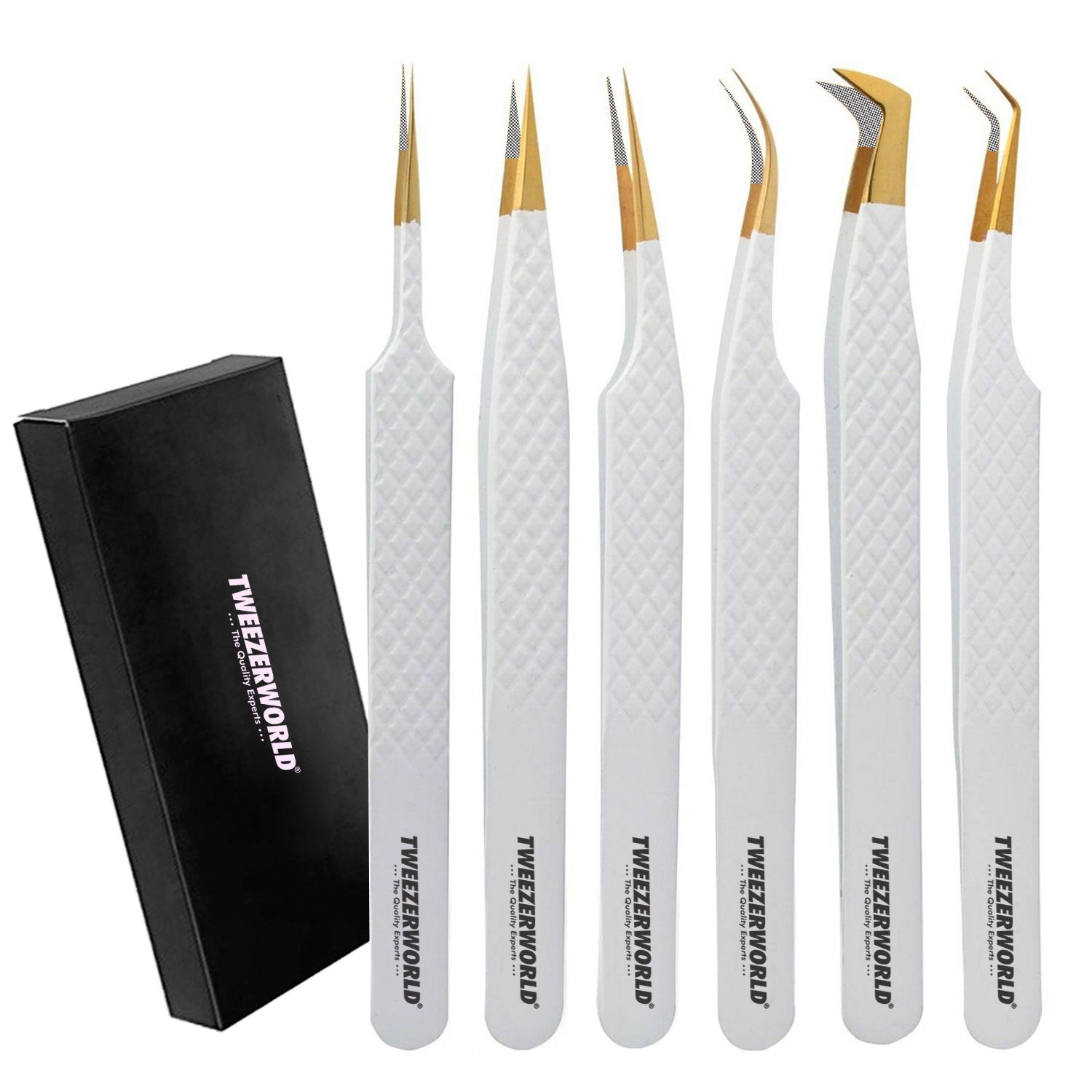
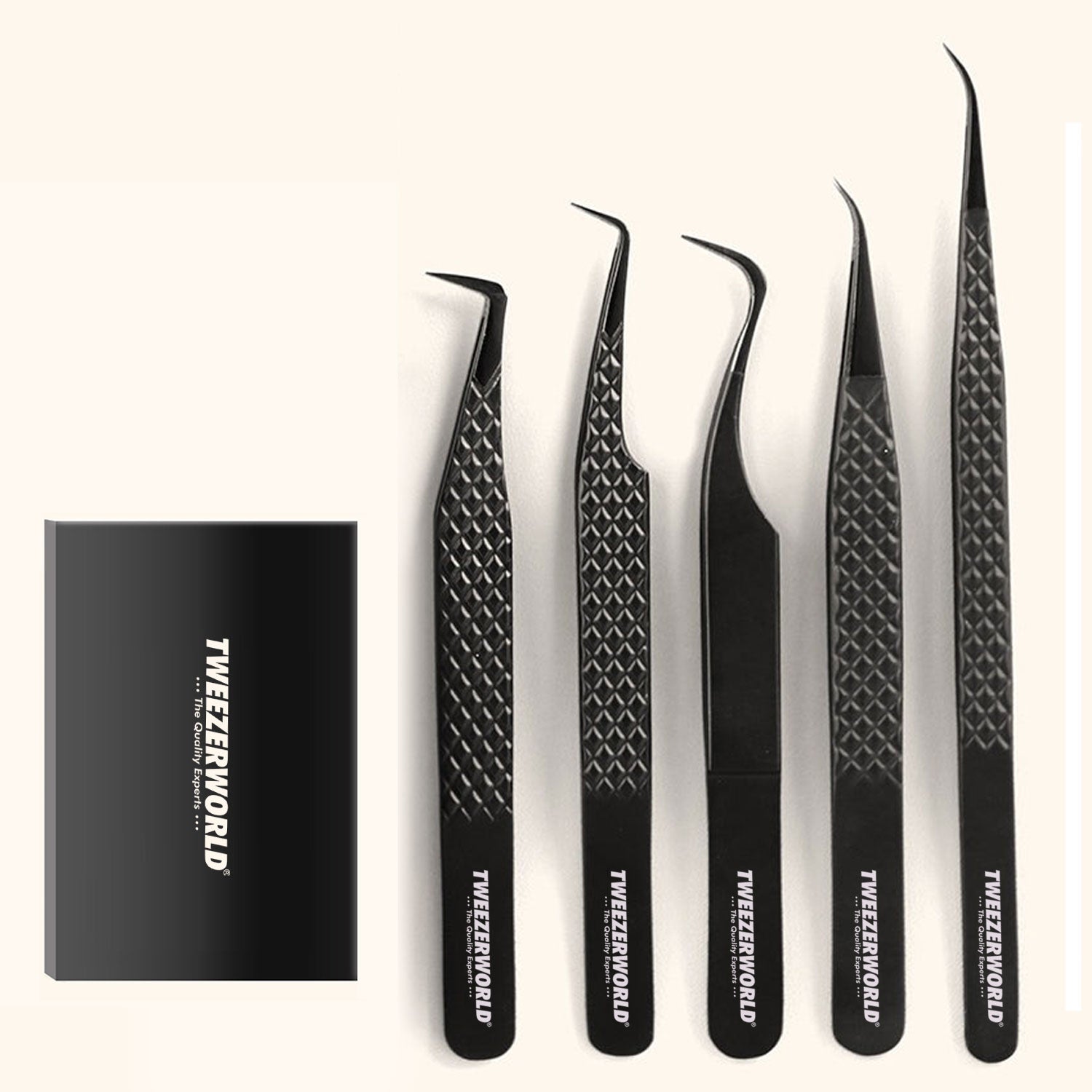
Start with the shapes your repair team has evaluated. Label them by model and intended task, and include suitable storage. For distributors, task-based descriptions and documented specifications provide a clearer offer than a large assortment of nearly identical shapes.
Browse TWEEZER WORLD electronics repair tweezers and the wider precision tweezer collection. Discuss a branded repair range through OEM services.
Can every coated tweezer be sold as ESD-safe?
No. Appearance alone does not establish electrostatic performance. Confirm the evidence and suitability of the exact model.
Source: iFixit teardown index, with entries dated September 20, 23 and 29, 2026. Device-specific conclusions are not used here.
Papular Products Gallery