
Precision Tweezers Procurement: The Specifications That Help Workshops Buy Better
Precision tweezers are easier to purchase consistently when the order describes the handling task. “Fine tip” or “professional quality” leaves too much open to interpretation. Workshops and distributors need a specification that makes samples comparable and replacement orders identifiable.
Recent electronics activity provides context
The Global Electronics Association’s IPC Builds page scheduled standards-development meetings in Paris for September 19–24, 2026. Its agenda included process control, reliability and traceability. The event listing does not certify any tweezer model or prove increased tool demand. It does provide timely context for a procurement approach centred on documented requirements.
Define the object and the access
Describe the component’s dimensions, weight, fragility and available gripping area. Explain whether the operator works under magnification or inside a restricted assembly. A tip that is small enough to reach the component may still be too flexible for the intended hold.
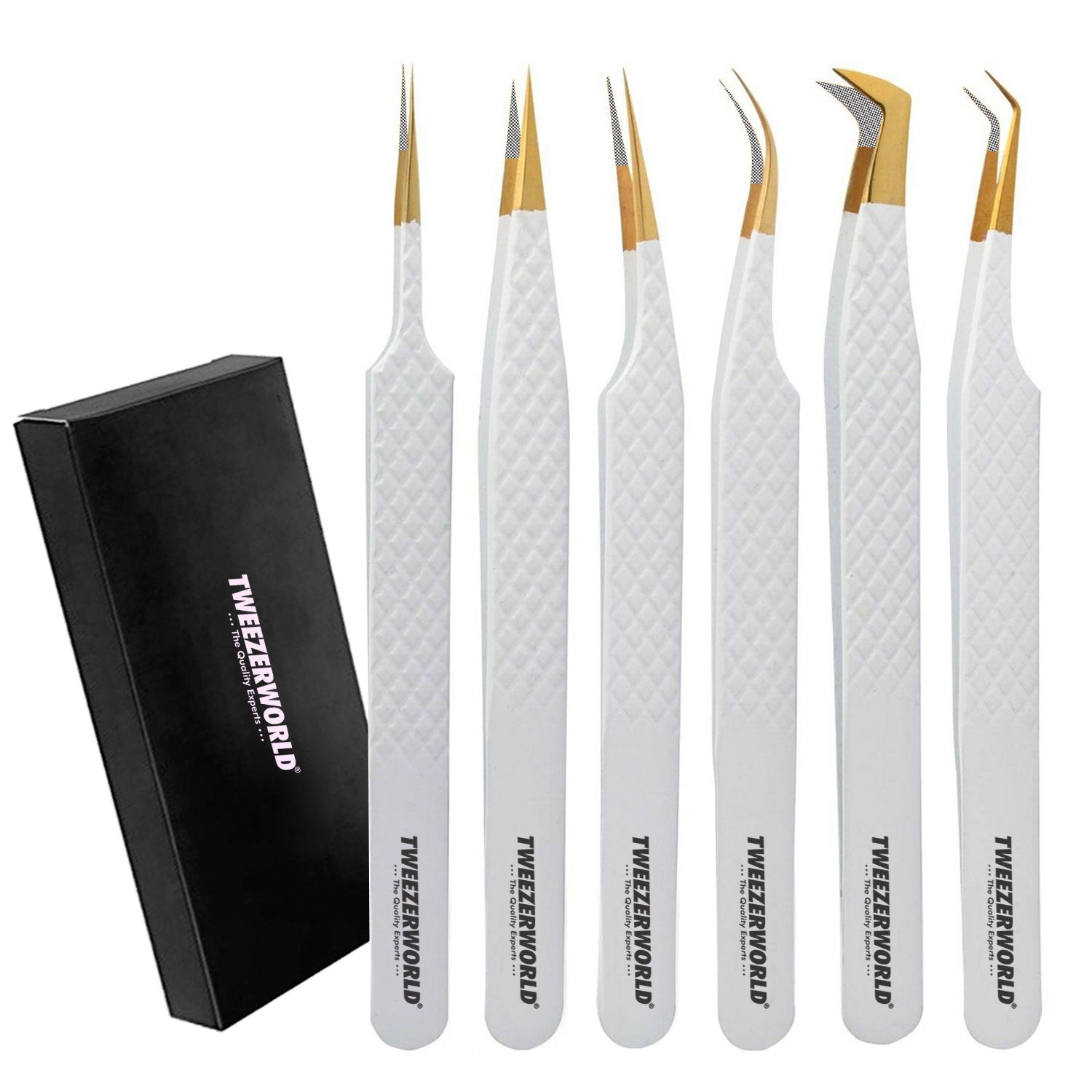
Straight and angled models give different access and visibility. Reverse-action designs change how the operator holds and releases the workpiece. Compare these options against the actual task rather than selecting by catalogue code alone.
Separate material from performance claims
Record the base material and surface finish separately. If magnetic behaviour, electrostatic performance or chemical compatibility matters, request supporting information for the exact model. Stainless steel is not a universal guarantee of non-magnetic behaviour, and a dark coating is not proof of ESD suitability.
For non-marring applications, the contact material and workpiece must be evaluated together. A softer contact surface may help in one task but introduce wear or contamination concerns in another. The application owner should define what acceptable contact looks like.
Agree an acceptance process
Useful inspection fields include overall length, tip width and thickness, closure alignment, surface condition and spring pressure. Specify tolerances where they matter rather than asking for an unspecified “ultra-fine” point. Test the sample with representative workpieces under the normal working conditions.
Keep photographs, model references and the approved sample together. Agree whether inspection records or batch identifiers are required for future orders. The documentation should support reordering without requiring the buyer to repeat the entire selection process.
Use application-specific ranges
A distributor can organise precision tweezers around clearly described tasks such as electronics assembly, inspection or delicate contact handling. Publish supported specifications and provide a route for customers to request additional evidence. This can improve the usefulness of the catalogue; its commercial effect should be tracked through qualified inquiries and repeat purchases.
Explore TWEEZER WORLD precision tweezers, electronics repair tweezers and semiconductor micro-handling tweezers. For a defined specification, discuss OEM development.
Does a fine tip guarantee precision?
No. Alignment, stiffness, closure, operator access and the workpiece all affect practical handling.
Source: Global Electronics Association, IPC Builds event listing for September 19–24, 2026. This is an event-date source; its publication date is not established here.
Papular Products Gallery