
Fiber Tip Lash Tweezer Batch Consistency Guide
Fiber Tip Lash Tweezer Batch Consistency: What Lash Brands Should Inspect
A private-label lash brand may approve an excellent fiber tip tweezer sample and still receive a bulk order that feels different. The texture may cover a shorter area, the working contact zone may have moved, spring tension may vary between pieces or the finish may not match the approved reference.
These differences are not controlled by asking whether the production batch is “the same quality.” Consistency requires a written specification, an approved golden sample and an inspection plan that defines how production units will be compared with both.
This guide explains what lash brands, academies, distributors and OEM buyers should inspect when comparing fiber tip lash tweezer samples with bulk production.
A golden sample is a physical reference, not a complete specification. Measurable requirements are still needed to define permitted production variation.
What Does Batch Consistency Mean?
Batch consistency means that production tweezers remain within the agreed requirements for identity, dimensions, texture, closing geometry, tension, finish and functional performance.
It does not mean that every hand-finished tool will be microscopically identical. The objective is controlled variation that does not materially change intended handling or brand presentation.
A useful consistency programme answers five questions:
- What characteristics matter to the customer?
- How will each characteristic be measured or judged?
- How much variation is permitted?
- How many units will be inspected?
- What happens when a result is outside the requirement?
Build the Reference System Before Bulk Production
Production comparison should use three connected references:
1. Product Specification
The specification describes the required material, pattern, dimensions, texture, tension, finish, marking, packaging and testing.
2. Technical Drawing
The drawing identifies dimensions, tolerances and measurement points. Pattern names and photographs alone are insufficient.
3. Golden Sample
The signed physical sample demonstrates agreed characteristics that are difficult to communicate numerically, such as hand feel, finish appearance and closing behaviour.
All three should carry matching SKU and revision information. If the supplier changes material, texture process, tooling, tension adjustment or coating, the brand should evaluate whether reapproval is required.
Do Not Compare Production With a Used Sample
The golden sample should remain clean, protected and unused after approval. Repeated compression, adhesive exposure, cleaning or accidental impact can change its condition.
For daily testing, use a separate working reference from the same approved sample group. Keep the golden sample for controlled comparison and dispute resolution.
1. Confirm Product Identity and Configuration
Before evaluating performance, confirm that the batch matches the ordered configuration.
Check:
- Purchase-order number
- Product SKU
- Tweezer shape
- Overall length
- Tip angle and width
- Inner-tip texture type
- Tension classification
- Finish or coating
- Logo version and position
- Packaging configuration
- Batch or lot number
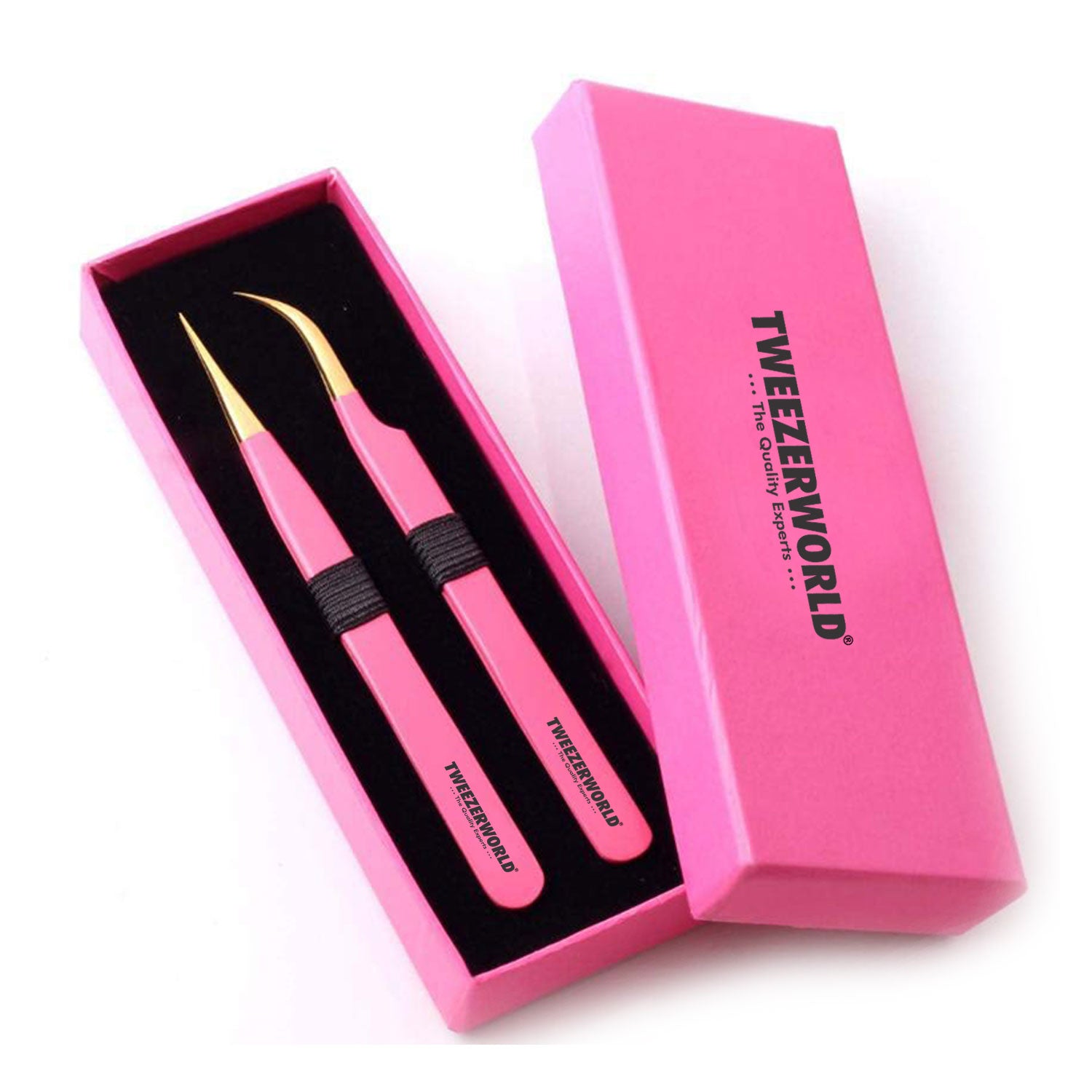
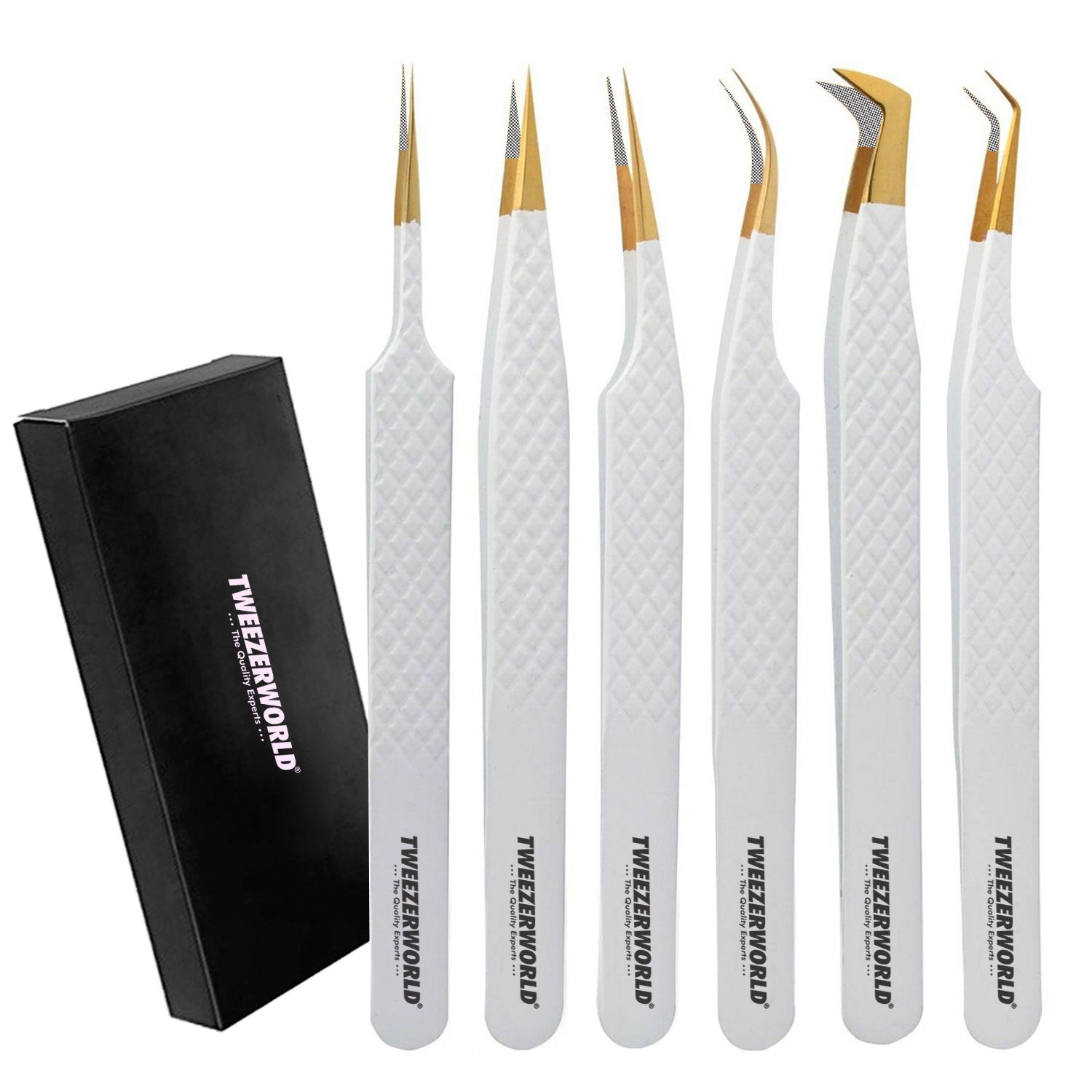
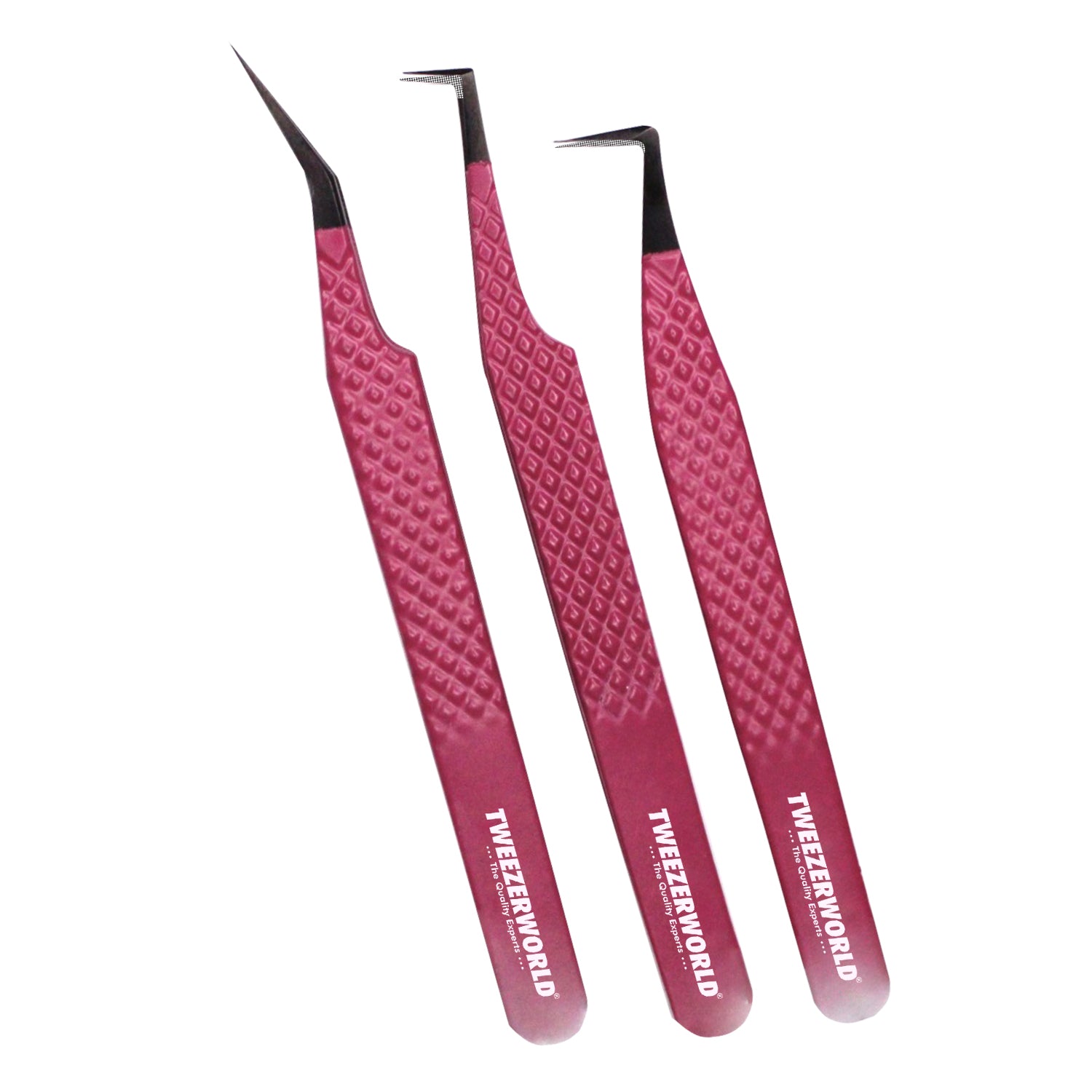
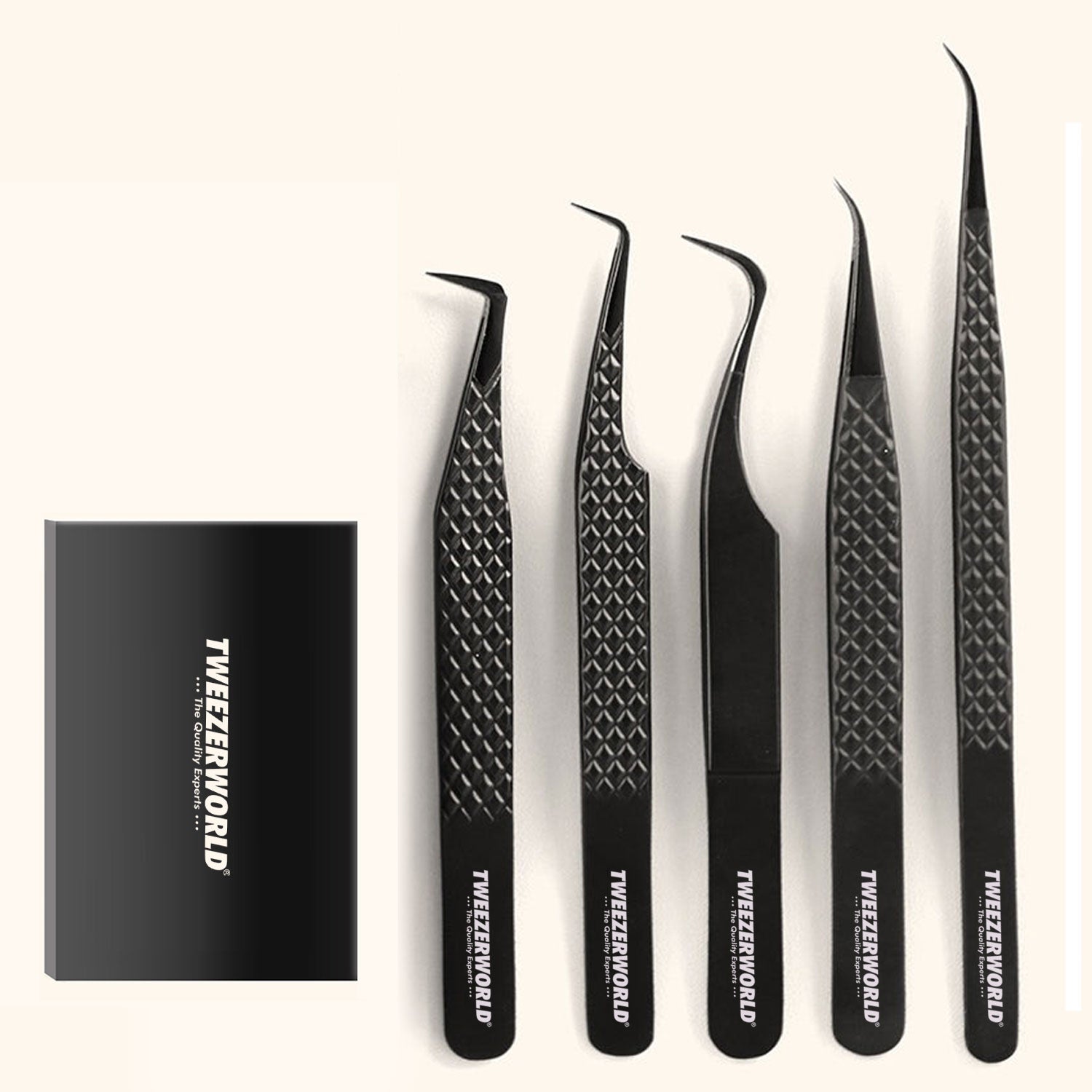
TWEEZER WORLD® texture options may include Hex, Straight-Line and Cross patterns. The selected texture should appear by name in the purchase specification rather than being described only as “fiber tip.”
2. Inspect Texture Coverage
Texture coverage describes where the pattern appears and how much of the inner gripping faces it occupies.
Inspect under consistent lighting and magnification for:
- Correct pattern type
- Texture present on both opposing faces
- Coverage beginning and ending at the approved locations
- Consistent orientation
- No missing sections
- No excessive smoothing or flattening
- No sharp projections or burrs
- No polishing, coating or cleaning residue
- No unintended texture on exterior surfaces
Define Coverage With Measurement Points
“Full fiber tip” can be interpreted differently. A specification should define the length and width of the textured area and the locations from which they are measured.
For example, the record may state:
- Texture length measured from the inner end of the tip
- Minimum coverage on each contact face
- Permitted untextured border
- Maximum left-to-right displacement
Actual limits should be developed for the specific model and approved sample.
3. Inspect the Functional Contact Area
The textured area and functional contact area are related but not identical. Texture can be present where the opposing faces do not make useful contact.
The contact area—often called the sweet spot—is the region where the two working faces provide the intended closure under defined pressure.
Check:
- Where contact begins
- How contact develops during closure
- Length of the useful working zone
- Whether both textures meet within that zone
- Whether contact changes under normal working pressure
- Whether the tips cross, twist or slide sideways
The intended closing geometry may involve full-face, progressive or localised contact. The inspector should compare the production unit with the approved design rather than assuming every tweezer must close identically.
Map the Working Zone
Use a drawing or inspection photograph to record the working-zone position. State its approximate distance from the tip and minimum acceptable length.
A phrase such as “wide sweet spot” is more useful when supported by a controlled measurement or reference range.
4. Check Alignment From Several Directions
Inspect closure from the top, side and end. A tweezer can appear aligned from above while one tip sits higher than the other.
Reject or segregate units showing:
- Crossed tips
- Vertical offset beyond the requirement
- Excessive lateral displacement
- Twisting during closure
- One-corner contact when not intended
- Alignment that changes unpredictably with pressure
If alignment is adjusted during production, the tool should be reinspected for contact area, tension and functional performance.
5. Control Tension Classification
Brands often classify lash tweezers as ultra-soft, soft, medium or firm. These words are useful for customers but subjective unless linked to a controlled range.
Tension depends on:
- Material properties
- Arm length, width and thickness
- Resting opening
- Forming geometry
- Heat treatment, where applicable
- Hand adjustment
Define the Measurement Method
A closing-force requirement should state:
- Measurement equipment
- Measurement point on the handle
- Starting opening
- Closing position
- Number of conditioning cycles
- Force unit
- Minimum and maximum result
Use the same method for approval samples and production batches. Changing the measurement position can change the result even when the tweezer itself has not changed.
Check More Than Average Tension
A batch average can appear acceptable while individual tools are excessively soft or firm. Review the spread of results and identify outliers.
The tension range should be specific to the pattern. A straight isolation tweezer and a wide boot tweezer should not automatically share one requirement.
6. Inspect Surface Finish and Colour
Finish consistency affects brand presentation, comfort, cleanability and customer expectations.
Inspect for:
- Uniform mirror, satin, matte, sandblasted or stone-washed appearance
- Colour agreement with the approved physical reference
- Consistent coating boundaries
- No coating buildup inside the contact zone unless specified
- No scratches, pits, peeling, bubbles or bare patches
- No polishing compound or residue
- Consistent logo contrast and position
Digital photographs are useful records but may not reproduce metallic and coated colours accurately. Retain a physical colour reference or approved sample under controlled storage.
Evaluate Finish Under Consistent Conditions
Use the same lighting, viewing distance and background. Separate cosmetic defects from functional defects. A small permissible shade variation should not be classified in the same way as coating that interferes with closure or cleaning.
7. Conduct Controlled Functional Testing
Functional testing checks whether the assembled characteristics work together. It should supplement dimensional and visual inspection—not replace them.
Record:
- Lash-fiber manufacturer and material
- Diameter and length
- Strip type
- Number of fibers attempted
- Technique
- Pickup position
- Contact zone used
- Number of trials
- Pickup stability
- Fan-base control
- Release behaviour
- Operator
Use trained evaluators and the same test method used during sample approval. Where several artists participate, record results separately before combining observations.
Do Not Test Only the Best-Looking Pieces
Functional samples should be selected from the batch according to the agreed inspection plan, not specially adjusted immediately before testing.
Include units from different parts of the production lot or packing sequence where practical. This helps reveal process drift that might be missed by inspecting adjacent pieces.
Do Not Turn Sample Testing Into a Universal Fan Claim
A successful pickup under one controlled condition does not prove that every artist can create the same fan with every lash fiber.
Performance depends on:
- Lash diameter and finish
- Fiber material
- Tape-strip behaviour
- Fanning technique
- Pickup position
- Hand pressure
- User preference
- Tool cleanliness
Marketing language should describe design intent and documented test conditions rather than guaranteeing a particular fan capacity.
Sample-to-Batch Comparison Table
| Characteristic | Approved reference | Production check | Record |
|---|---|---|---|
| SKU and shape | Drawing and golden sample | Visual and dimensional verification | Pass/fail by lot |
| Texture type | Hex, Straight-Line, Cross or approved pattern | Magnified visual inspection | Pattern and defects |
| Texture coverage | Defined length, width and position | Measurement and visual comparison | Values and pass/fail |
| Contact area | Approved closing geometry and working zone | Closure inspection under defined pressure | Position, length and defects |
| Alignment | Drawing and golden sample | Top, side and end inspection | Pass/fail or measured offset |
| Tension | Classification and measured range | Closing-force test | Individual values and range |
| Finish | Approved physical colour and finish sample | Controlled visual inspection | Defect category |
| Logo | Artwork, size and position | Visual and dimensional check | Pass/fail |
| Functional performance | Approved test protocol | Controlled pickup-and-release test | Conditions and results |
| Packaging | Approved packaged golden sample | Fit, protection and label inspection | Pass/fail |
Classify Defects Before Inspection
Critical Defects
Examples may include dangerous burrs, cracked tips, severe contamination or another condition that creates an unacceptable safety risk. The exact classification should follow the buyer's risk assessment.
Major Defects
Examples may include incorrect texture, unusable alignment, tension outside specification, an insufficient working zone, the wrong shape or a coating defect that affects closure.
Minor Defects
Examples may include limited cosmetic variation that does not materially affect use, cleanability or agreed presentation.
Do not rely on “AQL inspection” as a complete instruction. Define the sampling standard, inspection level, defect classes, acceptance values and critical-defect policy.
Which Characteristics May Need 100% Inspection?
Depending on the product and risk assessment, important characteristics may justify individual inspection, including:
- Dangerous burrs
- Tip alignment
- Texture presence
- Working-zone contact
- Return action
- Correct product identity
- Obvious coating failure
Other dimensions, tension measurements, cosmetic characteristics and functional tests may use sampling when supported by a controlled process and agreed inspection plan.
Use a Batch Consistency Scorecard
| Inspection field | Result | Comments |
|---|---|---|
| Batch or lot number | ||
| Inspection quantity | ||
| Correct SKU and shape | Pass / Fail | |
| Texture type | Pass / Fail | |
| Texture coverage | Pass / Fail | |
| Contact-area position | Pass / Fail | |
| Contact-area length | Pass / Fail | |
| Top-view alignment | Pass / Fail | |
| Side-view alignment | Pass / Fail | |
| Tension classification | Pass / Fail | |
| Measured closing force | Result | |
| Surface finish | Pass / Fail | |
| Colour match | Pass / Fail | |
| Logo and marking | Pass / Fail | |
| Pickup control | Pass / Fail | |
| Release behaviour | Pass / Fail | |
| Packaging protection | Pass / Fail | |
| Final disposition | Accept / Rework / Reject |
Investigate Patterns, Not Only Individual Failures
When defects are found, look for clustering:
- One production shift
- One texture machine or fixture
- One finishing operator
- One coating batch
- One section of the shipping carton
- One size or geometry
A repeated pattern may indicate process drift or packaging damage rather than isolated workmanship.
Define Batch Disposition
The quality agreement should explain what happens when the batch fails.
Possible dispositions include:
- Accept the batch
- Sort affected units
- Rework and reinspect
- Replace nonconforming units
- Reject the lot
- Approve a documented concession for a limited cosmetic issue
A concession should never be assumed. It requires the buyer's documented authorization and should not be used for defects that affect safety or intended function.
Require a Pre-Shipment Inspection Report
The report should identify:
- Buyer and supplier
- Purchase order
- SKU and batch number
- Production and inspection quantities
- Drawing and specification revisions
- Inspection date and inspector
- Measurement equipment
- Results for texture, contact area, alignment, tension and finish
- Functional-test conditions
- Defect counts and categories
- Corrective action or rework
- Final release decision
Photographs can support the report, but they should not replace measurements and recorded results.
Control Changes After Approval
The supplier should not change important characteristics without prior buyer approval.
Controlled changes may include:
- Steel grade or raw-material source
- Tip dimensions
- Texture pattern or production method
- Working-face length
- Forming or tension adjustment
- Heat treatment
- Polishing or coating process
- Manufacturing site or subcontractor
- Logo-marking method
- Packaging restraint
- Inspection or functional-test method
Depending on the change, the buyer may require revised samples, comparative testing, pilot production or a new golden sample.
Fiber Tip Tweezer Batch Inspection Checklist
- [ ] Purchase order, SKU and batch identity confirmed
- [ ] Current drawing and specification available
- [ ] Protected golden sample available
- [ ] Correct Hex, Straight-Line, Cross or approved texture
- [ ] Texture coverage measured at defined points
- [ ] Texture is clean and burr-free
- [ ] Working contact area matches the approved position
- [ ] Minimum contact length is achieved
- [ ] Tips do not cross, twist or shift
- [ ] Tension classification is correct
- [ ] Closing-force results are within the approved range
- [ ] Finish and colour match the physical reference
- [ ] Coating does not interfere with the contact faces
- [ ] Logo and marking are correct
- [ ] Functional test uses documented materials and technique
- [ ] Samples were selected according to the inspection plan
- [ ] Defects are classified as critical, major or minor
- [ ] Nonconforming units are segregated
- [ ] Packaging protects alignment and finish
- [ ] Pre-shipment report is approved
- [ ] Any process change has written authorization
Frequently Asked Questions
Should every production tweezer feel exactly like the golden sample?
Production should remain within the approved specification and tolerances. Hand-finished tools may have limited natural variation, but that variation should not materially change the defined tension, closure or function.
Is texture coverage the same as the sweet spot?
No. Texture coverage describes the patterned surface. The functional contact area describes where the opposing faces meet usefully. Both should be inspected.
How should soft tension be specified?
Use a customer-facing classification supported by a measured closing-force range and a defined test method.
Can the golden sample replace a technical drawing?
No. The sample supports the drawing and specification, especially for feel and appearance. It does not define every measurement or permitted tolerance.
Does one successful functional test prove batch consistency?
No. Functional units should be selected according to a documented inspection plan, and the batch should also pass texture, alignment, tension, finish and dimensional checks.
Should each colour have a separate approved reference?
Yes, where colour and finish are commercially important. Metallic and coated colours should be compared with approved physical references under consistent lighting.
Conclusion
Fiber tip lash tweezer consistency begins before production. Lash brands should convert the approved sample into controlled requirements for:
- Texture type and coverage
- Functional contact area
- Alignment and closing geometry
- Tension classification and closing force
- Surface finish and colour
- Logo and packaging
- Controlled pickup and release testing
The golden sample, technical drawing and written specification should work together. A structured inspection plan then determines whether the production batch represents the product the brand actually approved.
Explore TWEEZER WORLD®'s Fiber Tip Lash Tweezers, review the OEM Process or learn about OEM and Private-Label Tweezer Manufacturing.
Primary CTA: Request a Fiber Tip Tweezer Batch Evaluation
Shopify SEO Settings
SEO title: Fiber Tip Lash Tweezer Batch Consistency Guide
Meta description: Learn how lash brands should inspect fiber tip tweezer batches for texture coverage, contact area, tension, finish and functional consistency.
URL handle: fiber-tip-lash-tweezer-batch-consistency
Blog excerpt: Compare production fiber tip lash tweezers with approved samples using measurable checks for texture coverage, working contact area, alignment, tension, finish and functional performance.
Primary keyword: fiber tip lash tweezer batch consistency
Secondary keywords: lash tweezer batch inspection, fiber tip texture coverage, lash tweezer tension classification, private-label lash tweezer QC, tweezer golden sample, OEM lash tweezer quality control
Suggested image alt text: Fiber tip lash tweezer production batch inspection comparing texture coverage, contact area, tension, finish and functional performance with an approved golden sample.
Papular Products Gallery