
How to Protect Fiber Tip Lash Tweezers - TWEEZER WORLD
How to Protect Fiber Tip Lash Tweezers During Packaging, Shipping and Storage
Fiber tip lash tweezers can leave production with correct alignment, controlled tension and clean inner-tip texture, yet arrive at a salon with damaged tips if their packaging does not control movement and impact.
The working end is particularly sensitive because the two arms must meet according to the intended closing geometry. A loose tool can strike another tweezer, press against the carton wall or move repeatedly inside its case. Moisture, adhesive residue and unsuitable storage materials can also affect cleanliness, coatings and corrosion resistance.
For salons, academies, distributors and private-label brands, suitable protection requires more than placing a plastic cap over the tips. The packaging system should protect the complete tweezer through handling, transport, retail display and storage.
Protective packaging is not a sterile barrier unless it has been specifically designed, validated and labelled as one. Professional lash tweezers are normally supplied as clean, non-sterile beauty tools.
Why Fiber Tip Lash Tweezers Require Specific Protection
A fiber tip tweezer combines several characteristics that packaging must preserve:
- Fine or angled tip geometry
- Hex, Straight-Line, Cross or another inner-tip texture
- Model-specific closing alignment
- Controlled spring tension
- Decorative or functional surface finish
- Permanent branding and product identification
The texture is located on the inner contact faces, but impact anywhere along the arms can change how those faces meet. Packaging must therefore support and restrain the tool without squeezing it into a permanently closed or distorted position.
The Five Main Packaging Risks
1. Tip Impact
The most obvious risk is direct impact against a hard surface. Fine, boot, L-shaped and angled tips can become chipped, crossed or bent.
2. Metal-to-Metal Contact
When several tweezers are packed loosely together, their tips and coated handles can strike one another during transport. This may damage alignment, texture, polishing or decorative finishes.
3. Excessive Compression
A tight cap, elastic loop or poorly designed insert may apply constant force to the arms. Long-term compression can alter the resting opening or make the tool difficult to remove safely.
4. Moisture and Condensation
Stainless steel is corrosion resistant, not corrosion proof. Humidity, condensation, salts and unsuitable packaging materials can contribute to staining or corrosion, particularly when tools are stored for long periods.
5. Contamination
Dust, fibers, adhesive residue, process debris and unstable packaging materials can contaminate the textured surfaces. Fine recesses must remain visibly clean and suitable for the brand's care process.
1. Select the Correct Tip Protector
A tip protector is the first line of defence, but it must suit the tweezer's shape and opening.
A suitable protector should:
- Cover the full vulnerable working end
- Remain attached during normal transport
- Avoid pressing the arms sideways
- Avoid forcing the tips together excessively
- Have no sharp internal edges
- Leave no residue or colour transfer
- Permit safe installation and removal
- Be compatible with the finish or coating
Avoid One Cap for Every Shape
Straight isolation, curved, 45-degree, 90-degree, L-shaped and boot tweezers do not always fit the same protector. A cap that works for a narrow straight tip may distort a wider boot.
Private-label specifications should identify the protector type for each SKU or approved model family.
Closed or Partly Open Storage?
The correct position depends on the tweezer design and packaging system. The protector should not keep the tool under unnecessary closing force. Where a case supports the handle, the tip can remain protected without using the contact faces as the primary restraint.
2. Use Individual Sleeves to Prevent Contact
An individual sleeve helps separate each tweezer from other tools and packaging surfaces.
Common options include:
- Clear protective sleeves
- Soft nonwoven pouches
- Paperboard sleeves with internal restraint
- Reusable fabric sleeves
- Individual retail pouches
The sleeve should be large enough for insertion without scraping the tips or logo, but not so loose that the tweezer gains damaging momentum inside it.
Specify:
- Material
- Dimensions
- Thickness
- Closure method
- Ventilation or sealing requirement
- Cleanliness standard
- Compatibility with coated finishes
- Label position
A sleeve is not a substitute for structural protection. It prevents scratching and direct contact but may not protect a fine tip from crushing.
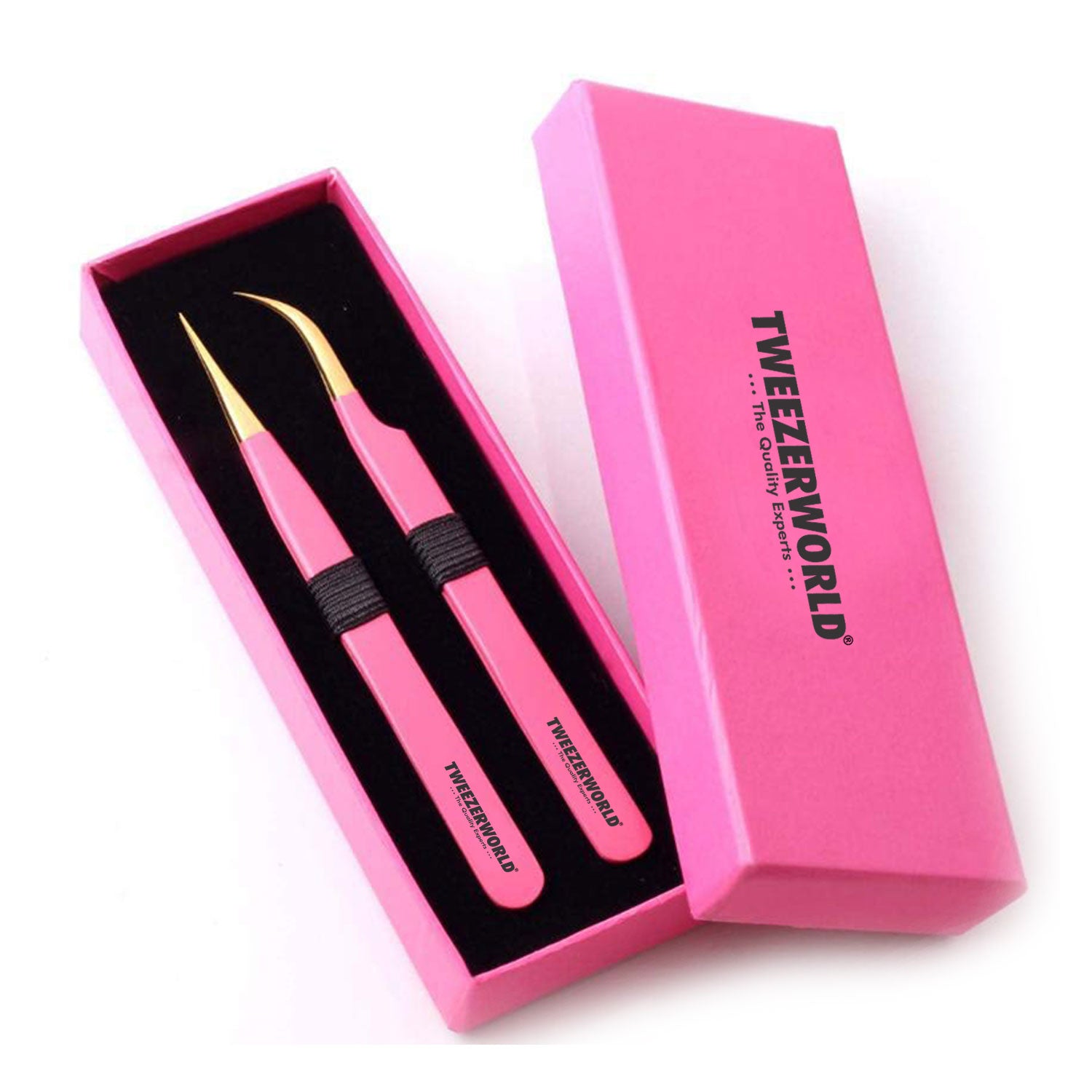
3. Choose a Case That Restrains the Handle
A protective case should hold the tweezer by its body or handle rather than relying on the tips to stop movement.
Suitable case features may include:
- Individual tool channels
- Soft but stable inserts
- Elastic loops positioned away from the working end
- Recesses matched to each tweezer shape
- A rigid exterior
- A closure that cannot press onto raised tips
- A cleanable interior
- Space for a care card and tool identification
Inspect Foam and Fabric Inserts
Some inserts can shed particles, retain moisture, transfer dye or degrade over time. Buyers should approve the final insert material rather than only its colour.
Check for:
- Loose fibers
- Dust
- Odour
- Oil or plasticizer transfer
- Abrasive surfaces
- Excessive compression
- Discoloration of light coatings
Velvet-style presentation can support a premium brand, but the insert must still protect the tool and remain clean.
4. Control Movement Inside Retail Packaging
A visually attractive box can fail if the tool moves freely inside it.
Perform a gentle movement check with the closed package. The tweezer should not slide, rattle or strike the lid. Open the package after the check and confirm that:
- The tip protector remains in place
- The tool remains in its intended position
- The arms are not under unwanted pressure
- The coating has not rubbed against the insert
- No particles have entered the textured faces
For a set, provide a separate location for every tool. Do not allow an isolation tweezer, volume tweezer and applicator to overlap.
5. Add Transport Protection for Wholesale Cartons
Individual retail packaging may not be enough for international distribution. The shipping system should protect the retail units from compression, vibration and impact.
A wholesale packaging specification may define:
- Units per inner carton
- Inner-carton dimensions
- Dividers or partitions
- Units per master carton
- Master-carton board grade
- Maximum gross weight
- Void-fill material
- Edge and corner protection
- Moisture barrier, when justified
- Carton sealing method
- Handling labels
- Stacking limit
- Lot and SKU identification
Mixed-SKU cartons require clear separation and labelling. A boot-style tweezer should not be substituted for another pattern simply because both packages use the same colour.
6. Manage Moisture Without Creating New Problems
Moisture control should be based on the route, storage duration, climate and packaging permeability.
Possible controls include:
- Thorough drying before packaging
- Clean, dry packaging materials
- Moisture-resistant inner packaging
- Suitable desiccant for defined conditions
- Humidity-indicator cards for selected bulk shipments
- Protection from rapid temperature changes
- Warehouse humidity monitoring
Desiccant Is Not Automatically Required
A desiccant packet should not be added as a decorative feature or assumed to solve every moisture risk. The packet type, capacity, packaging barrier and expected exposure should work as a system.
Desiccant must remain physically separated from the working tip and must not leak dust or granules. Include any necessary handling warning and ensure compliance with the destination market's packaging requirements.
Avoid Packaging Damp Tools
Sealing residual moisture inside a low-permeability pouch can be worse than using a ventilated package. Tools should be clean and completely dry before final packing.
7. Define Salon Storage Practices
After delivery, professional tools still require protection between appointments.
Salons should store clean, dry tweezers:
- In individual case positions
- With suitable tip protection
- Away from adhesive bottles and spills
- Away from sinks, wet towels and high humidity
- Away from direct heat or sunlight
- Separately from contaminated tools
- Without heavy objects resting on the case
Do not store tweezers loose in a drawer, cup or open tray where the tips can collide.
8. Separate Clean, Used and Quarantined Tools
A case should not mix tools at different stages of use and inspection.
A simple status system can include:
- Clean and ready: inspected and stored for professional use
- Used—awaiting cleaning: physically separated from ready tools
- Quarantined: dropped, misaligned or suspected of damage
- Retired: permanently removed from professional service
Colour-coded labels or dedicated case sections can reduce accidental reuse, provided the labelling does not replace the required cleaning and inspection process.
9. Protect the Texture During Cleaning and Drying
Packaging cannot compensate for damage caused before storage.
Before returning a tweezer to its case:
- Remove adhesive using the approved method.
- Do not scrape the textured faces with another metal tool.
- Rinse or wipe as required by the care instructions.
- Dry the tweezer completely.
- Inspect texture, alignment and coating.
- Install the correct tip protector.
- Place the tool into its individual storage position.
Ensure that reusable cases are clean and dry before inserting freshly cleaned tools.
10. Approve Packaging With the Golden Sample
For private-label production, the approved golden sample should include the complete packaging configuration—not only the tweezer.
Confirm:
- Tweezer SKU and shape
- Tip protector
- Individual sleeve
- Insert or restraint position
- Case or retail box
- Care instructions
- Labels and barcode
- Batch identification
- Inner-carton quantity
- Master-carton configuration
Link the approved packaging sample to a controlled specification revision. If the insert, cap, box dimensions or packing orientation changes, evaluate whether reapproval is required.
Private-Label Packaging Specification
| Packaging field | Buyer requirement |
|---|---|
| Product SKU | Unique reference matching the tool, label and inspection report |
| Tip protector | Model-specific type, dimensions, material and approved fit |
| Storage position | Defined open, partly closed or supported position without damaging force |
| Individual sleeve | Material, size, thickness, closure and cleanliness requirements |
| Case or retail box | Dimensions, material, closure and presentation standard |
| Internal restraint | Handle-supported channel, insert or loop with defined position |
| Insert material | Non-shedding, non-abrasive and compatible with the finish |
| Movement acceptance | No tip impact, metal contact or displacement during the agreed handling check |
| Moisture control | Dry packing, barrier and desiccant requirements where justified |
| Care card | Approved cleaning, drying, inspection and storage instructions |
| Label | Brand, SKU, pattern, texture, lot and applicable market information |
| Inner carton | Quantity, partitions, dimensions and label placement |
| Master carton | Quantity, dimensions, strength, gross-weight limit and sealing method |
| Inspection | Defined sample size, acceptance criteria and pre-shipment record |
| Golden sample | Signed reference containing the approved tool and complete packaging |
| Change control | No material, fit, layout or supplier change without written approval |
Packaging Inspection Checklist
- [ ] Correct tweezer model and texture
- [ ] Tool is clean and fully dry
- [ ] Tip protector matches the shape
- [ ] Protector remains secure without excessive pressure
- [ ] No loose particles inside the protector
- [ ] Individual sleeve does not scratch the finish
- [ ] Handle is restrained without bending the arms
- [ ] Tips cannot strike the case or lid
- [ ] Multiple tools cannot touch each other
- [ ] Case interior is clean and non-shedding
- [ ] Package closes without compressing raised tips
- [ ] Care instructions are included
- [ ] SKU, texture and batch details are correct
- [ ] Moisture-control component is approved and secure
- [ ] Retail units remain separated in the inner carton
- [ ] Master carton has sufficient void fill and protection
- [ ] Packed product passes the agreed handling or transport check
- [ ] Alignment and finish remain acceptable after testing
Test the Complete Packed Product
Do not evaluate the carton without inspecting the tools afterwards. The purpose of transport testing is to confirm that the tweezer remains acceptable.
Post-test checks should include:
- Tip alignment
- Closing geometry
- Resting opening
- Spring tension
- Texture condition
- Surface finish
- Logo legibility
- Package integrity
- Label readability
- Functional pickup and release, where specified
The testing method and acceptance criteria should reflect the intended distribution route and commercial risk.
Common Packaging Mistakes
- Using one narrow cap for every tweezer pattern
- Allowing tips to support the weight of the tool
- Packing multiple tweezers in one loose pouch
- Closing the case directly onto an angled tip
- Using shedding foam or fabric
- Sealing tools before they are fully dry
- Adding desiccant without a defined moisture-control plan
- Leaving empty space in the master carton
- Mixing SKUs without partitions and labels
- Approving only the visual design rather than the protective function
Frequently Asked Questions
Should fiber tip lash tweezers always have a tip protector?
A suitable protector is strongly recommended during transport and storage. It must fit the exact shape without bending, crossing or excessively closing the tips.
Is an individual plastic sleeve enough for shipping?
Usually not by itself. A sleeve can reduce scratching and contact, but fine tips also require structural protection and movement control.
Can several tweezers be stored in one case?
Yes, when every tool has an individual restrained position and the tips cannot touch each other or the lid.
Should salons keep tweezers closed during storage?
The storage position should suit the design and protector. Avoid continuous excessive closing force. Support the handle and protect the tip without distorting the arms.
Do stainless-steel lash tweezers need moisture control?
They should always be stored clean and dry. Additional moisture controls depend on climate, packaging, route and storage duration. Stainless steel can still stain or corrode under unsuitable conditions.
Does a sealed pouch make the product sterile?
No. A standard sealed pouch provides protective packaging only. It should not carry a sterile claim unless the complete sterile-barrier and sterilization system has been appropriately established.
What should wholesale buyers inspect after transport testing?
Inspect the packaging and the tool. Confirm alignment, tension, texture, finish, marking and functional performance against the approved specification.
Conclusion
Effective packaging protects the fiber tip tweezer as a complete precision tool. The best system combines:
- A correctly fitted tip protector
- An individual sleeve
- A handle-supported case or insert
- Separation between tools
- Movement control inside retail and shipping cartons
- Appropriate moisture management
- Clean, dry salon storage
- Post-transport inspection
Private-label buyers should approve the packaging together with the golden sample and translate it into a controlled specification. This protects tip texture, alignment, tension, finish and brand presentation from the factory to the professional user's workstation.
Explore TWEEZER WORLD®'s Fiber Tip Lash Tweezers, review the OEM Process or learn about OEM and Private-Label Tweezer Manufacturing.
Primary CTA: Request a Fiber Tip Tweezer and Packaging Evaluation Set
Papular Products Gallery