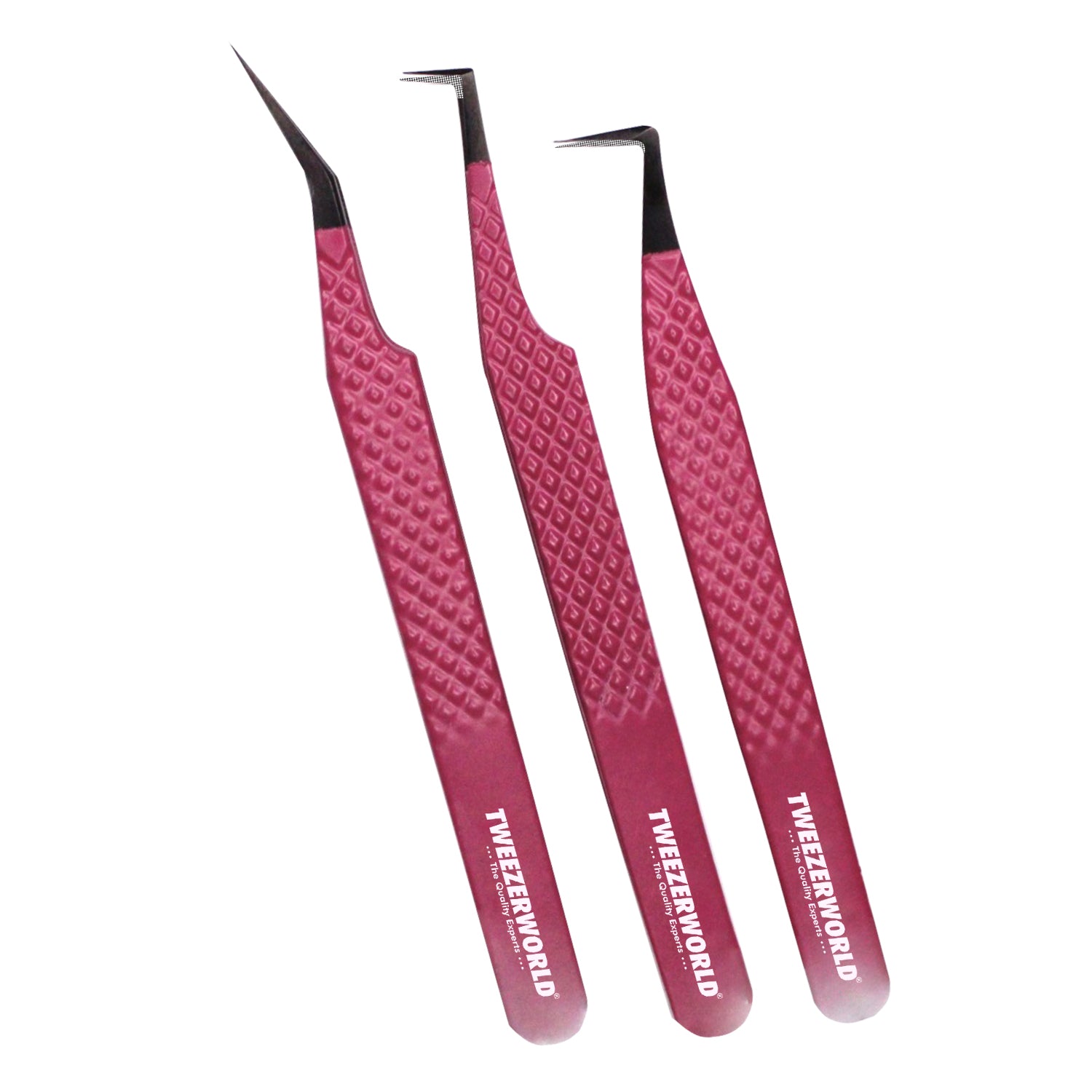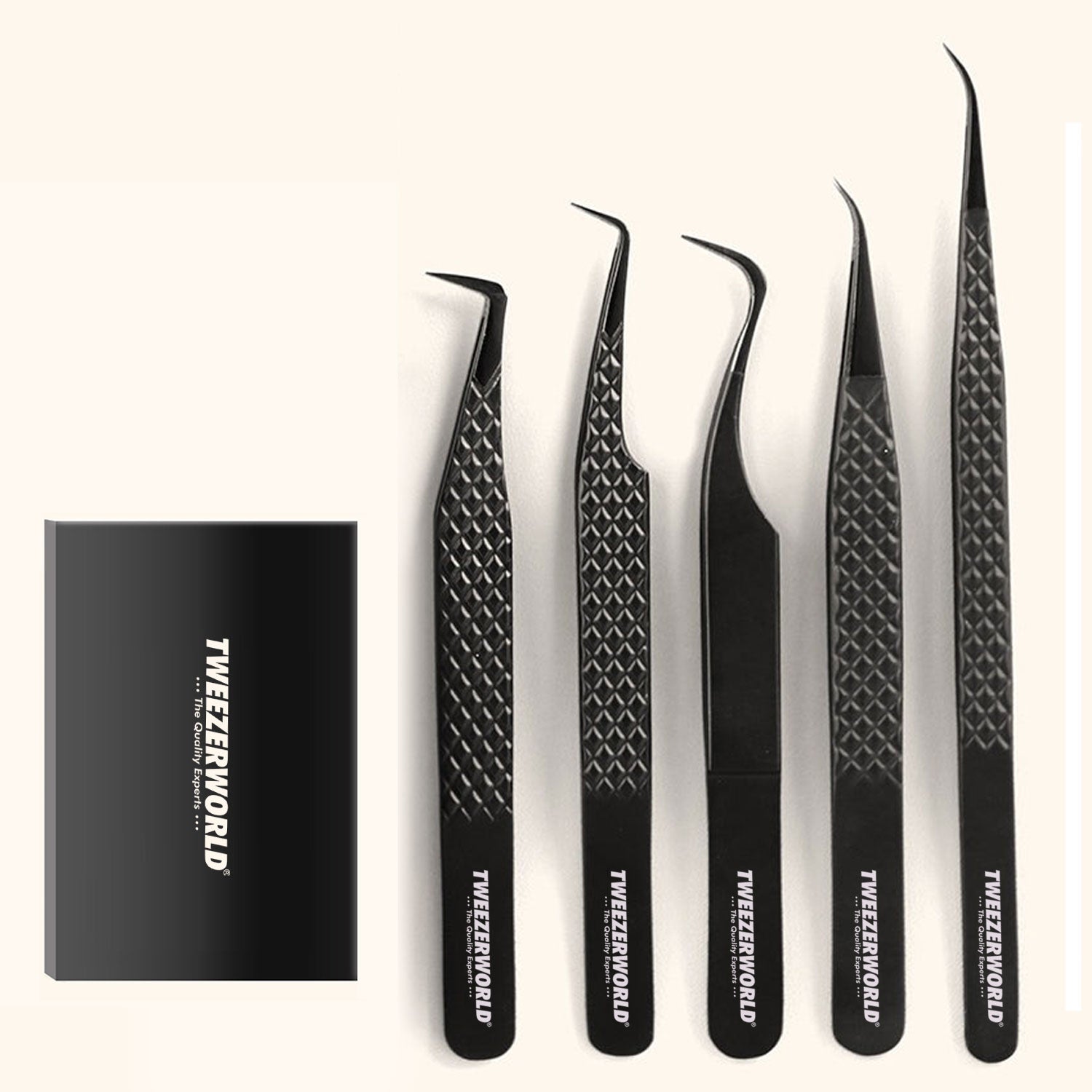

Fiber Tip Lash Tweezers: Avoid Fan-Capacity Overclaims
Fiber Tip Lash Tweezers: Why Fan Capacity Should Not Be Overclaimed
“Suitable for 16D.” “Grips up to 30D.” “Perfect for 40D fans.” These statements are common in the lash-tweezer market, but a fan-size number by itself does not describe a repeatable product capability.
A 16D fan made with 0.03 mm extensions is not equivalent to a 16D fan made with thicker fibres. A narrow handmade fan is not the same test object as a wide premade fan. Pickup from a strip is not the same operation as holding, transferring and releasing a completed fan. The result also changes with tip shape, contact area, alignment, tension, lash finish, pickup angle, hand pressure and artist technique.
For lash brands, academies, distributors and OEM buyers, the solution is not to avoid performance language completely. It is to make claims specific enough to test and modest enough to remain true outside one ideal demonstration.
Quick answer: a “D” number tells the reader how many extensions are in a fan. It does not, on its own, prove how much material a tweezer can reliably pick up or control. A defensible capacity claim should identify the exact tweezer model, lash diameter and type, pickup method, test procedure, pass criteria and limitations.
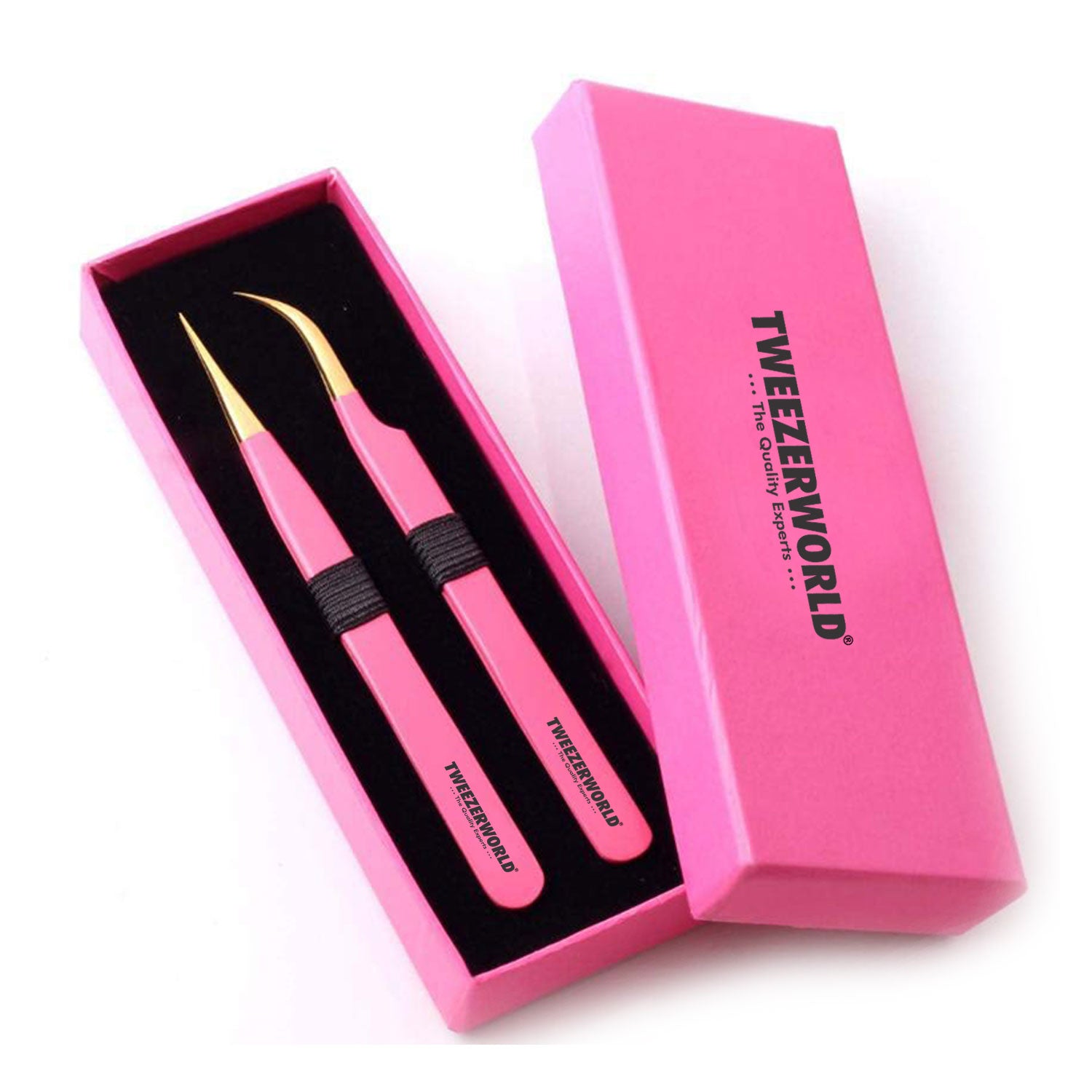
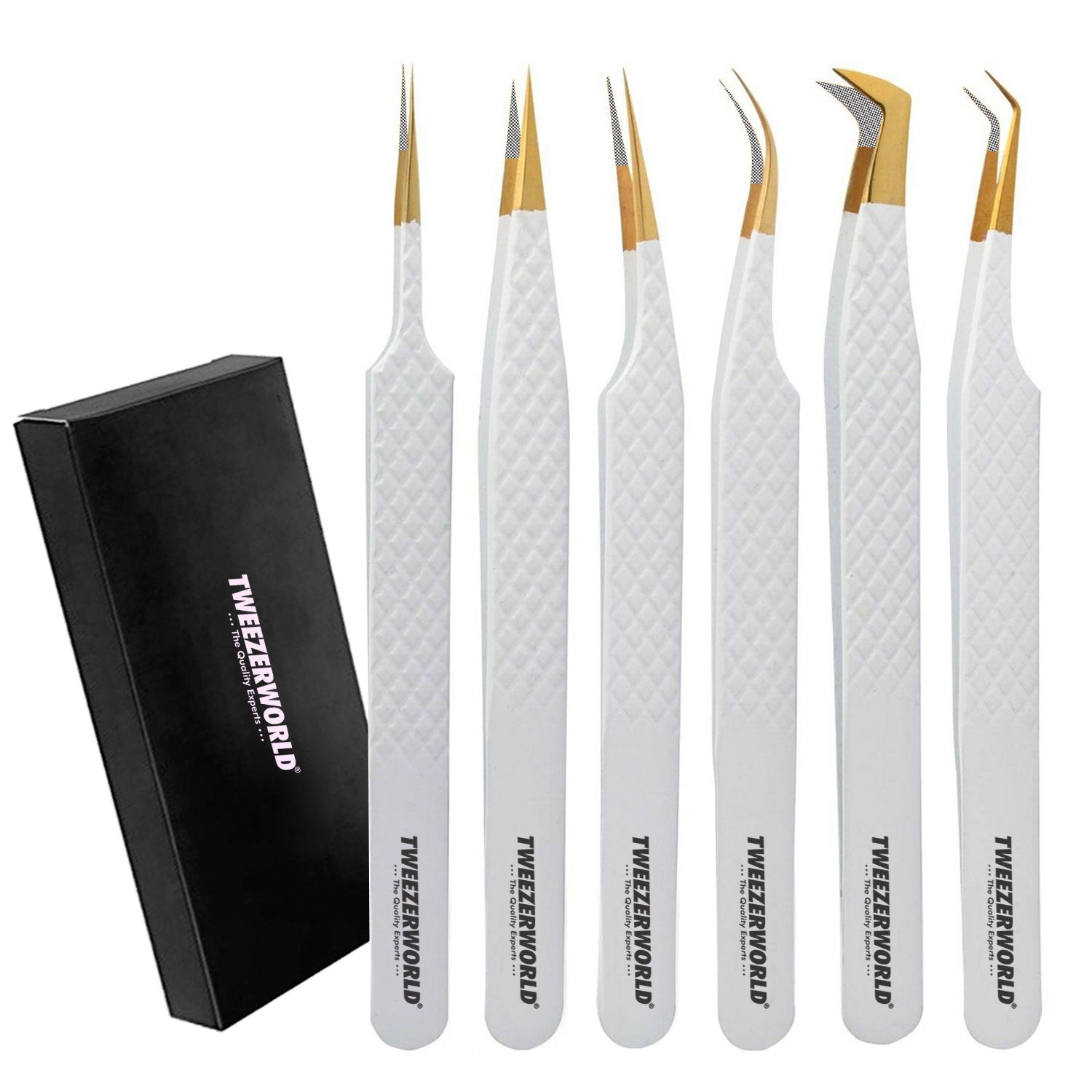
Explore TWEEZER WORLD®’s Fiber Tip Lash Tweezers, Volume Lash Tweezers and Mega Volume Lash Tweezers.
This article discusses tool specification and marketing claims. Fan selection for a client must also consider the lash artist’s training, the natural lash and the applicable product and adhesive instructions.
What Does “D” Mean in a Lash-Fan Description?
In lash terminology, “D” normally indicates the number of extension fibres grouped into one fan. A 2D fan contains two fibres, a 6D fan contains six, and a 16D fan contains sixteen.
That count does not state:
- the diameter of each extension;
- the extension material or surface treatment;
- the curl;
- the length;
- the width of the fan;
- the base construction;
- whether the fan is handmade, promade or premade;
- how the fibres are attached to the strip;
- where the fan is held;
- or how much force is required to control it.
“16D” is therefore a fan-count description, not a standardized load rating for tweezers.
Why the Same D Number Can Create a Different Pickup Task
Two fans with the same number of fibres can behave differently before they ever reach the tweezer.
| Variable | How it can change the handling task | What a test report should record |
|---|---|---|
| Lash diameter | Changes the amount of material within the closed tip and can affect bundle stiffness and control | Nominal diameter and lash supplier or batch |
| Lash length and curl | Changes leverage, balance and how the fibres meet the gripping area | Length, curl and preparation |
| Fibre surface | Different finishes can feel more or less prone to movement at the contact surface | Product name, material description and condition |
| Fan width | A narrow closed fan and a wide open fan present different contact geometry | Fan type and approximate width or approved reference |
| Base design | A thin, pinched, bonded or premade base can require a different pickup point | Base construction and gripping location |
| Strip attachment | Adhesive tack and strip construction affect separation and pickup force | Strip type, adhesive condition and pickup method |
| Environment | Residue, humidity and static behaviour can influence fibre separation and handling | Relevant conditioning and cleanliness controls |
| Technique | Pinching, rolling, flower-bouquet and other methods use different angles and contact zones | Technique, operator instructions and pickup angle |
A useful capacity claim must control enough of these variables for another trained evaluator to repeat the result.
Fiber Tip Does Not Mean Unlimited Grip
In this context, “fiber tip” refers to a textured inner gripping surface. It does not necessarily mean that a separate fibre material has been attached to the tip. The texture may use straight-line, cross, hexagonal or another controlled pattern.
The texture can increase the number of contact edges available within the gripping area and may help reduce slipping in selected pickup conditions. It does not remove the influence of the complete tool.
Actual grip depends on:
- tip shape and width;
- contact-area length;
- texture pattern, pitch, depth and coverage;
- left-to-right pattern consistency;
- tip alignment;
- whether the contact surfaces close progressively or simultaneously;
- spring tension;
- handle stiffness;
- closing pressure applied by the artist;
- tip cleanliness;
- pickup angle;
- and the lash fibres being handled.
A deep texture cannot compensate for twisted tips. A wide boot cannot compensate for incomplete contact. A perfectly aligned sample does not prove that every unit in a batch performs the same way.
For a detailed comparison of the surface patterns, read Cross vs Straight-Line vs Hex Fiber Tip Tweezers.
Fan Capacity Is Not the Same as Fan Control
A tweezer may be able to close around a large bundle without being the best tool for the complete technique. Professional performance includes more than whether the fibres can be lifted once.
Evaluate at least five stages:
- Separation: can the selected fibres be separated from the strip without uncontrolled loss?
- Pickup: can the tool lift the fibres at the intended point and angle?
- Fan formation: can the artist create or preserve the desired base and spread?
- Transfer and placement: does the fan remain controlled while the hand and tool orientation change?
- Release: can the tool release without pulling, twisting or closing the fan?
A claim based only on successful lifting may overstate what the tweezer supports during a complete working sequence.
More Capacity Is Not Automatically Better
A high numerical claim can look impressive on a product page, but many artists do not select a tweezer by the largest possible fan. They select it by the techniques they perform most often and by how predictably the tool behaves.
A very wide gripping area may support a broad bundle, but it may also feel less suitable for narrow access or small fans. A strong spring may provide a particular closing response, but it can increase thumb effort for some users. An aggressive texture may resist slipping, but release behaviour and cleaning must also be assessed.
The best product is not the one with the highest D number. It is the one that provides the required control, repeatability, comfort and release for the intended range of techniques.
Why “Up To” Still Needs Evidence
Adding the phrase “up to” does not make any number automatically reliable. A customer may still reasonably interpret “up to 40D” as a product capability supported under meaningful conditions.
In the United States, the Federal Trade Commission states that advertisers should have a reasonable basis for objective product claims. Review the official FTC Policy Statement Regarding Advertising Substantiation.
For UK advertising, the Committee of Advertising Practice explains that marketers should hold documentary evidence for claims that consumers are likely to regard as objective and capable of substantiation. See the official CAP guidance on substantiation.
Exact legal requirements depend on the market and the way the complete advertisement is understood. From a procurement perspective, the practical lesson is simple: if a claim contains a measurable fan number, keep a model-specific test record supporting it.
Four Better Levels of Capacity Language
| Claim level | Example | Evidence expectation |
|---|---|---|
| Design description | “Wide boot-style fiber tip designed for volume and mega-volume pickup.” | Drawing, product construction and basic functional evaluation |
| Technique suitability | “Suitable for testing with pinching and strip-pickup techniques.” | Technique-specific sample evaluation; avoid implying universal preference |
| Qualified test result | “In our internal sample test, trained evaluators picked up 6D–16D fans made with the specified 0.03 mm lash product.” | Written method, exact materials, sample size, results and limitations |
| Broad guarantee | “Guaranteed non-slip grip for every artist from 2D to 40D.” | Usually too broad because artist, lash and technique variables are uncontrolled |
The qualified test-result format is more informative than a large number alone. It tells the reader what was actually evaluated and avoids turning one controlled result into a universal promise.
How to Build a Repeatable Fan-Capacity Test
There is no single universal lash-industry capacity test that applies to every tweezer, fan and technique. OEM buyers should create a method appropriate to the intended product and use it consistently for sample approval and production checks.
1. Identify the exact tweezer
Record the model, production lot, tip shape, texture pattern, finish and sample number. Do not combine results from a 45° model, 90° model and wide boot model under one general “fiber tip” claim.
2. Define the lash product
Record the lash brand or supplier, product code, nominal diameter, length, curl, colour, strip and lot where available. If several lash products are part of the claim, test them separately.
3. Define the fan construction
State whether the fan is handmade during the test, promade or premade. Define the fan count, approximate spread, base type and whether adhesive has been applied.
4. Define the pickup technique
Identify the method, pickup point on the strip or fan, tool orientation and where the fibres sit within the tweezer tip. A 90° boot used at its broad contact area is not the same test as holding the bundle near one corner.
5. Control the tweezer condition
Test clean, dry tips unless the claim addresses another condition. Record any approved cleaning process. Residue in a textured surface can change both pickup and release.
6. Define the closing action
If practical, specify hand position, closing-force range or another repeatable operating instruction. At minimum, trained evaluators should use the same procedure and avoid excessive squeezing that masks poor tip contact.
7. Test more than one stage
Include pickup, a defined hold or transfer movement and controlled release. The claim should not be based only on touching or briefly lifting the fibres.
8. Define pass and failure
A pass might require pickup without losing fibres, retention through a stated movement and release without unacceptable fan collapse. Define what counts as slipping, dropping, snagging, twisting or incomplete pickup.
9. Repeat the trial
One successful attempt is anecdotal. Use a stated number of attempts at each fan size and record passes, failures and observations. If only the best result is reported, the claim may not reflect normal performance.
10. Include more than one evaluator
Where the product is marketed to a broad professional audience, test with multiple trained users. Record their experience level and preferred technique. Individual hand pressure and technique can affect the result.
11. Test several production samples
Do not establish a commercial claim from one specially selected tweezer. Evaluate several samples representing the proposed production process and record the sample-selection method.
12. Retain evidence
Keep the method, raw results, sample references, photographs or video where appropriate, evaluator details and approved claim wording together. The test record should be linked to the product and specification revision.
Example Fan-Capacity Test Record
| Test field | Example entry |
|---|---|
| Tweezer model | FT-90-HX-WB, 90° wide boot, hex-textured inner tip |
| Sample and lot | Five randomly identified pre-production samples; lot reference recorded |
| Lash product | Supplier and product code recorded; 0.03 mm, selected length and curl |
| Fan construction | Handmade fans prepared from the named strip using the defined method |
| Fan counts | Separate trials at 6D, 10D, 12D and 16D |
| Evaluators | Three trained lash artists; experience and preferred technique recorded |
| Sequence | Separate, pick up, hold through the defined transfer path and release |
| Attempts | Defined equal number per evaluator, fan count and sample |
| Pass criteria | No fibre loss during pickup and transfer; controlled release within the agreed fan condition |
| Result | Report actual pass rate and observations at every fan count—do not report only the maximum |
This example deliberately avoids inventing a universal acceptance percentage. The buyer should set the required pass rate based on intended use, pilot testing and commercial risk.
Test a Range, Not Only the Maximum
A tweezer promoted for 2D–16D should be evaluated across the range. Testing only 16D does not establish that the tool releases small fans cleanly. Testing only 2D does not establish control of larger bundles.
A useful test matrix can include:
- the lowest intended fan count;
- one or more normal working counts;
- the proposed upper claim;
- more than one lash diameter if the marketing names them;
- the principal pickup methods;
- clean-tip performance;
- and performance after the agreed cleaning or cycle condition.
The normal working range is often more useful to customers than the single highest successful pickup.
How Shape Influences the Test
| Tweezer shape | Useful evaluation focus | Capacity-claim caution |
|---|---|---|
| 45° | Versatile pickup angles, contact-zone position and release for everyday volume work | Do not apply one result to every 45° tip width or jaw length |
| 90° | Broad angled contact, hand position and control of selected volume techniques | The angle name does not define the size of the gripping area |
| Boot or wide boot | Bundle contact across the wider foot, fan spread and release | A wider foot does not automatically mean a higher reliable D range |
| L-shape | Contact near the angled working end and technique-specific pickup | Small changes in bend and jaw meeting can change performance |
| J-curved | Curved access, grip location and directional pickup | Results depend on where the bundle sits along the curve |
| Straight or slim curved | Classic, narrow-fan, spike or isolation tasks where appropriate | Do not infer mega-volume capacity from texture alone |
For model selection, read How to Choose a Fiber Tip Lash Tweezer by Technique and Best Fiber Tip Lash Tweezers for Volume Fans.
Texture Pattern Should Not Be Turned Into a Capacity Ranking
Straight-line, cross and hex textures create different contact patterns. That does not establish a universal ranking such as “hex equals 40D, cross equals 20D and straight-line equals 16D.”
A fine hex texture on misaligned tips can perform worse than a well-finished straight-line texture on a correctly matched contact area. A deep cross pattern may feel secure during pickup but require a different release technique. Pitch, depth, coverage, burr condition, jaw shape and tension matter together.
Describe the actual surface and test the complete tweezer model. Do not assign capacity by texture name alone.
“All-Biting” and “Full Sweet Spot” Also Need Definition
Terms such as “all-biting,” “full sweet spot” or “grips anywhere” can imply that the complete inner tip makes effective contact at every point. In practice, contact may change with closing pressure and bundle thickness.
If a brand uses this language, define:
- the length and width of the tested contact zone;
- the opening or bundle thickness used;
- the closing force;
- the inspection method;
- the permitted non-contact area;
- and the pickup result at several positions.
“Extended textured contact area” is often more defensible than “grips perfectly at every point” unless the broader statement has strong supporting evidence.
Better Product-Page Wording
| Avoid or verify carefully | More responsible alternative |
|---|---|
| “Guaranteed to create up to 40D fans.” | “Designed for volume and mega-volume fan pickup; test with your preferred lash diameter and technique.” |
| “100% non-slip.” | “Textured inner tips provide additional contact intended to support controlled pickup.” |
| “Hex texture holds more lashes than every other pattern.” | “Hex texture creates multidirectional contact edges across the gripping area.” |
| “Works for every volume technique.” | “A candidate for selected volume techniques; sample testing is recommended.” |
| “Full-tip grip with no sweet spot.” | “Extended textured contact area, inspected using the approved model-specific method.” |
| “Professional 2D–30D capacity.” | “Tested range: [insert supported result], using [lash diameter/product] and [defined method].” |
| “Best mega-volume tweezer.” | “Wide boot-style option for artists evaluating mega-volume pickup and fan control.” |
Qualified language remains commercially useful. It also gives customers better information for choosing samples.
Do Not Copy One Sample Result Across a Product Range
A supplier may offer many finishes on what appears to be the same shape. Changes to coating thickness, polishing, heat treatment, spring geometry or final adjustment can affect the tool. Different sizes or bends can change the contact zone even when the model names are similar.
Keep capacity evidence linked to:
- the exact model;
- the approved drawing revision;
- the texture specification;
- the material and finish construction;
- the production or sample lot;
- the test method revision;
- and the approved claim wording.
When a meaningful product feature changes, review whether the test must be repeated.
Control Capacity Claims During OEM Development
For private-label projects, the buyer and manufacturer should agree on claims before packaging and product pages are finalized.
The approval process can follow this sequence:
- Select several candidate shapes and textures.
- Define the intended techniques, lash diameters and working fan range.
- Approve the test method before evaluating the samples.
- Test multiple samples with trained users.
- Record normal-range performance, not only the maximum.
- Select the commercial claim supported by the results.
- Approve a golden sample, drawing and specification.
- Define production controls and batch acceptance.
- Lock packaging, web copy and distributor descriptions to the approved wording.
- Retest after relevant design or process changes.
Learn more about TWEEZER WORLD®’s Fiber Tip Lash Tweezers OEM Manufacturing and OEM Process.
Production Inspection Still Matters
A strong pre-production sample does not guarantee uniform bulk production. Capacity-related performance can change when tip alignment, texture or tension varies within the lot.
Production inspection may include:
- tip alignment under the agreed closing condition;
- contact-zone inspection;
- texture pattern, coverage and cleanliness;
- burr and edge inspection;
- spring-tension measurement or classification;
- handle symmetry;
- finish and coating condition;
- model and batch identification;
- and a defined gripping-performance screen.
Where acceptance sampling is used, the buyer should state the current standard, inspection level, defect categories, AQL values and switching rules. ISO 2859-1:2026 provides AQL-indexed lot-by-lot sampling schemes for inspection by attributes. “AQL inspection required” alone is incomplete.
Characteristics essential to safety or intended performance may need stronger controls than ordinary sampling. The inspection plan should follow the buyer’s product and risk assessment.
Fiber Tip Fan-Capacity Procurement Checklist
The completed example below can be adapted for an OEM RFQ. Replace the example entries with requirements for each exact model.
| Procurement field | Example buyer requirement |
|---|---|
| Product name | Professional fiber tip volume lash tweezer |
| Model reference | Unique model code linked to the drawing, sample, packaging and inspection report |
| Intended users | Trained professional lash artists and academy students under appropriate instruction |
| Intended techniques | Named volume techniques only; no universal-technique claim |
| Tip shape | 45°, 90°, boot, L-shape or other exact approved geometry |
| Tip dimensions | Width, length, thickness and angle with drawing-defined measurement points and tolerances |
| Texture pattern | Hex, cross or straight-line pattern fixed by drawing and approved sample |
| Texture coverage | Defined inner-tip length and width; no unapproved full- or partial-coverage substitution |
| Alignment | Tips close according to the approved contact method without crossing or lateral displacement |
| Contact zone | Measured or functionally inspected at named positions under the defined closing condition |
| Spring tension | Model-specific range or light/medium classification supported by a defined measurement method |
| Test lash | Supplier, product code, diameter, length, curl and strip condition recorded |
| Fan construction | Handmade, promade or premade stated; base and fan spread defined |
| Claimed fan range | Only the range supported under the approved model-specific test; conditions stated with the claim |
| Test sequence | Separate, pick up, transfer through the defined movement and release |
| Pass criteria | Defined limits for fibre loss, slippage, fan disturbance, snagging and release |
| Trial quantity | Equal documented attempts across samples, evaluators and fan sizes |
| Approved claim | Exact wording locked to the model and evidence; no unsupported guarantee or universal claim |
| Production inspection | Alignment, texture, tension, finish and functional controls defined by defect category |
| Golden sample | Signed sample linked to drawing, specification, test and artwork revisions |
| Packaging copy | Matches the approved capacity language and includes applicable care instructions |
| Change control | No unapproved change to material, tip geometry, texture, tension, finish, process, site or test method |
| Required records | Drawing, material declaration, inspection report, capacity-test record, artwork and batch release |
Documentation to Request From the Supplier
A buyer making or passing on a fan-capacity claim should be able to request:
- the exact product specification;
- the approved technical drawing;
- tip-texture definition;
- alignment and tension inspection method;
- capacity-test method and results;
- sample and lot identification;
- photos or video linked to the test where useful;
- the approved claim statement;
- production inspection plan;
- golden-sample reference;
- and change-control agreement.
A video of one successful large-fan pickup can support product evaluation, but it does not replace the complete record.
Control Influencer, Academy and Distributor Language
A brand can approve careful packaging copy and still create an overclaim through a reseller listing, academy manual or social-media demonstration. Provide channel partners with an approved claim sheet.
It should state:
- the exact model name;
- approved product description;
- supported test result and conditions;
- language that must not be used;
- care and cleaning information;
- the need for individual sample testing;
- and the current content revision.
Do not encourage a demonstrator to select one unusually successful attempt and present it as guaranteed performance for all customers.
When Should a Capacity Claim Be Retested?
Review the evidence when any change could affect tip contact or tool response, including:
- tip shape or dimensions;
- texture pattern, pitch, depth or coverage;
- material or thickness;
- heat treatment or forming process;
- spring tension;
- polishing or coating;
- manufacturing site or subcontractor;
- alignment or functional inspection method;
- the lash product named in the claim;
- or the advertised fan range.
Retesting is also sensible when complaints suggest that current production no longer matches the approved sample.
Frequently Asked Questions
Can one fiber tip tweezer really work from 2D to 40D?
A particular model may work across a broad range for some artists and lash products, but the statement needs defined test conditions. The D range alone does not show the lash diameter, fan type, technique or success rate.
Does a 16D claim mean the tweezer is safe for every 16D application?
No. It describes a claimed tool-handling capacity, not client suitability. Lash diameter, natural-lash assessment, adhesive, technique and product instructions must be considered separately by a trained professional.
Is 16D made with 0.03 mm lashes the same as 16D made with 0.05 mm lashes?
No. They present different amounts and behaviour of material at the tip. A test result should identify the lash diameter and product used.
Do hex fiber tips always hold larger fans than cross or straight-line tips?
No. Pattern name alone does not determine capacity. Texture quality, coverage, tip geometry, alignment, tension, closing pressure and technique all influence performance.
What is the best fiber tip shape for mega volume?
Boot, wide boot, 90° and L-shape models are common starting options, but there is no universal best shape. Artists should test shortlisted samples with their normal lash diameter and technique.
Is “up to 30D” acceptable if one artist achieved it once?
One successful attempt is weak support for a broad commercial claim. Repeat the test across multiple attempts, samples and trained evaluators, and report the conditions and normal results.
Can we say a fiber tip is non-slip?
An absolute “non-slip” statement may be too broad because residue, closing pressure, lash type and technique affect movement. “Textured inner tips designed to support controlled pickup” is more precise unless stronger evidence exists.
Should a product page include the test lash diameter?
Yes, when a numerical fan-capacity claim depends on it. Include enough detail for the customer to understand the basis and limitations of the result.
Does a capacity test need to include release?
It should if the claim implies complete professional handling. A tool that lifts a bundle but releases it poorly may not support the full technique.
How should OEM buyers approve fan-capacity wording?
Link the exact wording to the model, test method, sample results, drawing and specification revision. Require written approval before the claim appears on packaging, websites or distributor listings.
Conclusion
Fiber tip lash tweezers can provide valuable textured contact for volume and mega-volume work, but they do not have one universal fan capacity. D count describes the number of fibres in a fan; it does not control diameter, fan construction, pickup method, hand pressure, tip position or artist technique.
Brands and distributors should replace isolated maximum numbers with model-specific evidence. Define the lash, technique, fan construction, test sequence, pass criteria, samples and evaluators. Report the useful working range and conditions—not only the largest bundle lifted once.
This approach produces more credible product pages, clearer academy guidance and stronger OEM specifications. It also helps customers select a tool for their actual method instead of choosing the highest number on the package.
Request a Fiber Tip Lash Tweezer Sample Set
Tell TWEEZER WORLD® which shapes, texture patterns, lash diameters, techniques, finishes, branding and packaging you want to compare. Capacity claims and documentation should be confirmed for the exact approved model before bulk production.
Papular Products Gallery