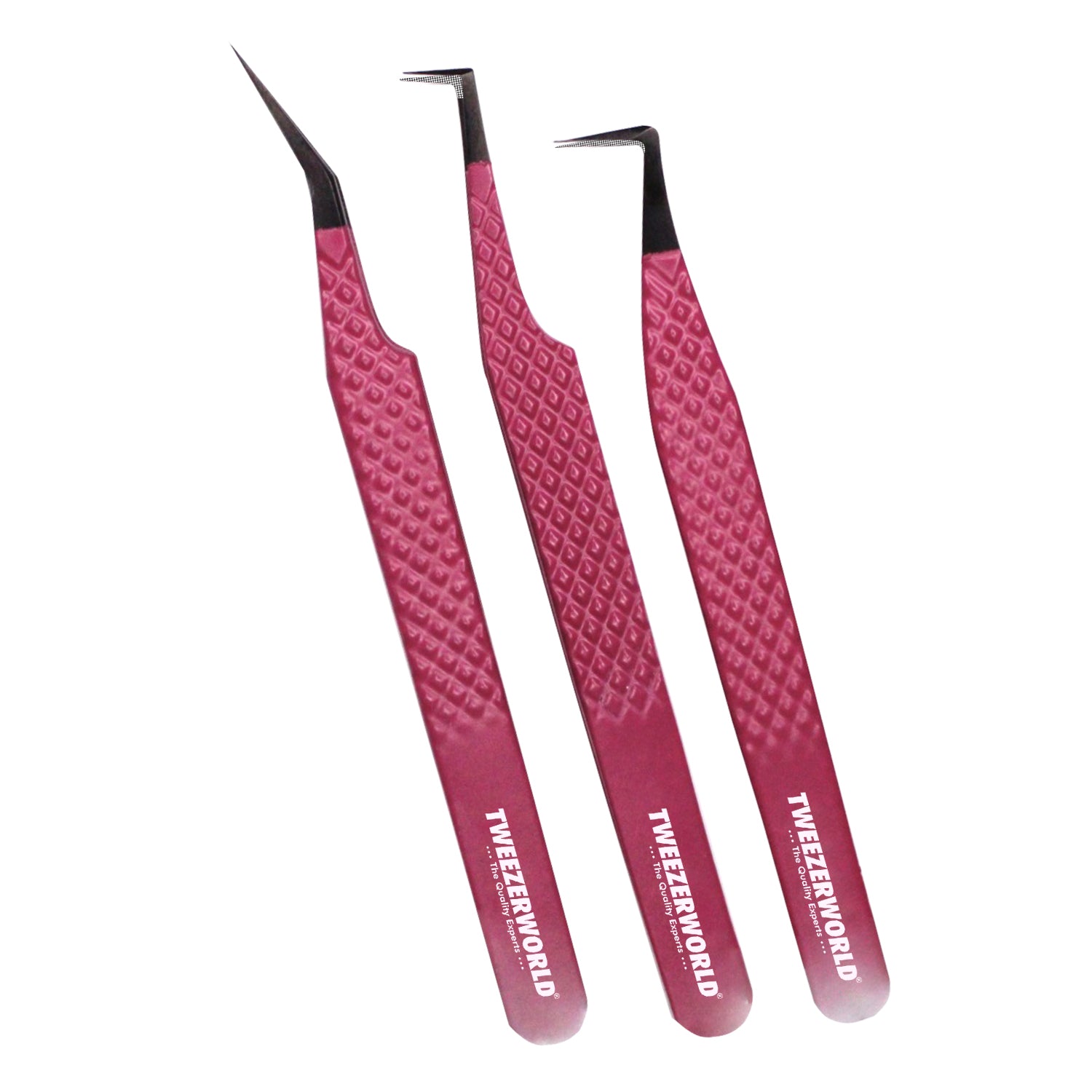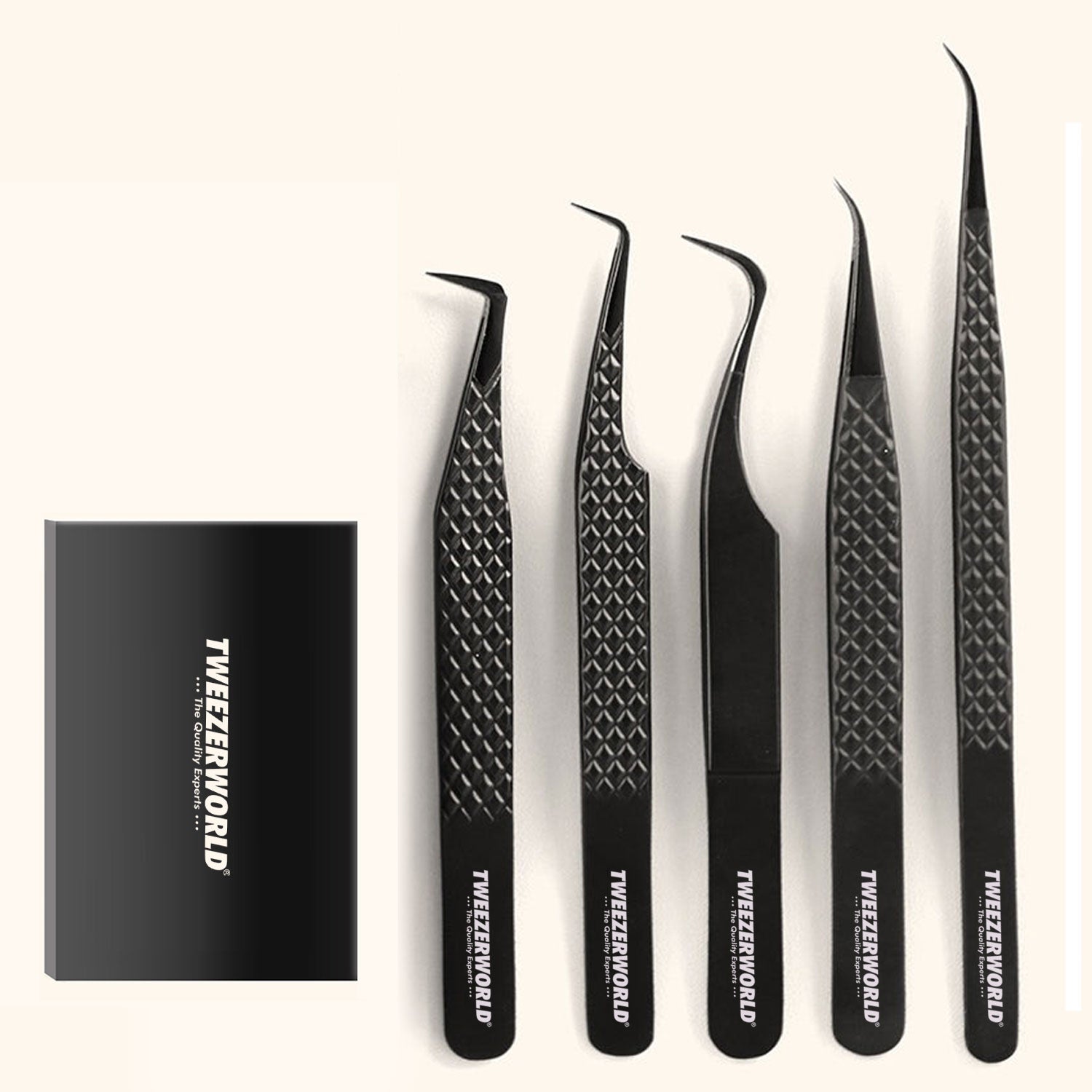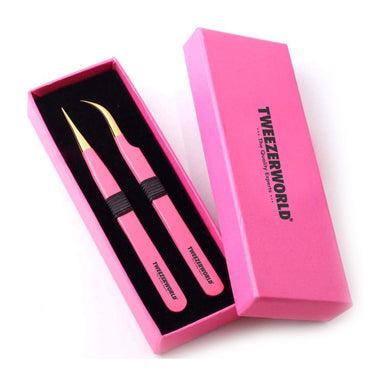

How Fiber Tip Lash Tweezers Are Manufactured
How Fiber Tip Lash Tweezers Are Manufactured: Texture, Alignment and Quality Control
Fiber tip lash tweezers are designed to provide a textured gripping surface for manipulating fine eyelash-extension fibers. However, the words “fiber tip” describe a broad product category—not one standardized material, texture or performance level.
Two tweezers may look similar in photographs yet behave differently because of variations in:
- Base material
- Tip geometry
- Inner-tip texture
- Contact-area length
- Closing alignment
- Handle tension
- Edge finishing
- Surface treatment
- Production consistency
For lash brands, academies, distributors and private-label buyers, understanding the manufacturing process makes it easier to prepare accurate specifications, assess samples and establish realistic quality-control criteria.
This article describes general manufacturing and inspection principles. The exact production route depends on the selected alloy, design, finish and manufacturer.
What Is a Fiber Tip Lash Tweezer?
A fiber tip lash tweezer usually has a deliberately textured gripping area on the inner faces of its tips. Depending on the manufacturer, this texture may be described as:
- Fiber texture
- Micro texture
- Nano texture
- Laser texture
- Diamond texture
- Cross texture
- Hex texture
- Straight-line texture
- Patterned inner surface
These descriptions are not necessarily interchangeable or standardized.
The texture may be produced by mechanical machining, laser processing, controlled abrasion or another surface-treatment method. Its purpose is to increase contact and grip under appropriate working conditions.
The texture does not independently determine performance. Effective pickup also depends on tip alignment, closing force, fiber diameter, fan-making technique and where the artist holds the material.
The Main Manufacturing Stages
A typical fiber tip lash tweezer may pass through the following stages:
- Material selection
- Blank cutting or forming
- Body shaping
- Heat treatment, where applicable
- Grinding and profiling
- Tip-geometry formation
- Inner-tip texturing
- Alignment and closing adjustment
- Hand finishing
- Surface finishing or coating
- Cleaning
- Functional inspection
- Marking and packaging
- Final batch release
The order can vary. For example, some texturing operations may take place before final alignment, while particular coatings must be applied after polishing and cleaning.
1. Selecting the Base Material
The base material affects rigidity, spring response, corrosion resistance, weight and finishing behavior.
Stainless steel is commonly used because it can provide a practical balance of:
- Strength
- Elastic return
- Corrosion resistance
- Surface-finish options
- Manufacturing repeatability
- Commercial scalability
However, “stainless steel” is not a complete specification. Private-label buyers should ask the manufacturer to declare the actual grade or permitted grade family.
The material must be suitable for the tweezer’s geometry. A very fine isolation tweezer and a wide boot-style volume tweezer may require different combinations of thickness, stiffness and tension even when made from the same alloy.
The buyer may also need to specify:
- Chemical-composition requirements
- Material certificates
- Hardness range
- Magnetic-property expectations
- Corrosion testing
- Finish or coating compatibility
- Restrictions on material substitution
A finished tweezer’s performance cannot be predicted from the steel grade alone.
2. Cutting and Forming the Tweezer Blank
The production process begins with a flat or preformed metal blank. Depending on the design and production method, the blank may be:
- Cut from sheet or strip
- Stamped
- Laser cut
- Mechanically profiled
- Forged or otherwise preformed
The two arms must be symmetrical enough to support controlled closure. Variations in arm width, thickness or forming angle can affect:
- Closing force
- Side-to-side movement
- Tip alignment
- Balance in the hand
- Fatigue during repeated use
At this stage, the tool is still a rough component. The working tip, finished edges and final tension require further processing.
3. Shaping the Body and Handle
The arms are formed into the intended profile and opening width. The manufacturer must control the relationship between:
- Overall length
- Handle width
- Arm thickness
- Bend location
- Tip angle
- Resting opening
- Contact position
An ergonomic shape is not purely cosmetic. Small dimensional changes can alter how force moves from the artist’s fingers to the gripping area.
The required shape should therefore be defined with a controlled drawing rather than only a product photograph or pattern name.
4. Grinding the Tip Geometry
Tip geometry determines how the tweezer approaches and contacts lash fibers.
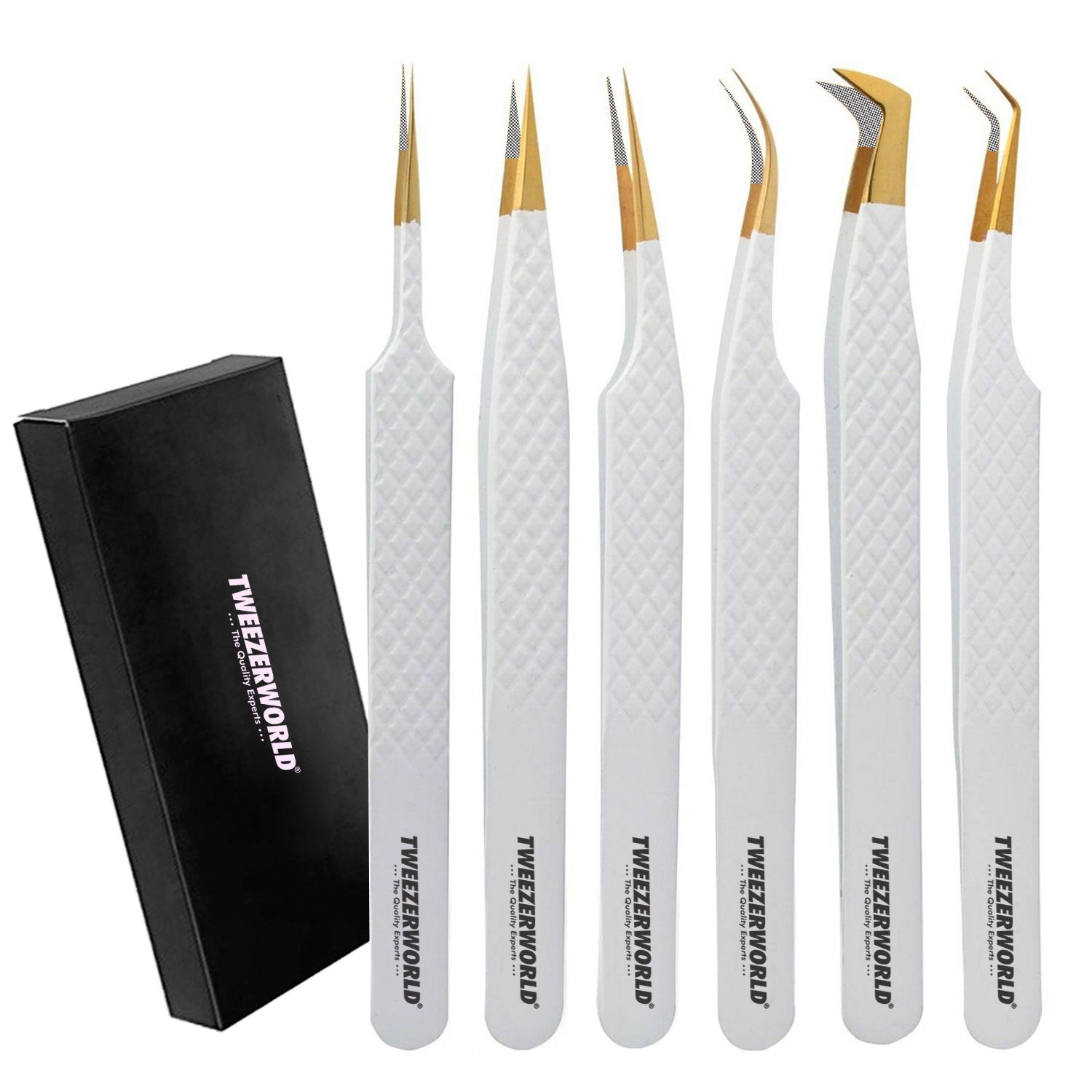
Common fiber tip configurations include:
- Straight
- Curved
- 45-degree
- 75-degree
- 90-degree
- L-shaped
- Boot
- Mini boot
- Slim boot
During grinding, material is removed gradually to create the required tip width, thickness, angle and working-face length.
Important variables include:
- Tip width
- Tip thickness
- Inside-face flatness
- Working-face length
- Angle consistency
- Edge radius
- Left-to-right symmetry
- Transition from arm to tip
Excessive grinding may make the tip too flexible or fragile. Insufficient grinding may create an unnecessarily bulky working end.
For angled and boot-style tools, the transition should be smooth and repeatable. Abrupt or inconsistent bends can change both access and closure.
5. Creating the Inner-Tip Texture
Inner-tip texturing is one of the defining stages of fiber tip tweezer production.
The manufacturer creates a controlled pattern on the surfaces intended to contact the lash fibers. The pattern may consist of:
- Parallel grooves
- Crossed lines
- Repeating geometric cells
- Fine irregular microtexture
- Hexagonal-style features
- Directional or multidirectional texture
The procurement specification should define more than the marketing name. Where commercially important, it should identify:
- Pattern type
- Texture location
- Textured-area length
- Coverage on each jaw
- Direction or orientation
- Approximate feature size
- Permitted variation
- Maximum sharpness or burr condition
- Cleaning requirements after processing
Why Texture Depth Matters
A texture that is too shallow may provide little practical difference from a smooth surface. A texture that is too aggressive may:
- Catch fibers unexpectedly
- Make release less predictable
- Collect adhesive residue
- Feel rough during use
- Create difficult-to-clean recesses
- Introduce sharp projections
The objective is not simply to create the deepest possible pattern. Texture must work together with the contact geometry and closing force.
Texture Must Be Consistent on Both Tips
The opposing textured faces should be positioned so that the intended areas meet when the tweezer closes.
If the patterns are displaced, the tool may have:
- Uneven contact
- Local pressure points
- A shortened functional gripping zone
- Different pickup behavior along the tip
- Inconsistent release
Visual texture alone does not confirm that the tweezer has a usable working area.
6. Establishing the Closing Geometry
Closing geometry describes how the two working faces approach and contact each other.
Possible closure conditions include:
- Full-face contact
- Progressive contact
- Contact beginning near the end
- Contact beginning farther back
- A deliberately localized working zone
No single closing pattern is automatically correct for every tweezer style. The appropriate geometry depends on the design and intended technique.
The key is that the manufacturer and buyer agree on the expected contact behavior.
Tip Alignment
When the tweezer closes, the tips should not:
- Cross
- Twist
- Slide sideways
- Contact only at an unintended corner
- Leave an excessive gap
- Require excessive force to align
Inspection should consider the tweezer from several directions. A tool can appear aligned from above while still having vertical offset or uneven inner-face contact.
Defining the Working Zone
The “sweet spot” is the region where the tweezer provides useful contact for the intended task. For procurement purposes, it is better described as the specified working or contact zone.
The specification may define:
- Distance from the tip
- Minimum contact length
- Permitted gap outside the working zone
- Contact under a defined force
- Test material and pickup method
Terms such as “wide sweet spot” should be supported by a measurement or approved reference sample.
7. Hand Alignment and Adjustment
Precision lash tweezers frequently require individual adjustment after initial machining.
A trained finisher may evaluate and correct:
- Side-to-side alignment
- Vertical alignment
- Tip-face contact
- Arm symmetry
- Resting opening
- Closing sequence
- Handle tension
This process may involve very small controlled changes to the arms or working end.
Hand finishing can improve the performance of individual pieces, but it also introduces a need for standardized workmanship. Different operators should be working to the same:
- Drawing
- Master sample
- Inspection method
- Force range
- Contact-zone requirement
- Cosmetic acceptance criteria
“Hand tested” is not a substitute for documented acceptance criteria.
8. Edge Finishing and Burr Removal
After shaping and texturing, the tweezer must be checked for burrs and unintended sharp edges.
Areas requiring particular attention include:
- Outer tip edges
- End corners
- Inner textured faces
- Pattern transitions
- Handle edges
- Logo or laser-marked areas
Finishing must preserve the functional texture. Excessive polishing can partially remove or round the pattern, while inadequate finishing can leave projections that affect handling or cleaning.
A suitable process should balance:
- Functional grip
- Predictable release
- User comfort
- Cleanability
- Surface consistency
- Tip durability
9. Adjusting and Measuring Tension
Tension is the force the user feels when closing the tweezer.
It is influenced by:
- Material properties
- Arm thickness
- Arm width
- Overall length
- Forming geometry
- Resting opening
- Heat treatment
- Permanent adjustment during finishing
A tweezer with very high tension may contribute to hand fatigue. A tool with extremely low tension may feel unstable or provide insufficient closing response for the intended technique.
How Tension Should Be Specified
“Soft tension” and “strong tension” are subjective. A more useful specification defines:
- Measurement point
- Resting opening
- Closing position
- Test equipment
- Force unit
- Minimum and maximum force
- Conditioning or repeated-compression procedure
For example, the closing force could be measured at a defined handle position while bringing the tips to a specified separation. The actual limits should be established from validated samples and user trials.
Tension should not be copied blindly from a different pattern. A boot tweezer, curved isolation tweezer and straight precision tweezer may require different ranges.
10. Surface Finishing and Coating
After the functional geometry is established, the tweezer may receive a selected surface finish.
Options can include:
- Satin
- Matte
- Mirror polish
- Brushed finish
- Colored coating
- Multicolor decorative finish
Surface treatment can influence appearance, cleaning, grip and brand positioning. A decorative coating should not be assumed to improve functional performance.
The buyer should confirm:
- Finish color and permitted variation
- Coating coverage
- Uncoated working areas, if required
- Scratch acceptance
- Adhesion requirements
- Chemical compatibility
- Cleaning limitations
- Logo-marking compatibility
The coating process must not change tip alignment, fill the texture or interfere with the closing surfaces.
11. Cleaning and Final Preparation
Manufacturing can leave behind:
- Grinding particles
- Polishing compound
- Process oil
- Dust
- Metal debris
- Coating residue
- Marking residue
The final cleaning process should remove manufacturing contamination without damaging the finish or leaving residue within the textured tips.
Inspection under magnification is particularly valuable because debris can remain trapped in fine patterns even when the rest of the tweezer appears clean.
Packaging should protect the finished tip from:
- Impact
- Bending
- Abrasion
- Contamination
- Metal-to-metal contact
12. Functional Quality-Control Inspection
A complete inspection plan combines dimensional, visual and functional checks.
Visual Inspection
Inspect for:
- Scratches
- Pits
- Cracks
- Coating defects
- Stains
- Burrs
- Uneven polishing
- Residue
- Incorrect markings
- Color variation beyond the approved limit
Dimensional Inspection
Measure where applicable:
- Overall length
- Tip width
- Tip thickness
- Tip angle
- Boot width
- Working-face length
- Resting opening
- Handle width
- Textured-area dimensions
Measurement points and tolerances should appear on the approved drawing.
Alignment Inspection
Verify:
- Central closure
- No crossing
- No twisting
- No excessive lateral offset
- Expected closing sequence
- Contact in the specified working zone
Tension Inspection
Measure closing force using the agreed test position and equipment. Compare results with the approved range rather than a subjective description alone.
Texture Inspection
Check:
- Pattern type
- Coverage
- Orientation
- Consistency
- Cleanliness
- Burr condition
- Position relative to the contact zone
Functional Pickup Test
A functional test can supplement dimensional inspection. It should define:
- Test fiber or material
- Fiber diameter
- Number of fibers
- Pickup location
- Gripping position
- Closing method
- Number of attempts
- Pass/fail condition
- Operator training
- Environmental conditions, if important
A vague instruction such as “test the grip” will produce inconsistent results.
Batch Inspection and Sampling
Not every characteristic must necessarily use the same inspection frequency.
A batch-control plan may separate characteristics into:
Critical Characteristics
Examples may include:
- Dangerous burrs
- Broken or cracked tips
- Severe crossing
- Contamination
- Incorrect product identification
These may justify 100% inspection or another risk-based control.
Major Characteristics
Examples may include:
- Incorrect texture
- Tip misalignment
- Tension outside the approved range
- Unusable working-zone contact
- Wrong angle or size
- Coating interfering with closure
Minor Characteristics
Examples may include cosmetic imperfections that do not materially affect function, safety or saleability under the agreed standard.
If acceptance-quality-limit sampling is used, the purchase specification should state:
- Sampling standard
- Inspection level
- Lot definition
- Defect categories
- AQL values
- Critical-defect policy
- Reinspection rules
- Disposition of rejected batches
Simply writing “AQL inspection” is incomplete.
Use an Approved Golden Sample
Before bulk production, the buyer and manufacturer should approve a signed reference sample.
The golden sample should represent the agreed:
- Shape
- Size
- Texture
- Contact zone
- Closing geometry
- Tension
- Surface finish
- Color
- Marking
- Packaging
It should be linked to a drawing number and specification revision.
A golden sample is useful for characteristics that are difficult to communicate through numbers alone, but it should complement—not replace—measurable requirements.
Do Not Overclaim Fan Capacity
Claims such as “perfect for 20D,” “guaranteed 30D pickup” or “works with every fanning method” should be treated carefully.
Fan-making performance can vary with:
- Lash-fiber diameter
- Fiber material and finish
- Number of fibers
- Tape-strip behavior
- Adhesive exposure
- Pickup position
- Contact pressure
- Tweezer angle
- Artist technique
- Hand dominance
- Maintenance and residue buildup
A successful sample test under one set of conditions does not prove universal performance.
A more defensible product description could state:
Textured inner tips designed to support controlled pickup and fan creation. Performance depends on lash diameter, technique, contact position and user preference.
If a specific fan-capacity range is marketed, the brand should document the test conditions and clearly present the result as sample-test performance rather than a universal guarantee.
Private-Label Procurement Checklist
| Procurement field | Buyer’s requirement |
|---|---|
| Product pattern | Straight, curved, 45°, 90°, L, boot or approved custom pattern |
| Overall length | Nominal dimension and tolerance |
| Base material | Declared stainless-steel grade or approved equivalent |
| Tip dimensions | Width, thickness and measurement locations |
| Working-face length | Minimum and maximum permitted length |
| Texture pattern | Cross, line, hex or approved reference pattern |
| Texture coverage | Defined area on both inner faces |
| Closing geometry | Full, progressive or specified localized contact |
| Alignment | Maximum permitted vertical and lateral offset |
| Working zone | Defined location and minimum usable length |
| Tension | Measured force range and test position |
| Edge condition | Burr-free with approved corner radius |
| Surface finish | Matte, satin, polished or coated |
| Color tolerance | Approved master sample or color reference |
| Logo marking | Position, dimensions and method |
| Functional test | Defined fiber, method and acceptance criteria |
| Inspection plan | Critical, major and minor defect controls |
| Packaging | Individual tip protection and approved labeling |
| Golden sample | Signed sample and linked drawing revision |
| Change control | Written approval before material or process changes |
Questions Buyers Should Ask Manufacturers
Before approving a fiber tip tweezer program, ask:
- How is the inner-tip texture produced?
- Is the pattern controlled by a drawing or only by a visual sample?
- Which texture dimensions are inspected?
- Is every tweezer checked for closure and alignment?
- How is tension measured?
- Is functional pickup testing standardized?
- How are burrs removed without damaging the texture?
- Does coating occur before or after final alignment?
- How are textured tips cleaned?
- What batch inspection records are available?
- How are rejected pieces identified and controlled?
- Which manufacturing changes require customer approval?
Clear answers help distinguish a repeatable manufacturing system from sample-by-sample adjustment without documented controls.
Frequently Asked Questions
Are fiber tip lash tweezers made from fibers?
Usually, “fiber tip” refers to the textured gripping surface rather than a tip made from textile fibers. Buyers should ask the manufacturer to explain the exact material and process.
Is laser texture always better than mechanical texture?
No. The production method alone does not determine performance. Pattern geometry, surface condition, alignment, contact area and tension all matter.
Should the textured surfaces make full contact?
Not necessarily. Some designs use full contact, while others use a localized or progressive working zone. The intended geometry should be defined and inspected.
Does more texture always provide better grip?
No. Excessively aggressive texture can affect release, cleaning and consistency. The texture should be appropriate for the intended fiber and technique.
Should every tweezer be hand tested?
Important functional characteristics may justify individual inspection. The manufacturer should define what “hand tested” includes and record acceptance against controlled criteria.
Can a manufacturer guarantee a specific fan size?
A universal guarantee is difficult to support because fan performance depends on materials, technique and test conditions. Any numerical claim should be based on documented testing and carefully qualified.
Conclusion
Producing a reliable fiber tip lash tweezer requires more than adding texture to a standard tool.
The finished performance results from the interaction of:
- Material
- Body geometry
- Tip profile
- Inner-face texture
- Contact-zone design
- Closing alignment
- Hand finishing
- Tension
- Surface treatment
- Inspection controls
Private-label brands and distributors should define these features in measurable specifications, approve representative samples and establish a batch inspection plan before bulk production.
TWEEZER WORLD® works with wholesale, academy and private-label buyers on customized lash-tweezer patterns, fiber tip textures, finishes, markings, packaging and quality-control requirements.
Explore private-label and OEM tweezer manufacturing.
Primary CTA: Request a Fiber Tip Lash Tweezer Sample Set
Papular Products Gallery