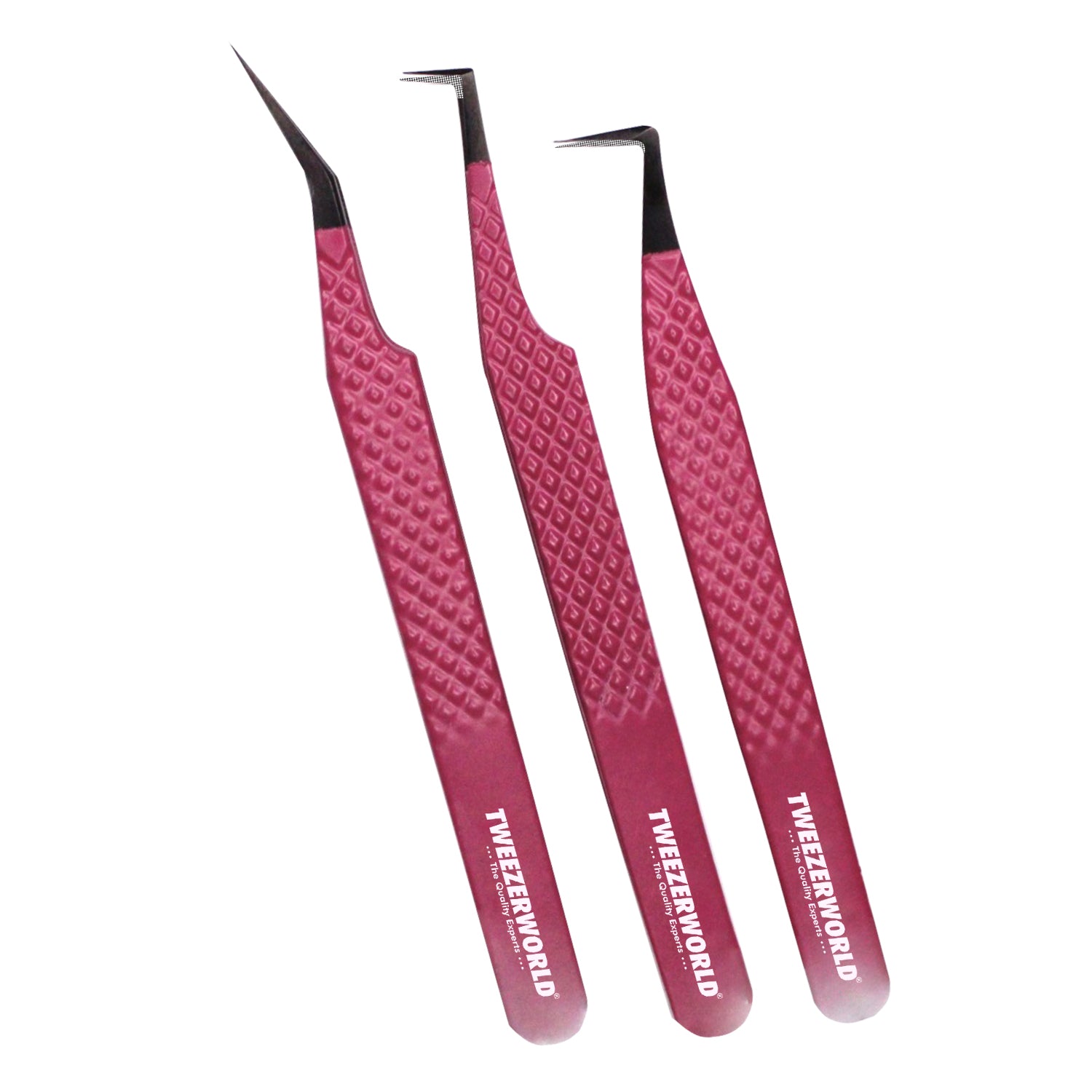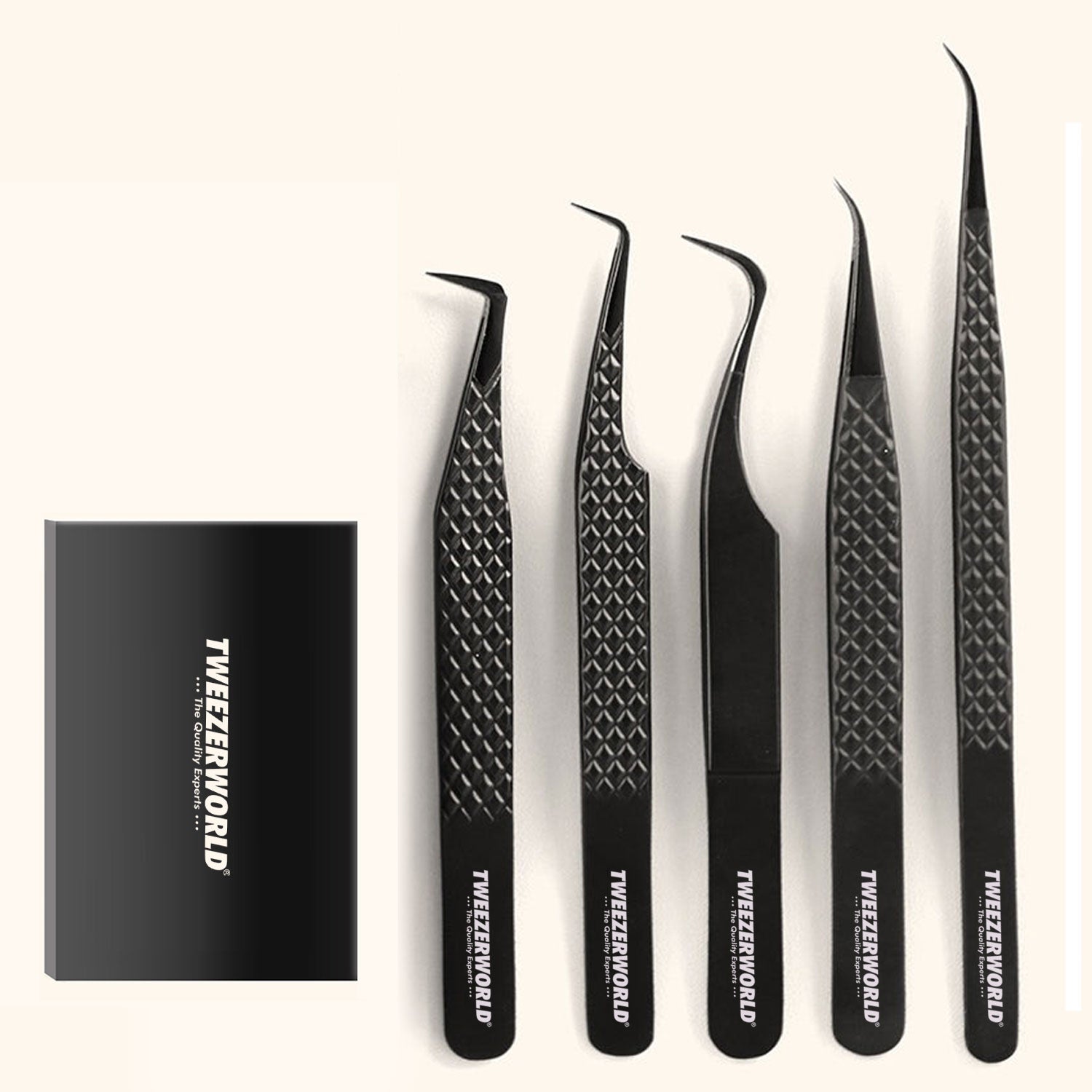

Specify Fiber Tip Lash Fan Capacity Without Overclaims
How to Specify Fiber Tip Lash Fan Capacity Without Overclaiming Performance
“Suitable for 16D.” “Grips up to 30D.” “Perfect for 40D fans.” These statements appear precise, but a fan-count number by itself does not define a repeatable tweezer capability.
A 16D fan made from 0.03 mm extensions does not present the same handling task as a 16D fan made from 0.05 mm extensions. A narrow handmade fan behaves differently from a wide premade fan. Lifting fibres once from a strip is also different from forming, transferring and releasing a complete fan without losing control.
For lash brands, academies, distributors and OEM buyers, the solution is to connect every capacity statement to defined materials, techniques and test conditions. This article provides a practical specification and qualification method that can be adapted for sample approval, product-page copy, packaging and production inspection.
Quick answer: specify the exact tweezer model, lash product, fibre diameter, length, curl, fan construction, pickup technique, gripping location, test stages, number of trials and pass criteria. Describe the result as a qualified test outcome—not as a universal guarantee for every lash artist, lash product or fan.
For the broader explanation of why large D-number claims can mislead, read Fiber Tip Lash Tweezers: Why Fan Capacity Should Not Be Overclaimed. You can also explore TWEEZER WORLD®’s Fiber Tip Lash Tweezers.
This is a product-specification and marketing-content guide, not legal advice or professional lash-application training. Lash weight and suitability for an individual client must follow the artist’s training, the natural lash assessment and the applicable lash and adhesive instructions.
What a Fan-Capacity Specification Should Accomplish
A professional specification should answer four different questions:
- What was tested? Identify the exact tweezer, lash product, fan and technique.
- How was it tested? Define the operating steps, evaluators, repeats and conditions.
- What counted as a pass? Separate pickup, hold, transfer, formation and release performance.
- What may be claimed? Limit the product wording to what the retained evidence actually supports.
These four questions prevent a successful demonstration with one preferred lash strip from becoming a broad promise about all 30D or 40D fans.
Start by Defining What “D” Means
In lash terminology, “D” normally states how many extension fibres are grouped into one fan. A 6D fan contains six fibres, a 12D fan contains twelve and a 20D fan contains twenty.
The number does not identify:
- the diameter of each fibre;
- the lash length or curl;
- the fibre material or surface finish;
- the fan width;
- the base construction;
- whether the fan is handmade, promade or premade;
- the strip adhesive and separation force;
- the pickup point; or
- the force needed to form, transfer and release it.
“20D” is therefore a fibre-count description. It is not a standardised load rating for a tweezer.
Why Fibre Diameter Must Appear in the Claim
Fibre count and fibre diameter work together. As a simplified geometric comparison, the combined cross-sectional area is proportional to the number of fibres multiplied by the square of the diameter:
Relative bundle area = number of fibres × diameter²
This is not a complete model of fan weight, stiffness or handling. It does, however, show why two fans with the same D number can present very different amounts of material at the gripping point.
| Example fan | Relative area calculation | Relative result | Specification lesson |
|---|---|---|---|
| 16D using 0.03 mm fibres | 16 × 0.03² | 0.0144 | Fan count alone does not show total material at the tip. |
| 16D using 0.05 mm fibres | 16 × 0.05² | 0.0400 | The relative area is approximately 2.8 times the 16D/0.03 mm example. |
| 20D using 0.03 mm fibres | 20 × 0.03² | 0.0180 | A higher D number can still involve less relative material than a lower count using thicker fibres. |
| 10D using 0.05 mm fibres | 10 × 0.05² | 0.0250 | This lower-count example has more relative area than the 20D/0.03 mm example. |
Do not use this calculation to prescribe safe fan weights for clients. It is included only to demonstrate why a tweezer capacity statement needs a lash diameter and product reference.
Define the Exact Tweezer Before Testing
Testing “a fiber tip tweezer” is too broad. Record the exact model and construction:
- supplier and model reference;
- production lot or sample number;
- overall length;
- tip shape, such as 45°, 90°, L-shape, boot or curved;
- working-face width and length;
- inner-tip texture pattern;
- texture pitch, depth and coverage where controlled;
- tip alignment and contact behaviour;
- spring-tension classification or measured closing force;
- material and surface finish; and
- cleaning condition before the test.
A result produced with one 90° hex-textured model should not be copied automatically to a 45° cross-textured or straight-line boot model. Shape, contact length, alignment and tension can change the usable pickup zone.
Compare texture constructions in Cross vs Straight-Line vs Hex Fiber Tip Tweezers.
Define the Lash Test Material
The lash product is part of the test system. Record enough information for another trained evaluator to repeat the trial.
| Test variable | Required record | Why it matters |
|---|---|---|
| Lash supplier and product | Brand or supplier, product name, code and lot when available | Products with the same nominal size can have different finishes and strip behaviour. |
| Diameter | Nominal fibre diameter in millimetres | Changes the material held within the closed tip. |
| Length | Nominal lash length | Changes leverage and balance during transfer. |
| Curl | Manufacturer’s curl designation | Changes how the fibres approach the contact faces. |
| Colour and finish | Black, brown or other product; matte, glossy or supplier description | Surface behaviour can affect perceived grip and release. |
| Fan type | Handmade, promade or premade | Base construction and spread alter the pickup task. |
| Fan width and base | Approved reference image, width range and base description | Narrow, wide, pinched and bonded fans require different contact geometry. |
| Strip and adhesive | Strip type, tack condition and any preparation | Separation force can dominate the pickup result. |
Define the Lash Technique
Pinching, rolling, flower-bouquet, strip pickup and other methods do not use the same movement or contact zone. A defensible specification should identify:
- the technique being evaluated;
- whether the fibres are separated before pickup;
- the pickup angle;
- the location of the fibres within the tweezer tip;
- the point on the strip or fan where the tool closes;
- the hand position or closing instruction;
- the required transfer movement; and
- the release action.
If a product is marketed for several techniques, qualify each technique separately. Do not assume that success with pinching proves equal performance with every strip or flower-bouquet method.
Test the Complete Working Sequence
Fan capacity should not be based on whether the tool can touch or lift a bundle once. Evaluate the stages that the artist actually performs.
- Separation: the selected fibres separate from adjacent fibres without uncontrolled loss.
- Pickup: the tweezer lifts the defined bundle from the specified location.
- Formation: the artist can create or preserve the intended fan shape and base.
- Hold: the tool retains the fan for a stated time without unacceptable movement.
- Transfer: the fan remains controlled through a defined hand movement or distance.
- Release: the tool opens without pulling, twisting, snagging or closing the fan beyond the agreed limit.
A tweezer may pass pickup and fail release. Another may lift a large closed bundle but perform poorly when the fan is spread. Record each stage instead of reducing the evaluation to one “grip” result.
Create Clear Pass and Failure Criteria
“Works well” is not an inspection criterion. Define the observable result.
| Test stage | Example pass criterion | Example failure |
|---|---|---|
| Pickup | All selected fibres lift from the defined point on the first controlled attempt. | Partial pickup, repeated attempt or loss of selected fibres. |
| Formation | Fan reaches the approved reference spread and base condition. | Uncontrolled closing, splitting or unacceptable base distortion. |
| Hold | Fan remains at the defined contact zone for the stated time. | Visible sliding, rotation or fibre loss. |
| Transfer | Fan remains controlled through the agreed distance and orientation change. | Fan moves outside the contact zone or drops. |
| Release | Fan leaves the tip without snagging or unacceptable change from the reference shape. | Fibres remain caught in the texture, twist or collapse. |
These are example structures, not universal thresholds. The buyer should define tolerances appropriate to the technique and intended product claim.
Use More Than One Artist and One Tweezer
One successful attempt by the product developer demonstrates possibility, not repeatability. A qualification plan should include:
- more than one trained evaluator;
- several tweezers from the intended production route;
- multiple trials for every fan configuration;
- the intended lash products and techniques;
- clean and defined tool conditions; and
- individual results rather than only the best demonstration.
For example, a buyer might evaluate five sample tweezers with two trained artists performing ten pickup–hold–transfer–release trials for each defined fan configuration. That produces 100 trial opportunities per configuration. This is an example plan, not an industry-mandated sample size; the buyer should choose a design appropriate to the importance and breadth of the claim.
Keep artist comments separate from objective pass/fail results. Comfort, preferred tension and sweet-spot feel are valuable, but they should not be averaged into a fan-capacity score without a defined method.
Example Qualification Matrix
A matrix prevents the team from testing only the largest advertised fan under one ideal condition.
| Variable | Qualification levels | Record separately? |
|---|---|---|
| Tweezer | Exact model and production sample | Yes—never pool different shapes or lots without justification |
| Lash diameter | Example: 0.03 mm and 0.05 mm | Yes |
| Fan count | Low, middle and claimed maximum | Yes |
| Fan type | Handmade and premade where both are claimed | Yes |
| Technique | Each method named in the listing | Yes |
| Test stage | Pickup, formation, hold, transfer and release | Yes |
| Evaluator | Each trained artist | Yes |
| Tweezer condition | Clean dry tool; any additional claimed condition | Yes |
Test at the low and middle parts of the marketed range as well as the maximum. A model described as “6D–20D” should not be approved solely because it lifted one 20D bundle.
Example Fan-Capacity Test Record
| Record field | Example entry |
|---|---|
| Tweezer | FT-90-HX, sample 03, production lot FT090-2609 |
| Shape and texture | 90° boot, hex-textured contact area |
| Tip condition | Clean, dry, aligned and visually accepted before testing |
| Lash product | Supplier/product/lot recorded in the controlled test file |
| Lash dimensions | 0.03 mm, 10 mm, selected curl |
| Fan | Handmade 12D, approved width and base reference |
| Technique | Pinching, pickup location and tool angle defined by work instruction |
| Stages | Pickup, formation, five-second hold, 15 cm transfer and controlled release |
| Trials | Ten trials for each evaluator and sample |
| Result | Pass/fail recorded for every stage and trial |
| Comments | Separate observations for comfort, tension, sweet spot and release feel |
| Approval | Reviewer, date, claim wording and report revision |
Turn Test Results Into Responsible Claims
Objective performance claims should have appropriate supporting evidence. The United States Federal Trade Commission’s advertising-substantiation policy states that objective product claims imply that the advertiser has a reasonable basis supporting them. In the United Kingdom, CAP Code rule 3.7 requires documentary evidence for objective claims capable of substantiation. EU rules also address misleading commercial practices; review the official EUR-Lex summary of Directive 2005/29/EC.
The exact legal position depends on the market, complete advertisement and consumer interpretation. From a product-management perspective, a useful rule is simple: write only what the retained model-specific evidence can support.
| Risky wording | Why it is weak | Better wording |
|---|---|---|
| “Guaranteed 2D–40D” | Does not define diameter, fan type, technique or success criteria. | “Designed for professional volume and mega-volume techniques; approve with your preferred lash system.” |
| “Holds 30D fans” | One D number is not a complete test condition. | “Internally evaluated with the specified 0.03 mm lash product and test method; request the qualification summary.” |
| “Non-slip grip” | Sounds absolute despite residue, angle, pressure and lash variation. | “Textured inner tips designed to improve contact and reduce slipping under suitable pickup conditions.” |
| “Works for every technique” | Artist method and tool geometry vary. | “Sample-tested for the techniques listed in the product specification.” |
| “Full sweet spot” | Does not identify the contact length or closing force. | “Defined textured contact zone inspected against the approved sample and functional test.” |
| “Perfect alignment” | Uses an absolute word without a measurement method. | “Tips inspected for contact, crossing and lateral offset using the stated method.” |
Product-Page Claim Template
The following structure is clearer than a standalone maximum D number:
Tool design: [90° boot / 45° / L-shape / other]
Inner-tip texture: [hex / cross / straight-line], covering [defined contact zone]
Recommended techniques: [techniques actually evaluated]
Qualified fan test: Internally evaluated using [lash supplier/product], [diameter], [length/curl], [fan type] and [fan-count range] under the documented test method.
Important limitation: Results vary with lash product, fan construction, technique, pickup angle, tip cleanliness and artist preference. Test a sample with your own lash system before bulk purchasing.
If the brand cannot maintain the qualification record, omit the numerical fan range and describe the tool design and intended techniques instead.
Keep Claims Consistent Across Every Channel
The approved claim should control:
- Shopify product titles and descriptions;
- collection-page filters and comparison tables;
- packaging and printed care cards;
- distributor catalogues;
- academy manuals;
- influencer briefs and affiliate posts;
- marketplace listings;
- sales presentations; and
- WhatsApp quotations and sample messages.
An approved product page can be undermined if an influencer is instructed to say “guaranteed 40D” or a distributor copies the largest demonstration result without its lash diameter and limitations.
Production Inspection After Sample Approval
A golden sample proves only what was approved at that time. Production still needs controls for the characteristics that influence grip:
- tip shape and dimensions;
- left-to-right alignment;
- contact length and closure pattern;
- texture pattern, pitch, depth and coverage;
- burrs and unfinished edges;
- closing force or tension classification;
- surface finish and cleanliness;
- laser marking and model identity; and
- functional performance using an agreed test medium.
ISO 2859-1:2026 provides acceptance-sampling systems for inspection by attributes. It does not define a lash-tweezer fan-capacity test or select the correct AQL for the buyer. The inspection level, defect categories, acceptance limits and characteristics requiring 100% inspection must be agreed separately.
Critical alignment or safety-related defects may justify stricter controls than minor cosmetic characteristics. “AQL inspection” is incomplete wording unless the plan identifies the standard, inspection level, defect classes and acceptance values.
When to Repeat Fan-Capacity Qualification
Retest when a change could alter the result, including:
- tip shape, width, angle or contact length;
- texture pattern, depth, pitch or coverage;
- material or material supplier;
- heat treatment or forming process;
- spring tension or arm thickness;
- grinding, alignment or finishing method;
- production site or critical subcontractor;
- approved lash product or claimed diameter;
- advertised fan range or technique;
- repeated complaints about slipping, release or inconsistency; or
- evidence that production no longer represents the qualified samples.
Change control should state which changes require notification, new samples, partial retesting or complete requalification.
Completed OEM Fan-Capacity Specification
The following example can be used as a starting point for an RFQ or sample-approval sheet.
| Specification field | Buyer’s requirement |
|---|---|
| Product name | Professional Fiber Tip Lash Tweezer for qualified volume-fan pickup |
| Model | Unique reference for the exact shape, texture, finish and tension |
| Tip shape | 90° boot, 45°, L-shape or other controlled drawing; no substitution |
| Inner-tip texture | Hex, cross or straight-line pattern with defined pitch, depth and coverage where measurable |
| Material | Declared stainless-steel grade or permitted grade family and material documentation |
| Dimensions | Overall length, arm thickness, working-face width, contact length and angle with tolerances |
| Tip alignment | No crossing or unacceptable lateral offset; contact zone defined under the specified closing force |
| Tension | Soft, medium or firm classification supported by a measured range or approved golden sample |
| Qualified lash product | Supplier, product, code, lot, diameter, length, curl and strip condition recorded |
| Fan construction | Handmade, promade or premade; fan count, width and base reference defined |
| Technique | Each promoted method tested separately with a controlled work instruction |
| Test sequence | Pickup, formation, hold, transfer and release |
| Evaluators and repeats | Number of trained artists, tweezer samples and trials defined before testing |
| Pass criteria | Observable pass and failure conditions for every test stage |
| Approved claim | Exact wording linked to the report revision; no broader D range or technique claim |
| Production inspection | Identity, alignment, contact, texture, tension, finish and agreed functional checks |
| Golden sample | Signed and dated sample linked to the drawing, specification and claim record |
| Documentation | Drawing, material declaration, inspection report, qualification report and approved artwork |
| Change control | No unapproved change to geometry, texture, material, tension, process, site or test method |
| Sample approval | Three to five evaluation samples per model before pilot production |
Documentation to Retain
Keep a controlled file containing:
- the approved product specification and drawing;
- sample and lot identification;
- lash product and fan references;
- the test work instruction;
- evaluator qualifications or selection criteria;
- individual trial results;
- photographs or video where useful;
- deviations and retests;
- the final reviewed report;
- approved product-page and packaging wording;
- golden-sample identification;
- production inspection records; and
- change-control and requalification decisions.
A supplier statement saying “tested for 30D” is not equivalent to a report identifying the actual model, lash diameter, fan, method, sample size and results.
OEM and Private-Label Development
Private-label brands can build stronger product ranges by defining each model around a real technique and evidence package. Possible options include:
- 45°, 90°, L-shape, boot and isolation configurations;
- hex, cross and straight-line inner-tip textures;
- soft, medium and firm spring-tension categories;
- matte, satin, mirror, coated and custom-colour finishes;
- laser logo and model marking;
- custom boxes, cases and care cards;
- model-specific qualification testing;
- golden samples and batch inspection;
- approved product-copy templates; and
- change control before bulk production.
Learn more about OEM and Private-Label Tweezer Manufacturing or compare the Volume Lash Tweezers Collection.
Frequently Asked Questions
Can a fiber tip tweezer have one universal fan capacity?
No. Performance changes with lash diameter, product, fan construction, technique, pickup angle, closing pressure, alignment and tip condition.
What does 16D mean?
It normally means that sixteen extension fibres are grouped into one fan. It does not specify fibre diameter, fan width, base, weight or pickup method.
Should a numerical capacity claim include lash diameter?
Yes. A fan-count claim is more meaningful when it identifies the tested fibre diameter and lash product, together with the fan construction and technique.
Is “up to 40D” acceptable if one artist achieved it?
One successful attempt shows that the result was possible in that instance. It does not establish repeatable performance across production tweezers, artists, lash products and techniques.
Does a hex tip always hold larger fans than a cross or straight-line tip?
No. Texture pattern is only one variable. Contact length, tip alignment, shape, tension, texture dimensions, cleanliness and technique also affect the result.
Should capacity testing include release?
Yes. A tool that lifts a fan but catches fibres during release may not support the complete working sequence.
How many fan sizes should be tested?
Test representative low, middle and maximum points in the proposed range. Add configurations for every lash diameter, fan type and technique included in the claim.
Can a brand say “non-slip”?
An absolute non-slip claim is difficult to support because residue, angle, pressure and lash products vary. More accurate wording describes textured tips designed to improve contact or reduce slipping under suitable conditions.
When should a fan-capacity claim be retested?
Retest after changes to shape, texture, material, tension, production process, site, lash product, claimed technique or fan range, and when complaints suggest that the qualified result may no longer represent production.
What should an OEM buyer approve before bulk production?
Approve the model specification, drawing, lash test system, work instruction, pass criteria, results, claim wording, golden sample, production-inspection plan and change-control requirements.
Conclusion
A responsible fan-capacity specification does more than attach a large D number to a fiber tip tweezer. It identifies the exact tool, lash product, diameter, fan, technique, test sequence and pass criteria. It also records enough trials, samples and evaluators to distinguish repeatable performance from one ideal demonstration.
When the evidence supports a defined range, describe the test conditions and limitations. When it does not, use design and technique language instead of an unsupported numerical guarantee.
For OEM and distributor procurement, connect the approved claim to the golden sample, production-inspection plan and change-control process. That protects the buyer, gives the supplier measurable requirements and provides lash artists with more useful product information.
Develop a Testable Fiber Tip Tweezer Range
Tell TWEEZER WORLD® which tip shapes, textures, tension ranges, lash techniques, branding and packaging your professional range requires.
Papular Products Gallery